Urban foraging is the practice of identifying and harvesting wild, edible plants in city environments, and it is currently one of the most effective ways to turn a mundane weekend walk into a high-engagement educational experience for children. By shifting the focus from simply “getting out of the house” to “looking for specific plant signatures,” you provide your kids with a concrete lesson in biology, ecology, and food sources that textbooks simply cannot replicate.
Key Takeaways for Busy Parents
- Safety First: Never consume anything unless you are 100% certain of its identity; use the “triple-check” rule (guidebook, app, and local expert consensus).
- The 10% Rule: Only harvest a maximum of 10% of any plant patch to ensure the ecosystem remains healthy and continues to thrive for others.
- Avoid Contamination: Never forage within 10 meters of busy roads, near industrial runoff, or in areas where pets are frequently walked to avoid chemical or biological hazards.
Why Urban Foraging Works for Modern Parenting
If you are in your 30s or 40s, you likely feel the constant pressure to provide “quality time” that is both productive and screen-free. The problem with many weekend outings is that they lack a central objective. A walk in the park can become a chore if the children are bored, but when that same walk becomes a “treasure hunt” for edible greens like dandelion, wood sorrel, or wild garlic, the dynamic shifts immediately.
This activity matters because it grounds children in the reality of their surroundings. In an era where food is abstracted into plastic packaging, seeing a plant go from the ground to the kitchen table is a profound lesson. It encourages patience, observational skills, and a healthy skepticism—critical thinking skills that are just as useful in the classroom as they are in the woods.
Furthermore, urban foraging is a low-cost, high-reward hobby. You don’t need expensive gear, and you don’t need to drive three hours to the wilderness. Your local park, the edge of a community garden, or even the neglected corners of your own neighborhood hold secrets waiting to be identified.
The Essential Safety Framework: The “No-Guessing” Rule
The most common mistake beginners make is overconfidence. Just because an app says a plant is “90% likely to be X,” does not mean you should put it in your salad. Here is the decision rule for every urban forager: If you have even a 1% doubt about the identity of a plant, it stays in the ground.
To avoid dangerous mistakes, you must treat plant identification as a multi-layered verification process. Do not rely on a single source. Follow these steps every time:
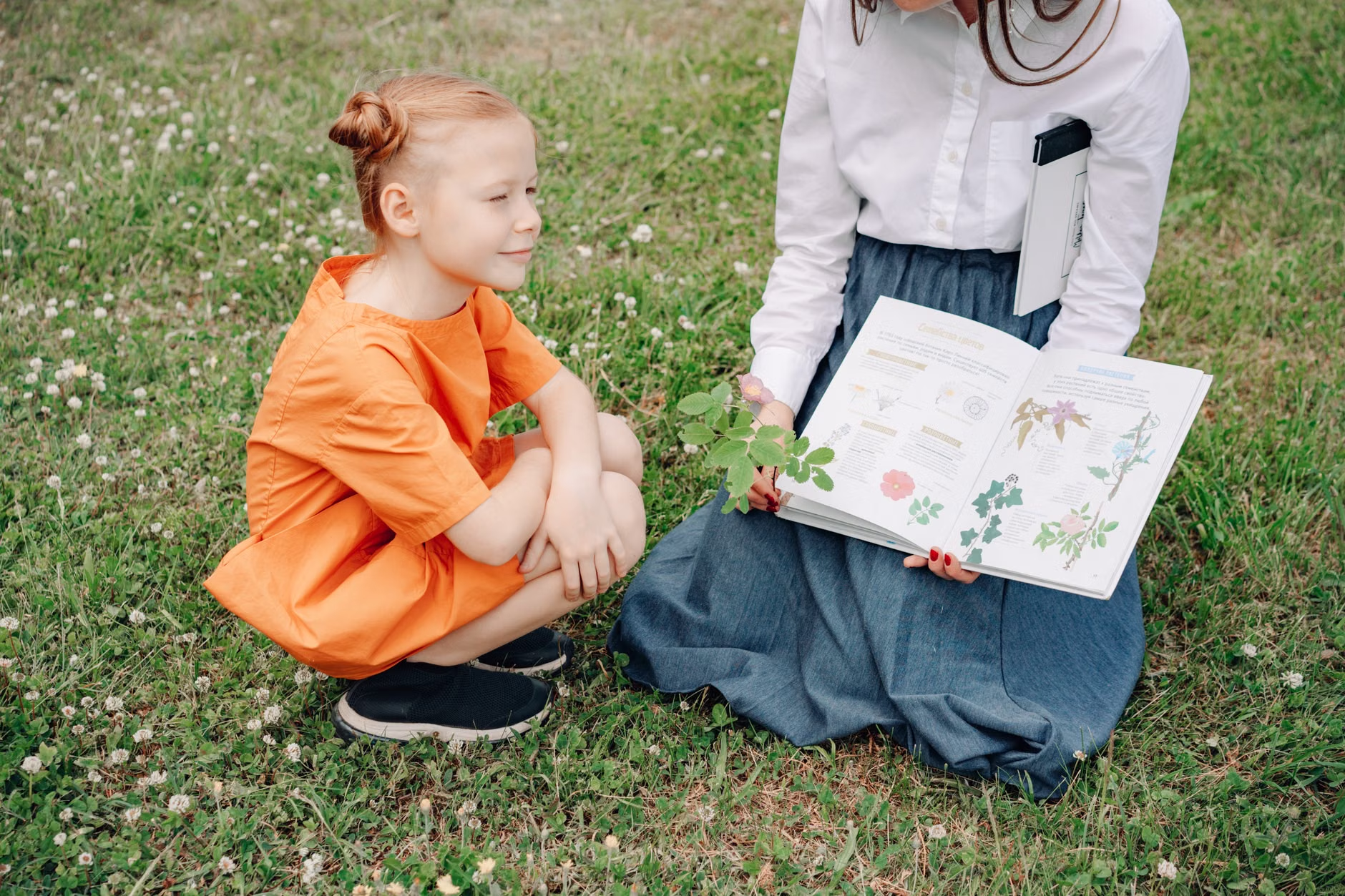
- Visual Comparison: Use a physical, region-specific field guide. Physical books are often more reliable than apps because they provide context about local look-alikes.
- The Digital Second Opinion: Use an app like iNaturalist or Seek to get a preliminary ID. These tools are excellent for narrowing down the field.
- The “Look-Alike” Search: This is the most crucial step. Search “[Plant Name] look-alikes” and look at images of poisonous plants that share the same habitat. If your plant shares characteristics with something toxic, stop immediately.
Hypothetically, let’s say you find a patch of what looks like Wild Garlic. You must check the leaf base, the smell (it should be distinctively garlicky), and the growth pattern. If it lacks the smell, it might be Lily of the Valley—a highly toxic plant. If you aren’t sure, you don’t eat it. Period.
Equipping Yourself for Success
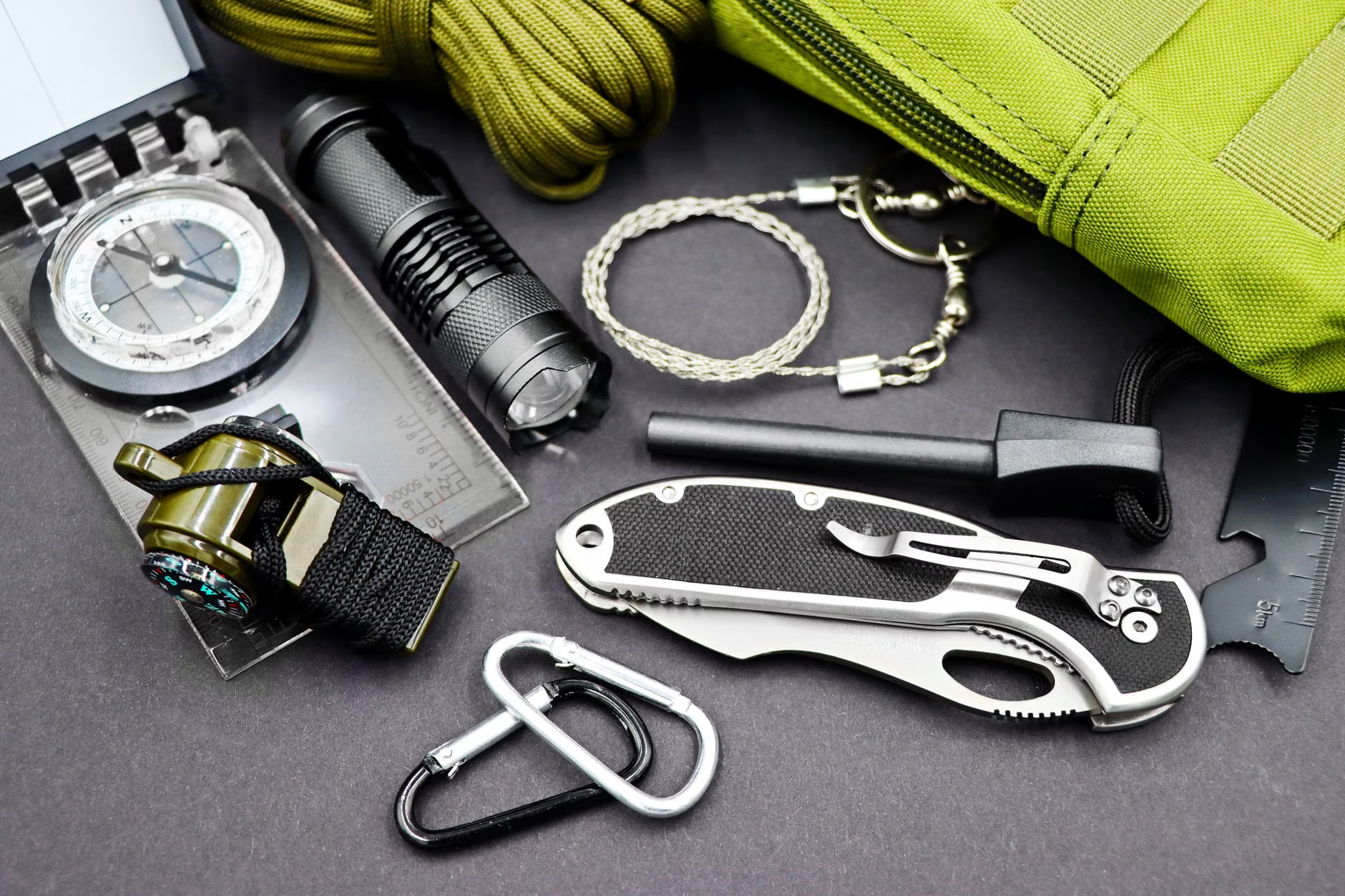
You don’t need a professional kit to start, but having the right tools makes the experience more professional and safer. Avoid using plastic bags, which cause plants to wilt and sweat. Instead, use breathable materials.
| Item | Purpose | Pro-Tip |
|---|---|---|
| Breathable Cloth Bags | Prevent moisture buildup and mold. | Use old pillowcases. |
| Dull Butter Knife | Used for digging roots or cutting stems. | Sharp knives are unnecessary and dangerous. |
| Magnifying Glass | Helps identify tiny flower structures. | Essential for kids to feel like explorers. |
The most important tool, however, is a notebook. Keep a log of where you found specific plants and when you found them. This creates a “harvest calendar” for your specific neighborhood, which is invaluable for planning future outings.
Understanding the “Urban” Part of Urban Foraging
Foraging in a city is different from foraging in a forest. The biggest variable is soil contamination. Plants absorb heavy metals like lead and cadmium from the soil, especially in older urban areas or near busy roads.
To mitigate this risk, follow these strict location criteria:
- Distance from Roads: Maintain a buffer of at least 10–15 meters from any road with significant traffic. Exhaust fumes settle on leaves and heavy metals accumulate in the soil near the curb.
- Avoid High-Traffic Dog Areas: If you see a lot of pet waste, don’t forage. The biological hazard is not worth it.
- Check Historical Use: Avoid areas that were previously industrial sites, gas stations, or old construction zones where lead paint or chemicals might be in the soil.
- The “Wash Well” Rule: Even if you are 100% sure the plant is clean, wash it thoroughly with a vinegar-and-water solution before consuming it.
Engaging Children Without Turning it into a Biology Lecture
The secret to keeping kids interested is to gamify the process. If you turn it into a lecture, they will tune out. If you turn it into a quest, they will lead the way.
Start by creating a “Plant Passport.” For every new plant they successfully identify, give them a sticker or a checkmark in their notebook. Focus on the sensory aspects: the smell of the leaves, the texture of the stem, the way the plant moves in the wind. When they touch and smell the plants, they are building a tactile memory that helps with identification later.
Another technique is to focus on “The Ecosystem Role.” Ask them questions like, “Why do you think the bees like this flower?” or “What kind of bug do you think hides under these leaves?” This shifts their perspective from “What can I eat?” to “How does this plant fit into the world?” It teaches them that foraging is a relationship with nature, not just a grocery trip.

Common Mistakes to Avoid
Even experienced foragers run into trouble. One of the most common pitfalls is “confirmation bias.” You want to find something edible, so you convince yourself that a poisonous look-alike is actually the plant you are looking for. This is why you must always start by identifying the poisonous plants in your area. If you know what the “bad” plants look like, you are much less likely to mistake a “good” plant for them.
Another mistake is over-harvesting. The temptation to “clear the patch” is strong, but it destroys the habitat. If you take too much, the plant cannot reproduce, and you won’t have anything to forage next year. Stick to the 10% rule mentioned earlier. If there are only ten plants in a patch, take none. If there are 100, you can take 10. This ensures that nature stays balanced.
Laws regarding foraging vary wildly by region. In some countries, foraging for personal use is a protected right (the “Right to Roam” in parts of Europe), while in others, it is considered trespassing or theft if done on private or certain public lands. Before you start, check your local municipal codes.
Generally, public parks have strict rules about disturbing vegetation. If you are in a protected nature reserve, it is almost certainly illegal to pick anything. Focus on “foraging-friendly” areas like community gardens, public trails that explicitly allow it, or private land where you have obtained direct permission from the owner.
Ethically, never forage rare or endangered plants. If you find a plant that you cannot identify, do not pick it just to “look at it later.” Leave it where it is. If you find a plant that is clearly struggling, leave it alone. The goal is to be a steward of the land, not just a consumer.
Planning Your First Outing: A Step-by-Step Guide
If you are ready to take your family out this weekend, start simple. Don’t aim for a complex salad. Aim for one or two easily identifiable plants. Dandelions are the classic starting point. They are everywhere, they are clearly identifiable, and every part of the plant is edible (the leaves in salads, the flowers in fritters, the roots for tea).
Step 1: The Pre-Walk Scout. Spend 15 minutes on Google Maps or a local satellite view to find a green space that isn’t a high-traffic dog park or a roadside strip.
Step 2: The Identification Prep. Spend 10 minutes with your kids looking at images of dandelions and their common look-alikes. Make it a game: “Can you spot the difference between the serrated leaves of the dandelion and the smoother leaves of the look-alike?”
Step 3: The Outing. Go to the spot. Don’t rush. Spend an hour looking for the plant. If you find it, check the safety criteria (no poop, no traffic, no chemicals). If it passes, harvest 10%.
Step 4: The Kitchen Table. Wash the plants. Let the kids help prepare them. If you are nervous about eating them, start by using them as a garnish or in a tea. The goal is the process, not the calories.
Advanced Foraging: Moving Beyond the Basics
Once you are comfortable with common plants, you can look into more seasonal varieties. In the spring, focus on young shoots and buds. In the summer, look for berries (but be extremely cautious here, as many toxic berries look similar). In the autumn, focus on nuts or late-season greens. Each season provides a new curriculum for your children.
Remember that urban foraging is a long-term project. You are teaching your children to be observant, to respect the environment, and to understand the complexity of the natural world. These lessons will last far longer than the snacks you harvest.
Frequently Asked Questions
1. Is it actually safe to eat plants found in a city?
It can be, provided you follow strict safety protocols. The primary risks are chemical contamination from soil and pollutants from traffic. Always avoid foraging near roads, industrial areas, or places where pets are walked. If in doubt, skip the harvest. The health of your family is the priority, not the contents of your basket.
2. What if my child accidentally eats something they found?
This is why supervision is non-negotiable. You should always be within arm’s reach of your child during the foraging process. If an accident happens, have your local poison control number saved in your phone. Most wild plants are harmless, but the ones that are toxic can be dangerous, so never let your guard down.
3. How do I know if I’m allowed to forage in my local park?
Check your local municipal website or the specific rules of the park authority. Many city parks prohibit the removal of “any plant or plant part.” If you are unsure, look for community-managed spaces or private land where you can ask the owner for permission. Respecting the rules is part of the ethical foraging code.
Final Thoughts
Urban foraging is not about saving money on groceries; it is about reclaiming the weekend as a time for genuine, hands-on learning. It turns a walk into a mission and a park into a classroom. By starting slow, prioritizing safety above all else, and teaching your children to respect the ecosystem, you are giving them a skill that fosters both curiosity and environmental stewardship. Start with one plant, keep it simple, and enjoy the discovery process with your family.
For further reading and identification resources, visit: