Starting in 2026, many regions are expanding carbon pricing mechanisms that will directly influence the cost of fossil fuels used for home heating, meaning now is the time to audit your energy consumption and explore alternatives before the winter spikes hit your wallet.
Key Takeaways
- Pricing Shifts: The 2026 carbon tax updates are designed to make carbon-heavy fuels (oil, natural gas) more expensive to encourage a transition to cleaner heating sources.
- Audit Your System: Your current heating system’s efficiency rating is the biggest factor in how much a carbon tax will actually impact your monthly bills.
- Small Changes Matter: Before investing in expensive hardware, focus on “passive” savings like insulation and smart climate control to buffer against price volatility.
If you are like me, you probably don’t think about your furnace until it either stops working on the coldest day of the year or you open a utility bill that makes you want to sit down and have a long, quiet cry. We are in a transitional period globally. Governments are moving toward aggressive decarbonization targets, and the mechanism of choice—whether you call it a carbon tax, an emissions trading scheme, or a pollution levy—is coming for our home heating systems.
For those of us in our 30s and 40s, balancing the mortgage, grocery prices, and the kids’ extracurriculars, the idea of another “tax” on top of inflation feels like a headache. But understanding what is happening in 2026 isn’t just about politics; it’s about math. If you know how the system works, you can insulate your family budget from the worst of the price hikes.

Why 2026 Is the Turning Point for Home Heating
You might have heard the term “Carbon Tax” thrown around in news cycles, but it’s rarely explained in the context of your living room. Essentially, a carbon tax is a fee imposed on the burning of carbon-based fuels (coal, oil, natural gas). The logic is simple: if it costs more to pollute, companies and households will eventually switch to cleaner, cheaper alternatives.
By 2026, many international jurisdictions are moving into a “phase two” of their climate strategies. This often involves a steeper annual increase in the price per ton of CO2 emissions. For the average homeowner, this translates to a gradual but steady increase in the cost of natural gas and heating oil. It isn’t necessarily a massive, overnight explosion in price, but a slow creep that makes your current fuel source progressively more expensive year-over-year.
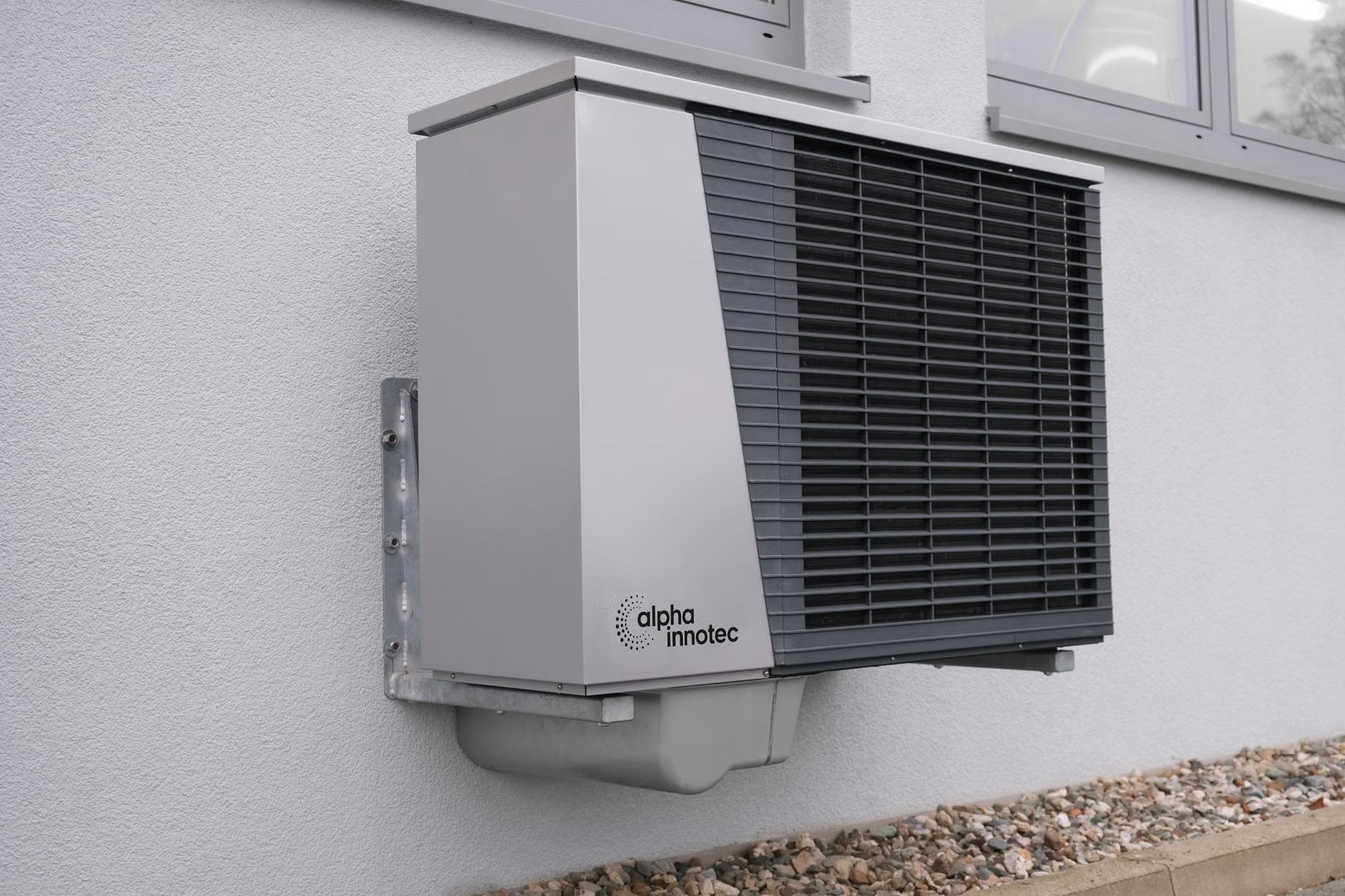
Why now? Because the infrastructure for renewable heating, like heat pumps and geothermal systems, has reached a level of maturity where governments feel comfortable pushing people away from gas lines. They are essentially using the tax to make the “old way” of heating your house financially unattractive.
The Math of Your Heating Bill
To understand the impact, we need to look at how your home is currently heated. Not all fuels are created equal in the eyes of a carbon tax. Natural gas, while cheaper than oil, still releases CO2. Heating oil is even more carbon-intensive, meaning it will likely be hit harder by new regulations.
Let’s break down the factors that determine your exposure to these 2026 changes:
| Fuel Type | Carbon Intensity | 2026 Risk Level |
|---|---|---|
| Heating Oil | High | High |
| Natural Gas | Moderate | Moderate/High |
| Propane | Moderate | Moderate |
| Electricity (Renewable) | Low | Low |
If you are currently on an oil-based furnace, you are in the “high risk” category. The cost of heating oil is directly tied to global crude prices, and when you layer on a carbon tax, the price at the pump (or in your tank) gets hit twice. Natural gas users are in a slightly better position, but as the grid continues to decarbonize, gas prices are expected to rise as utilities pass on their own carbon compliance costs to consumers.

Is It Time to Ditch the Gas Furnace?
The most common question I get is: “Should I rip out my furnace tomorrow?” The answer is almost always no. Panic-buying a new heating system is a classic financial mistake. The cost of a new heat pump or a high-efficiency boiler is significant, and you need to calculate the “payback period.”
A payback period is the amount of time it takes for the energy savings of a new, efficient system to cover the cost of the unit itself. If a new system costs $8,000, but only saves you $400 a year in energy costs, it’s going to take 20 years to pay for itself. In that case, it’s better to keep your current unit running while optimizing your home’s efficiency.
The “Envelope” First Approach
Before you even think about buying a new furnace, look at your home’s “envelope.” This includes your attic insulation, window seals, and door weatherstripping. Most of the heat you pay for is literally leaking out of your house. By spending $500 on sealing drafts and adding insulation, you might reduce your heating demand by 15-20%. That is a much better return on investment than a $10,000 furnace upgrade.
The Role of Smart Tech
If you haven’t installed a smart thermostat yet, 2026 is the year to do it. These devices don’t just “save energy”—they learn your family’s schedule. If the kids are at school and you’re at work, there is no reason to heat an empty house to 72 degrees. Smart thermostats allow you to create “setback” temperatures that automatically reduce consumption during the hours you aren’t home, which can shave a significant percentage off your carbon footprint and your bill.
What to Watch for in 2026 Policy
Beyond the direct tax on your bill, keep an eye on government incentives. When governments introduce a carbon tax, they often simultaneously introduce “rebate” or “grant” programs to help families transition. These are designed to offset the economic pain of the tax.
In many regions, you can find:
- Tax Credits: Direct reductions in the income tax you owe for installing high-efficiency equipment.
- Low-Interest Loans: Government-backed financing for home energy retrofits.
- Direct Rebates: Cash back for switching from oil or gas to a heat pump.
The trick is to be ready. These programs often have limited funding. If you wait until the winter of 2026 to apply, the funds might already be exhausted. Check your local energy authority’s website now to see what will be available in the coming fiscal year.
A Pragmatic Roadmap for Your Household
Let’s put together a realistic, step-by-step strategy for the next 18 months. You don’t need to be an engineer to make your home more resilient to these changes.
Phase 1: The Audit (Now)
Take one Saturday to do a “draft audit.” Walk around your house with a lit incense stick or a damp hand on a windy day. Check your window frames, baseboards, and electrical outlets. If you feel a breeze, you are losing money. Seal these gaps with caulk or foam. This is the cheapest, most effective way to fight the rising cost of heating.
Phase 2: The Maintenance (Next 6 Months)
If you are using a furnace, ensure your air filters are changed regularly. A clogged filter makes your motor work harder, burning more gas or electricity to move the same amount of heat. It sounds basic, but many people forget this simple maintenance task. It’s like trying to breathe through a straw while running a marathon.
Phase 3: The Long-Term Plan (2026 and beyond)
Start a “replacement fund.” Even if your furnace is working fine now, assume it will need replacing in the next 5-10 years. By setting aside a small amount each month now, you avoid the panic-buy scenario when it eventually breaks. When the time comes to replace it, you will have the cash on hand to choose a high-efficiency system, which will be the standard by that time.
Addressing Common Misconceptions
There is a lot of noise surrounding carbon pricing. Let’s clear up a few things that often confuse homeowners in their 30s and 40s.
“The carbon tax will make my home unlivable.”
This is an exaggeration. The tax is intended to influence behavior, not to make home heating unaffordable. While costs will rise, they are designed to be manageable if you take proactive steps to improve your home’s efficiency. Most governments also include “revenue-neutral” provisions, where the money collected from the tax is redistributed to households through rebates, though the timing of these rebates can vary.
“I have to buy a heat pump immediately.”
Not necessarily. Heat pumps are fantastic, especially in moderate climates, but they aren’t the only solution. High-efficiency gas boilers are also improving. The key is to look at the “Coefficient of Performance” (COP) of any new system you buy. A higher COP means more heat for every unit of energy consumed. Don’t be pressured by aggressive sales tactics; do your own research on what works for your local climate.
“I can’t afford to change anything.”
This is where the “envelope” approach is vital. You don’t need a new furnace to save money. You can save 30% on your bill simply by insulating your attic properly and sealing air leaks. These are low-cost, high-impact projects that you can do yourself over a weekend.
Final Thoughts and Implications
The 2026 carbon tax shifts are a reality of our current economic and environmental landscape. While it can feel like another burden on an already stretched family budget, it is also a signal to take control of your home’s energy profile. By viewing your home as a system—where insulation, windows, and heating equipment all play a role—you can minimize the impact of these changes.
Don’t be overwhelmed by the “big picture” of climate policy. Focus on the small, tangible steps within your four walls. A warmer, more efficient home is not just a way to save money on taxes; it’s a more comfortable place to raise a family. Start with the drafts, keep up with the maintenance, and plan for the future. You have more control than you think.
Frequently Asked Questions
Q: Will the 2026 carbon tax apply to electricity as well?
A: It depends on how your local electricity is generated. If your grid relies heavily on coal or gas, the tax will likely increase your electricity rates. However, if your region uses hydro, wind, or solar, the impact on electricity will be significantly lower, making electric heating (like heat pumps) an even more attractive option.
Q: How do I know if my house is “leaky”?
A: The most professional way is to hire a certified energy auditor to perform a “blower door test.” They depressurize your home and measure exactly how much air is leaking out. If that’s not in the budget, perform a manual walkthrough on a windy day, checking for drafts near windows, doors, and electrical outlets.
Q: Is it better to wait for government rebates to increase?
A: While rebates may fluctuate, waiting for a “perfect” moment is risky. If your heating system is failing, you need a solution now. Check your government’s official energy efficiency portal for current active programs. Most programs are “first come, first served,” so checking periodically is better than waiting for a major announcement.
For further reading and to track policy changes in your specific region, please consult the official resources provided by your national energy department or local utility board. Always verify program eligibility before committing to any home improvement contracts.
Official resources: International Energy Agency (IEA) – Energy Policy Reviews | World Bank Carbon Pricing Dashboard