Key Takeaways for Your Evolving Home
- Modular furniture is an investment in longevity: By purchasing pieces that can be reconfigured or expanded, you avoid the cost and waste of replacing furniture as your family’s needs shift from toddler-proofing to remote work or guest hosting.
- Prioritize “System” over “Statement”: When buying, look for manufacturers that offer open-stock systems (where you can buy individual modules years later) rather than limited-run “collections” that disappear from the market.
- Measure for the “Max” configuration: Always verify if your room can handle the largest possible expansion of your modular piece before purchasing, rather than just measuring for its current compact state.
If you are in your 30s or 40s, your home is likely a battlefield of competing priorities. You are managing the transition from “single-person” or “couple” living to “family-centric” spaces, all while trying to maintain a sense of order. The traditional approach to furniture—buying a fixed sofa, a rigid dining set, or a static bookshelf—often fails when life changes. You find yourself selling heavy pieces on secondary markets at a loss because they no longer fit the room or the life stage.
Modular furniture is not just a design trend; it is a logistical solution to the unpredictability of modern life. By utilizing pieces that can be broken down, expanded, or repurposed, you transition from being a consumer who buys and discards, to a manager of a flexible home environment.
Why Static Furniture Is Costing You More Than You Think
The “sunk cost” of furniture is rarely just the price tag. It is the cost of moving it, the space it occupies when it isn’t serving a purpose, and the inevitable depreciation when you decide it no longer works for your floor plan. When you buy a fixed-size, three-piece sectional, you are locked into that footprint. If you move to a new home with a different layout, or if you need to clear space for a play area, that sofa becomes an anchor—literally and figuratively.
Modular systems, by contrast, are designed for the “Life-Cycle Shift.” Consider the following table, which illustrates the common transitions that force furniture replacement:
| Life Stage | Primary Need | Modular Solution | Fixed Furniture Outcome |
|---|---|---|---|
| Early Parenting | Floor space for play | Remove modular cushions/sections | Struggle to fit playpen around sofa |
| School-Age | Study/Storage space | Add shelf modules/desk attachments | Buy new, separate desk units |
| Guest Hosting | Extra seating/sleeping | Reconfigure modules into bed | Buy a dedicated guest bed (unused 90% of time) |
The financial benefit here is clear: you are not buying new furniture; you are simply re-purchasing or rearranging modules. This maintains the aesthetic consistency of your home while adapting to immediate, practical requirements.

The Anatomy of a Quality Modular System
Not all “modular” furniture is built for the long haul. A common mistake is assuming that any piece with multiple parts is modular. True modularity relies on a standardized connection system. When shopping, you need to look past the fabric or the finish and examine the “chassis” of the piece.
The Connection Mechanism: Look for heavy-duty steel brackets or interlocking teeth. If the connection relies on plastic clips or fragile wooden dowels, it will not survive more than two or three reconfigurations. These parts are often the first to fail, rendering the “modular” aspect useless.
Standardized Dimensions: A truly modular system should have a base unit dimension (e.g., 60cm x 60cm). This allows you to mix and match components from different “series” within the same brand. If a manufacturer changes their dimensions every season, you are not buying a system; you are buying a series of one-off products.
The “Open-Stock” Guarantee: Before you commit to a major piece, check if the manufacturer sells individual components separately. If you cannot buy a single armrest or a single shelf module three years from now, the system is essentially closed. An open-stock policy is the single best indicator of a high-quality modular product.
Designing for the “Shift”: A Step-by-Step Approach
When you start integrating modularity into your home, you shouldn’t try to replace everything at once. This is a common trap that leads to “design fatigue” and unnecessary spending. Instead, focus on the high-impact areas where your needs change most frequently: the living room, the home office, and storage zones.
Step 1: Assessing the “Traffic Flow”
Before buying modular pieces, map out your room’s traffic flow. In your 30s and 40s, this is critical because your home needs to accommodate children, pets, and work. Use painter’s tape on the floor to mark the “maximum” footprint of a modular sofa or shelving unit. If the unit, when fully expanded, blocks a walkway or a door, it is not the right fit, regardless of how flexible it is.
Step 2: Starting with the “Core”
Start with a core module—a corner piece or a primary shelf unit. Do not buy the full set if you don’t need it. Many people buy a massive L-shaped sofa because they think it “looks right” in the store. Start with two or three modules. If you find, after six months, that you need more seating, you can add. This prevents over-furnishing, which is the quickest way to make a home feel small.
Step 3: Managing the “Joinery”
Modular pieces often leave small gaps between units. This is normal, but it can be annoying if you have small children (the “lost toy” phenomenon). Look for modular systems that include “ganging brackets” that pull the units tightly together. If the system you love doesn’t have them, you can often purchase third-party furniture connectors, but it is always better to have them built-in.
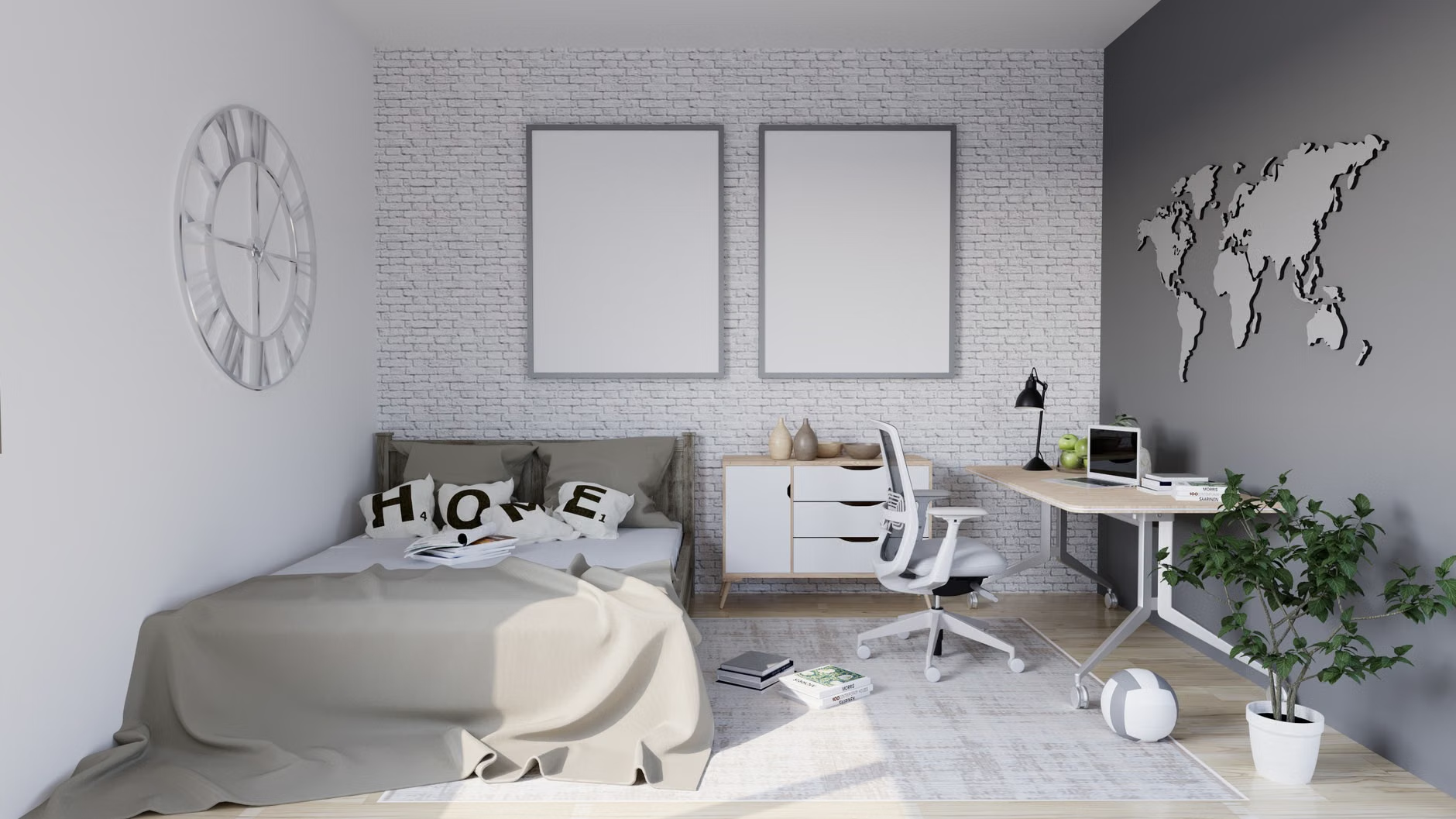
Common Misconceptions and Hidden Costs
There is a prevailing myth that modular furniture is always “cheaper.” In reality, high-quality modular systems often carry a premium price tag compared to mass-produced, fixed furniture. You are paying for the engineering that allows for disassembly and reassembly, as well as the long-term support of the product line.
The “Hidden Cost” of Maintenance: Because modular pieces have more joints and seams, they require more maintenance. You need to periodically check the bolts and brackets. If a child jumps on a modular sofa and a bracket loosens, the entire unit can become unstable. Treat your modular furniture like a mechanical device—it needs a “service” (a quick tightening of bolts) every six to twelve months.
The “Aesthetic Trap”: Some modular designs look overly industrial because of the visible seams and connection points. If you prefer a seamless, traditional look, you may find that modular furniture feels too “utilitarian.” The solution is to use “slipcovers” or large throws that span across multiple modules, visually unifying them while keeping the structural flexibility underneath.
Real-Life Scenario: The “Living-Office” Transition
Let’s look at a hypothetical scenario common for a professional in their 40s. You have a spare room that is currently a home office. You need it to be a guest room when family visits, but you don’t want a permanent, bulky guest bed taking up space. A modular wall-system that includes a drop-down desk and a murphy-style bed module is the answer.
In this setup, the furniture is not just “flexible”; it is “active.” During the week, the desk is deployed. When guests arrive, you fold the desk away (or move it to a different module) and lower the bed. This is far more efficient than owning a desk and a guest bed separately. The cost of a high-quality modular wall system might be $3,000, but it replaces two pieces of furniture that would cost $1,500 each and consume twice the floor space.
Choosing the Right Material for Durability
Since you are likely reconfiguring your furniture, the materials need to withstand the stress of movement. Avoid cheap particleboard for modular systems. When you unscrew and re-screw bolts into particleboard, the holes strip out, and the structural integrity is permanently compromised.
Solid Wood or High-Density Metal: Look for modular systems made from solid wood, plywood with high-quality veneer, or powder-coated steel. These materials handle the “wear and tear” of reassembly much better. If you have children, consider performance fabrics for modular sofas—these are treated to be stain-resistant and are often more durable than standard weaves, which is vital when you have more seams and crevices to clean.
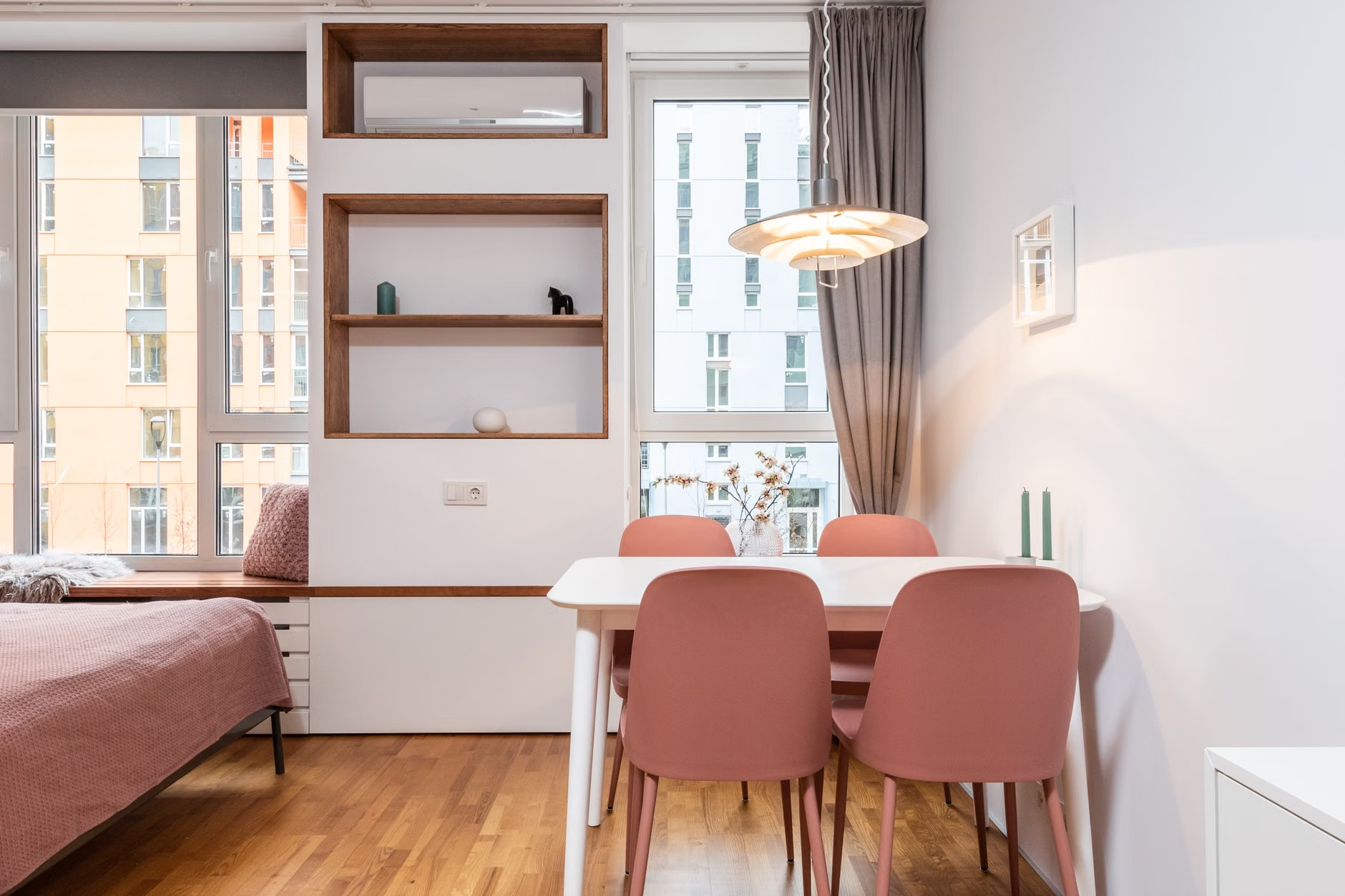
Strategic Placement and Lighting
Modularity also impacts lighting. If your modular sofa changes position, your floor lamp might suddenly be in the wrong place. Consider “zoning” your room with area rugs. A large area rug can define the “modular zone.” As long as the furniture stays within the rug’s boundaries, the room will look intentional even when the configuration changes. This is a subtle design trick that keeps a living room from looking like a chaotic playroom when you decide to shift things around.
When Should You Avoid Modular Furniture?
It is important to be realistic: modularity is not always the answer. If you have a room with very specific, irregular dimensions (like a circular bay window or a room with multiple non-parallel walls), modular furniture can actually be a hindrance. You might end up with “dead space” that the modular system cannot fill, and the gaps will look awkward. In these cases, custom-built, fixed furniture is often the better investment. Do not force a modular system into a space that doesn’t support its geometric constraints.
The Long-Term Value of Modularity
When you reach your 50s and your children have left home, your modular furniture can transition again. That massive family-sized sofa can be broken down into two smaller loveseats for separate rooms. The modular bookshelf can be split into smaller units for a home office or a reading nook. You are not just buying a product; you are buying a long-term asset that evolves with your lifestyle. This is the definition of “sustainable living” in a practical, everyday sense.
If you are currently choosing between a cheap, fixed piece and a modular system, consider the “Cost-Per-Use” over a five-year period. A $500 fixed sofa that you hate after two years is expensive. A $1,200 modular sofa that you can adapt for ten years is, in fact, an incredible bargain. Take the time to research the manufacturer’s history—are they a company that has been around for decades? Do they have a track record of supporting their older product lines? These are the questions that separate a good investment from a regrettable impulse buy.
Practical Next Steps for Your Home
If you are ready to start, do not rush. Spend one week observing how your family uses your current space. Where do people sit? Where do they leave their things? What areas feel “cluttered” because the furniture is too big or in the wrong place? Use these observations to define exactly what you need from a modular system. Then, look for brands that offer “sample kits” or “fabric swatches” so you can test the quality before committing. Finally, check the return policy—because modular systems are complex, you want to ensure you can return them if the connection system doesn’t meet your expectations once you see it in your home.
Remember, the goal is not to have the most “flexible” home, but to have a home that supports the life you are actually living. Modularity is simply the tool that allows you to do that with less stress and less waste.
Frequently Asked Questions
1. Is modular furniture harder to assemble than standard furniture?
Generally, yes. Because modular furniture requires precise alignment to ensure that multiple pieces fit together seamlessly, the assembly process can be more time-consuming. You are often dealing with more hardware, such as ganging brackets and interlocking pins. However, once assembled, the system is designed to be “re-configured” rather than fully disassembled, so you only perform the heavy assembly once.
2. Can I mix and match different brands of modular furniture?
It is strongly discouraged. Even if two brands claim to have the same “standard” dimensions, the connection mechanisms (the way the pieces lock together) will almost certainly differ. Trying to force a connection between two different brands will usually result in damage to the furniture or an unstable configuration. Always stick to one manufacturer’s system to ensure compatibility.
3. How do I clean the gaps between modular sofa sections?
The gaps between modules can accumulate dust and crumbs. The best practice is to use a vacuum with a crevice tool every time you clean your floors. If you are reconfiguring your sofa, take the opportunity to pull the modules apart completely and deep-clean the sides of the cushions. If you have small children, consider placing a “sofa gap filler” or a thin runner over the seams to prevent debris from falling into the joints.
For further reading on furniture safety and quality standards, you may find the U.S. Consumer Product Safety Commission (CPSC) guidelines helpful for understanding what to look for regarding structural stability and material safety in home furnishings.