The most effective way to reconnect with your neighborhood—and keep the kids entertained without a screen—is to transform your weekend walk into a hyper-local history scavenger hunt.
- Start with the “Why”: Focus on one specific theme (e.g., old architecture, former trade routes, or local legends) to keep the walk structured.
- Use Digital Archives: Leverage free public databases and historical society maps to find the “hidden” stories behind familiar street corners.
- Gamification is Essential: Give children specific tasks, like finding the oldest date on a building or spotting remnants of old signage.
We’ve all been there: it’s Saturday morning, the coffee is cooling, and the “what should we do today” conversation is hovering over the breakfast table. If you’re in your 30s or 40s, you likely have a limited window of time before sports practice, nap times, or the inevitable household chores demand your attention. You don’t have the bandwidth for a three-hour drive to a major tourist attraction, but you also want to avoid another afternoon of aimless wandering at the local mall.
This is where the concept of the “Hyper-Local History Walk” comes in. It’s not about becoming a professional historian; it’s about shifting your perspective on the spaces you inhabit every day. By treating your own zip code like a destination, you save time, save money, and build a deeper sense of belonging in your community.
Why Your Neighborhood Is More Interesting Than You Think
Most of us walk past landmarks every day without a second glance. That generic brick wall? It might have been a textile mill in the 1920s. The oddly shaped park at the end of the street? It was likely a creek bed or a rail spur before urban development took over. When you commit to a history walk, you are essentially peeling back the layers of your environment.
The beauty of this approach is its accessibility. You don’t need a guide, a tour bus, or a plane ticket. You need a little curiosity and a bit of “detective work” beforehand. This process shifts the weekend from a series of chores into an investigative project. It turns a mundane walk into an activity that requires engagement, observation, and critical thinking—all of which are great skills to model for your children.

To get started, you don’t need a doctorate in archaeology. You just need a systematic way to gather information. Here is how you can build a framework for your own hyper-local exploration.
Building Your Research Toolkit
Before you step out the door, spend 30 minutes on Friday evening doing some “pre-flight” research. This isn’t about memorizing dates; it’s about identifying three to five “anchor points” for your walk. These are places where you can stop and tell a story.
| Resource Type | How to Use It |
|---|---|
| Local Historical Society | Check their website for archived walking tour PDFs or “did you know” articles. |
| Google Earth (Historical View) | Use the time-slider feature to see how your neighborhood looked 10, 20, or 30 years ago. |
| Library Digital Archives | Search for your street name or neighborhood name to find old photos. |
How to Keep the Kids Engaged (Without the Whining)
If you’re bringing children along, the key is to move away from “lecture mode.” If you stand there reading a long plaque about the founding of the city in 1894, you will lose them in about 45 seconds. Instead, turn the walk into a game of “detective.”
Give them a mission. For example: “I need you to find the oldest date carved into any building on this block.” Or, “Look for ‘ghost signs’—faded advertisements painted on brick walls that are no longer in business.” These small tasks keep them actively looking at their surroundings rather than staring at their feet or asking for snacks.

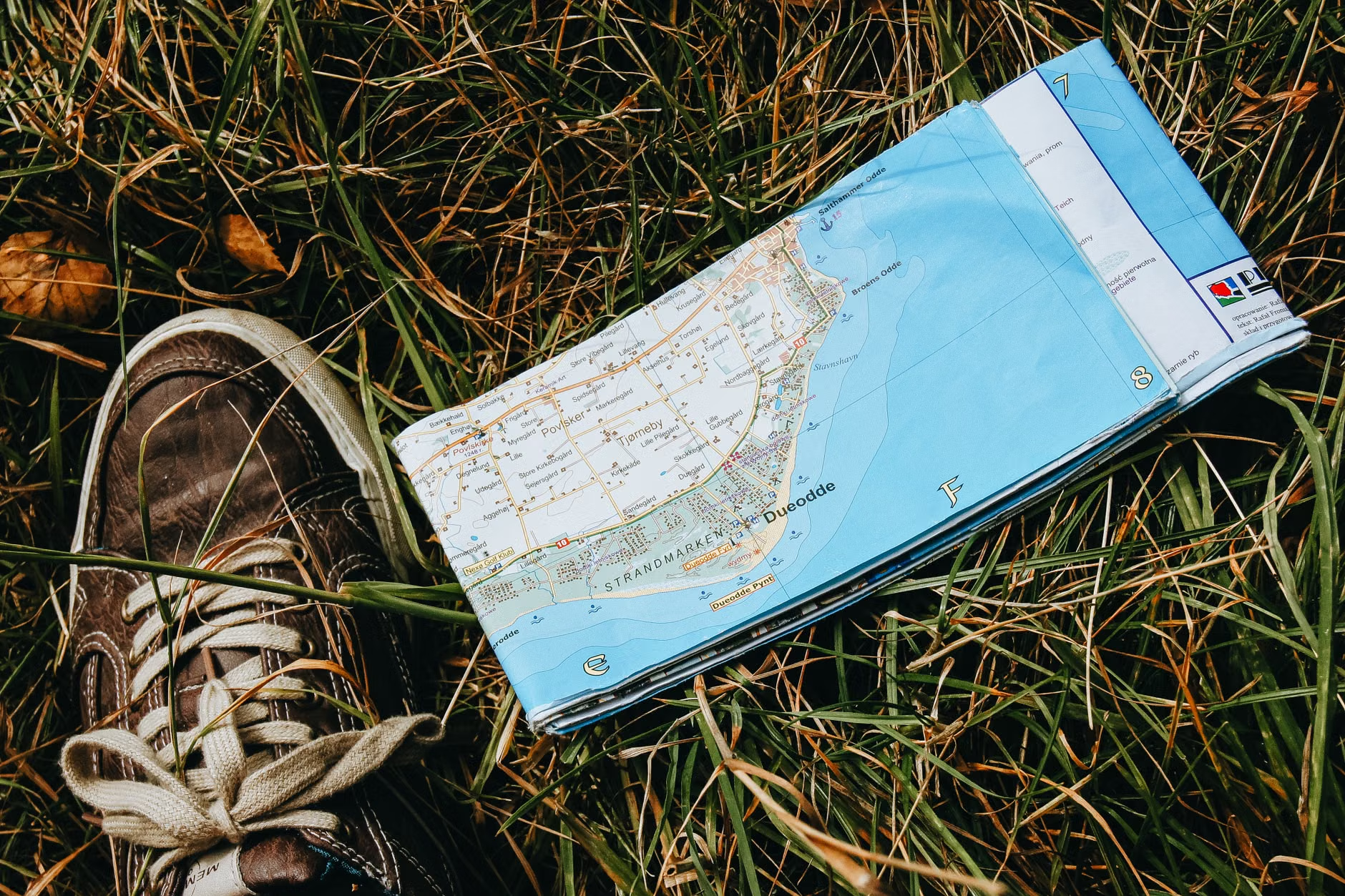
Another tactic is to print out a map of your neighborhood from 50 years ago (if available). Let them hold the map and compare it to the current street layout. Ask them: “Why do you think this road curves here?” or “Does this look like it used to be a forest?” This type of inquiry-based learning is far more effective than just reciting facts.
The Art of the “Ghost Sign” Hunt
One of the most rewarding aspects of a history walk is spotting “ghost signs.” These are remnants of old advertisements that were painted directly onto brick buildings. They were meant to be temporary, but because they were painted with lead-based paints or were protected from the elements, they have survived for decades.
Hunting for these signs teaches children (and adults) about how commerce has changed. You might find a sign for a pharmacy that is now a coffee shop, or a sign for a coal delivery service that is now a yoga studio. This creates a natural conversation starter about how our lives and technologies have evolved over time.
Overcoming Common Challenges
The biggest challenge to a successful history walk is the “uninspiring landscape” trap. Some neighborhoods are purely residential and lack obvious historical markers. In these cases, you have to dig deeper. Look for the “natural history” instead. Look at the trees, the topography, or the way the streets are laid out. Is the neighborhood on a hill? Why? Was it a farm? Who owned it?
If you can’t find a plaque, look for the architecture. Many neighborhoods have a mix of styles—Craftsman, Victorian, Mid-century Modern. Learning to identify these styles can turn a walk into an architectural tour. It’s a great way to build visual literacy.
Another potential pitfall is the weather or the “I’m tired” factor. Keep the walks short—30 to 45 minutes is plenty. The goal is not to exhaust everyone; it’s to build a habit of curiosity. If you make it a chore, no one will want to do it next week. Keep it light, keep it moving, and always plan for a treat at the end, like a visit to a local bakery or a park.
Structuring Your Weekend Routine
To make this a sustainable weekend practice, integrate it into your existing rhythm. Maybe it’s the “Saturday Morning History Hour” before the afternoon sports rush. Or perhaps it’s a “Sunday Evening Stroll” to wind down before the school week starts. The key is consistency.
When you start, don’t try to cover the whole city. Start with a three-block radius. Master the history of that small area before moving on. By the time you’ve explored your immediate surroundings, you’ll start to see patterns. You’ll understand why the neighborhood grew the way it did, and you’ll feel a greater sense of connection to the place you call home.
The Ethical Side of Local History
As you explore, it’s worth noting that history is rarely one-sided. When you look into the past of your neighborhood, you might uncover stories that are difficult—such as the displacement of original residents or the industrial pollution of local waterways. These are important conversations to have, even with children. They help us understand that our communities are living, breathing entities with complex, evolving stories.
Use these moments to discuss how the community has changed and how we, as current residents, have a responsibility to be good stewards of the neighborhood. It turns a simple walk into a lesson on citizenship and community responsibility.
Final Thoughts and Getting Started
The hyper-local history walk is more than just a way to kill time. It is a tool for building a deeper, more intentional life. By choosing to look closely at the world around you, you stop being a passive observer and start being an active participant in your local history.
Remember, the goal is not to be a perfect historian. The goal is to be a curious neighbor. Start this weekend. Pick a street, find one old thing, and ask yourself: “How did this get here?” You might be surprised at what you find.
Frequently Asked Questions
Q: What if my neighborhood is brand new and has no history?
A: Every place has a history. If the buildings are new, look at the land itself. Was it a park, a farm, or a forest? Use historical satellite imagery to see what was there 20, 50, or 100 years ago. The history of the land is just as important as the history of the buildings.
Q: How do I make this fun for a toddler versus a pre-teen?
A: For toddlers, focus on sensory details—textures of walls, shapes of windows, or spotting colors. For pre-teens, give them more responsibility, like navigating using a map, taking photos for a “history blog” you create together, or interviewing a long-term neighbor.
Q: Are there apps that can help with this?
A: Yes. Many local historical societies have apps or mobile-friendly websites with walking tours. Additionally, apps like HistoryPin allow you to see historical photos of the exact location where you are standing, which is a fantastic way to visualize the past.
Useful Resources:
– Library of Congress Map Collections
– Google Earth Historical Imagery
– HistoryPin: Explore Local History
Note: Always respect private property and follow local ordinances when exploring. Historical exploration should be done safely and with consideration for those who live and work in the areas you visit.
Disclaimer: This article is for informational purposes and is intended to encourage community engagement. SoCooly does not claim to be an expert in local history or urban planning; please verify local historical facts through official municipal archives or verified historical societies.
Enjoy your walk. There is a whole world waiting right outside your front door, and it’s much older—and more interesting—than you think.