The secret to a successful family board game night isn’t finding the most complex, award-winning strategy game, but rather lowering the stakes so that the focus shifts from winning at all costs to simply being in the same room together.
Key Takeaways
- Lower the stakes: Focus on cooperation and participation rather than competition to prevent meltdowns.
- Curate the library: Choose games that match the age, attention span, and mood of your family members.
- Create a ritual: Keep the environment relaxed with snacks and a “no-pressure” atmosphere to ensure long-term engagement.
If you are a parent in your 30s or 40s, you know the drill. You spend the entire week managing schedules, work deadlines, school projects, and the endless mental load of household maintenance. By the time Friday night or Saturday afternoon rolls around, the idea of “quality family time” often feels like just another item on a to-do list. When that time is structured around an intense, rule-heavy board game, it often ends in tears, arguments over who cheated, or someone storming off because they didn’t win.
The “low-stakes” approach to game night is a shift in philosophy. It is about removing the pressure to “achieve” or “learn” during your downtime. It is about creating a space where the game is a background activity, not the main event that dictates the emotional weather of your household.
Why Your Current Game Night Might Be Failing
It is easy to blame the kids when a game night goes sideways, but often, the issue lies in the game selection and the environment. We tend to pick games that we think are “educational” or “classic,” forgetting that if a game takes 20 minutes to set up and 45 minutes to explain, we have already lost the attention of anyone under the age of 12—and probably half the adults, too.
The primary friction point is usually cognitive load. If you are exhausted from a week of decision-making, the last thing you want is a game that requires deep strategic planning. When we are tired, our patience for complex rules diminishes. This leads to the “Rules Lawyer” dynamic, where one person is constantly policing the game, while others check out. This is the opposite of connection.
Furthermore, we often treat board games as a zero-sum game: someone has to win, and someone has to lose. For young children, or even adults who are just plain tired, losing can feel like a personal rejection. By shifting to games that emphasize luck, cooperation, or simple mechanics, you neutralize the sting of defeat.

The Architecture of a Low-Stakes Night
A low-stakes game night is defined by its flexibility. It is not a rigid event that must last for three hours. It is an invitation. Here is how you can structure your environment to minimize friction:
1. Keep the Setup Minimal
If the game requires a massive table, complex card sorting, or a manual that feels like a legal document, save it for when you are playing with friends after the kids are asleep. For family time, choose games that can be pulled out of a bag and started in under three minutes.
2. Embrace the “Drop-In” Method
In a low-stakes environment, it is okay if someone wanders off to grab a snack, or if a younger child decides they are done halfway through. If the game is designed to be quick, this won’t ruin the experience for everyone else. Avoid games that require all players to be present for the entire duration to function.
3. The Role of Snacks
Never underestimate the power of a “game night snack.” It shifts the focus from the game to the shared experience of eating. If you have a bowl of popcorn or some fruit slices on the table, the game becomes the secondary activity. This naturally lowers the intensity of the competition.
Selecting the Right Games
Not all games are created equal. When building your “low-stakes” library, look for specific mechanics that favor fun over frustration. Here is a breakdown of what to look for and what to avoid.
| Feature | Low-Stakes (Recommended) | High-Stakes (Avoid) |
|---|---|---|
| Goal | Cooperative or simple racing | Elimination or complex strategy |
| Duration | 10–20 minutes | 60+ minutes |
| Rules | Intuitive, visual | Heavy text, complex math |
| Social Dynamic | Shared laughter | Aggressive negotiation |
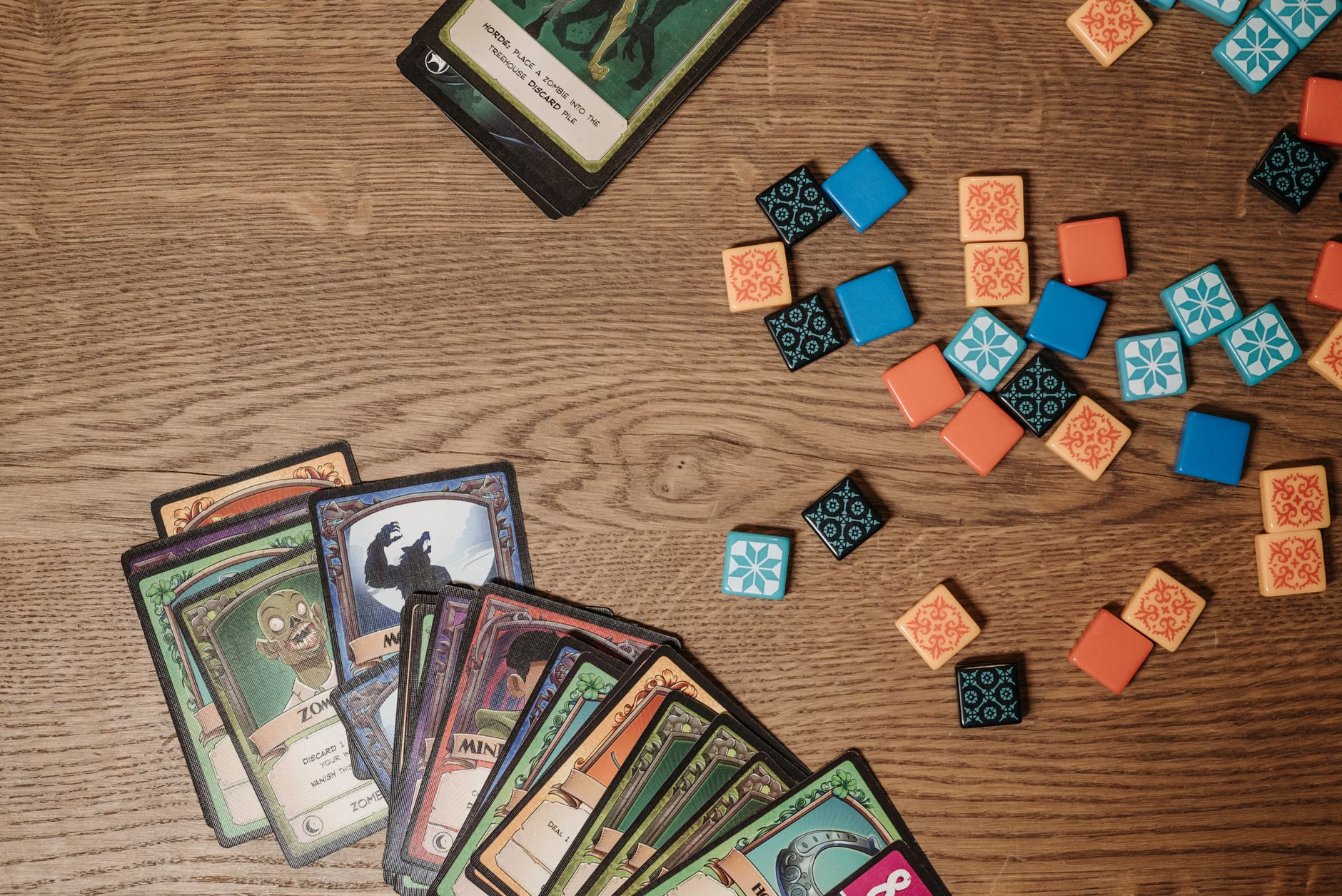
Look for games that involve “push your luck” mechanics. These games, like Can’t Stop or Zombie Dice, are inherently unpredictable. Because the outcome is largely determined by the roll of a die or the draw of a card, it is much harder for anyone to claim they were “better” at the game. The loss feels like bad luck, not a lack of skill, which is much easier for everyone to digest.
Managing the “Win/Loss” Emotional Fallout
Even in low-stakes games, some people are naturally competitive. If you have a family member who takes losing very hard, you need to employ a few psychological strategies to keep the peace.
The “Team” Pivot
If you find yourself playing a competitive game that is getting too intense, pivot to a cooperative variant. Many games that are designed as competitive can be played as a team. For example, if you are playing a card game, suggest playing with open hands so everyone can help each other reach a collective goal.
Normalize Losing
As a parent, you have the power to model how to lose. If you lose, make a lighthearted comment about how the dice were against you, or congratulate the winner with genuine enthusiasm. When children see adults handling defeat with grace, it lowers the pressure they feel to win. Avoid “letting” them win too obviously; children are surprisingly perceptive and often feel insulted when they realize you are playing down to them. Instead, play fairly but keep the mood light.
The “House Rule” Advantage
Don’t be afraid to change the rules. If a specific rule in a game causes an argument every single time you play, throw it out. Create a “House Rule” that simplifies that part of the game. Board games are tools for connection, not sacred texts. If a rule gets in the way of your family having a good time, it is a bad rule for your specific family.
Creating a Sustainable Routine
The reason most families stop playing games is that they try to make it an “event.” They try to do it every Friday, they buy expensive games, and they force everyone to participate. That is a recipe for burnout. Instead, treat it like an opportunistic activity.
If it is a rainy Sunday afternoon and everyone is bored, that is your window. If it is a Friday night and everyone is exhausted from a long week, don’t force a game night just because you think you “should.” The best family moments are often the ones that happen spontaneously.
Keep your games in a visible, accessible location. If the games are hidden away in a closet, they are “out of sight, out of mind.” If they are on a shelf in the living room, they are part of the landscape of your home. A worn-out box is a sign of a well-loved game, not a sign of clutter.

Common Pitfalls to Avoid
Even with the best intentions, it is easy to fall into traps that turn a fun night into a chore. Here are a few things to watch out for:
- The “Teach” Trap: Avoid picking games that require a 20-minute explanation. If you have to read the manual for more than five minutes, it is too complex for a casual night.
- The “Size” Trap: Avoid games with too many small pieces that get lost under the couch. Losing a critical component can ruin a game and lead to frustration.
- The “Age-Gap” Trap: If your children have a wide age gap, look for games that rely on dexterity or pattern recognition rather than reading or complex arithmetic. This levels the playing field naturally.
- The “Screen” Distraction: Keep the phones away. If you are checking emails or scrolling social media while others are taking their turns, you are sending a signal that the game—and the people playing it—aren’t worth your full attention.
The Role of Cooperation in Modern Gaming
In the last decade, there has been a surge in popularity for cooperative board games. This is a massive boon for parents. In these games, players are not playing against each other; they are playing against the game itself. You either all win, or you all lose.
This dynamic completely changes the social pressure. When the game is the enemy, the conversation shifts from “I’m going to block you” to “What do you think we should do next?” This builds communication skills and encourages children to think critically about their decisions in a safe, supportive environment. It is the ultimate low-stakes scenario because the “defeat” is shared by the entire group, which actually brings you closer together.
Final Considerations for Your Next Night
Remember that the goal is not to become a competitive board game family. The goal is to spend time together without the friction of daily life interfering. If you play for ten minutes and everyone is laughing, you have succeeded. You do not need to finish the game. You do not need to keep score. You do not need to be an expert.
If you keep the stakes low, you keep the doors open. A family that plays together is a family that develops a shared language of inside jokes, strategies, and memories. Even if those memories are just about that one time the cat knocked all the pieces off the table, those are the moments that build the foundation of your family life.
Start small. Next time you see a gap in your schedule, don’t reach for the remote. Reach for a simple deck of cards or a fast-paced board game. Keep it light, keep it simple, and most importantly, keep it fun.
Frequently Asked Questions
1. What if my children have very different attention spans?
Focus on “filler” games—games that take less than 15 minutes to play. If one child loses interest, the game is almost over anyway, meaning they don’t feel like they are “quitting” and the others aren’t left waiting for a long game to finish. You can also allow the younger child to partner with an adult so they feel included without the pressure of managing the full game mechanics.
2. How do I handle a child who gets upset when they lose?
Model the behavior you want to see. When you lose, express your disappointment briefly but move on quickly to the next turn or a new game. Avoid making a big deal out of winning, and praise the effort and the “fun” of the game rather than the outcome. If the meltdowns are frequent, stick exclusively to cooperative games where the family wins or loses as a single unit.
3. Are board games actually better than video games for family time?
Both have their place, but board games offer a unique tactile experience that allows for face-to-face interaction that is often lost in digital environments. Board games force you to look at each other, read body language, and engage in conversation, which is harder to do when everyone is focused on a screen. They are generally more conducive to the “low-stakes” social atmosphere you are trying to build.
For more information on family-friendly game mechanics and reviews of cooperative games, you can visit resources like BoardGameGeek, which provides extensive databases and community forums for finding the right fit for your family.