The most effective bedroom for sensory regulation is one that reduces cognitive load by minimizing visual clutter, controlling ambient noise, and offering precise lighting options. For adults in their 30s and 40s juggling careers, parenting, and the general “noise” of modern life, the bedroom should function as a sensory reset button rather than just a place to sleep.
- Visual noise reduction: Hidden storage is not just for aesthetics; it prevents the brain from processing unnecessary environmental stimuli during rest.
- Sensory modulation tools: Adjustable lighting (Kelvin temperature) and sound-masking technology are essential for transitioning from a high-stimulation day to a low-stimulation night.
- Texture over color: Prioritize tactile comfort through weighted fabrics and natural materials rather than relying on bright, stimulating decor.
If you have ever felt like your bedroom is “too much” at the end of a long day, you aren’t alone. Many of us treat our bedrooms as dumping grounds for clothes, laundry, and unfinished tasks. When you are neurodivergent—or simply someone with a high sensitivity to environmental stimuli—that physical clutter translates directly into mental clutter. Let’s look at how to strip back the chaos and rebuild a space designed for your nervous system.
Why Your Bedroom Environment Directly Impacts Your Executive Function
The concept of a “neuro-inclusive” bedroom isn’t about following a design trend on social media; it’s about acknowledging that our brains do not “turn off” just because we walk into a room. For adults in their 30s and 40s, the prefrontal cortex—the part of the brain responsible for planning, focus, and emotional regulation—is often exhausted by mid-evening. When your bedroom is filled with visual reminders of what you haven’t finished (the pile of laundry, the unopened mail, the scattered books), your brain continues to engage in “task-switching,” even if you are trying to sleep.
Neuro-inclusive design minimizes these “open loops.” An open loop is a visual cue that suggests an incomplete task. By removing these triggers, you lower the baseline level of cortisol in your system. This isn’t just “neatness”; it is a form of environmental therapy. Research into sensory processing suggests that for individuals who are easily overstimulated, a high-contrast or highly cluttered environment keeps the sympathetic nervous system (our “fight or flight” mode) in a state of low-level activation. By shifting to a low-contrast, organized space, you are signaling to your parasympathetic nervous system that it is safe to shift into “rest and digest” mode.
Strategic Lighting: Controlling Your Circadian Rhythm
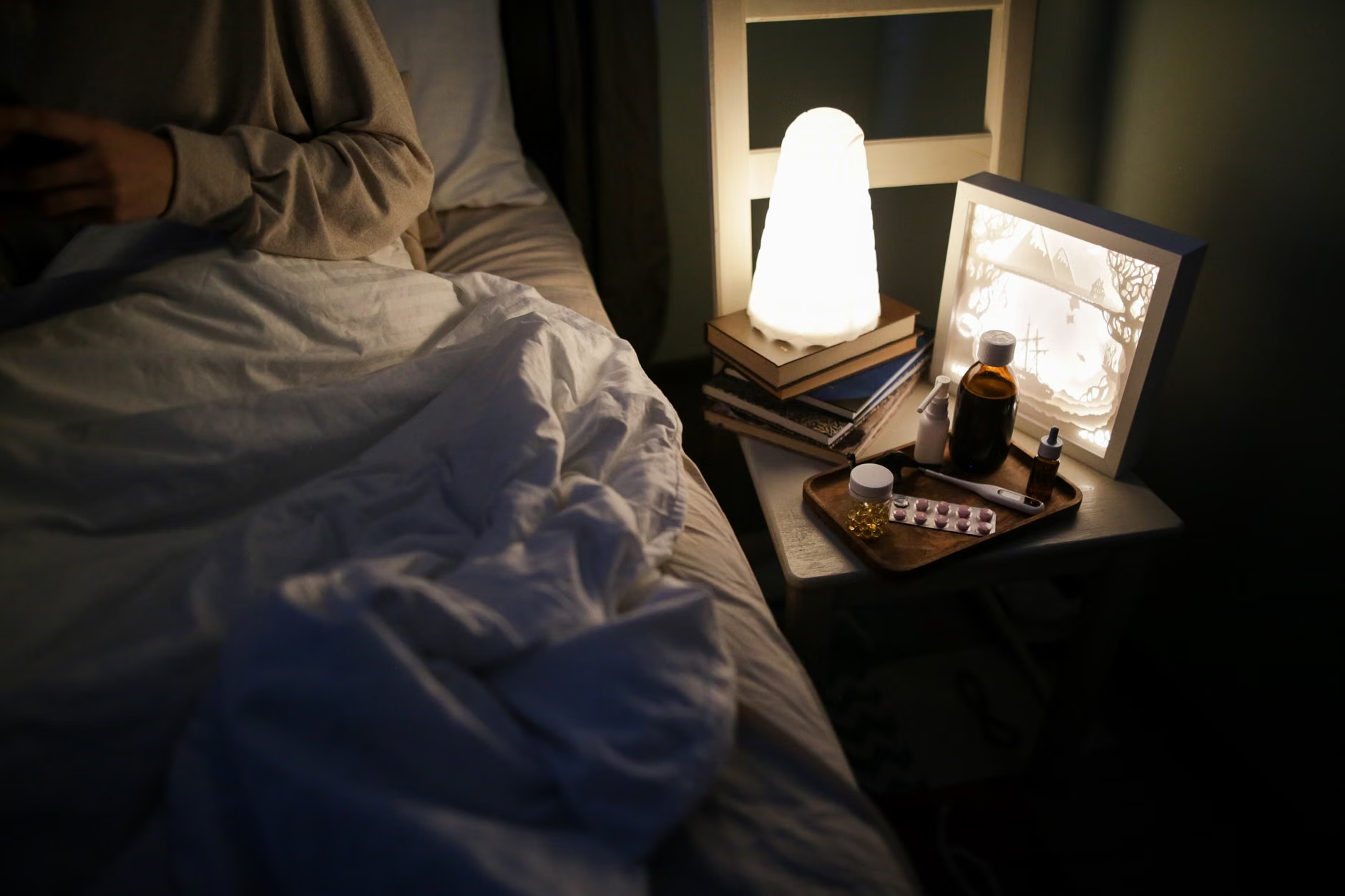
Lighting is the most significant environmental factor influencing sleep, yet most bedrooms are equipped with a single, harsh overhead light. In a neuro-inclusive design, you need layers of light that allow for granular control. The goal is to avoid blue-spectrum light (which suppresses melatonin) as you approach bedtime.
The Rule of Three: Every bedroom should have at least three types of light sources:
- Ambient Light: A soft, diffused overhead or wall-mounted light that provides general illumination without glare.
- Task Light: A directional lamp for reading or late-night tasks that does not illuminate the entire room.
- Accent/Night Light: A very low-intensity, warm-toned light (2200K – 2700K) for navigating the room at night without triggering full wakefulness.
If you are prone to migraines or sensory overwhelm, consider “smart” bulbs that allow you to adjust the Kelvin temperature throughout the day. Set your lights to shift to a warmer, dimmer setting automatically at 8:00 PM. This acts as a physical cue to your body that the day is ending, reducing the need for you to “think” about winding down.
Taming Visual Noise: The Psychology of Storage
Visual clutter is the number one enemy of a calm bedroom. It’s not about having a “minimalist” home; it’s about having a “closed” home. If you can see it, your brain is processing it. This is particularly difficult for parents who often use the bedroom as a secondary storage space for toys or household overflow.
The “Hidden Storage” Framework:
| Storage Type | Best For | Why it works |
|---|---|---|
| Opaque Bins | Odds and ends | Eliminates visual variety and color chaos. |
| Closed Cabinetry | Clothing, books, hobby gear | Creates flat, uniform wall surfaces. |
| Under-bed Drawers | Seasonal items | Utilizes dead space without adding visual volume. |
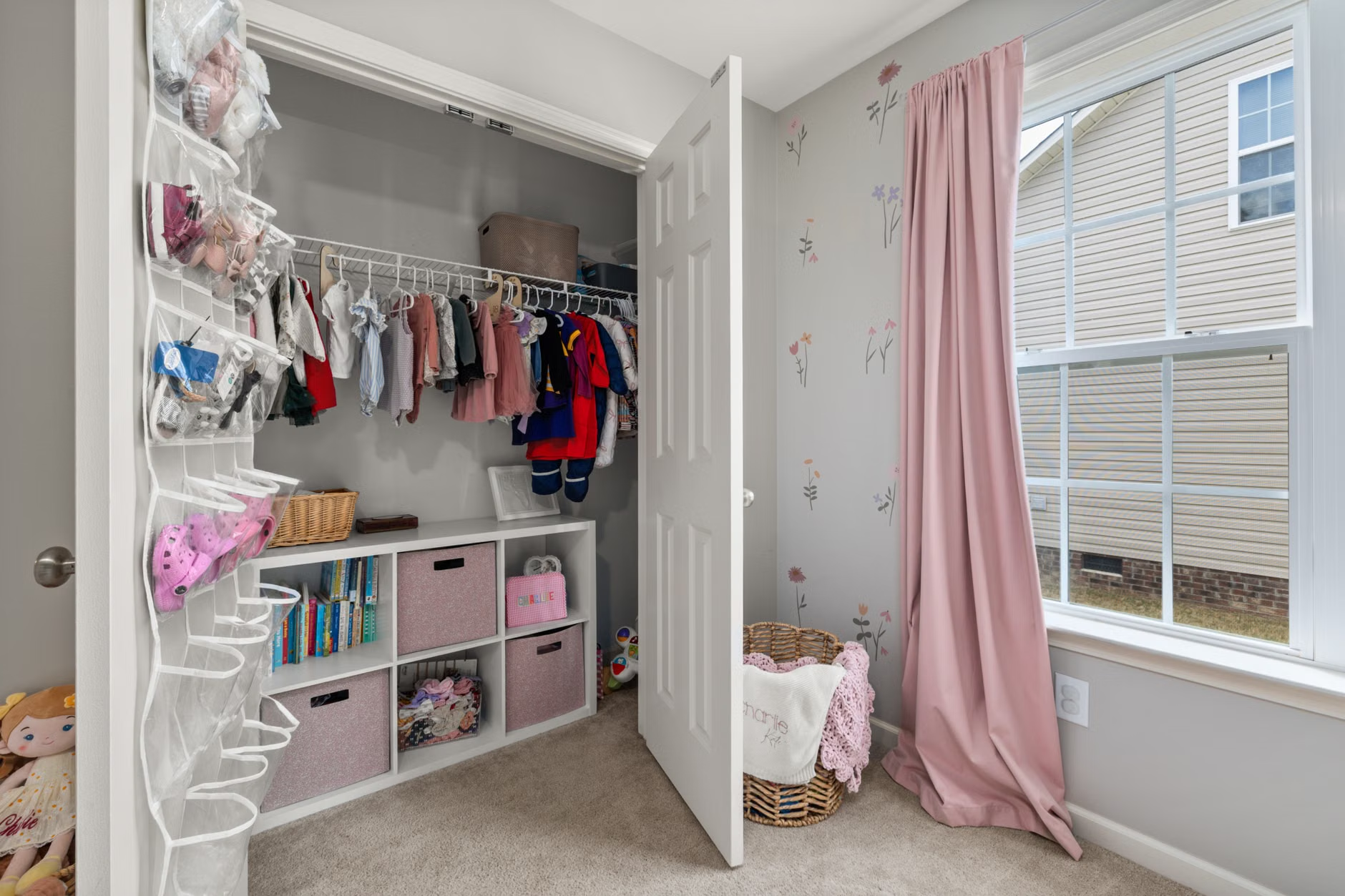
When choosing storage, avoid clear plastic bins. While they help you see what’s inside, they are a nightmare for sensory regulation because they display a chaotic “mosaic” of objects. Choose opaque, neutral-colored containers that blend into your walls. If your bedroom is small, use color-matching (e.g., white bins against a white wall) to make the storage “disappear.”
Sound Masking and Tactile Comfort
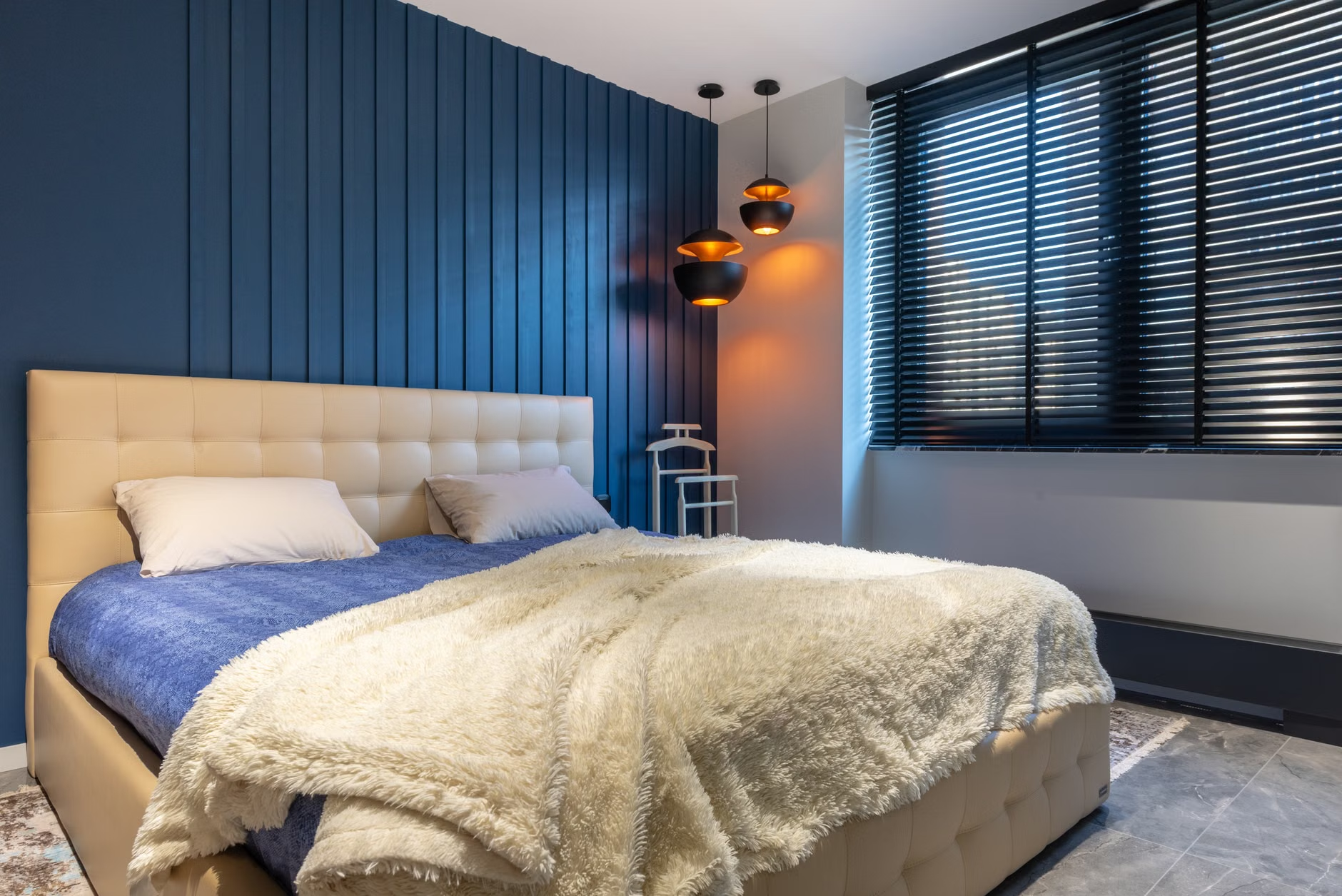
For many adults, silence can be just as overstimulating as noise, especially if you have tinnitus or are prone to ruminating thoughts at night. Sound masking—using consistent, non-rhythmic noise—can help ground your focus. A high-quality white noise machine or a fan is standard, but for a truly neuro-inclusive space, look for “brown noise.”
Brown noise is deeper and lower in frequency than white noise (think of the sound of a distant waterfall or heavy rain). Many people find it less “sharp” and more soothing for a racing mind. Pair this with tactile regulation. If you find yourself feeling “unsettled” in bed, a weighted blanket (typically 10% of your body weight) provides deep pressure stimulation. This physical feedback can help regulate the nervous system after a day of high-stakes decision making.
Common Pitfalls in Bedroom Redesign
A common mistake is trying to “fix” the bedroom in one weekend by buying expensive decor. This leads to decision fatigue and often results in a space that looks like a magazine but doesn’t feel like a sanctuary. Instead, focus on the “Function First” approach.
Avoid these traps:
- The “Aesthetic Only” Trap: Buying furniture based on how it looks on Instagram rather than how it functions. Does the nightstand have enough closed storage? Is the bed frame quiet, or does it squeak when you move?
- Ignoring the “Transition Zone”: The area just outside your bedroom door matters. If you walk from a chaotic, loud living room directly into a pitch-black, silent bedroom, the sensory shift can be jarring. Use a dimmer hallway light or a soft rug to create a “decompression zone” before you enter your sanctuary.
- Over-decorating: Too many photos, art pieces, or “knick-knacks” create visual clutter. If you love decor, choose one or two meaningful items and keep the rest of the surfaces clear.
Step-by-Step Implementation for the Busy Professional
You don’t need to renovate your entire home to reap these benefits. Start with these manageable steps, focusing on one quadrant of the room at a time.
- Clear the Bedside: Remove everything from your nightstand except a lamp, a water bottle, and one book. Everything else goes into a drawer or a box. If you don’t have a drawer, use a small, attractive box with a lid.
- Address the Light: Purchase one dimmable lamp or a smart bulb. Test the “warmth” of the light. If it feels too clinical, swap it for a lower Kelvin bulb.
- Audit the Noise: Spend one night with a white noise machine or an app. If you find your mind racing, experiment with different sound profiles (brown, pink, or green noise) until you find one that helps you settle.
- Declutter the Floor: Use a basket for “end of day” items like clothes or accessories. The goal is to ensure that when you wake up, the first thing you see is not a pile of laundry.
For parents in their 30s and 40s, this is often the most challenging aspect. You might be sharing space with a partner or even a child. If your bedroom is a shared space, prioritize “zones.” Your side of the bed should be your sanctuary. Use a room divider or even just a specific color palette for your side to create a psychological boundary. Even if the rest of the room is chaotic, having one defined, organized, and sensory-friendly zone can make a significant difference in your sleep quality.
The Hidden Variable: Air Quality and Temperature
While we often focus on visual and auditory stimuli, sensory regulation also involves physical comfort. A room that is too warm or stuffy is a major source of sensory irritation. The optimal temperature for sleep is typically around 18°C (65°F), but this varies by individual. The key is consistency.
If you live in a region with high humidity, invest in a dehumidifier. The feeling of “damp” air is a subtle, constant irritant that can prevent deep relaxation. Similarly, consider the scent of your room. Avoid strong, artificial air fresheners, which can be overwhelming. Instead, use natural ventilation or, if you have sensitivities, an air purifier with a HEPA filter to keep the air crisp and clean. These small environmental “invisible” factors are often the difference between a restless night and deep, restorative sleep.
Conclusion: Prioritize Your Recovery
Designing a neuro-inclusive bedroom is an act of self-care that pays daily dividends. By treating your bedroom as a specialized tool for nervous system regulation rather than just a room for furniture, you are taking control of your recovery. Start small, prioritize the elimination of visual and auditory noise, and focus on creating a space that feels calm the moment you step inside.
For further reading on how environmental design affects the brain, you can consult resources from the International WELL Building Institute, which provides extensive data on how indoor environments impact human health and sleep quality. You can learn more about these standards at wellcertified.com.
Frequently Asked Questions
1. Is it necessary to go completely minimalist to achieve a neuro-inclusive bedroom?
No. “Minimalism” is a style; “neuro-inclusive design” is a function. You don’t need to get rid of your belongings. You simply need to contain them. If you love books or collections, use closed storage—like cabinets with doors or deep drawers—to keep them out of sight when you are trying to relax.
This is a common friction point. Use “task-specific” solutions. A high-quality eye mask and active noise-canceling earplugs allow you to create your own sensory-regulated bubble regardless of your partner’s needs. Alternatively, use a directional reading light that only illuminates your side of the bed, ensuring their side remains dark.
3. How do I maintain this environment with kids frequently entering the room?
The goal is to make the “sanctuary” aspect clear. Use a “boundary” item—like a specific rug or a chair—that marks your space. Teach children that the bed area is for rest and is not a play zone. By keeping the room tidy and “closed” (using bins for any items that do end up in the room), you minimize the visual cues that invite play, helping children understand the room’s purpose.