Smart meters are not just about ending the era of the human meter-reader; they are your most powerful tool for ending the “surprise bill” cycle that plagues most households in their 30s and 40s.
- Granular Visibility: Smart meters record data in 15-to-30-minute intervals, allowing you to see exactly which appliances drive your peak usage.
- Load Shifting: By moving energy-intensive chores (like laundry or dishwashing) to off-peak hours, you can utilize time-of-use (TOU) tariffs to lower your bill by 15–20% without changing your lifestyle.
- Vampire Power Detection: The “always-on” baseline reading on your smart meter dashboard is the key to identifying standby power drains that contribute to 5–10% of your annual electricity bill.
Why Your Old Meter Was Costing You More Than You Realized
For most of us, electricity bills were historically a “black box.” You used power throughout the month, and a total number appeared on your screen 30 days later. If it was high, you might turn off a light or two, but you had no concrete data on what actually caused the spike. Was it the kids leaving the gaming console on? The old refrigerator in the garage? The HVAC system fighting a drafty window? Without data, we were just guessing.
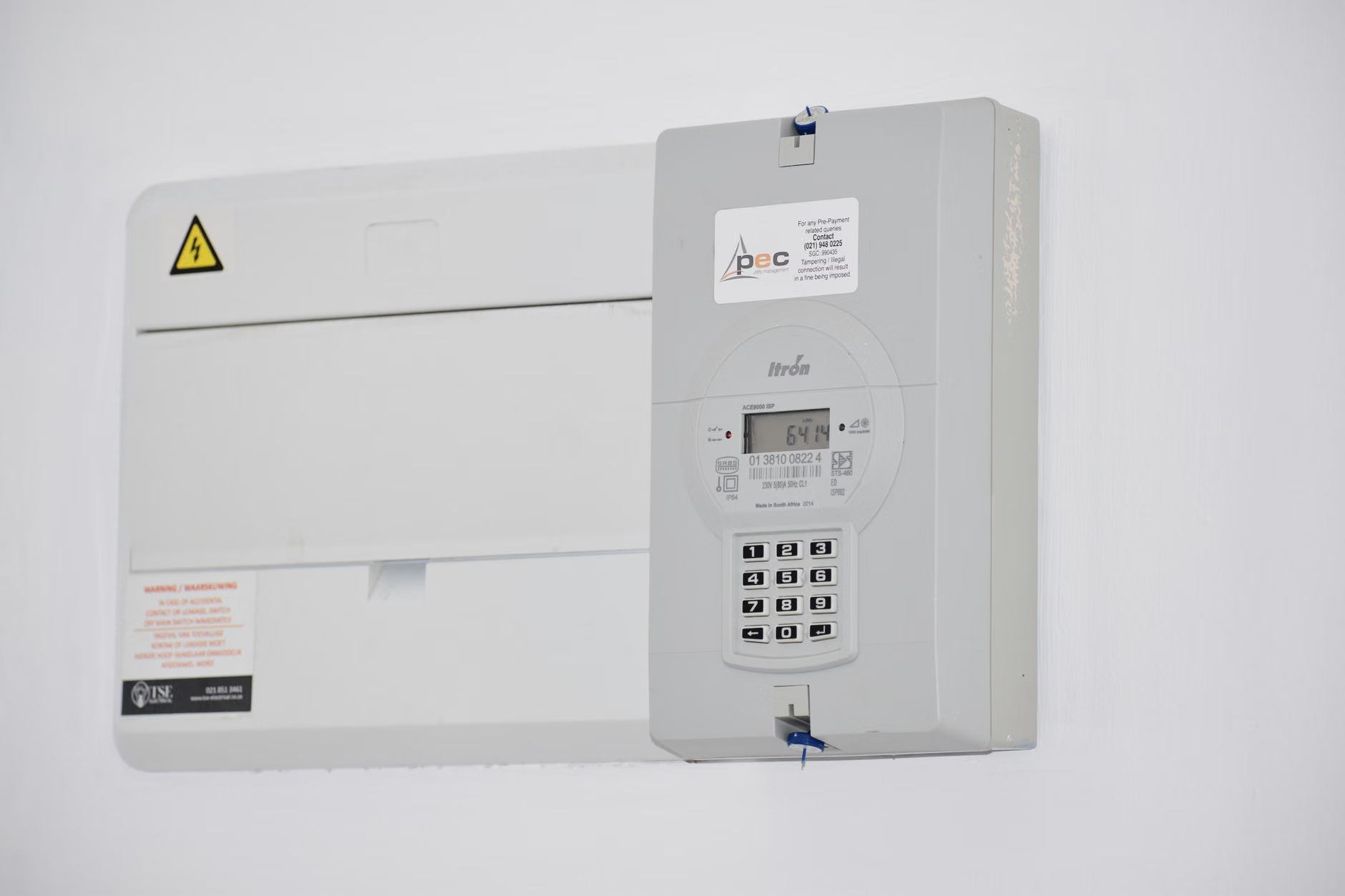
The transition to smart meters—also known as Advanced Metering Infrastructure (AMI)—changes the power dynamic between the utility company and the consumer. Unlike traditional analog meters that only track cumulative usage, smart meters communicate two-way data. They report your consumption in near real-time, often visible through a utility-provided portal or a third-party app.
Think of it like moving from a “total weight” scale that only tells you your current mass to a “body composition” scale that tells you exactly how much is muscle, water, and fat. The smart meter is the body composition scale for your home’s energy health. It exposes the “fat” in your utility bill—the waste you don’t even know you’re creating.
Understanding the Data: What Those Spikes Actually Mean
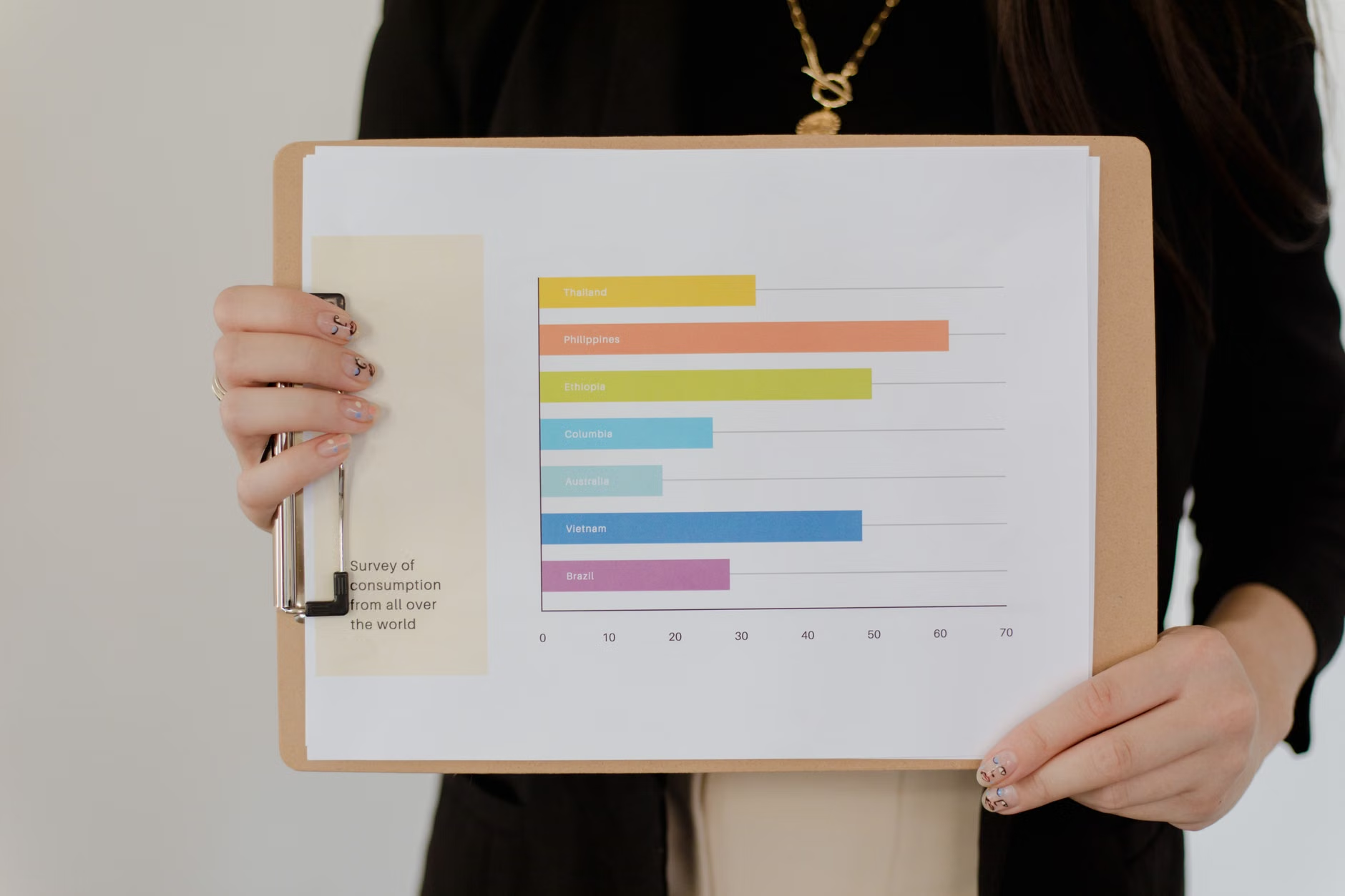
Once you gain access to your utility provider’s online dashboard, you will likely be greeted by a series of bar charts. At first glance, they look like standard consumption reports. However, the true value lies in the “interval data.” Most smart meters report usage in 15, 30, or 60-minute increments.
If you see a steady, high baseline during the hours you are asleep or at work, you have an “always-on” load. This is the energy consumed by devices that are plugged in but not actively doing work. Common culprits include:
- Home Entertainment Systems: Modern TVs, soundbars, and consoles often have “instant-on” features that draw significant power even when “off.”
- Smart Home Hubs: While individually small, a dozen smart devices in a house add up to a noticeable constant draw.
- Old Kitchen Appliances: A secondary fridge in the garage is often the single biggest hidden cost in a home, sometimes costing $150+ a year just to keep empty or half-full space cold.
Decision Rule: If your “always-on” baseline is higher than 100 watts, start by identifying devices that are warm to the touch even when not in use. These are your primary targets for smart plugs or power strips with switches.
The Art of Load Shifting: How to Beat Time-of-Use Pricing
Many utility providers have moved to Time-of-Use (TOU) pricing. This means electricity is cheaper when demand on the grid is low (usually late at night or midday) and more expensive during “peak” hours (typically between 4:00 PM and 9:00 PM when everyone is home cooking, showering, and powering devices).
If you are on a TOU plan, using your dishwasher at 7:00 PM is significantly more expensive than running it at 11:00 PM. This is where the smart meter data becomes actionable. You don’t need to live in the dark; you just need to be a “scheduler.”
| Activity | Peak Hour Cost | Off-Peak Hour Cost | Actionable Tip |
|---|---|---|---|
| Dishwasher | $$$ | $ | Use the ‘Delay Start’ button. |
| EV Charging | $$$$ | $ | Use a scheduled charge via app. |
| Laundry (Dryer) | $$$ | $ | Weekend morning cycles. |
The table above illustrates the potential for savings. By shifting your heavy-load appliances to off-peak hours, you aren’t actually using less electricity, but you are buying it when it is cheaper. This is the easiest “raise” you can give yourself on your monthly budget.
Advanced Insights: Identifying “Ghost” Loads and Malfunctioning Equipment
Smart meters can also act as early-warning systems for your home’s infrastructure. Because you can see the specific wattage draw of your home, you can detect anomalies that would otherwise go unnoticed until a repair becomes catastrophic.
For example, if your HVAC system is cycling on and off every five minutes (short-cycling), your smart meter data will show a repetitive, high-wattage spike pattern. This usually indicates a clogged air filter, a refrigerant leak, or a failing capacitor. In a house without smart metering, you might just notice the house feels “less comfortable” and pay a higher bill for months before realizing the unit was struggling.
Similarly, if you see a massive, unexplained spike at 3:00 AM, it might be your electric water heater element failing or a pool pump that has lost its timer settings. Using the data to identify these issues early saves you the cost of both the wasted energy and the emergency repair bill that inevitably follows a total system failure.
Setting Up Your Monitoring Routine
You don’t need to obsess over your energy data daily. In fact, that’s a quick route to burnout. Instead, treat it like a monthly financial reconciliation. Here is a recommended routine for busy parents:
- The Monthly Audit: Once a month, when your bill arrives, log into your utility portal. Look for the “Peak Demand” day. See what was different about that day compared to a low-usage day. Did you have guests? Was it exceptionally hot? Use this to ground your expectations.
- The “Always-On” Check: Every quarter, check your midnight usage. If it has crept up, walk the house. Is there a new device that’s always plugged in? Is the basement fridge running constantly?
- The Seasonal Calibration: Before summer or winter peaks, adjust your thermostat setpoints by just two degrees. Compare the usage graph from the same week in the previous year. You will likely see a visible “thinning” of your daily usage bars.
The goal is to move from reactive bill-paying to proactive energy management. By spending 15 minutes a month reviewing your data, you gain a level of control that makes you immune to the “sticker shock” of seasonal energy price hikes.

Common Misconceptions and Reality Checks
There is a lot of noise surrounding smart meters, particularly regarding privacy and health. It is important to separate technical reality from misinformation. Smart meters transmit data via low-frequency radio waves, similar to a baby monitor or a Wi-Fi router. The data they transmit is limited to your consumption patterns; they do not “spy” on your conversations or track which specific devices you are using—they only track the total power load at the meter level.
Another common mistake is believing that “smart” means “automatic.” A smart meter does not automatically lower your bill. It only provides the information required for you to make the changes. If you install a smart meter but don’t change your usage habits or audit your “always-on” loads, your bill will remain exactly the same.
Finally, avoid the “smart device trap.” Buying $500 worth of smart lightbulbs to save $5 a year in energy costs is a poor investment. Focus your budget on high-impact areas: heating/cooling, water heating, and large appliances. These account for over 70% of the average home’s energy consumption. If you are going to invest in smart technology, prioritize a smart thermostat or a smart plug for your high-draw, high-frequency appliances.
Practical Next Steps for Your Household
If you have a smart meter installed but haven’t engaged with the data, your first step is to visit your utility provider’s website. Look for a link that says “Energy Usage,” “My Account,” or “Usage Dashboard.” If they don’t provide a clear, granular view, check if they support “Green Button” data, which allows you to securely share your energy data with third-party apps that provide better visualizations and automated insights.
Don’t try to change everything at once. Start with one category. For one month, focus solely on your evening peak usage. Once you have mastered shifting your dishwasher and laundry, move on to addressing your “always-on” phantom loads. Small, incremental changes are more sustainable for families than drastic, overnight lifestyle shifts that lead to frustration.
Remember that energy efficiency is not about deprivation; it is about intentionality. It is about ensuring that the energy you pay for is actually working for you, rather than leaking away into the ether of standby power or inefficient scheduling. By taking control of the data your meter provides, you are securing a more predictable, affordable, and sustainable future for your household.
Frequently Asked Questions
- Does every home have access to granular smart meter data?
Most modern smart meters (AMI) support 15-to-60-minute interval data. If your provider only shows daily totals, call them and ask if you can access “interval data” or “Green Button” data. If you are in an older home with an analog meter, you may be able to request an upgrade from your utility, though some may charge a fee. - Can I use a smart meter to lower my bill if I am a renter?
Yes. While you cannot change the meter itself, you can still access the data via your utility account. Even if you cannot change the HVAC, you can still identify and unplug vampire devices, use smart plugs for your personal appliances, and shift your laundry/dishwashing to off-peak hours. - Is there a risk of the utility using this data to raise my rates?
Utility rates are typically regulated by public commissions and are based on the cost of generating and distributing electricity, not on your personal usage habits. While TOU (Time-of-Use) plans are designed to incentivize behavior that helps the grid, they are generally optional or structured to reward the consumer for shifting demand, not to punish individuals for their personal consumption levels.
For further reading on understanding your energy usage and local smart meter programs, visit the U.S. Department of Energy’s guide on Smart Meters or your local utility provider’s official sustainability portal.