The most effective way to lower your daily stress levels isn’t to add more self-care routines, but to remove the hidden sensory triggers in your home that are quietly draining your cognitive energy.
- Identify hidden noise: Visual clutter and low-frequency humming from appliances contribute significantly to “sensory fatigue,” which often mimics burnout in parents.
- Designate a “low-stimulus” zone: You don’t need a renovation; dedicating just one corner of a room with muted colors and soft textures allows your nervous system to reset during short breaks.
- Prioritize lighting over brightness: Switching from harsh overhead cool-white bulbs to warm, localized task lighting can reduce cortisol levels by minimizing the constant “alert” signal your brain receives from bright, broad-spectrum light.
If you are in your 30s or 40s, you are likely living in a state of constant sensory input. Between the pinging of work notifications, the high-pitched demands of children, the visual noise of a lived-in house, and the persistent background hum of modern appliances, your brain is rarely in a state of true rest. This isn’t just “being busy”; it is sensory processing overload. When your environment is chaotic, your nervous system remains in a heightened state of alertness, making it nearly impossible to switch off, even after the kids are asleep.
Understanding Sensory Overload in the Domestic Space
Sensory processing isn’t just a term reserved for clinical settings or childhood development. Every adult has a sensory threshold. When that threshold is exceeded, we experience cognitive fatigue, irritability, and a diminished capacity for emotional regulation. In a home shared with children, the primary culprits are often overlooked because they are so common: flickering LED lights, the “background noise” of toys, and the accumulation of visual clutter on flat surfaces.
Why does this matter? Research into environmental psychology suggests that our brains process visual input constantly. Every object you see in your peripheral vision is being categorized by your brain. If your kitchen counter is covered in mail, stray toys, and grocery bags, your brain is effectively “working” on those items even when you aren’t actively using them. This is why you might feel an immediate sense of relief when you walk into a tidy, minimalist hotel room—your brain finally stops processing the environment.
To start your sensory sanctuary, you must first conduct a “sensory audit” of your home. Pick one room where you spend the most time, such as the living room or your bedroom. Walk in, close your eyes for 30 seconds, and listen. What do you hear? The hum of the refrigerator? A neighbor’s lawnmower? A high-pitched whine from a power adapter? Now, open your eyes. What is the first thing you see that makes your shoulders tense up? That is your primary sensory stressor.
The Physics of Lighting and Its Impact on Your Nervous System
Most modern homes are lit for visibility, not for biological regulation. We often use cool-white (5000K+) LED lighting that mimics mid-day sun. While this is great for cleaning or working, it is detrimental to your evening wind-down. Your brain relies on light cues to regulate melatonin production. When you are bathing your home in harsh, high-Kelvin light until the moment you go to bed, you are essentially telling your nervous system it is noon, not 9:00 PM.
Decision Rule: Replace overhead lighting with localized, warm-toned (2700K or lower) lamps. The goal is to move the light source from above your head to your eye level or below. This “warm glow” approach shifts the brain from a state of vigilance to one of relaxation.

Step-by-Step Lighting Adjustment:
- The 2700K Rule: Check your current bulbs. If they are labeled 4000K or 5000K, move them to utility rooms (garage, pantry) and replace living room bulbs with 2700K or “warm white” versions.
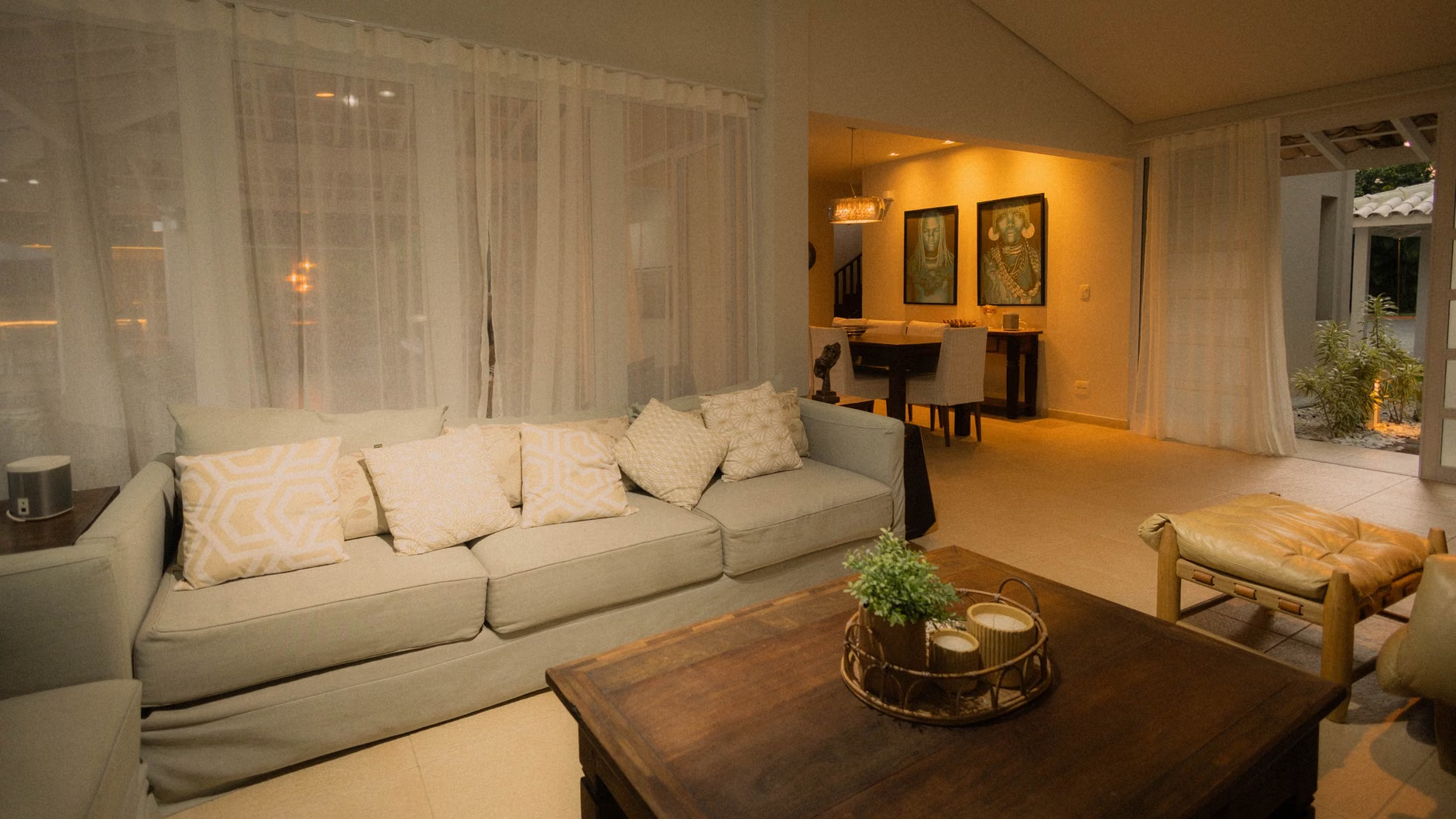
- Layered Lighting: Use at least three light sources in your main living area—a floor lamp, a table lamp, and a dimmable wall light. Never rely on a single, powerful ceiling light.
- The Dimmer Transition: If you cannot change the bulbs, install plug-in dimmers. They are inexpensive and allow you to gradually lower the “intensity” of the room as the evening progresses.
Managing Visual Noise: The “One Surface” Strategy
Visual clutter is one of the most significant, yet invisible, sources of stress. It creates a “background hum” of to-do lists. If you look at a pile of laundry, your brain thinks, “I need to fold that.” If you look at a stack of mail, you think, “I need to pay those.” This is cognitive load at work. To create a sanctuary, you don’t need to be a minimalist; you need to be a “surface curator.”
The “One Surface” strategy is simple: keep one major surface in your main room completely clear of everything except one aesthetic or functional item. For many, this is the kitchen island or the coffee table. When you look at that clear space, your brain registers a “safe zone.”
Table 1: Managing Sensory Clutter
| Trigger | Immediate Action | Long-term Solution |
|---|---|---|
| Kitchen Clutter | Clear the island before bed. | Use “drop zones” or baskets for mail/keys. |
| Toy Overflow | Use opaque bins, not clear ones. | Implement a rotation system for toys. |
| Digital Clutter | Turn off non-essential phone alerts. | Designate a “charging station” away from the bed. |
Acoustic Dampening: The Hidden Key to Calm
We often underestimate how much sound impacts our ability to parent. Hard surfaces like tile, hardwood floors, and bare walls reflect sound, creating an echo chamber that amplifies every conversation and footstep. This creates a “sonic fatigue” that is especially prevalent in modern open-concept homes.
You don’t need expensive acoustic foam to fix this. Soft materials absorb sound. The more “soft” your room is, the quieter it will feel. Think of a library versus a gymnasium. By adding rugs, heavy curtains, or even wall hangings, you are physically changing the acoustics of your home.
Pro Tip: If you have hard floors, a high-pile rug with a thick felt pad underneath is one of the most effective sound-dampening investments you can make. It doesn’t just feel good underfoot; it physically absorbs the vibrations of daily movement, making the entire house feel “softer” and more contained.

Creating a Dedicated Low-Stimulus Sanctuary
Every parent needs a “reset button.” If you live in a busy household, you may feel like you never have a moment of silence. You need a designated low-stimulus space. This doesn’t have to be an entire room. It could be a comfortable chair in a corner, a reading nook in a bedroom, or even a specific spot on the sofa that you have claimed as your own.
What makes this space “low-stimulus”?
- No Screens: This is a non-negotiable. If you are in your sanctuary, the phone stays in another room.
- Tactile Comfort: A weighted blanket, a soft throw, or a firm pillow that supports your posture allows your body to relax its muscles.
- Controlled Input: Whether it’s a candle, a specific playlist, or just the sound of a white-noise machine, you control the sensory input.
The biggest mistake people make is trying to use their “sanctuary” for other tasks. Do not work on your laptop in your relaxation chair. Do not fold laundry there. Your brain needs to associate that specific physical location with the act of decompressing. If you use it for chores, you will lose the psychological benefit of the space.
The Role of Scent and Texture in Nervous System Regulation
We often focus on sight and sound, but smell and touch are the most direct pathways to the limbic system—the part of the brain that handles emotional responses. A room that smells like stale food or sharp cleaning chemicals will keep your nervous system on guard. A room that smells neutral or has a subtle, calming scent (like lavender or cedar) can help signal that it is time to shift gears.
Regarding texture, consider the “sensory contrast” in your home. If everything is smooth (plastic, glass, metal), your brain feels “bored” or “cold.” If you add textures—a wool throw, a wooden bowl, a linen pillowcase—you provide your body with subtle sensory feedback that feels grounded and natural. This is why natural materials like wood, wool, and cotton are so effective in home design; they provide a “soft” sensory experience that synthetic materials cannot replicate.
Common Misconceptions About Home Sanctuaries
There is a prevailing myth that you need to spend thousands of dollars on “minimalist furniture” or “home organization systems” to create a calm space. This is false. In fact, buying more “stuff” to solve a clutter problem is the most common mistake. The goal is to remove, not to reorganize. If you have too much stuff, no amount of storage bins will solve the sensory overload. You must audit your belongings and remove what isn’t serving your need for calm.
Another misconception is that a sensory-friendly home must be “sterile.” A home should be lived in. A sensory sanctuary isn’t about removing life; it’s about managing the volume of the noise. It is perfectly fine to have toys, books, and art. The key is in the “containment.” When the toys are in a bin, they aren’t part of your visual field. When the books are on a shelf, they are organized, not chaotic. Containment is the secret to a high-functioning, low-stress home.
Actionable Steps for the Busy Parent
If you are feeling overwhelmed, do not try to “fix” your entire house in a weekend. Start small. Pick one area—perhaps the bedside table or the corner where you drink your morning coffee—and make it your first “sensory-processed” zone.
- Remove all non-essential items from that area. If you haven’t used it in a month, move it to a drawer or donate it.
- Assess the lighting. Can you add a small lamp? Can you dim the overhead light?
- Introduce one “grounding” element. A soft cushion, a favorite book, or a plant.
- Practice the “Reset.” Spend five minutes in that space, without your phone, at the end of the day. Notice how your body feels.
The cumulative effect of these small changes is significant. Over time, you will find that your baseline level of anxiety drops. You will be more patient with your children, more focused at work, and more capable of handling the inevitable stresses of daily life. The home is not just a place where you sleep; it is a tool for your mental health. By curating it intentionally, you are taking control of your sensory environment, rather than letting it control you.
Conclusion: The Long-Term Benefit of a Controlled Environment
Creating a sensory-processing sanctuary is not a luxury; it is a survival strategy for the modern parent. By understanding how your environment impacts your cognitive load, you can design a space that actively supports your mental well-being. Start by identifying the most intrusive sensory triggers in your home and methodically reducing their impact through better lighting, deliberate storage, and acoustic management.
Remember that this is a process, not a project. Your needs will change as your children grow, and your home will need to adapt with them. The most important thing is to maintain a “low-stimulus” baseline that allows you to reset your nervous system whenever necessary. You deserve a space where you can breathe, reflect, and recharge. By taking these small, deliberate steps, you are building that space—one corner at a time.
Frequently Asked Questions
1. Does a sensory-friendly home mean I have to get rid of all my colorful toys and decorations?
Not at all. The goal is “containment,” not elimination. Use opaque bins to store colorful toys when they aren’t in use. This keeps your visual field calm while allowing your children to play with their favorite items during the day.
2. I live in a very small apartment. How can I create a sanctuary when I have no extra room?
Focus on “micro-sanctuaries.” Even a single comfortable chair with a dedicated lamp and a small side table can serve as a reset zone. Use a noise-canceling headset if you cannot control the ambient noise in your living space; it acts as a portable, personal sensory-processing tool.
3. How long does it take to see a change in my stress levels after adjusting my home environment?
Many people report feeling a difference within 24 to 48 hours of clearing a primary visual stressor (like a cluttered kitchen counter) and adjusting their evening lighting. The key is consistency; the nervous system needs to learn that the space is now a “safe” zone for recovery.
For more information on the impact of environmental design on mental health, you may find these resources helpful: