- Hyper-local history isn’t about grand events: It’s about the evolution of your specific street, the architecture of your local shops, and the hidden stories of the people who lived there 50–100 years ago.
- Planning is the key to parenting success: Use digital archives and local library databases to map out a 90-minute route before you leave the house to avoid “decision fatigue” with kids in tow.
- Engagement beats observation: Transform the walk into an interactive “detective game” by hunting for specific architectural details or historical markers to keep children engaged for the full duration.
If your weekends feel like a repetitive loop of grocery shopping, laundry, and trying to convince the kids to step away from their tablets, you aren’t alone. Most of us in our 30s and 40s treat our neighborhood as a mere transit zone—a place to sleep between work and errands. But what if you could turn that familiar block into a treasure map? A “hyper-local” history walk is the antidote to the “we have nothing to do” weekend slump. It requires zero travel time, minimal cost, and offers a surprisingly deep sense of connection to the place you call home.
Why Hyper-Local Exploration Matters in Your 30s and 40s
When you are balancing a career, parenting, and the general mental load of adulting, the idea of “travel” often feels like a chore. Packing bags, booking tickets, and managing flight delays is the opposite of relaxation. Hyper-local history is different. It is the practice of investigating the immediate surroundings of your own home with the curiosity of a tourist.
Why does this matter? It shifts your perspective. When you understand why your local library is built in that specific style or why the main street curves the way it does, you stop seeing your neighborhood as a static background. You start seeing it as a living layer cake of human decisions, economic shifts, and social changes. For parents, this is a powerful way to teach children that history isn’t just something that happens in textbooks; it’s something that happens right outside their front door.
Furthermore, this activity is incredibly low-friction. If the kids get tired or a sudden rainstorm hits, you are five minutes from home. You don’t need a high budget or a full day of planning. You just need a bit of curiosity and a smartphone.
Step 1: The Research Phase—Finding the Hidden Stories
Before you step out the door, you need to know what you’re looking at. This is the “detective” phase. Don’t just wander aimlessly; find the “hooks” that will make the walk interesting for both you and your children.
Start with your local library’s digital archives. Many towns and cities have digitized collections of old photographs. Search for your street name or the name of your local park. You will often find photos from the 1920s or 1950s that show your street looking completely different. This is your “before and after” gold mine.
Another excellent resource is the national or local heritage registry. Most countries maintain databases of protected or historically significant buildings. Even if you don’t live in a historic district, these databases often contain brief write-ups on the architectural significance of local landmarks. If you are in the UK, the Historic England website is a treasure trove. In the US, the National Register of Historic Places provides similar data. If you are elsewhere, search for “[Your City/Region] historical society archives.”
Common Research Mistakes to Avoid
| Mistake | The Impact | The Fix |
|---|---|---|
| Over-researching | You get overwhelmed and never leave the house. | Set a timer for 45 minutes of prep. That’s it. |
| Ignoring the “ordinary” | You only look for “famous” landmarks. | Look for the history of everyday things: old mailboxes, cobblestones, or unique tree planting patterns. |
| Forgetting the kids | The walk becomes a lecture, not an adventure. | Pick 3 “mysteries” to solve, like “Why is this house painted this color?” or “What used to stand on this empty lot?” |
Step 2: Designing Your Route for Maximum Engagement
A successful history walk needs a narrative. If you just walk in a straight line, it’s just a walk. If you follow a theme, it becomes an adventure. Here are three themes you can use to structure your route:
- The “Vanished Neighborhood” Walk: Focus on finding physical evidence of things that are no longer there. Look for ghost signs (faded advertisements painted on brick walls), old foundations, or street names that hint at former industries (like “Mill Street” or “Foundry Lane”).
- The Architectural Evolution Walk: Choose a route that passes through different decades of construction. Point out the differences between the older, ornate buildings and the newer, minimalist ones. Ask the kids: “Which one do you think would be easier to keep warm in the winter?”
- The “Community Heroes” Walk: Research if any local streets, parks, or buildings are named after historical figures in your area. Find out who they were and why they were honored.
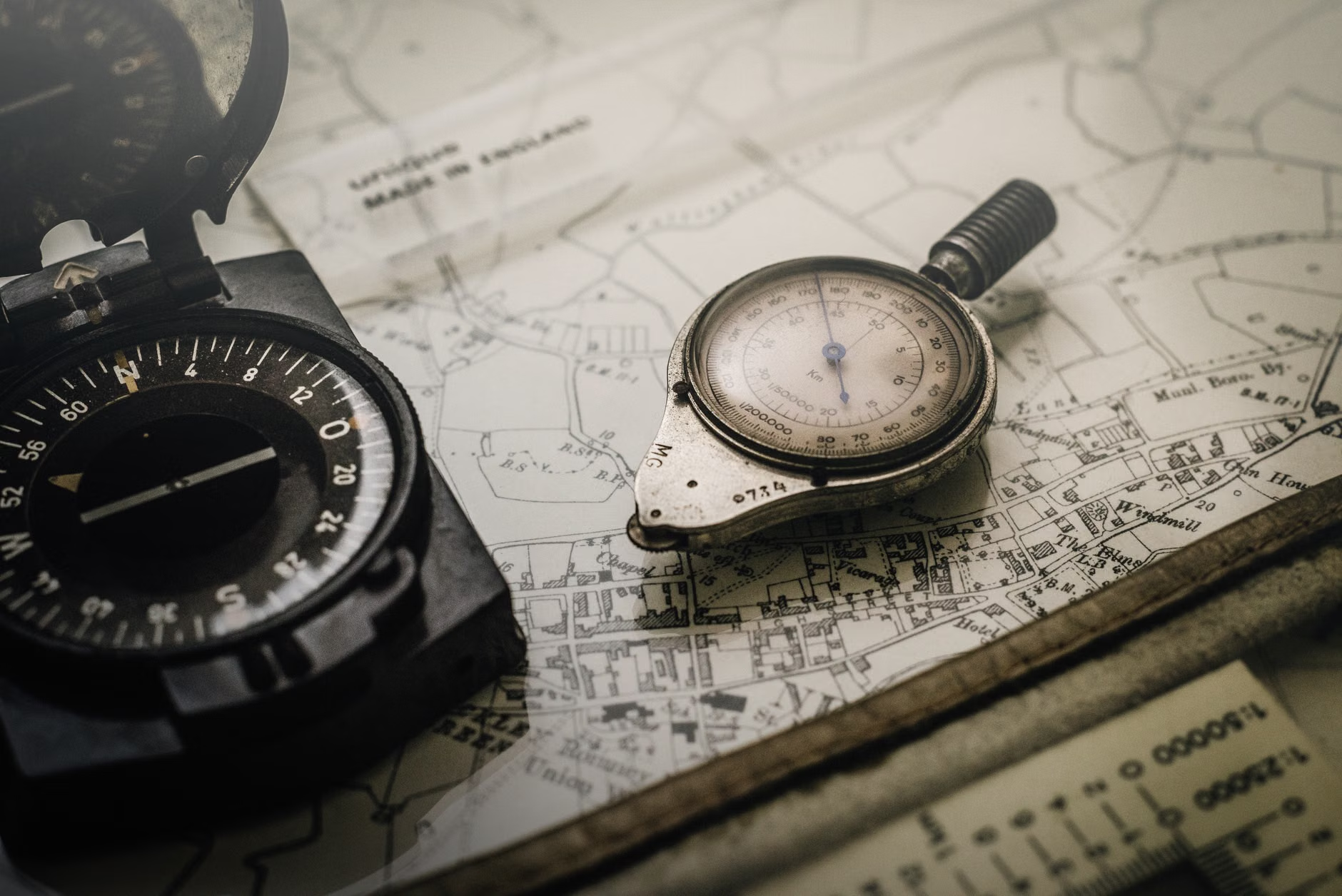
When mapping your route, keep it under 2 kilometers if you have young children. The goal is to spend time observing, not to cover distance. If you are doing this solo or with a partner, you can stretch it to 5 kilometers, but ensure you include a “stop-and-think” point every 500 meters.
Step 3: Turning Observation into Active Learning
Once you are on the ground, the transition from “observer” to “historian” happens through active questioning. Instead of telling your children facts, ask them to spot details. This is the most effective way to keep them engaged.
For example, look at the masonry. Are there dates carved into the lintels above the windows? Are there different types of brickwork that suggest a building was expanded over time? These are the physical clues that tell the story of the building’s life. If you see a building with a “blocked-in” window, explain the concept of the “window tax”—a historical tax that forced people to brick up their windows to save money. Even if your local area didn’t have that specific tax, it opens up a conversation about how laws and economics have always shaped our living spaces.
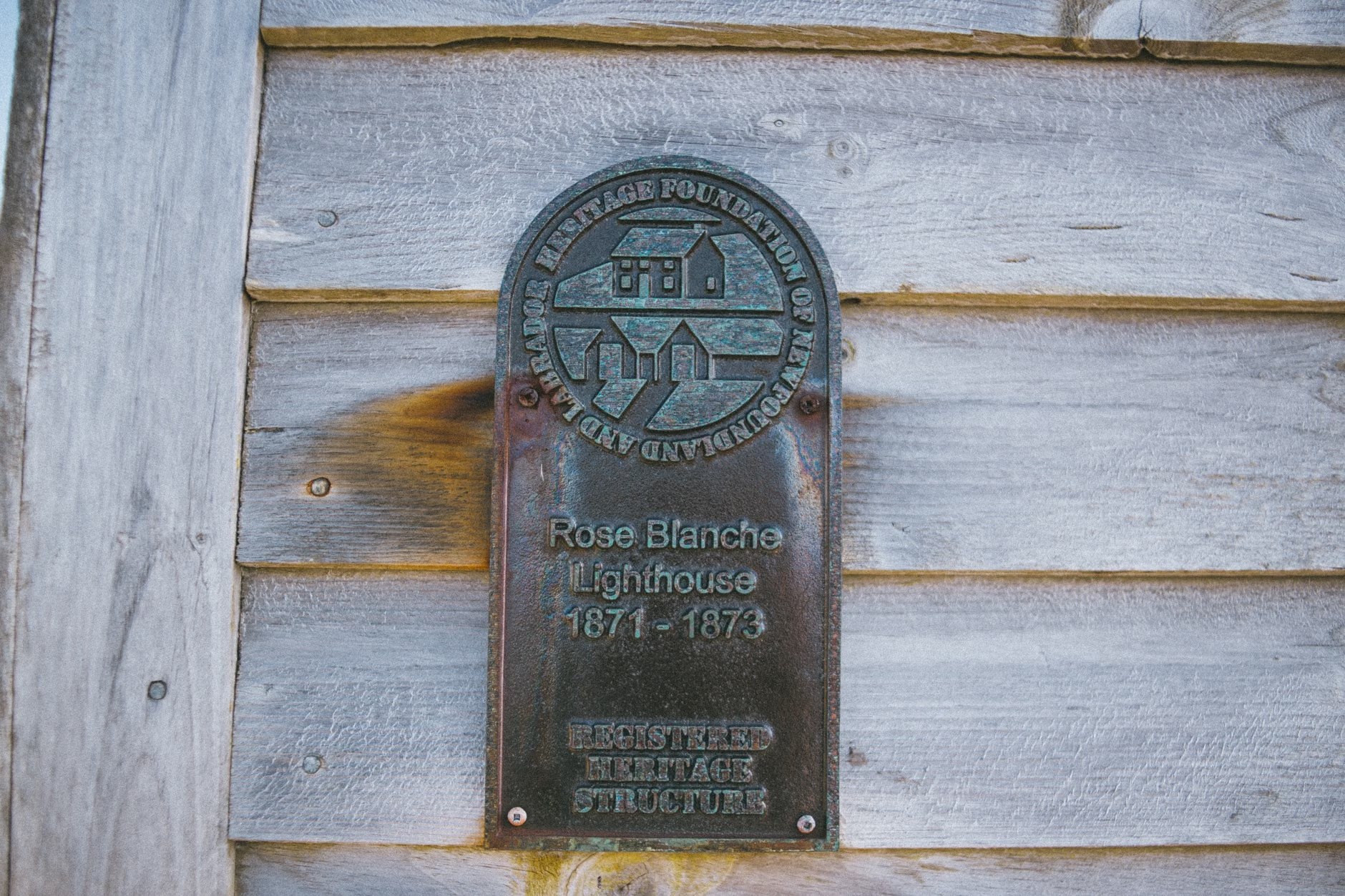
If you find a historical plaque, don’t just read it out loud. Ask: “If this person lived here today, what would they think of the traffic?” or “What do you think was the most important thing they did?” This turns a dry piece of metal into a character study.
Step Hidden Costs and Practical Realities
One hidden cost of hyper-local exploration is the “access hurdle.” Sometimes, the most interesting parts of your neighborhood are on private property or restricted areas. Always respect signage and property boundaries. Never trespass for the sake of a photo or a better view. The beauty of a history walk is that the public space itself—the streets, the parks, the sidewalks—is usually filled with enough history to last a dozen weekends.
Another variable to consider is the weather and lighting. If you are doing this for photography or just for the aesthetic, try to plan your walk during the “golden hour”—the hour after sunrise or before sunset. The long shadows cast by the sun will highlight the textures of old brick, stone, and wood, making the architecture look much more dramatic and easier to examine.
Also, don’t be afraid to use modern technology to bridge the gap. Apps like Google Earth can be used on your phone mid-walk to look at historical satellite imagery, or you can use “Google Street View” history mode to see how a specific corner has changed over the last 15 years. It’s a small, modern shift that makes the deep history feel more accessible.
The “SoCooly” Approach: Integrating the Walk into Family Life
Let’s be real: Saturdays are often chaotic. You might not have the energy for a full-blown expedition. That is perfectly fine. The beauty of the hyper-local walk is its modularity. You can do a “15-minute history sprint” while the laundry is in the dryer. You don’t need to commit to a grand tour of the city.
If you are a parent, the biggest mistake is trying to make the walk “educational” in a way that feels like school. If the kids want to look at a cool bug on a wall instead of the historical plaque next to it, let them. The goal is to build a habit of curiosity. If they associate the neighborhood with discovery rather than just “getting from A to B,” you have succeeded.
How to Handle the “This is Boring” Phase
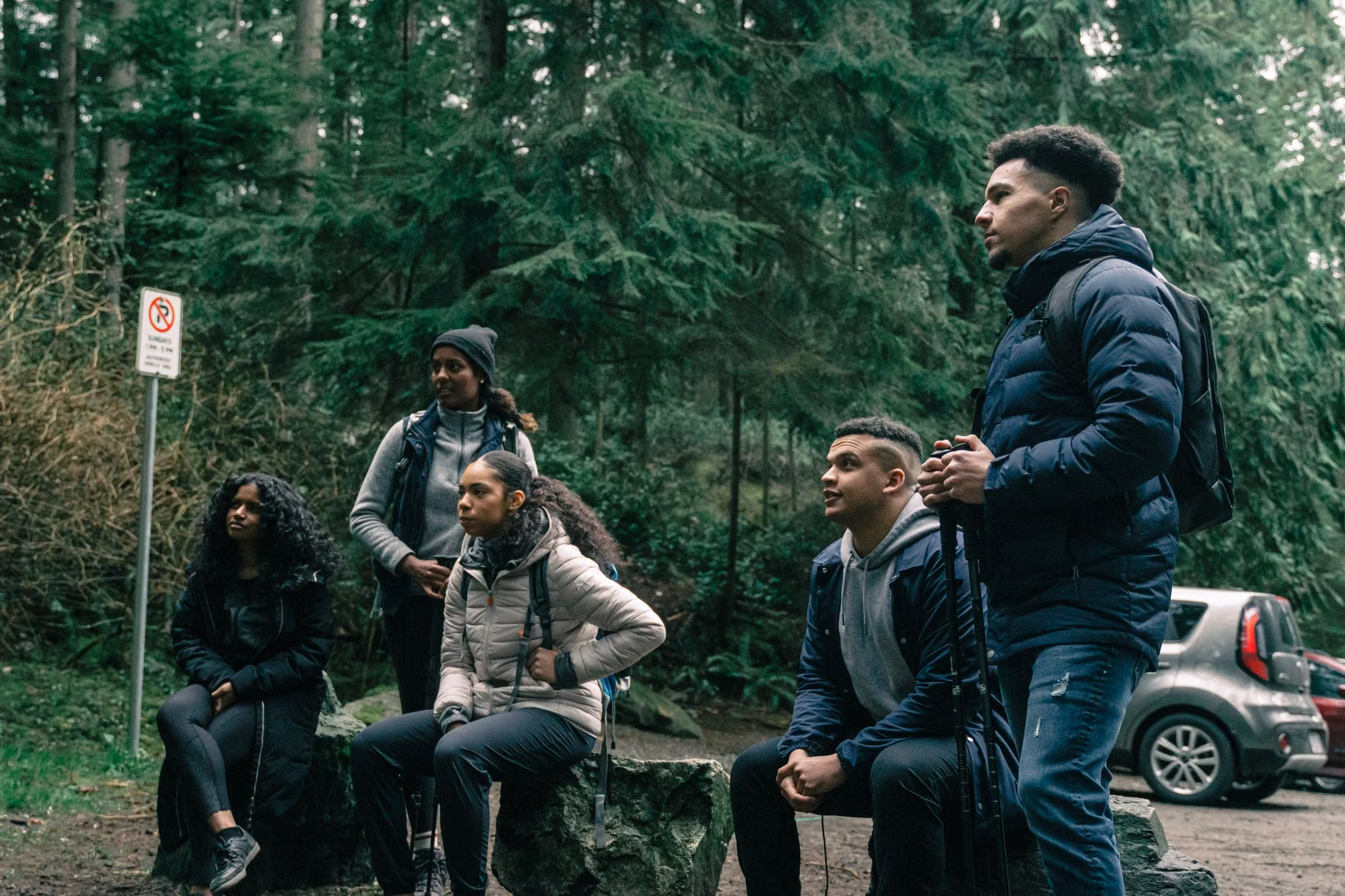
There will be a moment when the kids get bored. Have a “backup plan” ready. This could be a scavenger hunt list you prepared beforehand. Items like “find a house with a blue door,” “find a brick that looks like it’s 100 years old,” or “find a tree that looks older than the house next to it” can instantly reboot their interest. Always carry a small notebook and a pencil. Allowing them to sketch a detail they find interesting turns them from passive observers into active creators of their own history.
Deepening the Connection: Beyond the First Walk
After your first few walks, you will start to notice patterns. You might realize that all the houses built in the 1920s in your town share a similar style, or that the local park was originally a private estate. This is where the hobby evolves. You might find yourself searching for old maps online (many city councils offer these for free) to compare the current layout of your neighborhood with the layout from 1900.
This is not just about the past; it’s about understanding the present. When you see a new development going up, you will have a better sense of how it fits into the long-term story of your community. You become a more informed citizen, and you gain a sense of belonging that you simply don’t get by staying indoors.
The most important takeaway is this: Your neighborhood is not just a place; it is a repository of stories waiting for you to unlock them. You don’t need a plane ticket to have an adventure. You just need to walk outside, look up, and start asking, “Why is that there?”
Frequently Asked Questions
1. How do I find historical records if my neighborhood is relatively new?
Even if your neighborhood was built in the last 20 years, it was likely built on top of something else—farmland, a forest, or an industrial site. Look for “topographical maps” or “land survey records” from 50 or 100 years ago. These often reveal the original owners of the land or the original purpose of the site, which can be just as fascinating as architectural history.
2. What should I do if I can’t find any information about my specific street?
Zoom out. If your street doesn’t have a record, look at the history of the nearest major road, the local school, or the local church. These anchor points usually have written histories that mention the surrounding areas. Often, the history of a neighborhood is told through the history of its institutions.
3. Is this activity suitable for very young children (under 5)?
Yes, but keep it physical. For toddlers, the “history” is in the textures—touching the rough brick, feeling the cold metal of a gate, or noticing the different colors of the houses. Focus on sensory experiences rather than historical dates or names. They aren’t there for the lecture; they are there for the sensory engagement with the world around them.
For further reading and tools to start your own research:
- Library of Congress (USA) – Historical Map Collection
- Historic England – Heritage Search
- Google Earth – Using the “Historical Imagery” feature to track neighborhood changes
Remember: The best adventure is the one you start today. Grab your shoes and go see what your street has been hiding.