By 2026, the implementation and expansion of carbon pricing mechanisms in several major economies will lead to a direct, measurable increase in utility bills as energy providers pass the costs of carbon emissions onto the consumer. While the primary goal is to shift global infrastructure toward greener energy, the immediate impact for households in their 30s and 40s is a necessary adjustment to how we heat, cool, and power our homes to prevent unnecessary financial strain.
Key Takeaways for Your 2026 Budget
- Direct Cost Pass-through: Utility companies are increasingly authorized to pass carbon compliance costs directly to consumers, meaning your monthly bill will reflect the carbon intensity of the fuel sources used to power your home.
- The Efficiency Premium: Older homes with poor insulation will face disproportionately higher costs compared to modern, energy-efficient builds as carbon pricing makes “leaky” energy usage significantly more expensive.
- Actionable Mitigation: Prioritizing “low-hanging fruit” like smart thermostats, LED lighting, and weatherstripping today can offset the projected 5-15% increase in energy-related utility costs expected by 2026.
Understanding the Mechanics: Why Your Bill is Changing
If you have noticed that your utility bills seem to creep upward even when your usage remains relatively stable, you are likely already seeing the initial ripple effects of global carbon pricing. A carbon tax is essentially a fee imposed on the burning of carbon-based fuels (coal, oil, gas). The logic is simple: by making carbon-heavy energy more expensive, governments hope to encourage a transition to renewable energy sources like wind, solar, and nuclear power.
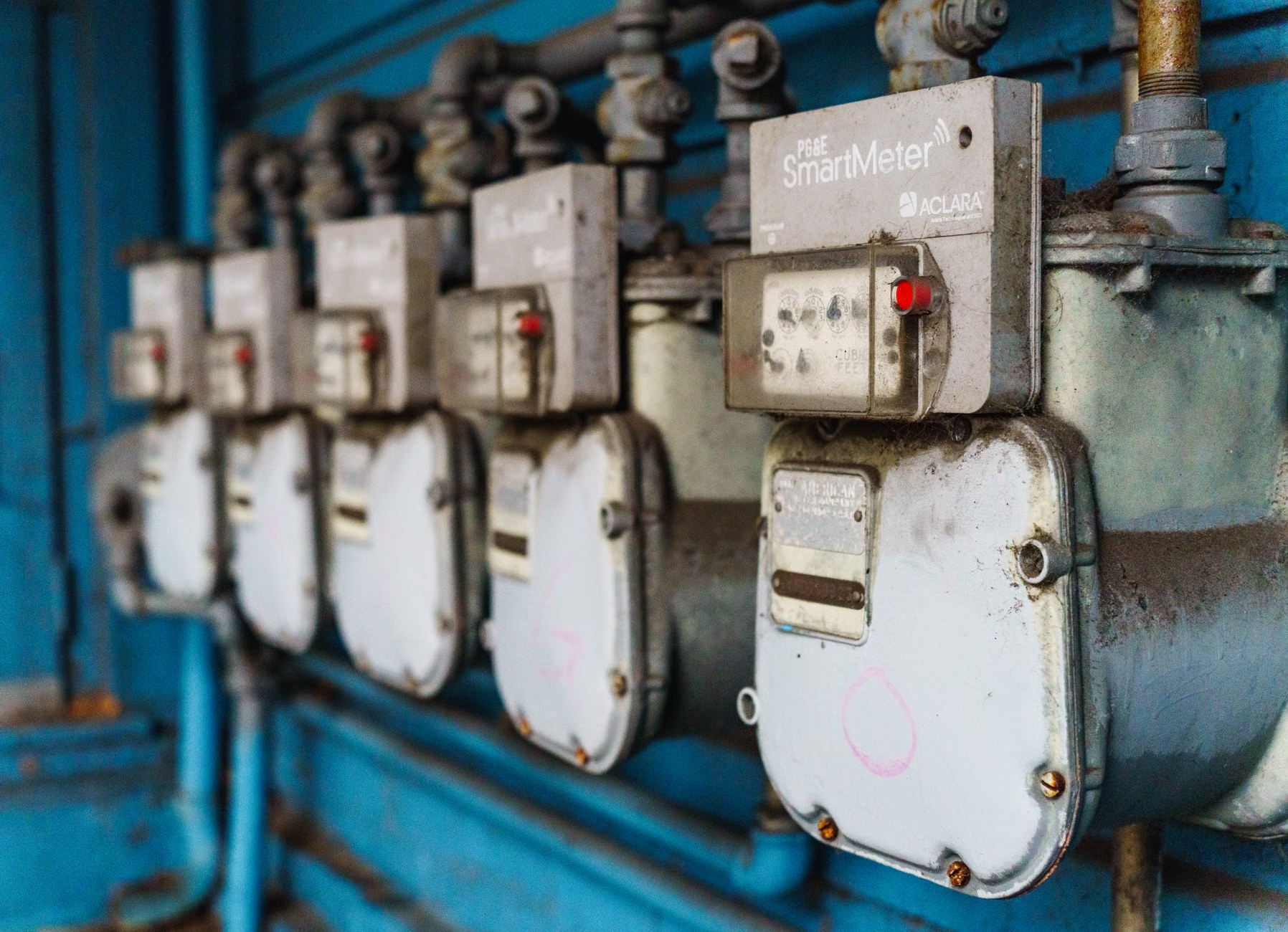
For most households, this manifests as an additional line item or a bundled price increase on electricity and natural gas bills. By 2026, many nations are scheduled to reach higher tiers of carbon pricing. For a family in their mid-30s juggling mortgage payments, childcare costs, and retirement savings, an unexpected 10% hike in utility expenses is not just an annoyance—it is a disruption to the monthly budget.
It is important to understand that this is not a “hidden” fee, but rather a structural change in how energy is priced. Utilities are businesses; when their operating costs rise due to carbon permits or taxes, they rarely absorb those costs. They pass them along. In many jurisdictions, this is legally mandated or regulated, ensuring that the cost of emissions is reflected at the point of consumption.
The 2026 Forecast: What to Expect in Real Terms
While specific rates vary wildly by region—from the European Union’s Emissions Trading System (ETS) to regional carbon levies in Canada or Australia—the trend is universally upward. If your local utility provider relies heavily on natural gas for electricity generation, your bill will be more sensitive to these changes than a household in a region that has already transitioned to a grid dominated by renewables.
Let’s look at a hypothetical scenario to ground these numbers. Consider a standard family home with an average monthly energy spend of $200. If the carbon tax policy in your region increases the effective rate on natural gas by 20% over the next two years, and natural gas represents 50% of your energy footprint, you are looking at a direct increase of approximately $20 per month. While that sounds manageable in isolation, when combined with inflation and potential rate hikes for grid maintenance, the cumulative effect can be significant.
The “Leaky Home” Penalty
One of the most overlooked variables is the age and efficiency of your housing stock. If you live in a home built before the 1990s, you are likely losing a significant percentage of your heated or cooled air through windows, doors, and attic insulation. As carbon taxes make every unit of energy more expensive, the “cost of leakage” rises. In 2026, an inefficient home will effectively carry a “carbon penalty” that a new, high-efficiency home will not.
| Efficiency Factor | Impact on 2026 Utility Costs | Action Priority |
|---|---|---|
| Poor Insulation/Drafts | High: You pay the carbon tax on wasted energy. | Urgent: Seal gaps and upgrade attic insulation. |
| Older HVAC System | Moderate-High: Lower efficiency consumes more fuel. | Medium: Consider maintenance or future replacement. |
| Smart Home Integration | Low: Automated control reduces peak demand costs. | Low: Already optimized for cost efficiency. |
The table above illustrates a clear decision rule: prioritize physical structural improvements before focusing on high-cost technological upgrades. Sealing a drafty window is a low-cost, high-impact action that makes you immune to the rising price of the energy you would otherwise be wasting.
Strategic Mitigation: What You Should Do Now
Waiting until 2026 to address your energy consumption is a mistake. The best strategy is a phased approach that focuses on reducing demand before considering high-capital investments like solar panels or heat pumps. Here is the step-by-step guide to insulating your budget.
Step 1: Conduct a Personal Energy Audit
Most utility providers offer free or subsidized energy audits. If yours doesn’t, you can do a DIY audit. Walk through your home on a windy day with a lit incense stick or a damp hand. Pass it slowly around window frames, electrical outlets, and baseboards. If you feel a draft, that is a direct point of energy loss. In 2026, that draft will be costing you a premium in carbon-tax-inflated dollars.
Step 2: Invest in “Passive” Efficiency
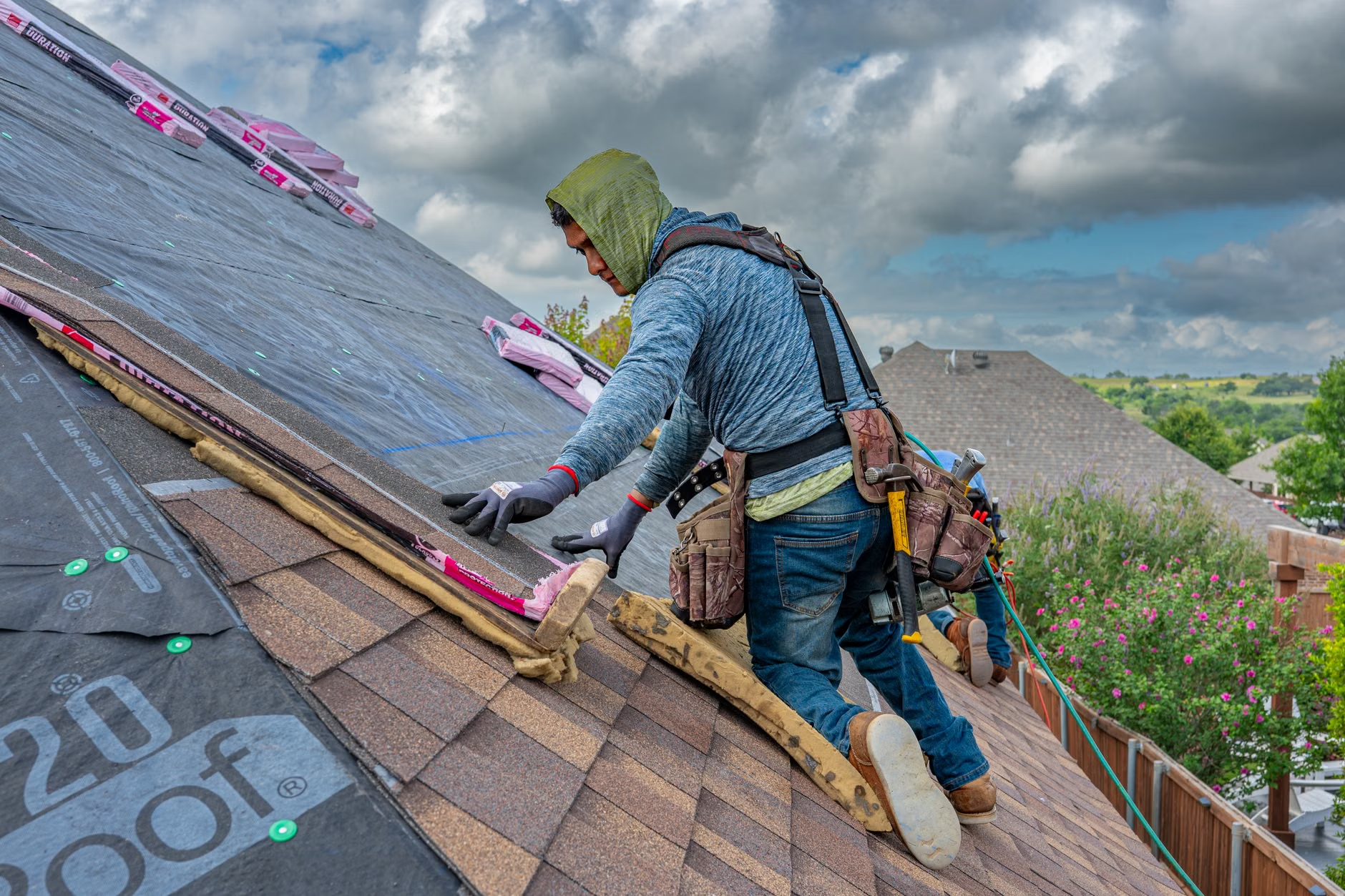
Before buying a fancy smart thermostat, ensure your house isn’t hemorrhaging heat. Adding weatherstripping to doors, applying window film, and topping up attic insulation are the most cost-effective ways to reduce your demand. These improvements are permanent and require zero electricity to function, making them the ultimate hedge against future carbon taxes.
Step 3: The Smart Tech Pivot
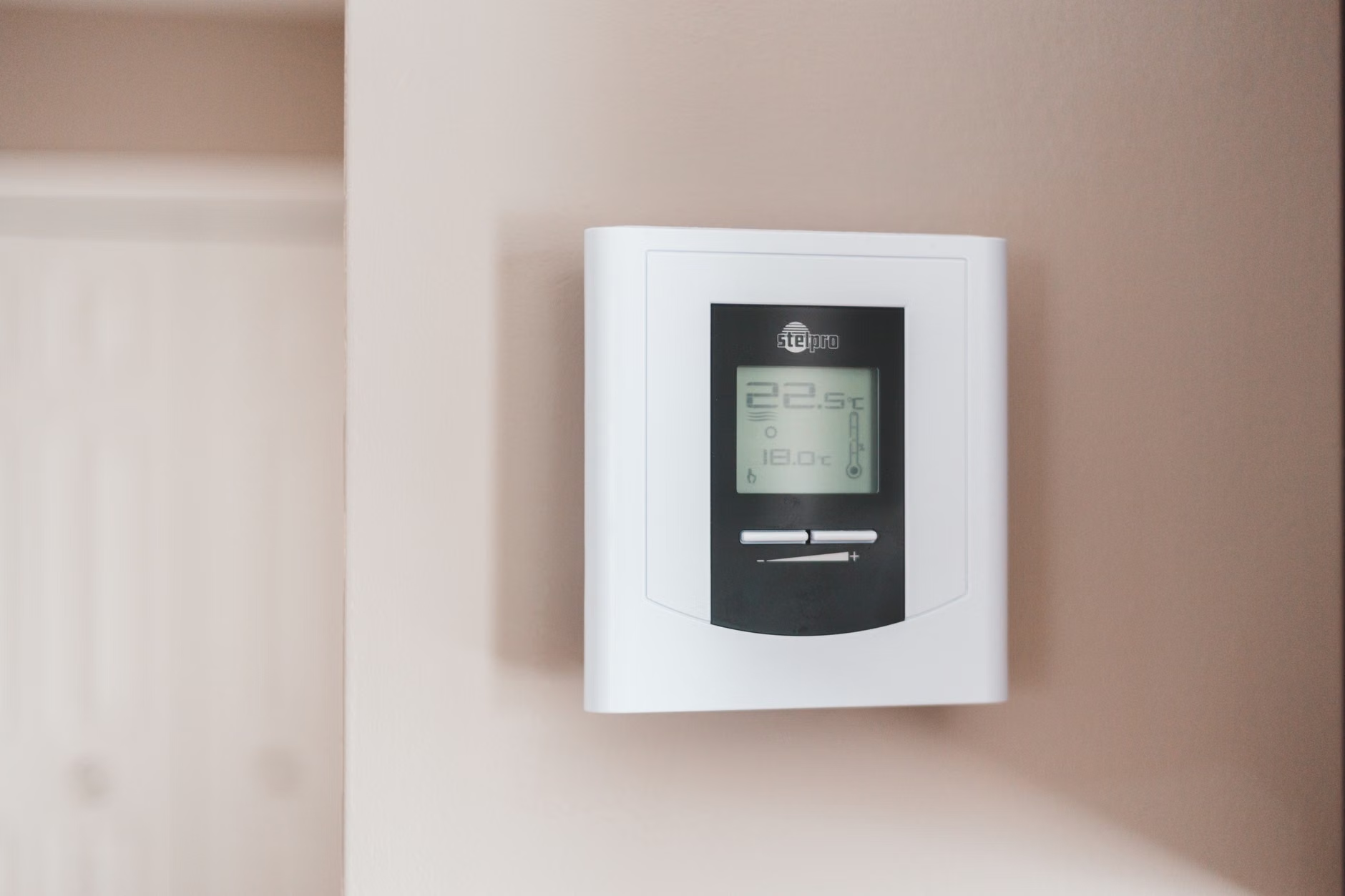
Once your home is “tight,” introduce intelligence. A smart thermostat does not just save energy; it allows you to shift your usage away from peak hours when utility providers often charge the highest rates. By programming your HVAC to “coast” during the day when the house is empty, you are not just saving energy—you are avoiding the highest-priced carbon-tax-inclusive tiers of electricity pricing.
Common Misconceptions About Carbon Pricing
There is a lot of noise surrounding this topic. It is easy to assume that carbon taxes are merely a government cash grab, but for the consumer, the reality is more nuanced. Understanding the “why” can help you make better decisions.
- Misconception 1: “It’s only a tax on the wealthy.” In reality, carbon taxes are regressive. They hit low-to-middle-income families harder because a higher percentage of their income goes toward basic utilities. This is why it is vital to treat energy efficiency as a core part of your financial planning.
- Misconception 2: “I can just switch to a ‘green’ plan.” Many “green” energy plans are simply purchasing carbon offsets. While this supports the industry, it does not necessarily reduce your direct exposure to the rising costs of traditional grid energy. Real, physical reduction of energy use is the only guaranteed way to lower your bill.
- Misconception 3: “Efficiency upgrades are too expensive.” Many governments offer rebates for home improvements. By 2026, these rebates will likely be tied to carbon-reduction goals, meaning the government might pay for half of your insulation upgrade if you act within the right window. Check your local government’s energy efficiency portal.
The Hidden Variable: Grid Stability and Peak Pricing
There is an overlooked variable that will likely impact our utility bills by 2026: grid stress. As more households transition to electric vehicles (EVs) and electric heating, the demand on the grid will surge. When demand spikes, utility companies often fire up “peaker plants”—often the most carbon-intensive, dirtiest, and most expensive power sources available.
Because these plants have high emissions, they are hit the hardest by carbon taxes. If you charge your EV or run your dryer during peak hours (usually late afternoon to early evening), you are effectively paying the highest possible carbon-tax-inclusive rate. The solution? Shift your high-energy tasks to off-peak hours. It costs nothing to delay running the dishwasher or washing machine until after 9:00 PM, but it is a concrete step toward mitigating the impact of carbon-linked pricing.
Final Recommendations for the Household Budget
To summarize, the 2026 carbon tax shift is not a reason to panic, but it is a clear signal to audit your household efficiency. The most important takeaway is that the cost of inaction is rising. Every year you delay sealing your home or optimizing your heating, you are paying a premium that will only grow as carbon pricing scales.
Prioritize your actions in this order:
- Seal the envelope: Weatherstripping, insulation, and window treatments.
- Optimize behavior: Shift high-energy tasks to off-peak hours and use smart controls.
- Plan for capital upgrades: If your furnace or water heater is nearing the end of its life, start budgeting for high-efficiency, electric-based replacements now to take advantage of upcoming green-transition subsidies.
By taking these steps, you are not just saving money; you are building a more resilient home that is less susceptible to the volatility of global energy markets. Start small, track your usage, and keep your eye on the long-term benefit of a more efficient living space.
Frequently Asked Questions
1. Will the carbon tax actually be applied to my household bill, or is it just a business expense?
In most cases, it is both. Utility companies calculate their total carbon compliance costs and incorporate them into their rate structure. While it may not always be listed as a separate line item labeled “Carbon Tax,” it is baked into the price per kilowatt-hour or therm you pay. You are paying for it every time you flip a switch.
2. Are there specific government websites I should check to see how this affects my region?
Yes. Always refer to your national or state-level energy department (e.g., the U.S. Department of Energy’s energy.gov, or the UK’s gov.uk/energy). These sites often have “Energy Savings” calculators that are tailored to your local climate and current utility pricing models.
3. If I rent my home, what can I do to avoid these rising costs?
Renters have fewer options for structural changes, but you can still control your demand. Use heavy curtains to insulate windows, use draft stoppers on doors, and ensure your thermostat is set to energy-saving temperatures. Additionally, advocate for your landlord to consider energy-efficient upgrades, as these can increase the property value and make the unit more attractive to future tenants.
Disclaimer: This article is for informational purposes and does not constitute financial or professional energy advice. Policies regarding carbon taxes vary significantly by country and local jurisdiction. Always verify local regulations through your official government energy portal.