Repairing your clothes is the most effective way to lower your annual clothing expenditure while significantly reducing your environmental footprint. By shifting from a “replace” mindset to a “repair” mindset, you can save hundreds of dollars a year—a crucial buffer for parents in their 30s and 40s balancing family budgets—while ensuring your favorite items last for years instead of months.
- Economic Impact: Repairing a $100 garment instead of replacing it saves you 100% of the replacement cost, minus a few cents for thread and time.
- Quality Over Quantity: The act of repairing forces you to evaluate fabric quality, helping you identify which brands actually use durable materials.
- Skill Acquisition: Basic mending (darning, re-sewing buttons, patching) takes less than 30 minutes to learn and can be done during a single episode of a show or while the kids are occupied.
Why the “Fast-Fashion” Trap Costs You More Than Just Money
If you are in your 30s or 40s, you have likely noticed that the clothes you bought a decade ago seem to have held up better than the items you bought last year. This isn’t just nostalgia; it is a measurable decline in manufacturing standards. Fast-fashion retailers operate on a model of planned obsolescence, where garments are designed to last only a season. When a zipper breaks or a seam pulls apart, the “convenience” of buying a new, cheap item often overrides the thought of repair.
However, this cycle is a hidden tax on your household budget. When you buy a $30 shirt that lasts six months, you are paying $60 a year to keep that item in your wardrobe. If you invest in a $60 shirt that lasts three years through minor maintenance, your annual cost drops to $20. The math is simple, but the behavior change is the challenge. We are conditioned to view clothing as disposable, but the “slow-fashion” movement is about reclaiming the agency to maintain what you own.
Beyond the budget, there is the time cost. How often have you had to rush out to a store or spend hours scrolling through online shops because a critical item—like a work blazer or a school-run jacket—gave out unexpectedly? Repairing keeps your “known-good” items in rotation, saving you the time and mental energy required to research, purchase, and fit new replacements.
The Anatomy of a Basic Repair Kit
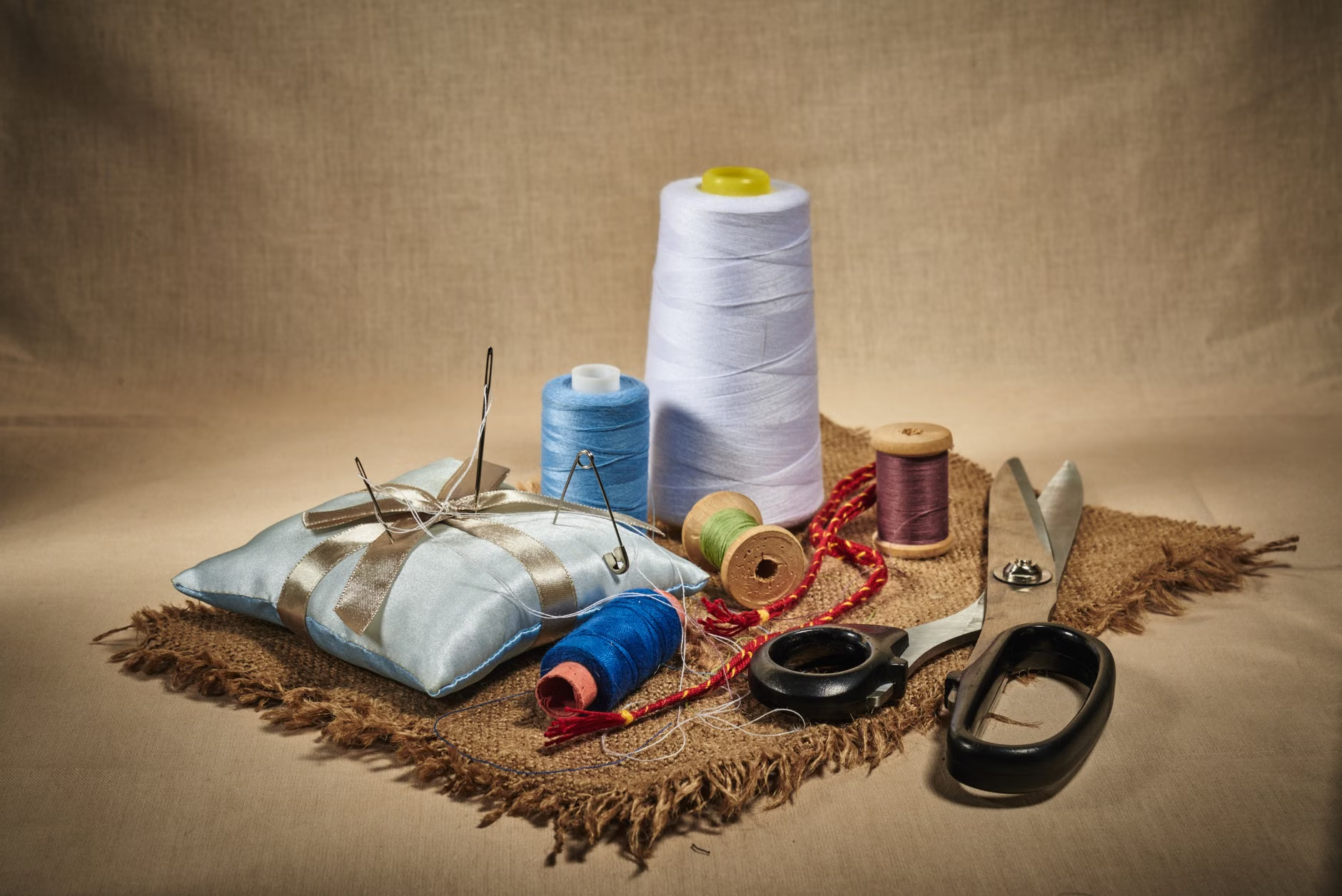
You do not need a professional sewing machine to participate in the slow-fashion movement. In fact, most of the repairs that keep our daily wardrobes functional are best done by hand. A well-stocked kit is an investment that pays for itself within the first three repairs.
Your essential starter kit should include:
- High-quality needles: Buy a variety pack that includes different sizes for thin cottons and thick denims.
- Polyester-cotton blend thread: This is more durable than 100% cotton thread and holds up better to daily wear and tear.
- A sharp pair of fabric shears: Never use these for paper. Keeping them sharp is the difference between a clean cut and a frayed edge.
- A thimble: This is the most overlooked tool. It protects your finger when pushing a needle through thick fabrics like denim or canvas.
- A seam ripper: This is your “undo” button. It allows you to remove bad stitching without damaging the fabric.
Avoid the cheap, pre-threaded kits found in hotel rooms or dollar stores. They contain low-quality thread that snaps easily, which will only frustrate you and make the repair process feel like a chore rather than a productive habit.
Step-by-Step: The Most Common Repairs You Will Encounter
Most of the “damage” we see in our closets is minor: a lost button, a small hole in a sweater, or a split seam in a pair of trousers. These are not signs that the garment is “done”; they are simply maintenance intervals.
1. Replacing a Button
The most common mistake people make is using a single strand of thread. When sewing a button, always use a double strand (knot the ends together). If the button is for a heavy coat, use a button-specific thread or a thicker, waxed thread. Always leave a small “shank”—a space between the button and the fabric—so the button can move easily when the fabric is buttoned.
2. Darning a Small Hole in Knitwear
Darning is the art of weaving new thread into the fabric to replace lost fibers. Instead of trying to “pull” the hole shut (which creates a messy pucker), use a darning mushroom or a round lightbulb to hold the fabric taut. Weave a grid of horizontal and vertical threads across the hole, then weave over and under that grid. This creates a “new” piece of fabric that mimics the original knit.
3. Reinforcing a Seam
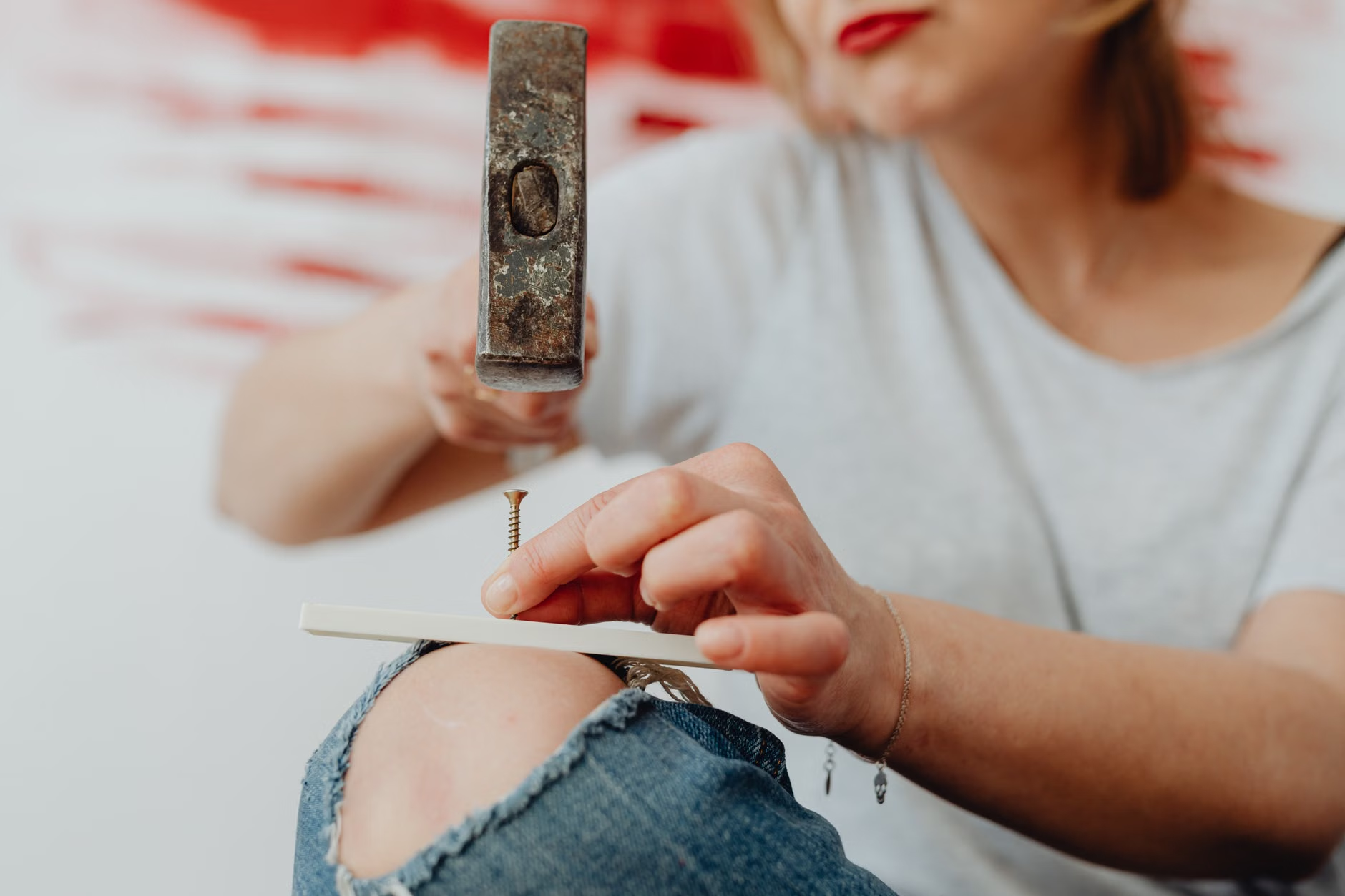
If you see a seam starting to unravel, don’t wait for the hole to grow. Use a “backstitch” to reinforce the area. A backstitch is stronger than a simple running stitch because it overlaps, creating a continuous line of strength that won’t pull apart under tension. Always start your stitch a few millimeters before the tear and end a few millimeters after it to ensure the integrity of the surrounding area.
The Economics of Professional Repair
While DIY is excellent for minor repairs, there are times when professional intervention is the smarter move. If you have an expensive piece of outerwear, a high-quality leather item, or a complex tailoring issue (like resizing a suit jacket), a professional tailor is a better investment than a DIY attempt that might ruin the garment.
When to choose a professional:
| Repair Type | Difficulty | Recommended Action |
|---|---|---|
| Missing button | Low | DIY (10 mins) |
| Small sweater hole | Medium | DIY (20 mins) |
| Broken zipper on a coat | High | Professional (Cost-effective) |
| Leather jacket tear | Expert | Professional (Essential) |
The key insight here is the “replacement cost ratio.” If the cost of the professional repair is less than 30-40% of the cost of a high-quality replacement, it is almost always worth the repair. Not only do you save money, but you maintain the “fit” of the item, which is often the hardest thing to replicate when buying new.
Building a Wardrobe That Is “Repair-Ready”
The best way to make repairs easier is to buy items that are designed to be repaired. This is where your shopping habits in your 30s and 40s should shift. Look for natural fibers like wool, cotton, and linen. Synthetic fabrics, especially those with high elastane content, are notoriously difficult to repair because the fabric fibers themselves degrade and lose elasticity over time. When a synthetic fabric loses its stretch, it is effectively dead.
Natural fibers, however, can be patched, darned, and re-dyed. A 100% cotton pair of jeans can be patched with scrap denim and last for decades. A wool sweater can be re-knitted. When you shop, check the internal label. If the composition is 95% cotton and 5% elastane, expect the item to have a shorter lifespan than a 100% cotton alternative. While the 100% cotton item might feel stiffer initially, it will soften with wear and remain repairable for the long haul.
The “Hidden” Benefits of Mending
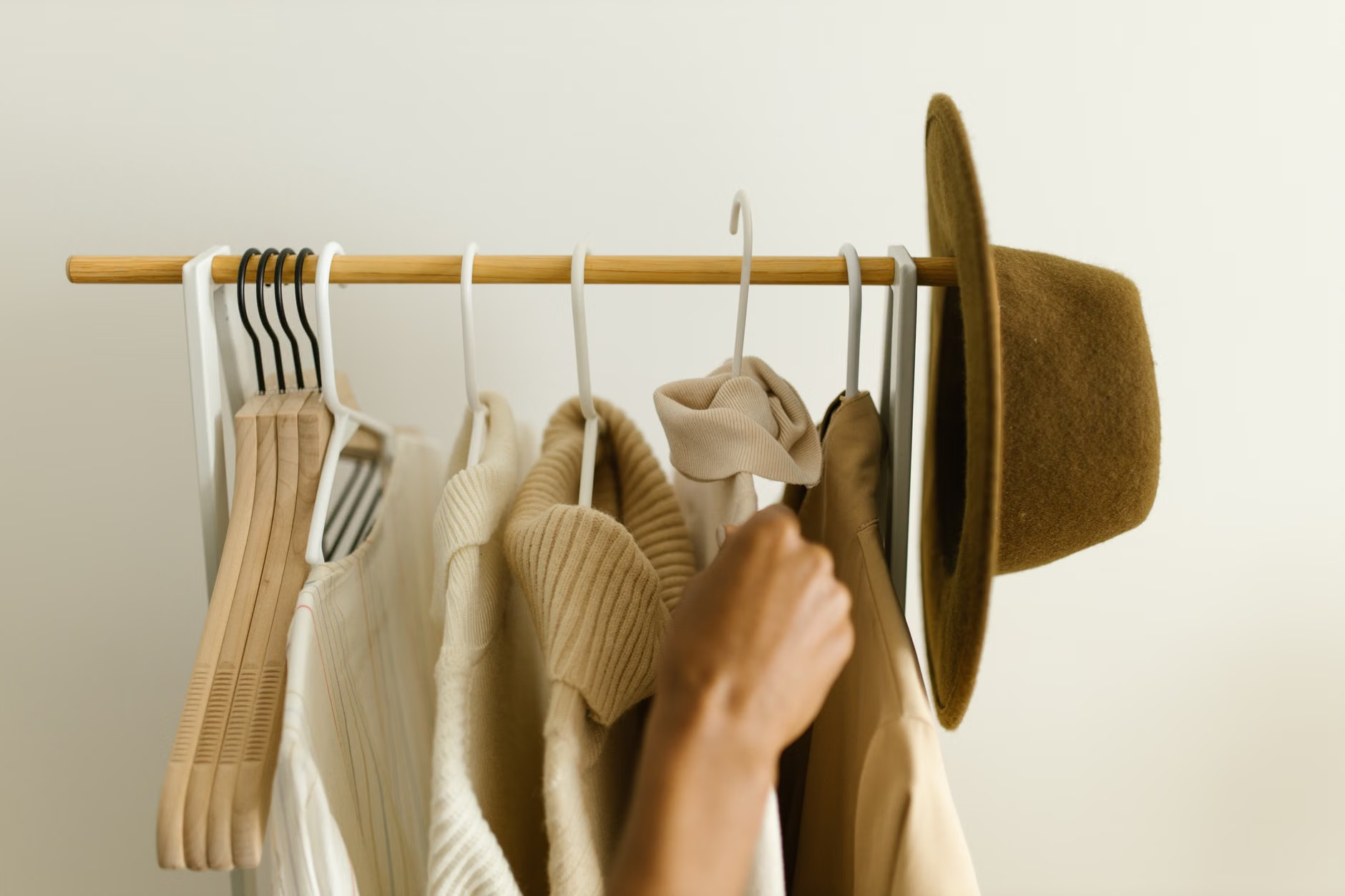
Beyond the financial and environmental arguments, there is a psychological benefit to mending. In a world where we are constantly bombarded with notifications and digital demands, the act of sitting down to repair a garment is a grounding exercise. It is a tactile, slow activity that provides immediate, visible results. For many parents, this is a rare moment of “productive quiet.”
Furthermore, repairing your clothes changes your relationship with them. You stop seeing them as disposable commodities and start seeing them as tools you have invested in. You handle them with more care, you store them more thoughtfully, and you are less likely to over-consume. This shift in mindset is the true heart of the slow-fashion movement. It isn’t just about saving a pair of pants; it is about reclaiming control over your consumption habits.
Common Misconceptions About Slow Fashion
A common misconception is that slow fashion is only for the wealthy. In reality, it is a survival strategy for the working and middle class. The “fast-fashion” industry relies on the assumption that you will keep buying. By refusing to engage in that cycle, you are actually opting out of a system designed to extract wealth from your household. You don’t need to buy expensive, sustainable brands to practice slow fashion; you need to practice better stewardship of the items you already own.
Another misconception is that “repaired” means “looking shabby.” If you learn the technique of “visible mending”—a style where you celebrate the repair with decorative thread or contrasting fabric—you can turn a damaged item into a unique, personalized piece. However, if you prefer a subtle look, invisible mending techniques (like color-matching your thread precisely) are easy to master with a bit of practice.
Taking Action: Your First Week of Repair
Don’t try to tackle your entire closet at once. Start with a “repair pile.” Gather all the items that have been sitting in your closet because of a missing button or a small tear. Choose one item to start with. If it’s a button, find a replacement from an old shirt or a craft store. If it’s a hole, watch a five-minute YouTube tutorial on “darning for beginners” or “how to patch denim.”
Focus on the process, not the perfection. Your first repair might look a little messy, and that is perfectly fine. The goal is to build the habit. Once you successfully repair one item, the “fear” of damage disappears. You will no longer view a loose thread as a reason to discard a garment, but as a minor task to be addressed during your next quiet hour.
Final Thoughts on Sustaining Your Wardrobe
The slow-fashion movement is not a trend; it is a return to a standard of living that respects both the labor that went into making our clothes and the resources required to produce them. By integrating simple repair skills into your routine, you are making a conscious decision to value quality over convenience. You are teaching your children, by example, that things are worth fixing, that waste is not a default state, and that being a smart consumer is about maintenance as much as it is about acquisition.
Start small, be patient with your progress, and remember that every item you rescue from the landfill is a victory for your wallet and the planet. You have the skills to make your wardrobe last; now it is just a matter of picking up the needle.
Frequently Asked Questions
Q: Does “visible mending” lower the value of my clothes?
A: It depends on the garment. For high-end luxury items, invisible mending is usually preferred to maintain the original aesthetic. For everyday wear, visible mending is often seen as a badge of honor and a sign of a creative, sustainable lifestyle. It does not lower the utility of the item, and in many circles, it is considered a mark of a well-cared-for wardrobe.
Q: I don’t have time to sew. Is there a “no-sew” option?
A: There are iron-on patches (fusible web) that can be used for quick fixes on denim or heavy cotton. While these are not as durable as a stitched repair, they are a legitimate, time-saving alternative for busy parents. Just be aware that the adhesive can degrade after many wash cycles, so they are best for non-critical areas.
Q: How do I know if a garment is worth repairing or if it’s time to recycle?
A: Use the “structural integrity” rule. If the fabric itself is thinning out across a large area (like the seat of trousers or the underarms of a shirt), the material has likely reached the end of its life. If the damage is localized (a specific tear or a broken fastener) but the surrounding fabric is still strong, it is almost always worth repairing.
For more information on the environmental impact of textile waste, visit the United States Environmental Protection Agency (EPA) textiles data page or explore the Ellen MacArthur Foundation’s circular economy resources.