The most effective way to combat parenting-induced exhaustion is not to chase a mythical eight-hour block of unbroken sleep, but to audit the structure of the sleep you are actually getting. In your 30s and 40s, when the demands of professional life collide with the unpredictable schedule of raising children, the quality of your sleep cycles—your “sleep architecture”—matters significantly more than the total duration of your time in bed.
- Quality over Quantity: Fragmented sleep is the primary driver of parental burnout; stabilizing your REM and Deep Sleep cycles is more important than achieving an 8-hour total.
- The 90-Minute Rule: Sleep occurs in 90-minute cycles. Aligning your wake-up times to the end of these cycles prevents “sleep inertia,” the groggy feeling that ruins your morning.
- Environmental Anchoring: Controlling light, temperature, and noise acts as a “biological anchor” that helps your brain drop into deep sleep faster, even when your total sleep window is compressed.
If you are a parent in your 30s, you know the feeling: you fall into bed at 11:30 PM, wake up to a toddler’s cry at 3:00 AM, and spend the next hour trying to settle them, only to wake up at 6:30 AM feeling like you’ve been run over by a truck. You aren’t just tired; your brain is struggling because the architecture of your rest has been dismantled.
Understanding Sleep Architecture: Why Your Brain Needs More Than Just “Hours”
Sleep architecture refers to the cyclical pattern of sleep stages you cycle through each night. A healthy adult typically goes through four to six cycles of roughly 90 minutes each. Each cycle consists of NREM (Non-Rapid Eye Movement) sleep—divided into light and deep sleep—and REM (Rapid Eye Movement) sleep.
In your 30s and 40s, the “stress-parenting” cycle often forces you to sacrifice the very end of your sleep cycles, which are predominantly REM-heavy. REM sleep is where emotional regulation and memory consolidation happen. When you are constantly interrupted, your brain never enters the restorative REM stage, leading to the “short fuse” irritability that many parents experience. It isn’t just about being sleepy; it’s about your brain’s inability to process the emotional stress of the previous day.

The Reality of Fragmented Sleep
For most parents, the “interrupted night” is the new normal. The danger here isn’t just the interruption itself; it is the latency—the time it takes to fall back asleep after the interruption. If it takes you 45 minutes to fall back asleep after a 15-minute child-care task, you have effectively destroyed your next 90-minute cycle. The goal of a sleep audit is to reduce that latency through environmental and behavioral conditioning.
The 7-Day Sleep Audit: A Practical Step-by-Step Guide
Before you can fix your sleep, you need to see the data. For seven days, track your sleep using a simple journal or a wearable tracker. Do not just track the time you spent in bed; track the quality of your transitions.
| Audit Metric | What to Look For | Why It Matters |
|---|---|---|
| Sleep Latency | How long to fall asleep? | Anything over 20 mins suggests high cortisol/stress. |
| Fragmentations | How many wake-ups? | Frequent wake-ups destroy deep sleep cycles. |
| Wake-up Inertia | How long to feel “awake”? | If > 30 mins, you are likely waking up mid-cycle. |
Once you have this data, you can begin the “architecture” adjustment. Start by identifying your “Anchor Point.” This is the time you must wake up. Work backward in 90-minute increments to find your target bedtime. If you must be up at 6:00 AM, your ideal sleep start times are 10:30 PM or 12:00 AM. Aiming for 11:15 PM is actually worse, as you will wake up in the middle of a deep sleep cycle, causing severe grogginess.
Environmental Anchoring: Controlling the Variables
Your environment is the most powerful tool you have to signal to your brain that it is time to cycle down. For parents, this usually means “blackout” everything. Even small amounts of light from a hallway or a street lamp can suppress melatonin production, keeping you in a state of light, easily-disturbed sleep.

The Temperature Trade-off
There is a common misconception that a “cozy” bedroom should be warm. Research consistently shows that your core body temperature needs to drop by about 1 to 2 degrees Fahrenheit to initiate sleep. If your bedroom is above 20°C (68°F), your body will struggle to enter deep sleep. This is a common, overlooked factor in why parents wake up feeling “hot” or “restless” in the middle of the night.
The “Buffer Zone” Strategy
If you have high-stress parenting duties, you likely jump straight from “solving a toddler crisis” to “trying to sleep.” This is a physiological mistake. Your nervous system is still in “fight or flight” mode. You need a 15-minute “buffer zone” of non-screen activity. This isn’t just “relaxing”; it is a mandatory period to lower your heart rate. If you skip this, your sleep latency will increase, and you will effectively lose the first 90-minute cycle of your night.
Common Mistakes in Parenting Sleep Management
Many parents fall into the trap of “revenge bedtime procrastination.” This is the psychological phenomenon where you stay up late because you feel you have no control over your time during the day. While it feels good in the moment, it creates a “sleep debt” that accumulates over the week. By Thursday, your cognitive function is impaired, making you less patient with your children, which increases your stress, which makes it harder to sleep. It is a vicious loop.
The Alcohol Fallacy
Many parents use a glass of wine to “wind down.” While alcohol helps you fall asleep faster (reducing latency), it is a potent inhibitor of REM sleep. Even one drink can cause you to wake up in the middle of the night as the alcohol metabolizes, leading to a fragmented, low-quality rest. If you are struggling with sleep architecture, alcohol is the first thing you should audit out of your routine.
Optimizing the “Mid-Night” Rescue
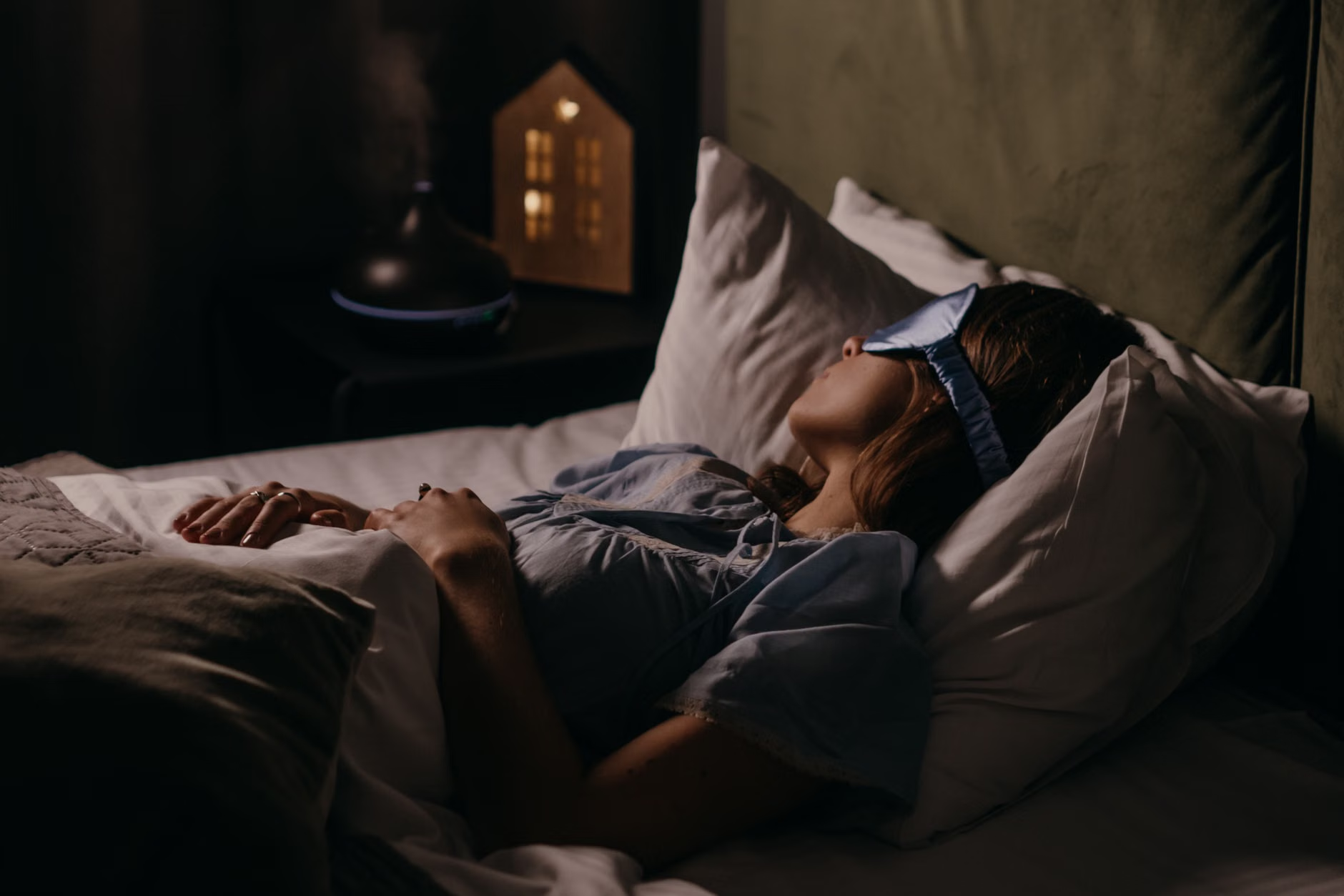
When you are woken up by a child, your goal is to minimize the “arousal” of your own brain. Avoid turning on bright overhead lights. Use low-level, warm-toned lighting (amber or red spectrum). Keep your movements slow and deliberate. If you have to speak, use a whisper. The more “boring” and “dim” you make the interaction, the easier it will be for your brain to slip back into the sleep cycle once the task is finished.
The Decision Matrix: Choosing Your Recovery Strategy
Not every parent has the same constraints. Use this matrix to decide where to focus your energy:
- If your child wakes you up 3+ times a night: Focus on “Sleep Latency.” Use a white noise machine to mask sounds and ensure your room is completely dark so that when you return to bed, your brain doesn’t “re-boot” with light exposure.
- If you have trouble falling asleep after a stressful day: Focus on the “Buffer Zone.” Incorporate 10 minutes of non-screen activity (reading a physical book, stretching) to physically signal the end of the “parenting shift.”
- If you wake up too early and can’t get back to sleep: Focus on temperature and blood sugar. A stable blood sugar level (avoiding high-sugar snacks late at night) can prevent the “early morning wake-up” caused by cortisol spikes.
The Role of Supplements and Professional Guidance
There is a lot of noise about magnesium, melatonin, and other sleep aids. While some supplements may help with falling asleep, they do not fix the architecture of your sleep. If you are consistently struggling with fatigue despite improving your environment and routine, you may have an underlying condition like sleep apnea or chronic insomnia. In these cases, no amount of “sleep hygiene” will fix the problem. Consult a primary care physician or a sleep specialist. According to the National Sleep Foundation, persistent sleep issues that affect daily functioning should always be evaluated by a professional rather than masked with over-the-counter aids.
Final Next Steps for the Overwhelmed Parent
You cannot “hack” your way out of the intensity of parenting in your 30s and 40s. However, you can manage the biological toll. Your next action is not to buy a new mattress or an expensive supplement. Your next action is to audit your last hour of the day. Identify one habit—whether it is doom-scrolling, a late-night snack, or an overly bright bathroom light—and remove it for three days. Observe how your morning wake-up feels.
By protecting your sleep architecture, you aren’t just getting “rest.” You are regaining the emotional bandwidth to be the parent you want to be. Start small, be consistent, and stop punishing yourself for the nights that don’t go according to plan. The goal is progress, not perfection.
Frequently Asked Questions
1. Does tracking my sleep actually help, or does it just add more stress?
For some, tracking can lead to “orthosomnia”—a perfectionist anxiety about sleep scores. If you find yourself obsessing over the numbers, stop tracking. Use the audit as a one-week diagnostic tool only. If you find the data helps you identify specific “weak points” in your routine, continue, but don’t let the score define your mood for the day.
2. Can I “make up” for lost sleep on the weekend?
“Catch-up sleep” can help reduce the immediate feeling of sleep deprivation, but it disrupts your circadian rhythm, often leading to “social jetlag” where you feel groggy on Monday morning. It is far better to keep your wake-up time within an hour of your weekday schedule, even on weekends, to keep your internal clock stable.
3. What is the most important factor in falling back asleep quickly after a night awakening?
The most critical factor is “cognitive detachment.” If you start worrying about how much sleep you are losing while you are awake, your cortisol levels spike, keeping you alert. Use a simple breathing technique (like 4-7-8 breathing) to shift your brain out of the “problem-solving” mode and back into the “rest” mode. Keep your eyes closed, keep the room dark, and focus entirely on the physical sensation of your breath.
Note: This article is for informational purposes and does not constitute medical advice. Always consult with a healthcare professional regarding chronic sleep issues.