Key Takeaways:
- Focus on narrative, not just geography: A heritage trip is most effective when you connect specific family stories to physical locations, rather than just visiting ancestral regions.
- The 70/30 Rule: Dedicate 70% of your time to child-friendly activities and 30% to heritage exploration to prevent burnout and keep engagement high.
- Digital preparation is mandatory: Digitizing documents and using offline mapping tools before you leave saves hours of frustration when navigating remote ancestral villages.
The most successful ancestral-roots trip isn’t a history lecture; it’s a scavenger hunt for your own family’s identity. If you try to force a genealogical deep dive on an eight-year-old, you’ll end up with a bored kid and a lot of wasted flight money. The trick is to treat the journey as a bridge between the abstract stories they hear at home and the tangible, sensory reality of their origins.

Defining the Goal: Why You’re Actually Going
Before you even look at flight prices, you need to define what “ancestral roots” means for your specific family unit. Are you looking for the exact house where a great-grandparent was born, or are you just trying to expose your children to the culture of their heritage? The answer changes your planning strategy entirely.
Many parents make the mistake of assuming that “finding the roots” is the primary activity. In reality, for a child, the “roots” are just a place. The connection only happens when you anchor that place to a story they already know. If you tell your child, “This is where your great-grandfather learned to fish,” the location suddenly becomes meaningful. If you just say, “This is the village our family is from,” it’s just another town with cobblestone streets.
The Decision Framework:
- The “Story-Heavy” Trip: Focus on oral history. Spend time in the specific towns where family members lived. This requires more archival work before you leave.
- The “Cultural Immersion” Trip: Focus on food, language, and traditions. You don’t need to find a specific grave or house; you just need to live in the region. This is much lower pressure and usually more fun for younger kids.
The Pre-Trip Research: Turning Data into a Treasure Map
You cannot effectively do research on the ground while traveling with children. The stress of managing a flight, a hotel check-in, and a crying toddler is enough; you don’t want to be hunting for baptismal records in a foreign language at the same time.
Start by digitizing your family tree. Use platforms like FamilySearch or Ancestry to build a clear, portable map. More importantly, create a “Family Story Book” for your kids. This should contain photos, short anecdotes, and, if possible, simple phrases in the local language of your ancestral home. By the time you arrive, your children should be able to recognize the names of the towns or the faces in the old photos.
Common Pitfalls in Genealogical Planning
One of the biggest mistakes parents make is overestimating the accessibility of records. In many parts of the world, records are not digitized, and local archives may only be open for three hours on a Tuesday. Do not plan your entire trip around a visit to a local parish office or municipal archive unless you have a confirmed appointment. Always have a “Plan B” that involves a local park, a playground, or a specific local delicacy you’ve promised the kids.

Balancing the Itinerary: The 70/30 Rule
To keep your sanity, adopt the 70/30 rule. 70% of your itinerary should be standard, high-engagement travel: local zoos, interesting playgrounds, kid-friendly museums, and downtime. 30% should be dedicated to the “roots” aspect. This ensures that even if you fail to find the specific ancestral home or the archive is closed, the trip is still a massive success for the children.
| Activity Type | Heritage Focus | Kid-Friendly Alternative |
|---|---|---|
| Museums | Local history museum | Science or interactive children’s museum |
| Outdoor | Visiting an ancestral cemetery | Hiking in a regional park |
| Food | Cooking a traditional family recipe | Local street food tour |
This balance is crucial because children process travel differently than adults. Adults derive meaning from cognitive connections (e.g., “This is where my heritage started”). Children derive meaning from sensory experiences (e.g., “This is where I ate the best gelato of my life”). By combining the two, you create a memory that is both intellectually grounded and emotionally positive.
Logistics: How to Manage the “Roots” Aspect in Real Life
When you arrive at the destination, avoid the “tour guide” trap. Don’t lecture your kids on the significance of every building. Instead, ask them to spot things. If you are in your ancestral town, give them a printout of an old photo of a landmark and ask them to find the modern version of that view. This turns research into an active, gamified experience.
Also, consider the “Hidden Cost of Heritage.” Often, the villages where our ancestors lived are remote and lack modern tourist infrastructure. You might need a rental car, specific insurance, or even a local guide. If you are going to a rural area, check the Google Maps satellite view ahead of time to see if there are even sidewalks or basic cafes. If the town is truly tiny, plan to stay in a larger, nearby city and make the ancestral village a day trip.
The Unexpected Variable: Cultural Nuance
One thing that often catches people off guard is the local reaction to “root-seekers.” In some cultures, locals are incredibly helpful and will go out of their way to help you find a long-lost house. In others, they might be indifferent or even suspicious of foreigners digging into the past. Always approach locals with humility. A simple phrase in the local language—”We are visiting to learn about our family history”—goes a long way. Never assume you are entitled to access private property just because your ancestors lived there 100 years ago.
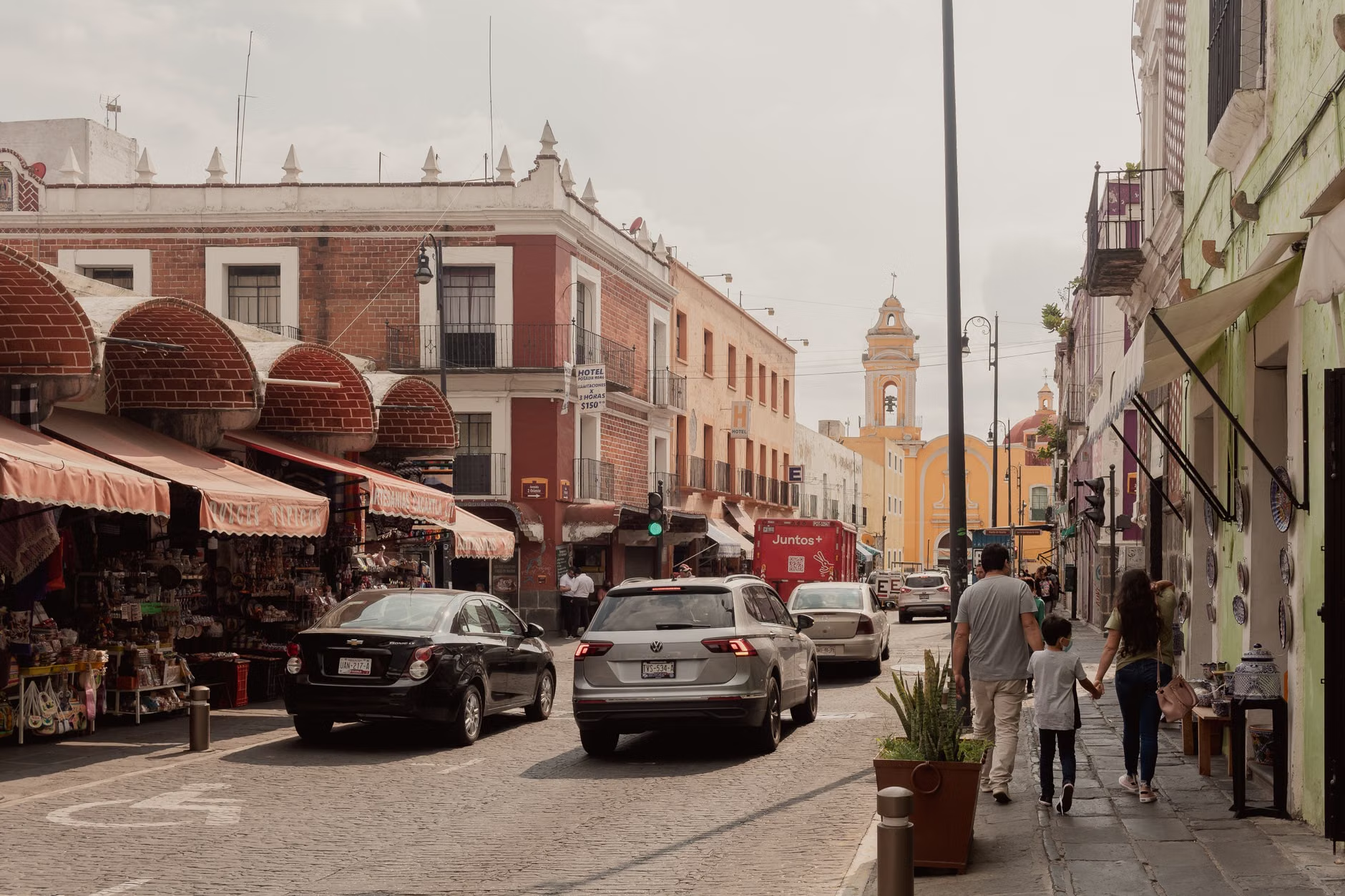
Practical Steps to Execute Your Plan
1. Document Everything: Before you leave, create a digital folder on your phone with high-resolution scans of all documents, old photos, and maps. Do not rely on cloud storage; ensure it is saved for offline access.
2. The “Gift” Strategy: If you are visiting distant relatives or local historians, bring a small, thoughtful gift from your home country. It’s a universal sign of respect and builds rapport instantly.
3. Manage Expectations: Tell your kids that we are going on an adventure, and sometimes adventures lead to dead ends. If we can’t find the house, we find the best ice cream in town instead.
4. Journaling: Give your children a dedicated travel journal. Have them write or draw one thing they learned about the family and one thing they loved about the destination each day. This consolidates the experience.
The Lasting Impact: Why It Matters
The goal isn’t to turn your kids into amateur genealogists. The goal is to give them a sense of place. In a world that feels increasingly transient and digital, having a physical, tangible connection to a specific part of the globe provides a sense of continuity. It teaches them that they are part of a larger story that spans generations.
When you return, the “roots” trip should continue to live in your home. Print out the photos you took, frame them, and place them next to the old photos you brought with you. Let the kids see the comparison. Keep the tradition of cooking that one meal you learned during the trip. These small, consistent reminders are what turn a one-off vacation into a lifelong connection to their heritage.
Remember, the most important part of this trip isn’t the data you collect or the records you verify—it’s the time you spend together, navigating the world and discovering the threads that tie your family to the wider tapestry of history. Keep it light, keep it fun, and prioritize the experience over the outcome.
Frequently Asked Questions
Q: How old should my kids be before we attempt an ancestral-roots trip?
A: There is no “perfect” age, but children between 8 and 14 are usually at the sweet spot. They are old enough to appreciate the history and follow a map, but young enough to still enjoy the “adventure” aspect of travel. If your kids are younger, focus entirely on the cultural immersion (food, music, festivals) rather than the genealogy.
Q: What if we don’t know where our ancestors were from?
A: That’s a common starting point! Before you travel, you can use DNA testing services or basic census research to narrow down the region. Even if you can’t pinpoint a specific village, visiting the general region (e.g., a specific province or state) is still a valid and rewarding way to connect with your roots.
Q: How do I handle potential language barriers in rural ancestral towns?
A: Use a combination of a reliable translation app (like Google Translate with offline language packs) and a physical notebook. Having a written note in the local language explaining your mission is often more effective than trying to explain it through a phone speaker. Keep the note simple and respectful.
Official Resources for Further Research:
- FamilySearch.org – Extensive free records and research guides.
- National Archives (US) – Useful for immigration and naturalization records.
- Cyndi’s List – A comprehensive directory of genealogy websites categorized by location and topic.