The most effective way to end morning chaos is to stop acting as your teen’s external frontal lobe and start building a physical system that does the heavy lifting for them.
- Externalize the plan: Move tasks from their brain to a physical, visible checklist to reduce cognitive load.
- The “Launch Pad” principle: Create a single, non-negotiable drop-zone for essentials to eliminate “where are my keys” panic.
- Shift from nagging to auditing: Transition from giving commands to asking, “What does your checklist say is next?”
If your mornings currently involve you repeating “Did you pack your lunch?” or “Where is your permission slip?” for the fourth time in ten minutes, you aren’t alone. Many parents in their 30s and 40s find themselves stuck in a loop of micromanagement. The issue isn’t that your teen is lazy; it’s that their executive function—the brain’s command center responsible for planning, focusing, remembering instructions, and juggling multiple tasks—is still under construction. It doesn’t fully mature until the mid-20s.
Instead of hoping they’ll eventually “get it,” you need to treat the morning routine as a piece of engineering. You are building a system that allows them to function independently even when they are half-asleep.
Understanding Why Your Teen Struggles with “Simple” Tasks
Executive function is an umbrella term for cognitive processes that allow us to get things done. When a teen looks at a messy room or a pile of school supplies, their brain might struggle with inhibition (stopping a distraction), working memory (holding the list of tasks in their head), or emotional regulation (getting frustrated when they can’t find their phone).
Think of it like a computer’s RAM. If your teen has 50 tabs open in their brain—worrying about a math test, trying to find a clean shirt, and thinking about a text they just received—their “processor” crashes. By building a routine that removes the need for them to “think” about what comes next, you free up their mental energy for the tasks that actually matter.
The Biology of the “Morning Fog”
Research published by the American Academy of Pediatrics underscores that adolescent circadian rhythms shift later, making early rising physically painful for many teens. This isn’t just “being a teenager”; it’s biological. When you combine sleep deprivation with an underdeveloped prefrontal cortex, you get a recipe for morning friction. The goal of an executive-function routine is to provide a “path of least resistance” that doesn’t require them to make high-level decisions before 8:00 AM.
Designing Your “Launch Pad” System
A “launch pad” is a designated physical space near the exit of your home that acts as a staging area. If an item isn’t in the launch pad, it doesn’t exist for the morning transition. This removes the “search and rescue” mission that defines many households.
The essential components of a launch pad:
- Charging station: All devices stay here overnight. No exceptions.
- The “Must-Have” tray: A small bowl or tray for keys, wallet, or transit cards.
- Backpack hook: If it’s not on the hook, it’s not ready for school.
- Outbox: A shelf or bin for items that need to leave the house, such as signed forms or library books.
The mistake most parents make is having a “loose” system. They might have a basket for keys, but the backpack is left in the living room, and the lunch is in the fridge. By consolidating these into one physical zone, you reduce the number of “points of failure” in the morning. If they have to visit three different rooms to gather their gear, they have three opportunities to get distracted by a screen or a sibling.

The Power of the Visual Checklist
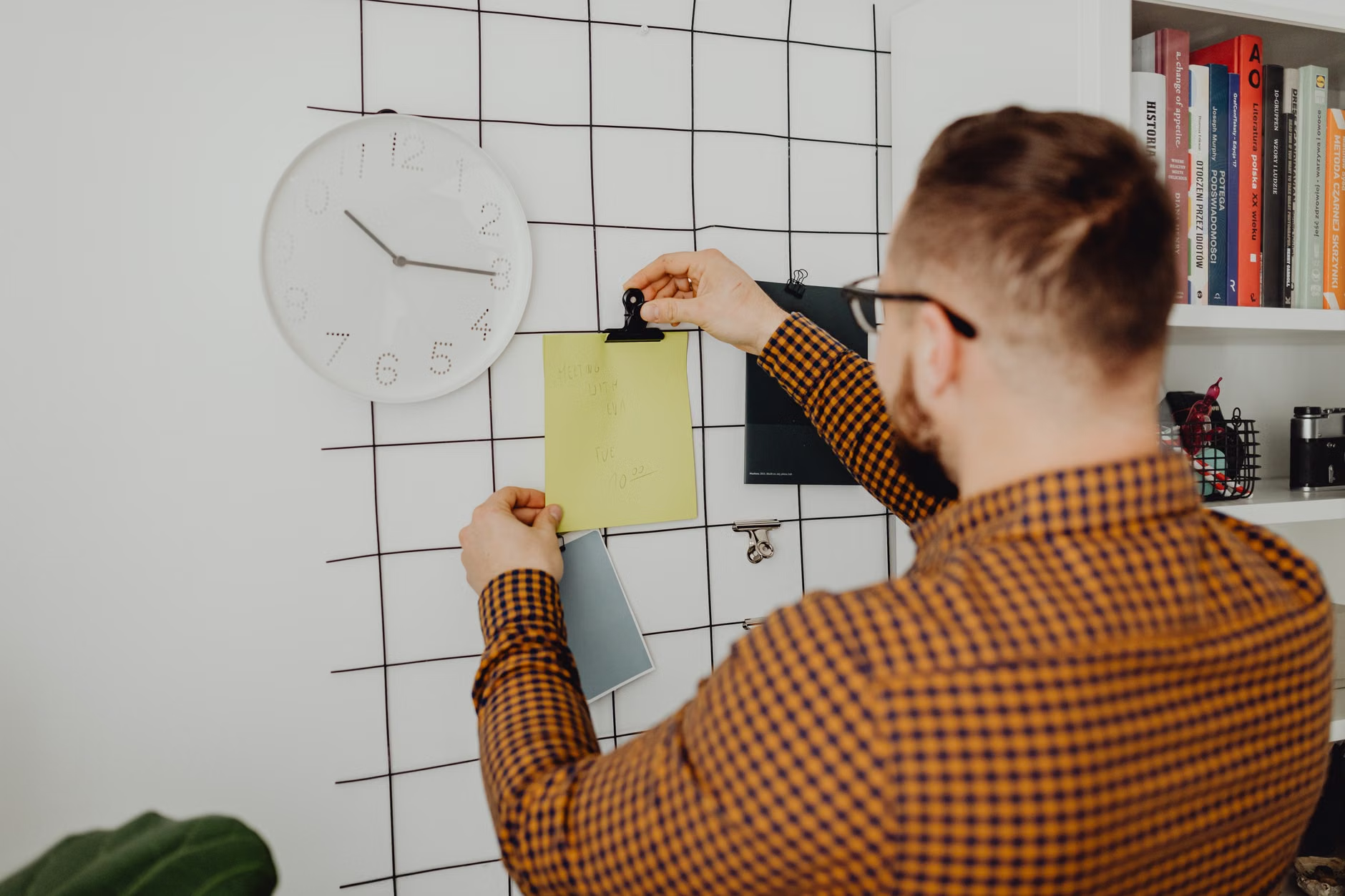
When you tell your teen to “get ready,” you are giving them an abstract instruction. Their brain has to break that down into 20 sub-tasks: brush teeth, find shoes, get bag, check lunch, etc. If you want to improve their executive function, you must externalize the list. A physical, printed, or handwritten checklist serves as their “external brain.”
| Routine Phase | Task | Executive Function Skill Targeted |
|---|---|---|
| Evening Prep | Pack bag and lay out clothes | Planning and Prioritization |
| Wake-Up | Drink water, open blinds | Task Initiation |
| Launch | Check “Launch Pad” items | Working Memory |
The key here is autonomy. If you are the one holding the list, you are the manager. If the list is on the wall, the list is the manager. When your teen misses a step, don’t say, “You forgot your lunch.” Instead, ask, “What does your checklist say you need to grab from the kitchen?” This forces them to engage their own brain rather than waiting for your instructions.
Managing the “Transition” Moments
The most common failure point in the morning is the transition between tasks. Moving from “getting dressed” to “eating breakfast” often results in the teen getting sidetracked by a phone notification or a video game. To manage this, use time-boxing or anchor points.
The 10-Minute Buffer Rule
If your teen needs to leave at 7:30 AM, their “Ready” time should be 7:20 AM. That 10-minute buffer is not for them to relax; it is the “Safety Net.” If they are running late, they won’t have time to find a lost shoe. By building the buffer into the routine, you reduce the physiological stress response (the “fight or flight” mode) that kills logical thinking.
Dealing with Resistance: The “Buy-In” Strategy
If you force a rigid routine on a teenager, they will resist it. It feels like a loss of control. Instead, sit down on a weekend and frame it as an experiment. Tell them, “I’m tired of nagging, and I bet you’re tired of being nagged. Let’s build a system that gets you out the door without me having to say a word.”
When they help design the order of tasks (e.g., “I prefer to eat before I shower”), they are more likely to follow the plan because they own it. If they suggest an order that is inefficient, let them try it for three days. If it fails, use that as data. “How did that work for you?” is a much more powerful question than “I told you so.”

Common Pitfalls and How to Pivot
Even with the best system, things will go wrong. Here are the most common traps parents fall into and how to handle them.
1. The “Nagging” Trap
When you see them staring at a wall while they should be putting on shoes, the urge to intervene is overwhelming. Resist it. If you step in, you are training them to wait for your prompt. Instead, use a “timer-based” intervention. “You have 5 minutes before we leave; check your list.” Then walk away. This places the responsibility back on their shoulders.
2. The “Friday Slump”
Routines often fall apart by the end of the week. That is normal. Don’t discard the system. Instead, do a “Friday debrief.” Ask what specific step was the hardest to follow. Maybe the backpack is too heavy, or the lunch prep takes too long. Adjust the system based on their feedback. It’s an iterative process, not a static rule.
3. The ADHD Variable
If your teen has diagnosed ADHD, executive function challenges are amplified. Standard advice like “just make a list” might not be enough. You may need to incorporate “body doubling” (working alongside them) or visual cues like color-coded bins. If you notice persistent, extreme difficulty despite consistent systems, consider consulting a specialist to see if occupational therapy or executive function coaching is appropriate. For more on the neurological basis of these challenges, the Children and Adults with Attention-Deficit/Hyperactivity Disorder (CHADD) offers excellent resources on managing these daily hurdles.
Refining the System for Long-Term Success
The ultimate goal of this routine is to make your input unnecessary. By age 16 or 17, your teen should be able to manage their morning autonomously. If you are still managing it for them, you are inadvertently delaying their development of independence.
Decision Criteria for Independence:
- Phase 1 (The Scaffold): You create the list, you monitor, you provide reminders.
- Phase 2 (The Partner): You create the list together, you audit only when they ask.
- Phase 3 (The Auditor): They create the list, you only intervene if there is a major safety or time-sensitive issue.
Don’t be afraid to let them fail in low-stakes ways. If they forget their gym clothes, don’t drive to school to drop them off. Let them experience the natural consequence of the forgotten item. The discomfort of that experience is a far more effective teacher than your lecture will ever be. It teaches them that their “system” needs an update.
Addressing the Emotional Tax
It’s important to acknowledge that this is hard work for you, too. Changing your parenting style from “manager” to “coach” feels uncomfortable. You might feel like you’re being “hands-off,” but you are actually doing something much more demanding: you are providing the structure that allows them to succeed on their own terms.
When you feel the urge to step in and fix things, take a breath. Remind yourself that every time you resist the urge to nag, you are giving your teen an opportunity to practice the executive function skills they will need for college, the workforce, and adulthood. The morning routine is just the gym; the muscles they are building are for their entire life.
For more research on adolescent cognitive development and the role of parental scaffolding, you can refer to the American Psychological Association’s resources on parenting and child development. These resources provide a broader context for why autonomy-supportive parenting is linked to better outcomes in the long run.
Frequently Asked Questions
1. What if my teen refuses to use a checklist?
Refusal is often a reaction to feeling controlled. Try “collaborative design.” Sit down and ask, “What are the three things that make you most stressed in the morning?” Build the list around those three points only. Once they see that the list actually reduces their stress, they will be more open to adding more items.
2. Does this work for teens with ADHD?
Yes, but it often requires more frequent “refreshing” of the system. Teens with ADHD often experience “visual blindness” to static lists. Try changing the color of the checklist, moving its location, or using a digital app with notifications if physical paper isn’t working. The key is to keep the system dynamic and novel.
3. How long does it take for this routine to become a habit?
Most research suggests that habit formation takes anywhere from 18 to 254 days, depending on the complexity of the task. For a morning routine, expect 3 to 4 weeks of consistent “coaching” before you see a significant decrease in your involvement. Stay patient and focus on the trend, not the daily performance.
Start small, be consistent, and remember that you aren’t just trying to get them out the door on time—you are helping them build the internal architecture for a successful adult life. It’s a process, but with a clear system, you can reclaim your mornings.