The most effective way to save money on household electronics and reduce your environmental footprint is to stop treating broken appliances as disposables and start treating them as fixable assets through the global Repair Café network.
- Repair Cafés are not just for experts: You don’t need prior skills; the model is built on “co-repair,” where volunteers teach you how to fix your own item.
- Economic and Environmental Impact: By extending the life of a single appliance by just two years, you avoid the high cost of replacement and the carbon intensity of manufacturing new goods.
- Safety First: Repair Cafés follow strict protocols, but always bring the device’s manual and original power cables to ensure the volunteers can diagnose the issue safely.
Why Your “Broken” Toaster is Actually a Learning Opportunity
If you are in your 30s or 40s, you likely remember a time when things were built to last, or at least to be opened. Today, we live in an era of “planned obsolescence” and “sealed units.” When a vacuum cleaner loses suction or a coffee maker stops heating, the default reaction is to check the price of a replacement. It’s faster, sure, but it’s an expensive habit that fills our landfills and empties our savings accounts.
The Repair Café movement, which began in the Netherlands in 2009, has grown into a global phenomenon. It is essentially a community meeting space where people bring their broken items—electronics, clothing, furniture, bicycles—to be fixed by volunteer repairers. But there is a twist: you don’t just drop off your item and pick it up later. You sit at the table with the volunteer, learn how the device works, and participate in the repair process yourself.
This isn’t just about saving a few dollars on a new toaster. It’s about regaining agency over the products you own. When you understand how a heating element functions or why a switch fails, you are less likely to be intimidated by technology in the future. It turns a frustrating “life admin” moment into a productive, educational experience for you and, often, your children.
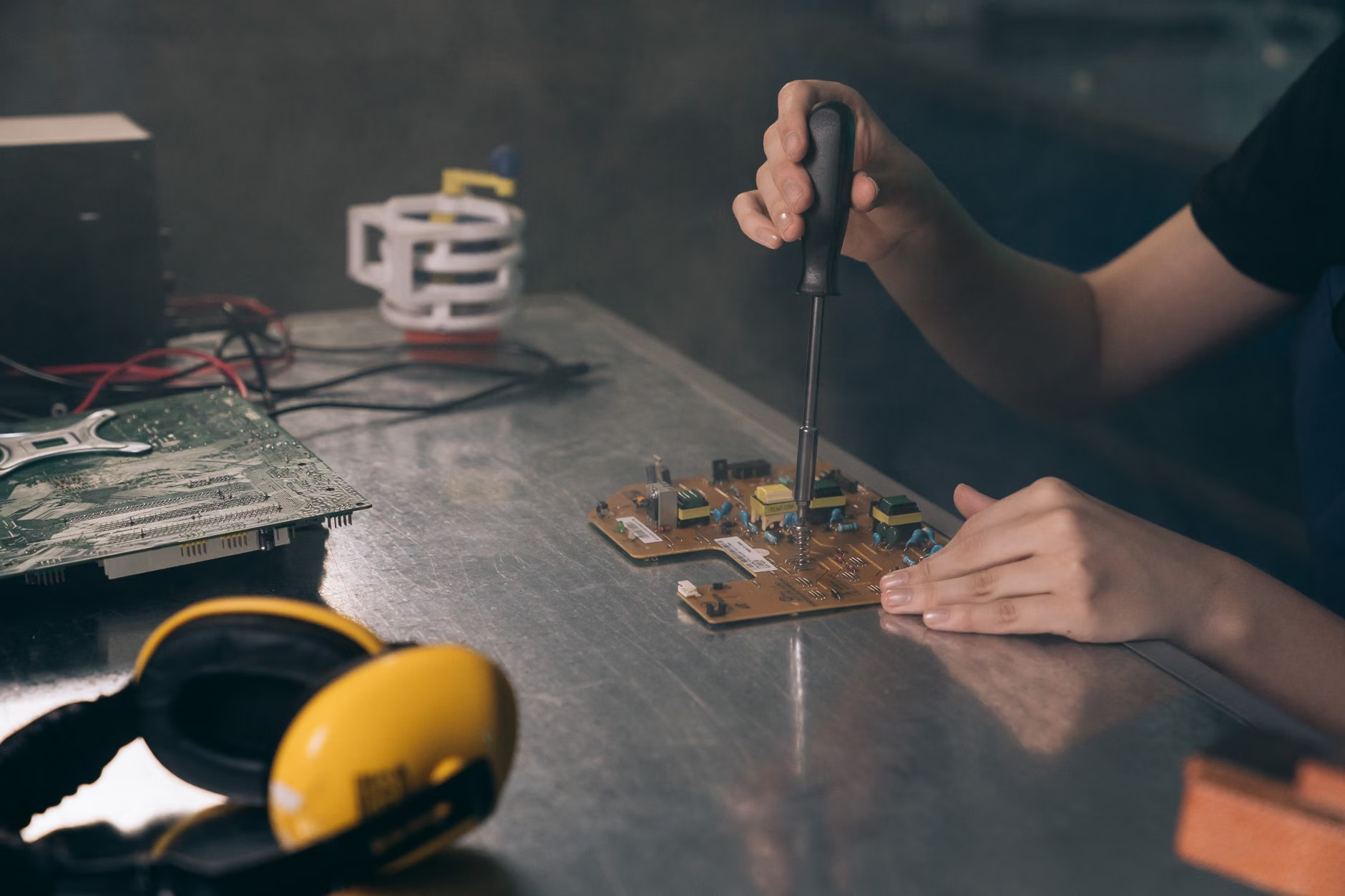
How to Find and Prepare for a Repair Café Visit
Finding a local session is easier than you might think, but it requires a bit of logistical planning. Most Repair Cafés operate on a rotating schedule—perhaps once a month at a community center or library. Because they rely on volunteers, they aren’t retail shops; you cannot just walk in on a Tuesday afternoon.
Step 1: Finding your local hub
The primary directory for this movement is Repaircafe.org. Their global map allows you to search by city or zip code. If you find that your specific town doesn’t have an official “Repair Café” branch, search for “Maker Spaces,” “Fix-it Clinics,” or “Tool Libraries.” Many of these organizations operate under similar principles of circular economy and community knowledge sharing.
Step 2: The “Triage” phase
Before you pack up your broken blender, do a quick “triage.” Does it have power? Have you checked the fuse in the plug? Are there obvious signs of damage, like a frayed cord? Many repairs are simple “contact” issues where a wire has come loose. If you bring a device that is completely melted or shattered, even the best volunteer may not be able to help. Be honest about the condition of the item when you arrive.
Step 3: What to bring with you
When you head to a session, bring more than just the broken item. Bring any manuals, the original power adapter (if it’s separate), and, if possible, any replacement parts you suspect you might need. If you’ve already watched a YouTube video on the specific model and think it’s a capacitor issue, mention that to your volunteer. It saves everyone time.
| Item Type | Common Success Rate | Typical Fix |
|---|---|---|
| Toasters / Kettles | High | Cleaning contacts, replacing thermal fuses |
| Lamps / Lighting | Very High | Rewiring, replacing switches |
| Modern Smartphones | Low to Medium | Screen replacement, battery swap (if parts are available) |
| Laptops | Medium | Fan cleaning, software resets, keyboard repairs |
The Reality of Modern Electronics: Why Some Things Can’t Be Fixed
It is important to manage expectations. While the Repair Café volunteers are incredibly skilled, they are limited by the design choices of manufacturers. Some modern electronics are glued shut with industrial-grade adhesives, making them impossible to open without destroying the casing. This is the “Right to Repair” battleground currently being fought by advocates worldwide.
If a volunteer tells you a device is “unrepairable,” they are usually referring to the cost-to-benefit ratio or the safety risk of a proprietary component that cannot be sourced. For example, if a custom-made integrated circuit board inside a high-end coffee machine fails, there is often no “spare part” available to buy. In these cases, the repairer isn’t failing; the manufacturer’s design strategy is.
Common Mistakes to Avoid:
- Trying to repair live electronics: Never attempt to take apart anything plugged into a wall outlet. Always unplug and, if it’s a device with a capacitor (like an old monitor or high-end audio gear), let it sit for 24 hours to discharge.
- Forcing screws: If a screw won’t budge, stop. You risk stripping the head, which makes future repairs nearly impossible.
- Ignoring the “Wait” rule: If you arrive at a busy Repair Café, be prepared to wait. These are social events, not express repair services. Bring a book or chat with other neighbors while you wait for your number to be called.

The Hidden Benefits: Beyond the Screwdriver
Beyond the obvious benefit of saving money on a new appliance, there is a profound psychological benefit to the Repair Café model. In our 30s and 40s, we are often overwhelmed by the sheer volume of “stuff” we manage for our families. We are constantly purchasing, maintaining, and disposing. The act of repairing breaks this cycle of consumption.
Furthermore, these spaces serve as intergenerational bridges. Many of the volunteers are retired engineers or hobbyists who have decades of experience. When they teach a parent how to solder a wire, they aren’t just fixing a lamp; they are passing down a dying skill. There is a tangible sense of community pride that comes from walking out of a community center with a working device that was destined for the bin.
You might also find that this experience changes how you shop. Once you’ve spent an hour trying to open a device that was clearly designed to be “un-openable,” you start to look at products differently. You might start choosing brands that emphasize modular design, parts availability, and transparent repair manuals. This is the “circular economy” in action—your individual purchasing power becomes a signal to the market that consumers value durability over disposability.
Advanced Tips for the Home Repair Enthusiast
If you find that you enjoy the process, you might want to move from “Repair Café participant” to “home hobbyist.” This doesn’t mean you need a full professional workshop. A basic kit for home electronics repair includes:
- Precision screwdriver set: Look for one that includes Torx and security bits, as many modern gadgets use non-standard screws to discourage home repair.
- Digital Multimeter: This is the single most useful tool for diagnosing electronics. It tells you if a wire is broken or if a component is receiving power.
- Spudgers and opening tools: These are plastic pry tools that help you open plastic casings without marring the finish or snapping the delicate clips that hold them together.
Before buying these, check if your local area has a Tool Library. Many cities now offer memberships where you can borrow high-quality tools for a nominal fee, just like a book from a public library. This is a perfect way to test your interest in repair without committing to a large upfront investment in equipment.
Sustainability: The Impact of Your Choice
The environmental impact of electronics waste (e-waste) is staggering. According to the United Nations’ Global E-waste Monitor, the world generates over 50 million metric tons of e-waste annually. Much of this contains hazardous materials like mercury and lead, which leach into the soil when discarded in standard landfills. By choosing to repair, you are personally diverting kilograms of material from this waste stream.
For a parent, this is a powerful lesson to demonstrate to children. When children see their parents repairing a toy or a household appliance, they learn that objects have value beyond their purchase price. They learn that “broken” is a temporary state, not an end point. This fosters a mindset of stewardship rather than consumption—a valuable trait in a world facing climate challenges.
However, be cautious of the “repair trap.” If an appliance is highly inefficient—like a 20-year-old refrigerator that consumes five times the electricity of a modern model—sometimes recycling it is the better environmental choice. A rule of thumb: If the repair is simple (mechanical/electrical connection) and the device is energy-efficient, repair it. If the device is inherently wasteful and the repair is complex/expensive, it might be time to recycle it responsibly and look for a more efficient, long-lasting replacement.
Actionable Next Steps
If you are ready to take action, do not wait for something to break. Start by searching for your nearest Repair Café today. Even if you don’t have a broken item right now, visiting a session can be an eye-opening experience. Talk to the organizers, see the tools they use, and understand the culture of the space.
If you have a broken item at home, gather it this weekend. Take photos of the model number and search online for “[Model Number] repair guide.” Many community-driven sites like iFixit offer free, step-by-step guides that can give you the confidence to start your repair. If the guide looks too complex, that is your cue to bring it to a Repair Café where a mentor can guide you through the trickier parts.
Repairing isn’t just a chore; it’s a small act of rebellion against a throwaway culture. It saves your money, protects the planet, and gives you a sense of mastery over the tools that define our modern lives. Start small, stay curious, and don’t be afraid to ask for help.
Frequently Asked Questions
1. Do I need to bring my own tools to a Repair Café?
Generally, no. Most Repair Cafés are equipped with a wide variety of tools, from soldering irons and multimeters to sewing machines and glue guns. However, if you have your own specific tools and are comfortable using them, you are usually encouraged to bring them. Always check the event details on the website beforehand, as some organizers may ask you to bring specific components or spare parts if you know what is wrong with the device.
2. Is there a charge for these services?
Repair Cafés are almost always free to attend. They are run by volunteers who donate their time and expertise. However, most locations operate on a “donation” basis. If you successfully repair an item, leaving a small contribution helps cover the cost of the venue, tea/coffee, and communal supplies. Some locations may ask you to pay for the cost of specific replacement parts, such as a new power plug or a specific capacitor, if they have them in stock.
3. What if I cause more damage to my device during the repair?
Repair Cafés typically require you to sign a liability waiver when you arrive. Because the model is “co-repair”—meaning you are the one doing the work with a mentor’s guidance—the responsibility ultimately lies with you. The volunteers are there to advise and assist, but they are not liable for accidental damage. This is why the process is slow and guided; the goal is to learn and be careful, not to rush through a repair.
For more information on the global movement and to find a location near you, visit the official Repair Café Foundation. For detailed DIY repair guides and parts, explore iFixit.