- Prioritize Verticality: In homes under 800 sq ft, move storage off the floor to create visual breathing room, essential for reducing daily anxiety.
- The “One-In, One-Out” Rule: For families with young children, this is not just a suggestion but a necessity to prevent sensory overload and clutter creep.
- Tactile Minimalism: Focus on natural materials like wood, linen, and wool rather than purely “empty” space to create warmth without adding physical bulk.
The most effective way to embrace slow living in a small home isn’t to buy more storage solutions; it is to ruthlessly edit your environment until your space supports your habits rather than competing with them. When you are in your 30s or 40s, balancing the chaotic demands of parenting, professional deadlines, and the desire for a serene home, “slow living” often feels like an unattainable aesthetic reserved for people with large houses and no children. In reality, slow living is a mindset of intentionality that is actually easier to maintain in a smaller footprint.
If you feel like your home is shrinking every time you buy a new toy or upgrade a kitchen gadget, you are experiencing “clutter fatigue.” This is the psychological weight of visual noise. By applying intentional design principles, you can turn a 600-square-foot apartment into a sanctuary that feels expansive, regardless of the actual square footage.
The Psychology of “Visual Weight” in Small Rooms
Visual weight is the perceived heaviness of an object based on its color, texture, and shape. In a small space, high-contrast, bulky furniture pieces act like visual anchors that pull the room inward, making it feel smaller. A dark, heavy velvet sofa in a 10×10 room doesn’t just take up physical space; it occupies your visual field, constantly reminding your brain that the room is crowded.
To combat this, start by analyzing your current furniture through the lens of “transparency and elevation.” Can you see the floor beneath your sofa legs? If the answer is no, you are losing valuable visual depth. Furniture that sits directly on the floor feels heavier and more permanent. By switching to pieces with tapered, exposed legs, you allow the eye to travel across the entire floor surface, which tricks the brain into perceiving a larger area.
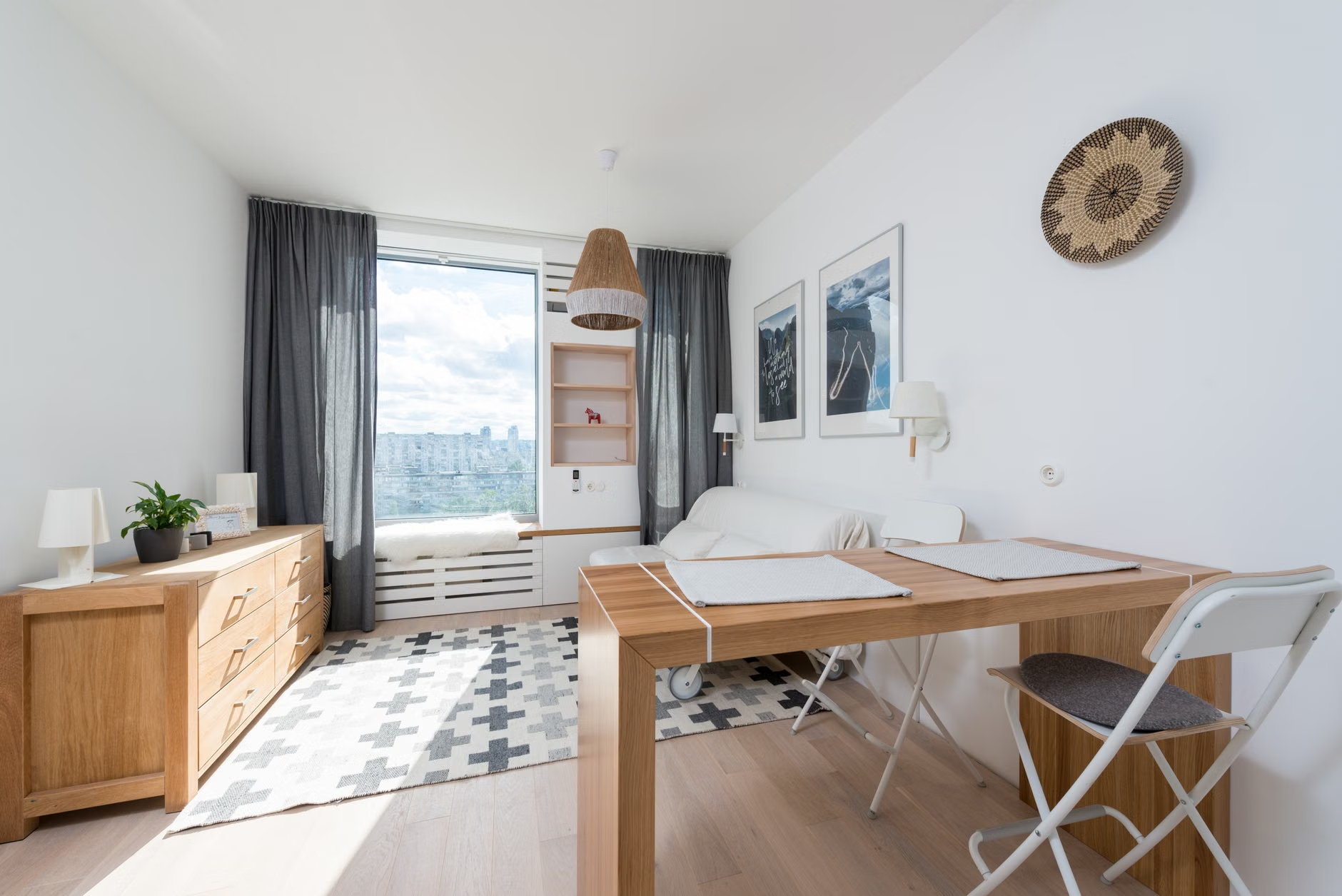
Furthermore, color plays a critical role. While “all-white” is a popular trend, it often feels sterile, especially for families. Instead, aim for a monochromatic palette with varying textures. Use a cream-colored rug, a light oatmeal sofa, and sheer linen curtains. By keeping the color values similar, you eliminate the “choppy” look that occurs when you have high-contrast blocks of color, which is the primary cause of small-room claustrophobia.
Rule 1: The Multi-Functional Furniture Audit
If a piece of furniture in your home serves only one purpose, it is likely a candidate for removal. In small-space living, every item must earn its keep. A coffee table that is just a surface for magazines is a wasted opportunity. A coffee table with deep, hidden drawers or a lift-top mechanism acts as a storage unit, a dining table, and a workspace.
When selecting multi-functional items, prioritize “hidden storage” over “display storage.” Open shelves look beautiful in magazines, but in a real-world family home, they quickly become dumping grounds for stray mail, chargers, and toys. Closed cabinetry, even if it is just a simple basket with a lid, allows you to “hide” the reality of parenting, leaving the serene surfaces visible for your own mental clarity.
| Furniture Type | Single-Use (Avoid) | Multi-Use (Adopt) |
|---|---|---|
| Coffee Table | Glass top, fixed legs | Lift-top desk with internal storage |
| Bedside Table | Small pedestal | Wall-mounted floating shelf/drawer |
| Ottoman | Decorative footstool | Storage ottoman (for blankets/toys) |
Rule 2: Verticality is Your Best Friend
Most people stop decorating at eye level. In a small home, the wall space above your head is the most underutilized asset. However, the common mistake is to install “heavy” bookshelves that go all the way to the ceiling, which can make a room feel like a library vault. Instead, use floating shelves that match your wall color. When the shelves disappear into the wall, the objects on them appear to float, which adds interest without adding visual bulk.
For parents, this is a lifesaver. You can mount activity centers, books, or art supplies at a height that is accessible to you but out of reach for toddlers, or conversely, mount them low to create a “kids-only” zone that doesn’t spill over into your living room. By taking items off the floor, you reclaim your square footage, making the room feel larger while keeping the floor clear for play or movement.
Rule 3: Managing the “Toy Creep”
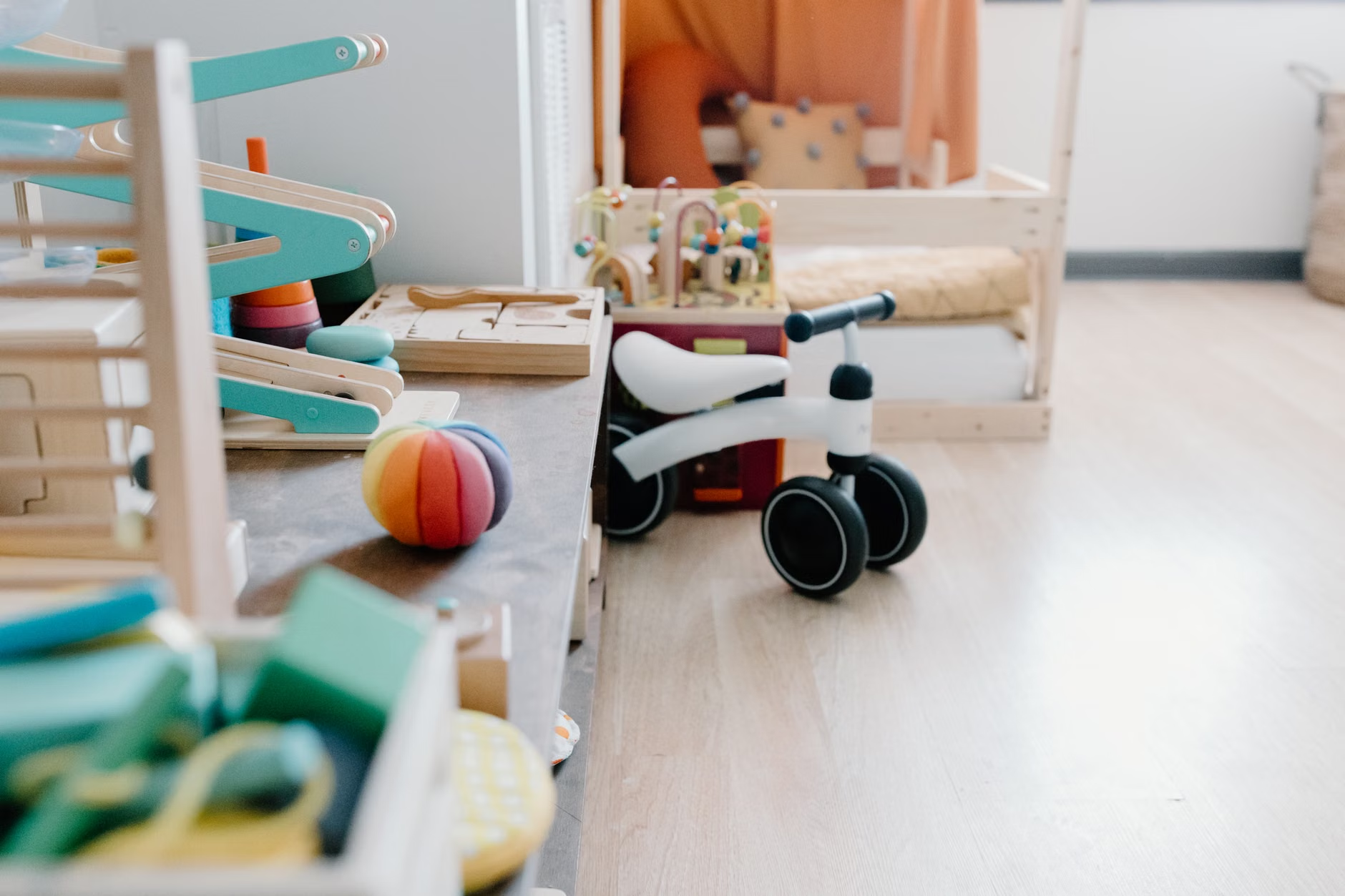
If you have children, you know that toys are the primary enemy of a calm interior. The “slow living” approach isn’t about forbidding toys; it’s about rotating them. This is often called the “toy library” method. Keep 80% of your children’s toys in deep storage (out of sight) and rotate them every two to three weeks. This keeps the child engaged and, more importantly, keeps your living space clear of the “toy explosion” that happens when every toy is available at once.
Choose storage furniture that feels like adult furniture. Instead of bright primary-colored plastic bins, use woven seagrass baskets or linen-lined wooden crates. These materials add organic texture to your room, which is a hallmark of the slow-living aesthetic, and they blend seamlessly into your decor rather than shouting “child’s play area.”
Rule 4: Lighting as a Zoning Tool
In a small home, you rarely have the luxury of separate rooms for every activity. You might be working at the kitchen table while your partner helps with homework and your child plays on the rug. The key to maintaining a “slow” feel in a multi-use space is lighting. Avoid relying solely on a single overhead light, which creates a flat, harsh environment that stresses the nervous system.
Instead, create “zones” of light. Use a warm task lamp for your workspace, a soft floor lamp behind the sofa for reading, and a dimmable wall sconce near the dining area. When you have multiple, low-level light sources, you create pools of warmth. This allows you to mentally “switch off” one area of the room when you aren’t using it. When you finish work, turn off the task lamp. The dining table is no longer a workspace; it’s a dining table again.
Rule 5: The Tactile Connection
Slow living is inherently about slowing down to appreciate the senses. In a small space, you don’t have room for a lot of “stuff,” so the items you do have should be high-quality and tactile. Replace synthetic fabrics with natural fibers. A wool blanket, a linen throw, or a cotton rug adds a depth of character that cheap, synthetic materials cannot replicate.
When you touch a surface, it should feel grounded. This isn’t just about aesthetics; it’s about the psychological shift that occurs when you interact with your environment. If your home is filled with plastic and laminate, it feels temporary and disposable. If it is filled with wood, ceramic, and natural textiles, it feels intentional and permanent. This sense of “grounding” is essential for parents who are constantly on the move; your home should be the place that forces you to slow your heart rate.
Rule 6: The “One-In, One-Out” Protocol
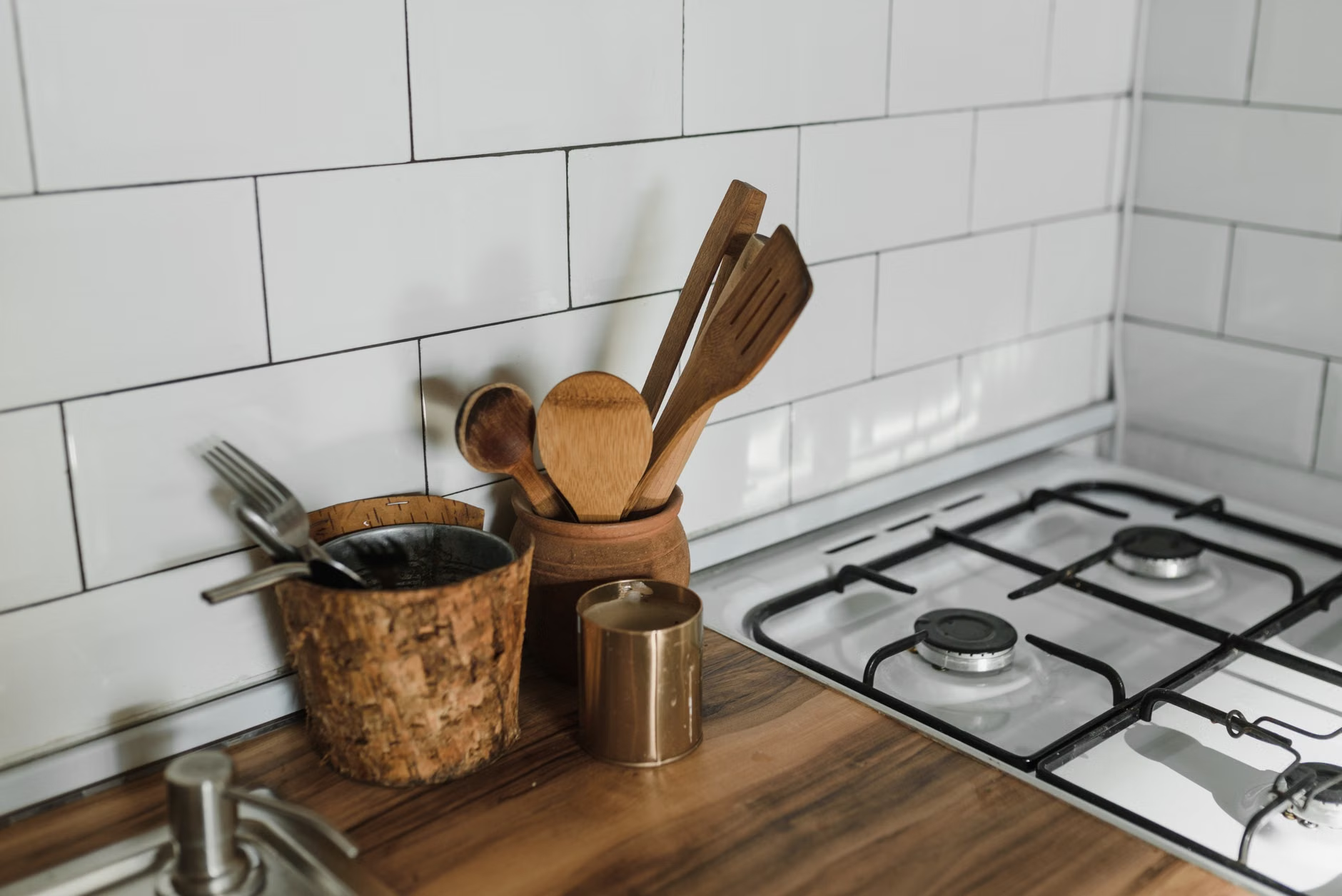
This is the golden rule of small-space maintenance. It is simple but difficult to enforce. If you buy a new kitchen appliance, an old one must be donated, sold, or recycled. If your child gets a new Lego set, a set they no longer play with must be passed on. This forces you to evaluate the value of every new item you bring into your home.
Before buying anything, ask yourself three questions:
- Does this replace something I already have?
- If this broke tomorrow, would I replace it immediately?
- Does this add to the “slow” vibe, or is it just another piece of clutter that needs cleaning?
If the answer to the second question is “no,” you don’t need it. This mindset shift prevents the accumulation of “lifestyle creep”—the tendency to fill every available space just because you have it. In a small home, space is a finite resource. Treat it with the same respect you would treat your savings account.
Rule 7: Embracing “Negative Space”
Negative space is the empty area around an object. In many homes, we try to fill every corner with a plant, a side table, or a basket. In a slow-living home, negative space is a design element in its own right. It is the “breath” of the room. If you have a wall, let it be blank for a while. If you have a corner, leave it empty. This emptiness is not “missing something”; it is a intentional choice to prevent your brain from being overstimulated.
When you enter a room with clear, empty walls or a vacant corner, your cortisol levels naturally drop. For parents in their 30s and 40s, whose days are filled with constant decision-making and noise, a room that requires nothing from you is the ultimate luxury. Don’t feel pressured to fill every void. Let your home have silence.
Common Misconceptions About Small-Space Living
One of the biggest mistakes people make is assuming they need “minimalist” furniture. True, minimal furniture helps, but there is a difference between “minimalist” and “cold.” You don’t need to live in a white box to have a small, slow home. You can have a cozy, maximalist-leaning home that is still “slow” as long as it is organized.
Another common mistake is buying “space-saving” furniture that is actually poor quality. A cheap, folding dining table that wobbles every time you write on it will end up being a source of frustration, not a solution. If you are going to buy a multi-functional piece, invest in one that is well-built. It is better to have one sturdy, beautiful, multi-use table than three flimsy, single-use pieces that break within a year.
Putting It Into Action: Your First Weekend Plan
Don’t try to transform your entire home in one day. That is a recipe for burnout. Instead, pick one “high-traffic” zone—the living room or the kitchen—and start there. Spend your Saturday morning doing a “ruthless edit.”
- Hour 1: Remove everything from the surfaces. If it doesn’t belong there, put it in a temporary “decision box.”
- Hour 2: Sort the decision box. Keep, donate, or recycle. Be honest. If you haven’t used that blender in 6 months, you won’t use it in the next 6 months.
- Hour 3: Reinstall only the essentials. If you have too many items, use the “rotate” method mentioned earlier.
- Hour 4: Add one “slow” element. This could be a new plant, a soft linen throw, or a warm-toned lamp.
By the end of the weekend, you will have one space that feels different. When you sit in that space, notice how your breathing changes. That feeling is the goal. It is not about the furniture; it is about the peace of mind you gain by removing the unnecessary.
Frequently Asked Questions
How do I maintain this style with young children who constantly create clutter?
The key is “containment,” not “elimination.” You cannot stop children from playing, but you can control where the mess happens. Use dedicated, easy-to-reach bins that allow for a “one-minute reset.” At the end of the day, when the kids are in bed, the goal isn’t to make the house look like a showroom, but to clear the “surface clutter” so that you can wake up to a clean slate. Teach your children that the baskets are their “home” for toys, which helps them learn organization early.
Is “slow living” just another term for expensive minimalism?
Not at all. In fact, slow living is the opposite of consumerism. It encourages you to use what you already have, repair broken items, and buy second-hand. It is fundamentally about valuing time and peace over the accumulation of goods. You don’t need designer furniture to achieve this; you need the discipline to curate your environment and the patience to let your home evolve slowly.
What if my partner disagrees with the “ruthless edit” approach?
This is a common friction point. The best approach is to start with your own “zone”—perhaps your bedside table or your desk. Show them the benefits of a decluttered space rather than forcing them to declutter theirs. Often, once a partner experiences the calm of a simplified area, they become curious about the process themselves. Frame the conversation around “reducing stress” rather than “getting rid of things,” which can feel like an attack on their personal belongings.
Final Thoughts
Creating a slow-living environment in a small space is a continuous process, not a destination. It requires checking in with yourself and your family to see if your home is still serving its purpose. If you find yourself feeling overwhelmed, look at your space and ask: “What is the one thing here that is causing me the most stress?” Start there.
Your home should be the place where you recharge, not another item on your to-do list. By applying these seven rules, you are not just organizing furniture; you are creating the physical conditions necessary for a calmer, more intentional life. Start small, be consistent, and enjoy the process of reclaiming your peace.
For more inspiration on sustainable and intentional interior design, you can explore resources from Apartment Therapy for small-space solutions, or check out the The Spruce for practical, step-by-step home maintenance guides that align with a slower lifestyle.