- Focus on Depth, Not Distance: Quiet tourism prioritizes spending 3–4 days in one neighborhood over visiting 5 cities in a week, significantly reducing travel fatigue.
- The 1-1-1 Rule: To avoid burnout, limit your daily schedule to one cultural activity, one local meal, and one period of unscheduled “down time.”
- Budget for Stillness: You will likely spend less on entry fees but more on high-quality accommodations where you actually enjoy spending time, shifting your travel budget toward comfort rather than consumption.
If you are in your 30s or 40s, you probably remember the “checklist” style of travel. You’d land in a new city, map out the top ten attractions, and spend your entire trip rushing between subway stations, museum queues, and crowded landmarks. By the time you got home, you needed a vacation from your vacation.
The “Quiet Tourism” trend is the industry’s response to that collective exhaustion. It isn’t just about going to a remote cabin in the woods; it’s a deliberate shift toward low-intensity travel that prioritizes mental restoration over checking off bucket-list items. For parents juggling careers and household management, this shift is not just a trend—it’s a survival strategy.
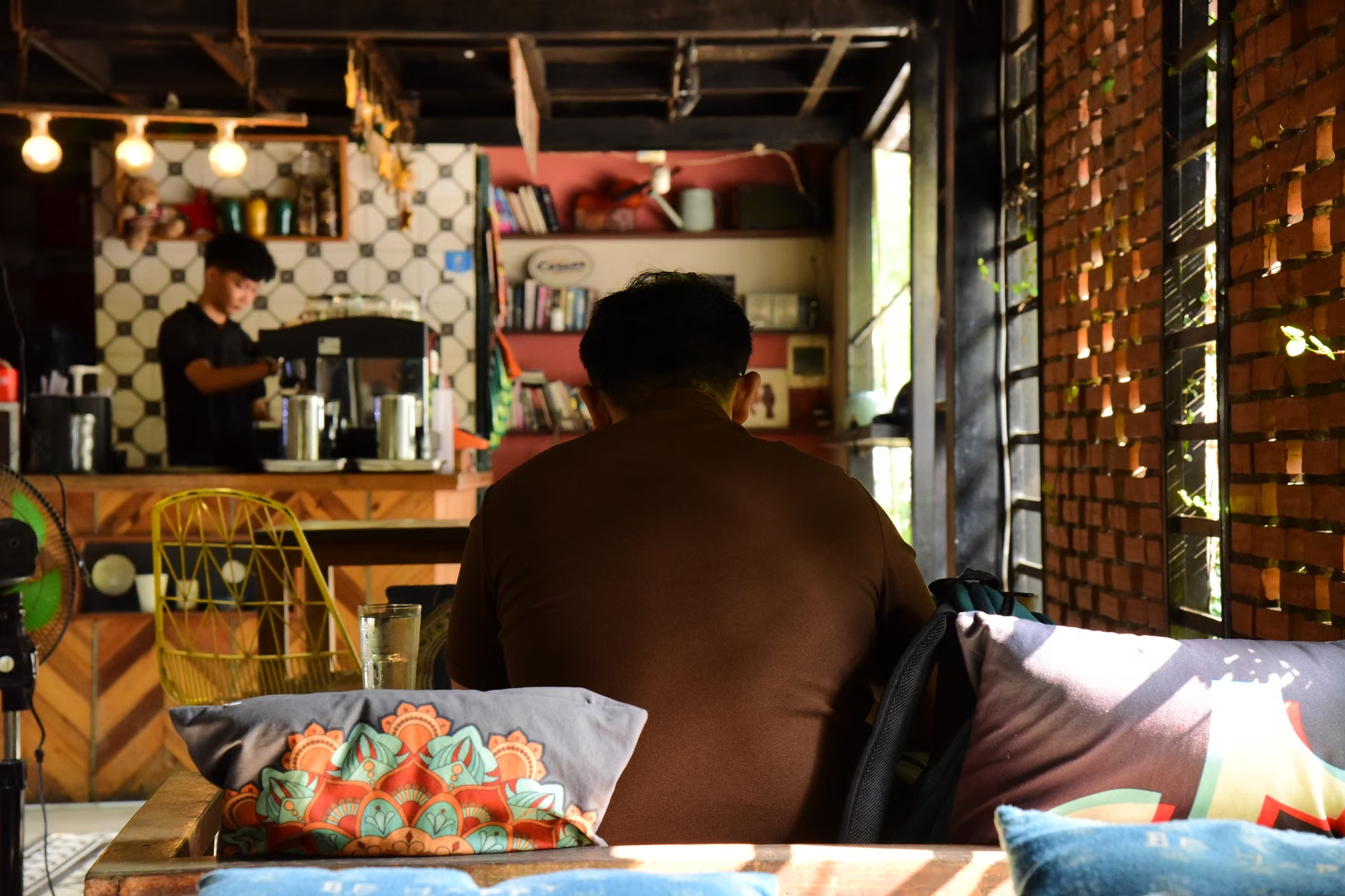
Why the “Sightseeing Marathon” Is Failing Modern Travelers
The traditional model of tourism was built on the premise that you might never return to a location, so you must see everything. This “scarcity mindset” leads to itinerary bloat. When you are managing kids, this pressure is magnified by the physical logistics of snacks, naps, and gear. The result is a high-cortisol experience that leaves everyone irritable.
Quiet tourism recognizes that true travel value comes from immersion, not volume. When you spend three days in one neighborhood, you aren’t just a tourist; you become a temporary local. You learn the rhythm of the street, you find a favorite bakery, and you stop feeling the constant, nagging pressure to “make the most of it.”
The Hidden Costs of High-Intensity Itineraries
Beyond the obvious exhaustion, high-intensity travel carries several hidden costs:
- Decision Fatigue: Research shows that we have a finite amount of decision-making energy per day. Planning complex transit routes and choosing between five different tourist traps drains your mental capacity for actual enjoyment.
- The “Photo-First” Trap: When you are racing to the next landmark, you are often viewing the world through a screen rather than engaging with it.
- Budget Inflation: Constant movement usually requires expensive express trains, multiple city-center hotels, and surge-priced tourist dining.
Implementing the “1-1-1” Rule for Families
If you want to transition to quiet tourism, you need a framework to prevent yourself from slipping back into the “must-see-it-all” trap. I recommend the 1-1-1 Rule. It is simple, rigid enough to keep you on track, and flexible enough to allow for spontaneity.
| Category | Goal | Example |
|---|---|---|
| One Activity | Cultural engagement | Visiting a local botanical garden or a specific museum wing. |
| One Local Meal | Culinary connection | Lunch at a neighborhood market rather than a tourist district. |
| One “Still” Period | Restorative time | Two hours in a park or reading in a cafe while the kids play. |
The key here is that the “Still” period is non-negotiable. If you find yourself tempted to add a second museum, you must remove the first. This trade-off forces you to prioritize what truly interests your family rather than what the guidebook says is “essential.”

Choosing the Right Environment for Quiet Tourism
Not all cities are built for quiet tourism. If you go to a major global hub like central London or Manhattan, the sheer volume of people and the high-energy atmosphere can make it difficult to find “stillness.” To succeed, you must choose your base wisely.
The “Second City” Strategy
Instead of the capital, look at the “second” city or a satellite town with good transit links. For example, instead of Tokyo, consider Kamakura. Instead of Paris, consider Lyon. These locations offer the same cultural depth but operate at a human scale. You get the benefit of world-class food and history without the aggressive pace of the global metropolis.
Why Your Accommodation Matters More Than Ever
In high-intensity tourism, your hotel is just a place to sleep. In quiet tourism, your accommodation is your base of operations. Since you will spend more time “at home” during your trip, prioritize:
- Kitchenette Access: Being able to make a simple breakfast or prepare snacks reduces the stress of finding a restaurant for every meal.
- Proximity to Green Space: Even a small park nearby allows for the “still” period without needing to commute.
- Neighborhood Vibe: Look for residential areas with local grocery stores and laundromats. These are the markers of a place where people actually live.
Common Mistakes That Ruin the “Quiet” Experience
Even with the best intentions, it is easy to sabotage your own trip. Here are the most frequent pitfalls I see parents fall into:
1. Over-optimizing the Itinerary
We are conditioned to think that an empty calendar is a waste of money. You might feel a pang of guilt if you spend an afternoon sitting in a park in Florence instead of visiting the Uffizi Gallery. Remind yourself: you are paying for the experience of being there, not the number of tickets you scan. If your child is happy playing with a stick in a beautiful garden, that is a successful travel moment.
2. Ignoring the “Transition” Time
Moving from one city to another is the most stressful part of travel. In quiet tourism, keep transit days “dark.” Do not plan any activities for the day you travel between cities. Treat that day as a logistical necessity, not a day for exploration.
3. The “Digital Tether”
If you are constantly checking your emails or scrolling through social media, you aren’t actually in a “quiet” state. Set a dedicated time for checking work—perhaps 30 minutes in the morning—and then put the phone away. The goal is to disconnect from the noise of your routine to reconnect with your immediate surroundings.

The Financial Shift: Investing in Comfort
One of the most interesting aspects of the quiet tourism trend is how it reconfigures the travel budget. When you aren’t paying for daily museum admissions, guided tours, and constant taxi rides, you suddenly have a surplus of funds. Use this money to upgrade the quality of your stay.
Consider the trade-off: Would you rather visit four museums in a noisy, crowded city while staying in a cramped hotel, or visit one museum in a quiet town while staying in a spacious apartment with a balcony? For most parents, the latter provides a significantly higher “happiness per dollar” ratio. You are essentially shifting your spend from activity consumption to environment quality.
The biggest obstacle to quiet tourism is the internal voice that says, “But we’re in Rome! We have to see the Colosseum!” The truth is, the Colosseum will be there in ten years. Your child’s need for a calm, balanced, and happy parent is immediate.
If you are struggling with FOMO, try this: Select one “anchor” activity for the entire trip. If you visit that one place, consider the trip a success. Everything else is just a bonus. This takes the pressure off every single day of the vacation.
FAQ: Making Quiet Tourism Work for You
How do I explain to my kids that we aren’t “doing” much?
Frame it as “local exploration.” Instead of saying “we aren’t going to the big park,” say “today we are going to find the best gelato in this neighborhood.” Kids are much more interested in small, tangible goals than in checking off a list of historical landmarks. The goal is to make the “everyday” things—like going to the local market—feel like a special adventure.
Is quiet tourism just for people with a lot of money?
Actually, it is often cheaper. By slowing down, you avoid the “tourist tax” of expensive city-center dining and high-frequency transit. You can shop at local grocery stores, cook your own breakfast, and spend your afternoons in free public spaces. It is a more sustainable, and often more affordable, way to see the world.
What if I get bored?
Boredom is a luxury. In our daily lives, we are so overstimulated that we rarely experience true boredom. If you find yourself bored on a quiet trip, lean into it. That is the moment your brain starts to recover from the stress of your daily routine. Use that time to read, sketch, or just watch the world go by.
Your Next Steps Toward a Quieter Trip
If you’re ready to try this, don’t try to overhaul your entire travel philosophy at once. Start with your next weekend trip or a short getaway. Choose a destination that is not a primary tourist hub. Book a place with a kitchen and a living space. And most importantly, commit to leaving at least half of your days completely unscheduled.
Travel should not be a test of endurance. It should be a way to step outside of your normal life, breathe, and actually see the places you visit. By choosing quiet tourism, you are choosing to prioritize your family’s well-being over the hollow victory of a full photo album. Start small, stay slow, and see how much more you actually enjoy the journey.
For more information on the principles of slow and sustainable travel, you can look at the resources provided by the World Tourism Organization (UNWTO) regarding responsible and mindful tourism practices.