The most important thing to know about heritage rail travel is that it is not about getting from Point A to Point B; it is about the transition between the two, turning what would be a stressful three-hour drive into an immersive, low-pressure experience that actually keeps kids entertained.
Key Takeaways for Modern Travelers
- Prioritize “The Experience” over Speed: Heritage rail is intentionally slow; view the journey as a dedicated activity rather than a transport necessity.
- Logistics Matter More Than You Think: Unlike modern commuter lines, heritage lines often operate on limited schedules, requiring precise pre-booking and station-to-station transfer planning.
- Cost vs. Value: Heritage tickets are rarely cheap, but they often bundle entertainment (scenery, history, dining) that offsets the need for additional activities elsewhere.
If you are in your 30s or 40s, you likely remember the “family road trip” as a blur of highway exits, backseat arguments, and the endless, rhythmic thrum of tires on asphalt. Modern travel often feels like a race to the destination, where the journey is merely an obstacle to be overcome. Heritage rail—the preservation and operation of historic, steam, or vintage diesel trains—offers an alternative that is gaining traction among parents looking for a more deliberate way to travel.
But let’s be honest: taking a train with a toddler or a pre-teen requires a different set of tactical skills than a standard flight or a drive. You aren’t just buying a ticket; you are stepping into a machine that requires a bit of maintenance, a bit of patience, and a lot of planning.
Why Heritage Rail Fits the Modern Family Dynamic
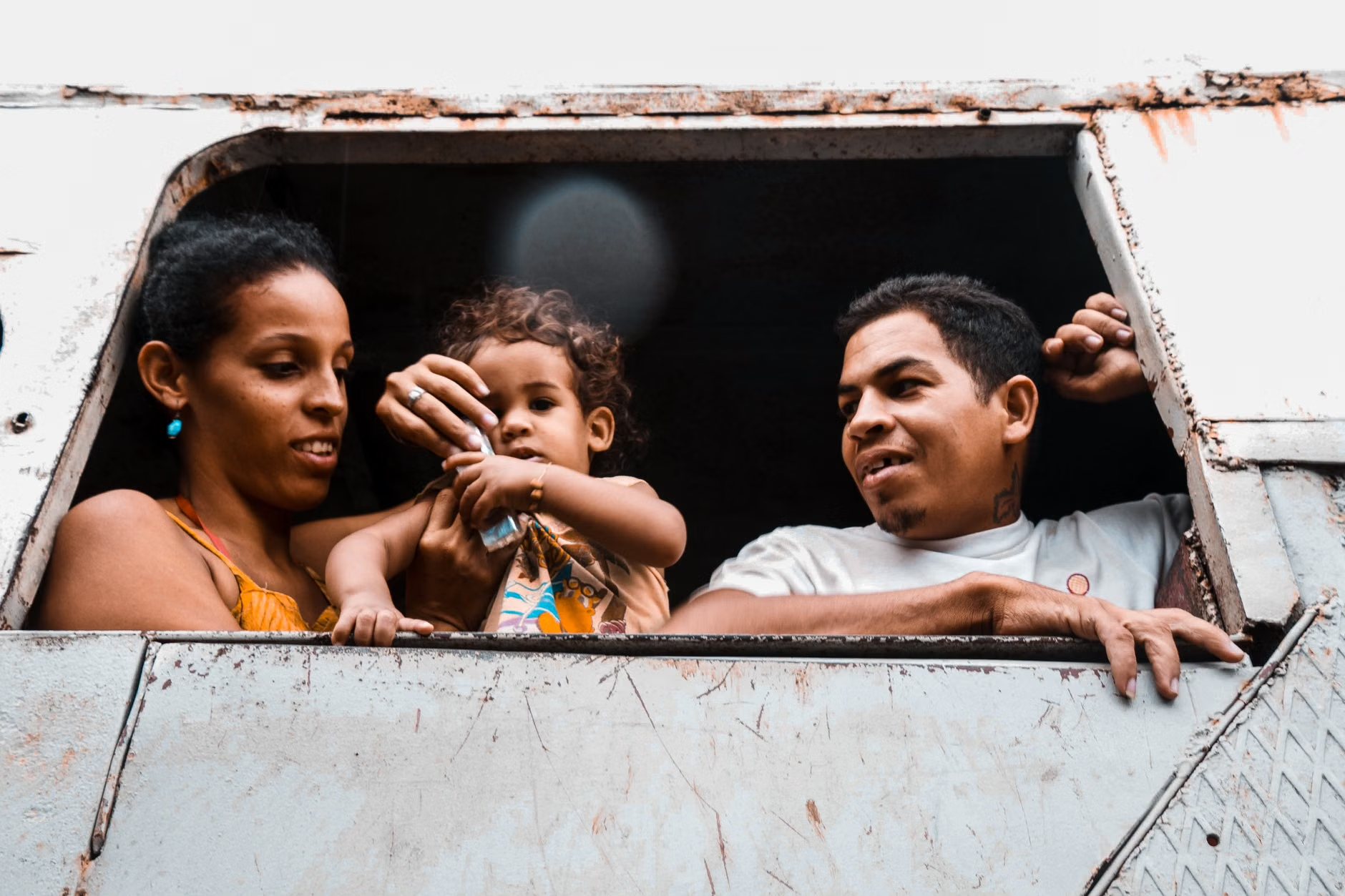
Why choose a train that goes 30 miles per hour when a car can get you there in a fraction of the time? The answer lies in the “cognitive load” of parenting. When you are driving, one parent is tethered to the steering wheel, managing traffic, navigation, and the inevitable “are we there yet?” inquiries. On a heritage train, you are physically present with your family. The environment is tactile—the smell of coal smoke, the clatter of iron wheels, and the ability to walk around the carriage—provides sensory input that tablets and headrests simply cannot match.
Furthermore, these lines are often run by non-profit organizations or historical societies. Your ticket price isn’t just paying for transit; it is subsidizing the preservation of engineering history. For children, this is a tangible history lesson. They aren’t reading about the Industrial Revolution; they are watching a firebox being stoked and hearing the whistle blow in real-time. It transforms a “trip” into an “event.”
The Reality of “Slow Travel”
The biggest mistake first-timers make is treating heritage rail like public transit. In a city like London or New York, you miss a train, you catch the next one in ten minutes. In the world of heritage rail, if you miss your 10:00 AM departure, your next option might be tomorrow morning. These lines are often single-track operations, meaning the schedule is as rigid as the steel rails themselves.
When planning, you must account for “buffer time.” If your journey involves a transfer from a national rail line to a heritage line, build in at least 60 minutes. Heritage stations are often located in rural areas where taxis or ride-shares are non-existent. Being stranded at a beautiful, but remote, 19th-century depot is only romantic for the first twenty minutes.
Strategic Planning: How to Execute a Seamless Trip
To make this work, you need to act like a project manager. Start by identifying the “Class” of travel. Heritage lines often offer various tiers: from standard wooden bench seating to restored Pullman-style dining cars. For families, the choice isn’t just about luxury; it’s about space. If you have younger children, look for carriages with “open bays” or tables. These allow you to set up coloring books, snacks, or small toys without encroaching on a stranger’s personal space.
The “Logistics Checklist” for Parents
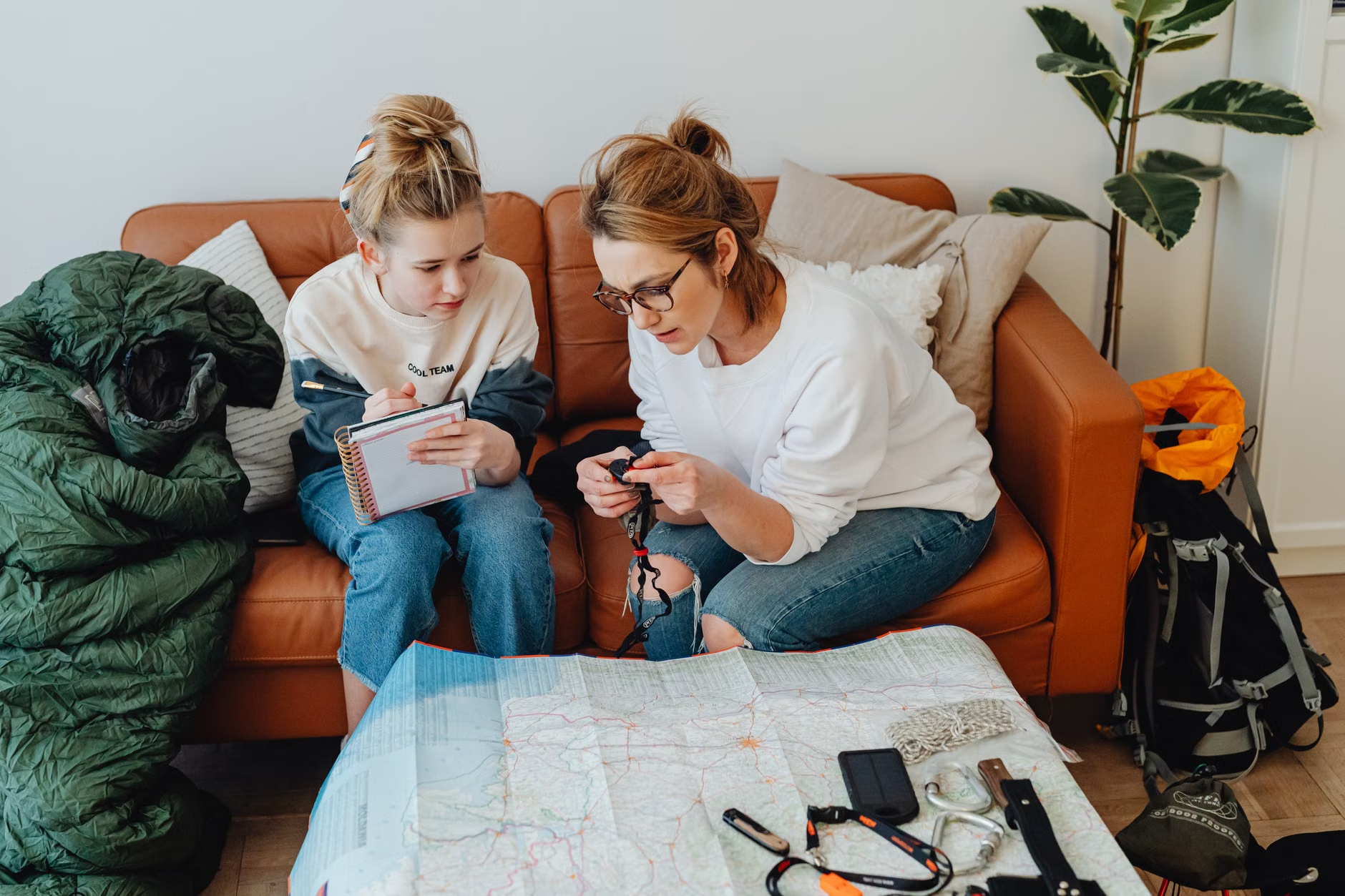
Before you commit to a long-distance heritage trip, run through this checklist to ensure you aren’t setting yourself up for a meltdown:
| Factor | Constraint | Action Item |
|---|---|---|
| Accessibility | Many vintage carriages have narrow doors and steep steps. | Call the operator to verify if a stroller or wheelchair can be boarded. |
| Catering | On-board dining is rarely “fast.” | Pack a “picnic kit” with high-protein snacks; don’t rely on the buffet car. |
| Facilities | Toilets are often original or limited. | Use the station facilities before boarding, regardless of perceived urgency. |
| Temperature | Steam trains can be drafty or incredibly hot depending on the season. | Dress in thin, removable layers rather than one heavy jacket. |
The “Accessibility” point is critical. Many heritage railways are run by volunteers who are passionate about the engines but may not have the resources to modernize every carriage. If you have a child who struggles with loud noises, be aware that steam locomotives are incredibly noisy during departure. Bring noise-canceling headphones for the first few minutes of the journey until the train hits its cruising speed.
Understanding the Financials and Hidden Costs
Heritage rail is a niche product, and it is priced accordingly. Unlike government-subsidized commuter rail, heritage lines must cover their own operating costs—which include the massive expense of maintaining 100-year-old machinery. Expect to pay a premium. However, look for “Family Day Passes” or “Membership Discounts.” If you live near a heritage line, an annual membership often pays for itself in just two visits.
Watch out for the “Add-on Trap.” Many lines offer character events (e.g., “The Polar Express” or “Thomas the Tank Engine” themed days). These are priced significantly higher than standard tickets. While they are great for young children, they are often crowded and rushed. If your goal is to experience the train itself, choose a standard service day. You will get more time to explore the locomotive, talk to the engineers, and enjoy the scenery without the artificial pressure of a themed event.
The Cultural and Historical Context
Why does this matter in the 21st century? Heritage rail represents a bridge between the analog past and our hyper-digital present. In your 30s and 40s, you are likely part of a generation that has seen the rapid obsolescence of technology. Watching a steam engine operate—a machine that is literally powered by fire and water—provides a rare opportunity to explain the “how” of our world to children who are used to everything being “magic” behind a glass screen.
When you visit these stations, you aren’t just a passenger; you are a participant in a living museum. Take the time to look at the signal boxes, the water cranes, and the ticket offices. These are often preserved in their original state. Most volunteers, often retirees who spent their careers in engineering or transport, love to talk about the mechanics. Engaging them is one of the best ways to get your kids off their devices and interested in the real world.
Common Mistakes to Avoid
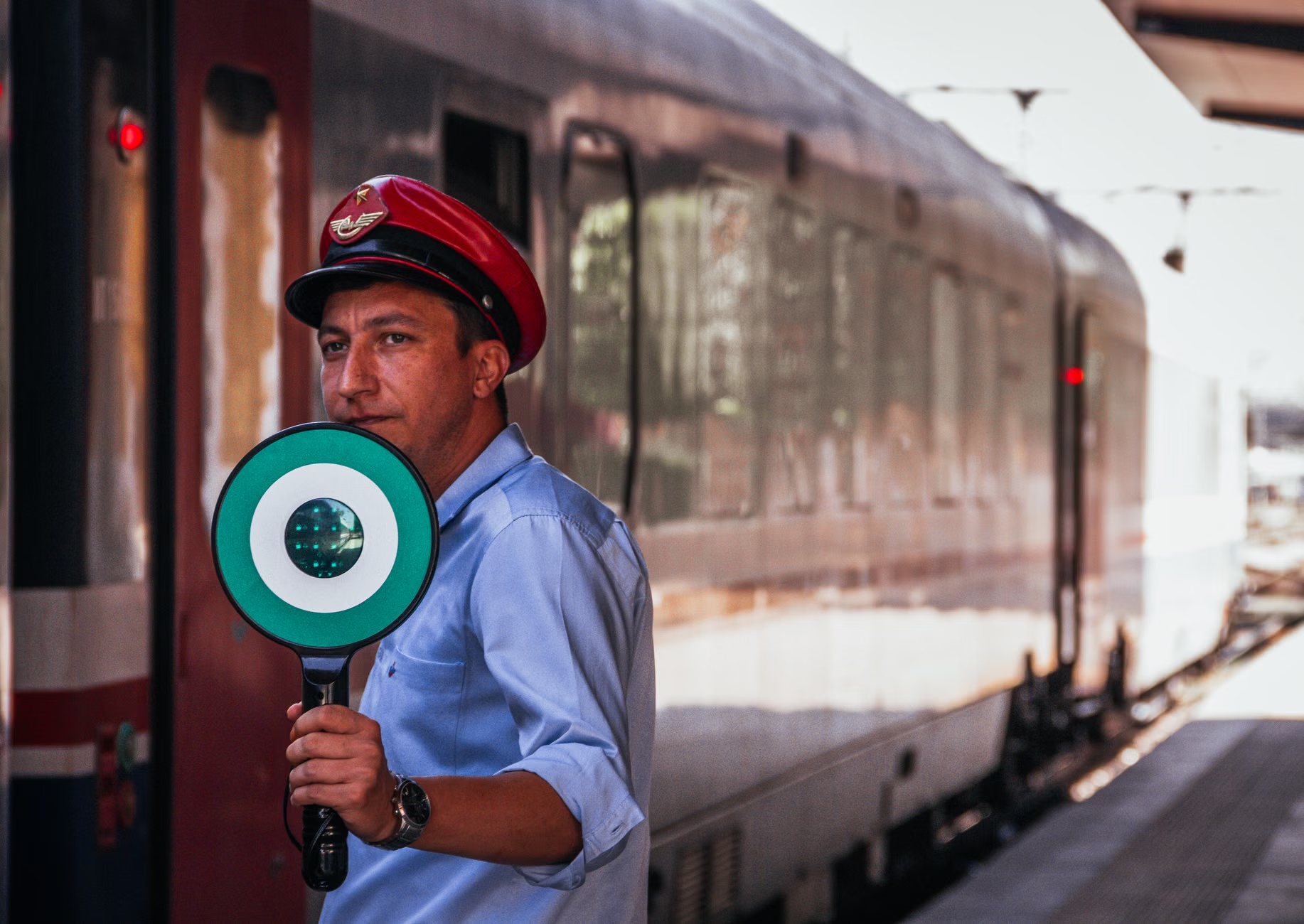
A common pitfall is over-scheduling. Do not plan a heritage rail trip as part of a “three-city tour.” Heritage rail is an experience that demands a full day. If you try to fit a museum visit, a lunch reservation, and a train ride into one day, you will fail. The train is the destination. Plan your day around the train schedule, and let everything else be secondary.
Another mistake is assuming that all heritage lines are “scenic.” Some run through industrial backdrops, while others cut through protected national parks. Research the route beforehand. If you are traveling for the views, ensure the line is known for its landscape, not just its history. Use tools like the Heritage Railway Association (in the UK) or regional rail heritage maps to verify the route’s primary appeal.
Actionable Steps for Your First Booking
If you are ready to book, follow this sequence to avoid the common pitfalls of casual travelers:
- Map the Route: Look for a line that connects two towns or points of interest. This allows you to have a “goal” at the other end (e.g., a park, a cafe, or a hiking trail).
- Verify the Motive Power: Are you riding behind a steam locomotive, a vintage diesel, or an electric railcar? If your child has a specific interest, check the schedule. Many lines rotate their engines.
- Book the “Right” Seat: Look for diagrams on the operator’s website. If you are traveling as a family of four, look for a “four-top” table. If you are solo with one child, try to get a window seat facing the direction of travel to avoid motion sickness.
- Check the Weather Policy: Heritage lines often run in all weather, but if you are planning for a steam-hauled trip, heavy wind can sometimes cause fire bans or restrictions. Check the operator’s website 24 hours before you leave.
Finally, remember that the “heritage” aspect means things might break. It’s part of the charm. If there is a delay due to a mechanical issue, don’t view it as a failure of service. View it as an authentic part of the experience. The volunteers are doing their best to keep history alive, and sometimes, history needs a little extra time to get moving.
Final Thoughts on the Journey
Heritage rail is not about efficiency; it is about intentionality. In an era where we optimize every second of our time, choosing to travel at a pace that allows you to see the textures of the landscape is a radical act of self-care for busy parents. It forces you to disconnect from the digital noise and reconnect with your family in a space that hasn’t changed much in a century.
Don’t worry about being perfect. Your kids might get bored for ten minutes, someone might spill a drink, and the train might be a bit loud. But when they see that massive engine pull into the station, hissing steam and smelling of coal, the look on their faces will remind you why you didn’t just take the highway.
Frequently Asked Questions
Q: Is it safe for young children?
A: Yes, generally. However, heritage trains lack the safety features of modern high-speed rail (e.g., automatic doors, climate control). Keep children away from the carriage vestibules when the train is moving, as the gaps between carriages are often exposed.
Q: Should I bring a stroller?
A: Most heritage trains have limited storage. If you can, use a lightweight, umbrella-fold stroller or a baby carrier. Large, bulky travel systems are often difficult to navigate on narrow, vintage platforms.
Q: What happens if it rains?
A: Most heritage carriages are fully enclosed and waterproof, though they may be drafty. The experience can actually be quite atmospheric in the rain. Just ensure you have appropriate footwear for the walk from the station to your final destination, as heritage stations often have gravel or uneven surfaces.
For further information on finding heritage lines in your region, check the Heritage Railway Association for comprehensive directories and safety standards.