The most effective way to save thousands of dollars and reclaim your garage space isn’t to buy better storage organizers; it is to stop owning tools you only use twice a year.
- Financial Efficiency: The average power drill is used for less than 15 minutes in its entire lifespan; renting or borrowing via a library saves the initial purchase price plus maintenance costs.
- Space Reclamation: Utilizing a tool library eliminates the need for “dead storage” in your home, freeing up square footage for family activity or living space.
- Quality over Quantity: Tool libraries provide access to professional-grade equipment that is often safer and more efficient than the entry-level consumer tools most homeowners purchase.
If you are in your 30s or 40s, your garage or basement likely holds a graveyard of intentions. There is that miter saw you bought for the “big renovation” in 2021, the pressure washer that leaks in the corner, and the set of specialized wrenches that have seen exactly one bolt. We buy these things because we feel a sudden need for efficiency, but we end up paying a “convenience tax” in the form of wasted money, cluttered square footage, and the inevitable guilt of seeing them sit idle.
The concept of “Community-Equity” tool libraries is changing this dynamic. These aren’t just rental shops; they are circular economy hubs designed to foster community resilience while slashing the cost of homeownership. Here is how you can leverage these systems to stop the cycle of accumulation.
Why Your “Just in Case” Tool Habit is Costing You More Than You Think
We often justify the purchase of a $200 tool by calculating how much a professional would charge to do the job. If a plumber charges $150 and a pipe wrench costs $40, we tell ourselves we are “saving” $110. This is the common trap of the DIY mindset. We ignore the hidden costs of ownership: storage space, maintenance, battery degradation, and the inevitable obsolescence of the item.
When you account for the “cost per use,” that $40 wrench becomes a liability. If you use it once and it occupies three cubic feet of your garage for five years, you are paying a premium in rent for that space. In many urban environments, storage space is worth hundreds of dollars per square foot annually. If your tools are taking up space that could be used for a child’s play area or a home office, the actual cost of your tool collection is significantly higher than the price tag.
Beyond the financial aspect, there is the issue of safety and quality. Most homeowners buy the entry-level or mid-tier tools found at big-box hardware stores. These tools are often made with lower-grade materials, making them harder to use and more prone to failure. Tool libraries, conversely, are often stocked with professional-grade, high-durability equipment. When you borrow from a library, you are usually getting a better tool than you would have bought for yourself.
The Real-Life Math: Buying vs. Borrowing
Let’s look at a hypothetical scenario involving a common home project: installing a new light fixture and fixing a deck board.
| Equipment | Retail Price | Library Fee (Typical) | Storage Requirement |
|---|---|---|---|
| Impact Driver | $150 | $5 – $10 | Medium |
| Pressure Washer | $300 | $15 – $25 | Large |
| Ladder (Extension) | $200 | $10 – $15 | Very Large |
| Total | $650 | $30 – $50 | Massive |
If you perform these three projects once a year, you spend $650 upfront, plus you are responsible for battery replacements and storage. By using a community library, you spend roughly $40 a year and keep your garage clear. The savings aren’t just in the cash; they are in the mental clarity of not having a cluttered home.
How to Find and Evaluate Your Local Tool Library
Not every town has a formal “Tool Library,” but the sharing economy is expanding rapidly. You can find these resources under names like “Library of Things,” “Maker Spaces,” or “Community Lending Cooperatives.” When searching for a reliable provider, you need to look past the marketing and evaluate the system’s longevity and reliability.
Three Tiers of Tool Access
- Public Library Systems: Increasingly, municipal libraries are expanding their collections beyond books. They now offer “Library of Things” programs where you can check out tools with your standard library card. These are generally the safest and most reliable options.
- Non-Profit Tool Cooperatives: These are often community-run and funded by membership fees. They offer the widest selection of tools but require a bit more vetting. Look for organizations that have been operating for at least three years.
- Peer-to-Peer Apps: Platforms like Fat Llama or local neighborhood Facebook groups allow you to rent tools from neighbors. These are excellent for specialized, high-end equipment but require more coordination and trust.
When evaluating a potential library, ask these three questions before signing up: What is their maintenance protocol? Do they provide safety training? What is the liability policy? A good library will have a documented process for cleaning, sharpening, and inspecting tools between loans. If they don’t, you run the risk of getting a dull saw blade or a malfunctioning drill, which can lead to injury.
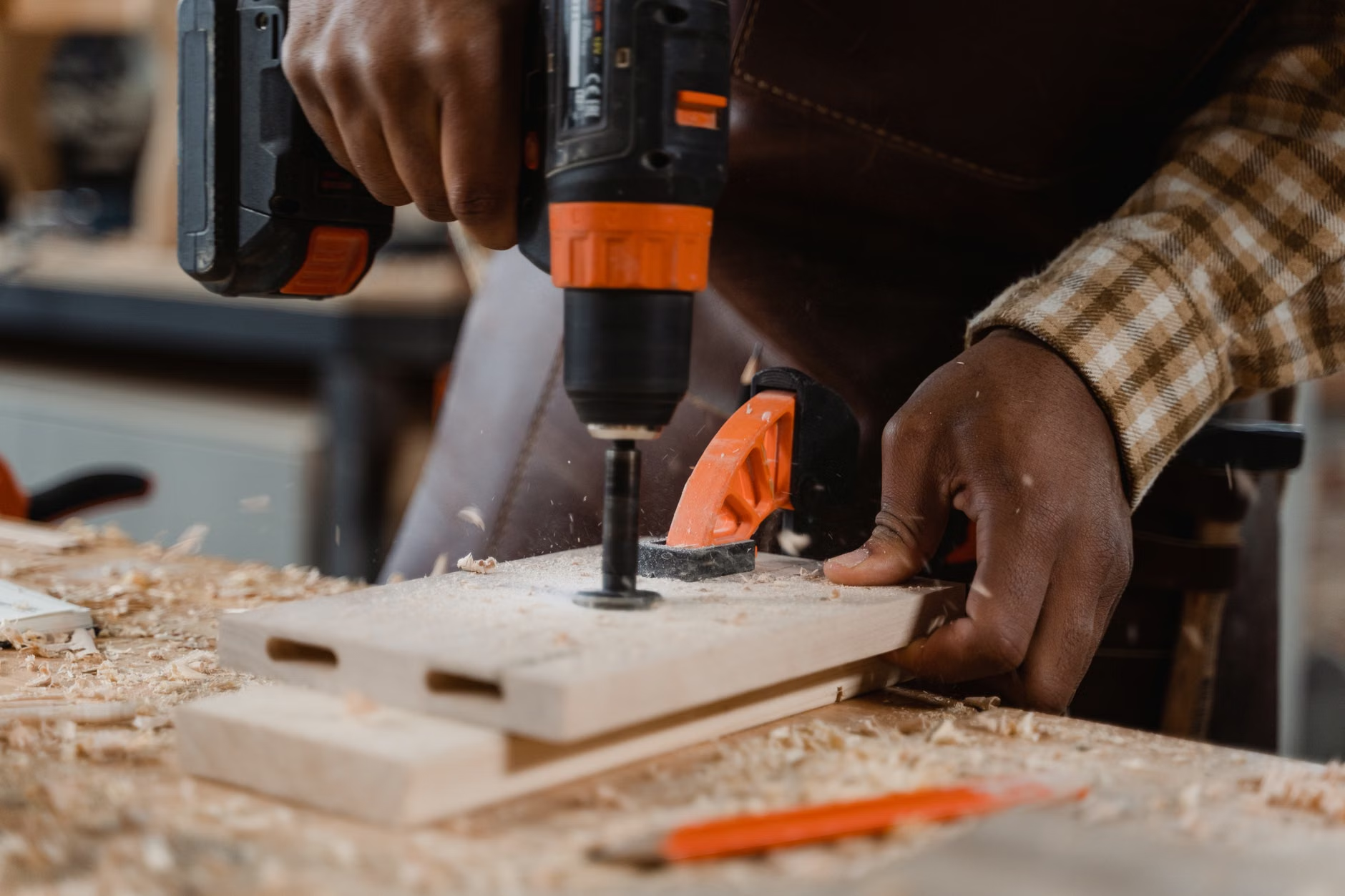
The biggest hesitation most people have about borrowing tools is the fear of breaking them or, worse, hurting themselves because they aren’t familiar with the equipment. This is a valid concern. Unlike buying a tool where you have it on your shelf for weeks to “figure it out,” borrowing is time-sensitive.
To mitigate this, treat the library as an educational resource, not just a hardware store. Many community tool libraries host weekend workshops. If you are planning a project, check their calendar. Spending two hours learning how to use a table saw at a workshop is significantly safer than watching a YouTube video and jumping straight into the project. Furthermore, professional tools often have different safety features than consumer-grade ones; always ask for a quick demonstration when you check out an item.
Common Mistakes to Avoid
The most common mistake is overestimating your project timeline. If you rent a floor sander for a weekend, you are under pressure to finish. This leads to rushed work and potential mistakes. Always add a 25% buffer to your project timeline when you are working with borrowed equipment. If you think it will take two days, rent it for three. The cost of an extra day of rental is negligible compared to the cost of a botched home repair.
Another pitfall is failing to check the consumables. A tool library will lend you the drill, but they won’t give you the drill bits. Ensure you have the necessary drill bits, sandpaper, or blades before you leave the house. Most libraries have a small shop that sells these, or you can buy them at a local store, but don’t assume the tool comes with everything you need to start immediately.
The Hidden Benefits: Building Community and Sustainability
There is a social dimension to tool sharing that is often overlooked. When you participate in a tool library, you are engaging in a circular economy. You are reducing the demand for new manufacturing, which is a tangible way to lower your household’s carbon footprint. Every time you borrow a tool instead of buying a new one, you are preventing the extraction of raw materials and the energy cost of shipping a heavy item across the globe.
Furthermore, these libraries are social hubs. You will meet neighbors who are also interested in home improvement. This is an invaluable resource for someone in their 30s or 40s who might be trying to manage home repairs while balancing parenting responsibilities. Need advice on how to fix a leaky faucet? You are far more likely to get honest, local advice at a tool library than from a faceless forum online. Many libraries have a “mentor” system where experienced members help novices with their projects.
Implementing the “Tool-Sharing” Mindset in Your Home
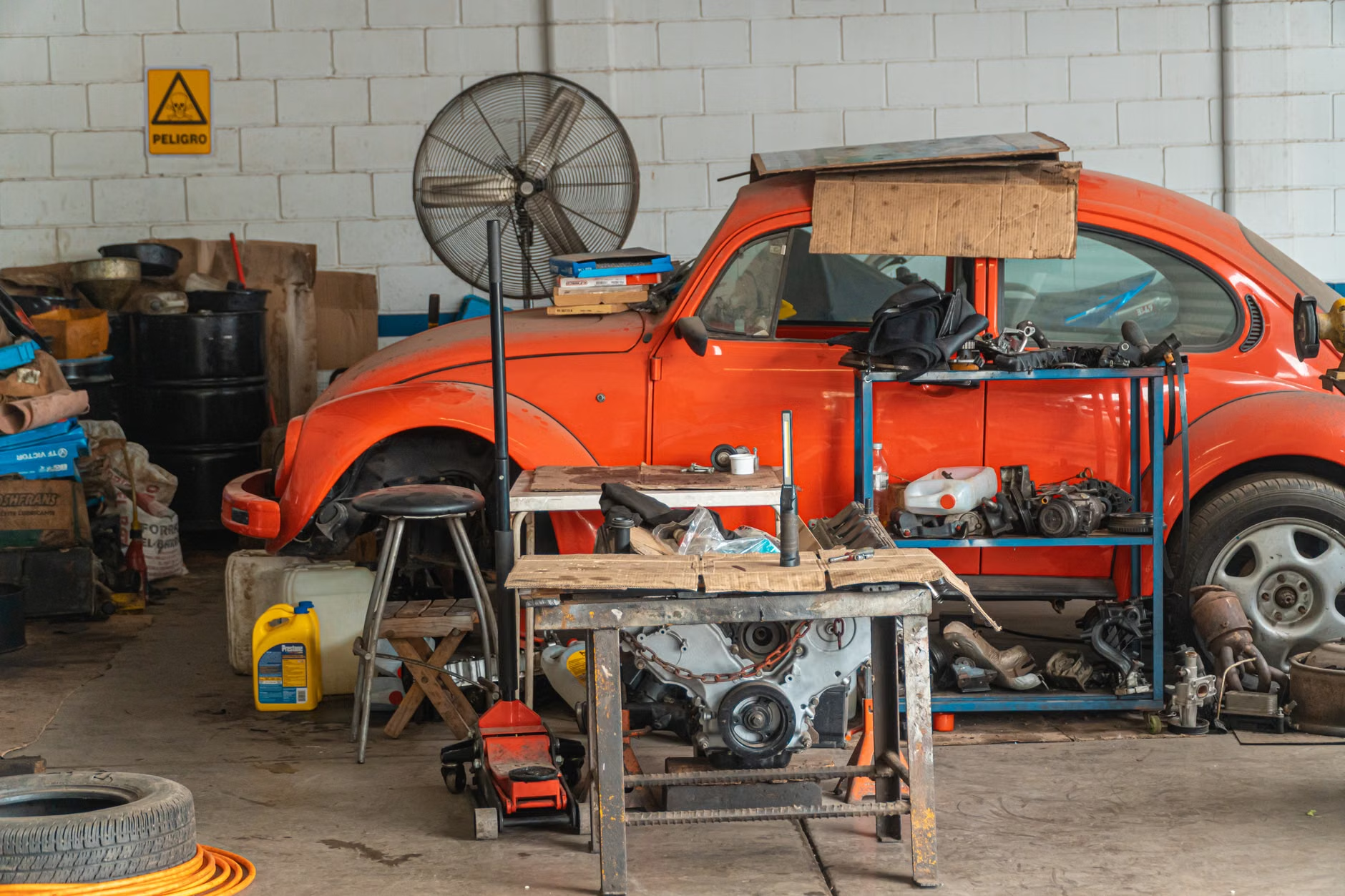
To make this transition, you need a systematic approach. Start by auditing your current garage. Be brutal. If you have not used a tool in the last 18 months, you likely will not use it in the next 18 months. Sell these items and use the proceeds to fund your membership at a local library. This is a classic “declutter-to-fund” strategy that clears space and provides a budget for your future projects.
Next, create a “Tool Inventory” for your household. List the tools you actually use frequently—a basic screwdriver set, a tape measure, a level, and a basic hammer. These are your “core tools.” Keep these. For everything else, treat it as a “borrow-first” item. When a project comes up, your first instinct should not be to go to the store; it should be to check the inventory of your local library.
Decision Criteria for Buying vs. Borrowing
If you are struggling to decide whether to buy a tool, use this checklist:
- Frequency: Will I use this more than once a month? If yes, consider buying. If no, borrow.
- Space: Does this tool take up more than 1 cubic foot of storage? If yes, and I use it rarely, borrow.
- Complexity: Is this a highly specialized tool that requires professional maintenance? If yes, always borrow.
- Cost: Is the cost of the tool less than 10% of the cost of the project? If yes, it might be worth buying for the sake of convenience.
This framework forces you to be intentional. It shifts your role from a “consumer of goods” to a “manager of resources.” Over time, this mindset shift will bleed into other areas of your life, making you more conscious of what you bring into your home.

Addressing Potential Challenges and Logistics
The transition to a tool library system is not without its logistical hurdles. The most obvious is transportation. Not everyone has a truck to move a large table saw or a rototiller. Before joining a library, check if they offer delivery services or if they are located near your usual commute. Some forward-thinking libraries are even experimenting with cargo-bike rentals to help members transport heavy items.
Another challenge is availability. What if you go to the library and the only power washer is checked out? This is where planning becomes crucial. Use their online reservation system if available. If they don’t have one, call ahead. Treat it like you would a doctor’s appointment or a restaurant reservation. It requires a bit more coordination than just walking into a hardware store, but the trade-off is significant savings and a cleaner home.
Finally, there is the issue of “social anxiety” regarding borrowing. Some people feel guilty asking for help or worry that they will be judged for not knowing how to use a tool. Let go of this immediately. Tool libraries are specifically designed for people who are learning. The staff and volunteers are there because they love to teach and share. You are not a “burden” by asking questions; you are the reason the library exists.
Final Thoughts: A More Intentional Home
The goal of using a tool library is not just to save money, although the savings are substantial. The goal is to live a more intentional life. We have been conditioned to believe that ownership is the only path to competence. If you want to be a “handy” person, you must own the tools. This is a lie.
Competence comes from experience, not from having a garage full of dust-covered machinery. By utilizing community-equity libraries, you strip away the friction of ownership and focus on the joy of doing. You save your money for experiences that truly matter, you reclaim your space for your family, and you contribute to a more sustainable, neighborly world. Start small—find one tool you were planning to buy, search for a local library, and make your first borrow. You will be surprised at how much lighter your home—and your mind—feels.
Frequently Asked Questions
- What if I break a tool while using it? Most libraries have a clear policy on this. If it’s normal wear and tear, you typically aren’t responsible. If it’s broken due to negligence, you may be charged a repair or replacement fee. Always ask for their specific policy upon registration.
- Do I need to be a professional to join? Absolutely not. Most libraries are designed for the average homeowner. They often have beginner-level tools and offer free or low-cost workshops to help you get started safely.
- Are these libraries only in big cities? While more common in urban areas, the “Library of Things” movement is spreading to suburban and rural areas via municipal library networks. Check your local county or city library website to see if they have a non-book lending program.
For more information on how to start or support a community-equity project in your area, you can visit the Local Tools directory, which aggregates information on community-run tool libraries globally.