The secret to a focused child isn’t more discipline—it’s the physical environment. If your child struggles to sit still or complete tasks, you are likely dealing with a sensory overload issue, not a behavioral one.
- Sensory-Audit defined: A systematic review of visual, auditory, and tactile stimuli in a study space to identify and remove “cognitive noise.”
- The 20-minute rule: Even the best-designed space requires a complete sensory reset every 20-30 minutes to prevent mental fatigue.
- Environment beats willpower: You can save hours of “homework battles” by adjusting lighting, sound, and ergonomics rather than nagging for focus.
The Hidden Cost of “Study Corner” Neglect
We often assume a desk, a chair, and a laptop are enough. But for a child whose brain is still developing its executive function, a home-schooling space is rarely just a space—it is an input device. Every flickering LED, every hum of the refrigerator, and every slightly-too-high chair height is a piece of data their brain has to process.
When we talk about a “sensory audit,” we aren’t suggesting a clinical overhaul of your home. Instead, think of it as a low-stakes, high-reward diagnostic tool. You are looking for the “hidden noise” that forces your child to spend 40% of their mental energy just staying seated, leaving only 60% for the actual math or reading they need to do.
Most parents in their 30s and 40s are juggling remote work, household management, and parenting. We tend to prioritize aesthetics or space-saving furniture. However, a “Pinterest-perfect” desk is often a disaster for focus if it’s placed in a high-traffic area or lacks proper task lighting. Let’s break down exactly how to audit your space.
Phase 1: The Visual Audit (The “Clutter-to-Calm” Ratio)
Visual noise is the silent killer of concentration. It isn’t just about a messy desk; it’s about the “peripheral pull.” If your child sits at a desk facing a window that looks onto the street, or a wall covered in posters, calendars, and family photos, they are fighting a losing battle against their own visual cortex.
The “Line-of-Sight” Test
Sit in your child’s chair. What is the very first thing you see? If it is a hallway where people walk, a kitchen where someone is cooking, or a wall cluttered with decorations, that is your primary target. The goal here is to create a “visual tunnel.”
- The 180-Degree Rule: The immediate 180-degree field of vision should be as neutral as possible. Use solid-colored desk mats to dampen visual patterns on the desk surface.
- The Lighting Temperature: Avoid harsh, cool-toned “daylight” bulbs (5000K+) if they are directly in the line of sight. They create glare on screens and paper, causing eye strain that manifests as “fidgeting.” Aim for 3000K-3500K warm-white bulbs for focused task lighting.
- The “Hidden Storage” Strategy: If you don’t have a dedicated room, use rolling carts that can be tucked away. When the “school day” ends, the desk should look like a desk, not an office supply store.
Phase 2: The Auditory Audit (Beyond Silence)
Total silence is actually rare in nature and can be just as distracting as loud noise. The key is “predictable auditory input.” If your home is busy, you don’t necessarily need a soundproof booth; you need to manage the contrast.
Common mistake: Allowing children to use “background music” with lyrics. The language center of the brain cannot ignore words. If they are reading or writing, music with lyrics is a direct competitor for their focus.
| Sound Type | Impact on Focus | Recommendation |
|---|---|---|
| Lyrics/Pop Music | High Interference | Avoid during active reading/writing. |
| Brown/Pink Noise | High Consistency | Excellent for masking erratic household sounds. |
| Natural Silence | Variable | Only effective if the house is truly empty. |
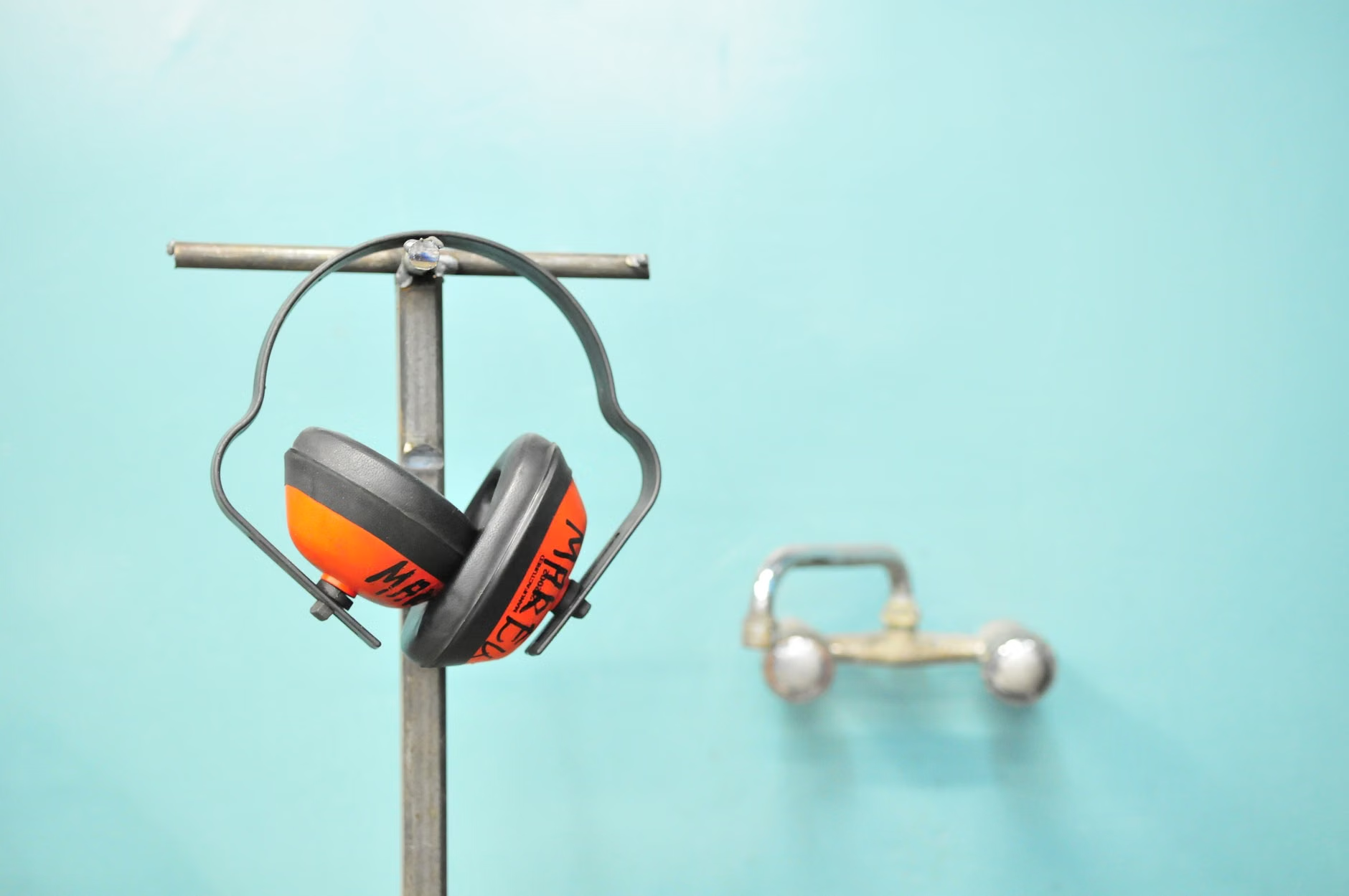
If you have multiple children or a working parent, invest in high-quality, comfortable noise-canceling headphones. Note the word “comfortable.” If the child finds them heavy or itchy, they won’t wear them. Test for weight and clamping force before committing to a pair.
Phase 3: The Tactile and Ergonomic Audit
If a child is constantly shifting in their seat, it’s usually not because they are “bored.” It’s because their core is tired. Ergonomics isn’t just for office workers; it’s the physical foundation of learning.
The 90-90-90 Rule: When sitting, the child’s ankles should be at 90 degrees, knees at 90 degrees, and hips at 90 degrees. If their feet are dangling, they lose core stability. If they lose core stability, they subconsciously focus on balancing rather than the task at hand.
The Tactile “Fidget” Factor: Some children need a tactile anchor. A smooth stone, a piece of velvet, or a textured desk mat can provide the necessary “grounding” for sensory-seeking children. The mistake here is providing “distraction toys” (like fidget spinners) that require visual attention. The tactile object should be something they can feel without looking at.
Phase 4: The “Reset” Rituals
Even the best audit will fail if the space becomes stagnant. The sensory environment needs to be “refreshed.” This is where the 20-minute rule comes in.
Every 20 to 30 minutes, the sensory input of the room should change slightly. This isn’t about deep cleaning. It’s about a “sensory reset.”
- Light Reset: If they’ve been working under a lamp, switch to natural light or dim the room for two minutes.
- Air Reset: Open a window. The change in temperature and oxygen levels acts as a physical “reboot” for the brain.
- Movement Reset: Do not just stand up. Perform a “proprioceptive” activity—like pushing against a wall for 10 seconds or doing five wall push-ups. This grounds the body and signals the brain that a transition is happening.
The Overlooked Variable: The “Social” Sensory Load
One of the most overlooked aspects of a home-schooling space is the presence of other people. Even if they aren’t talking, the mere presence of a parent walking by creates a “vigilance loop.” The child’s brain is constantly monitoring the movement in the periphery to see if they are being watched or if they need to interact.
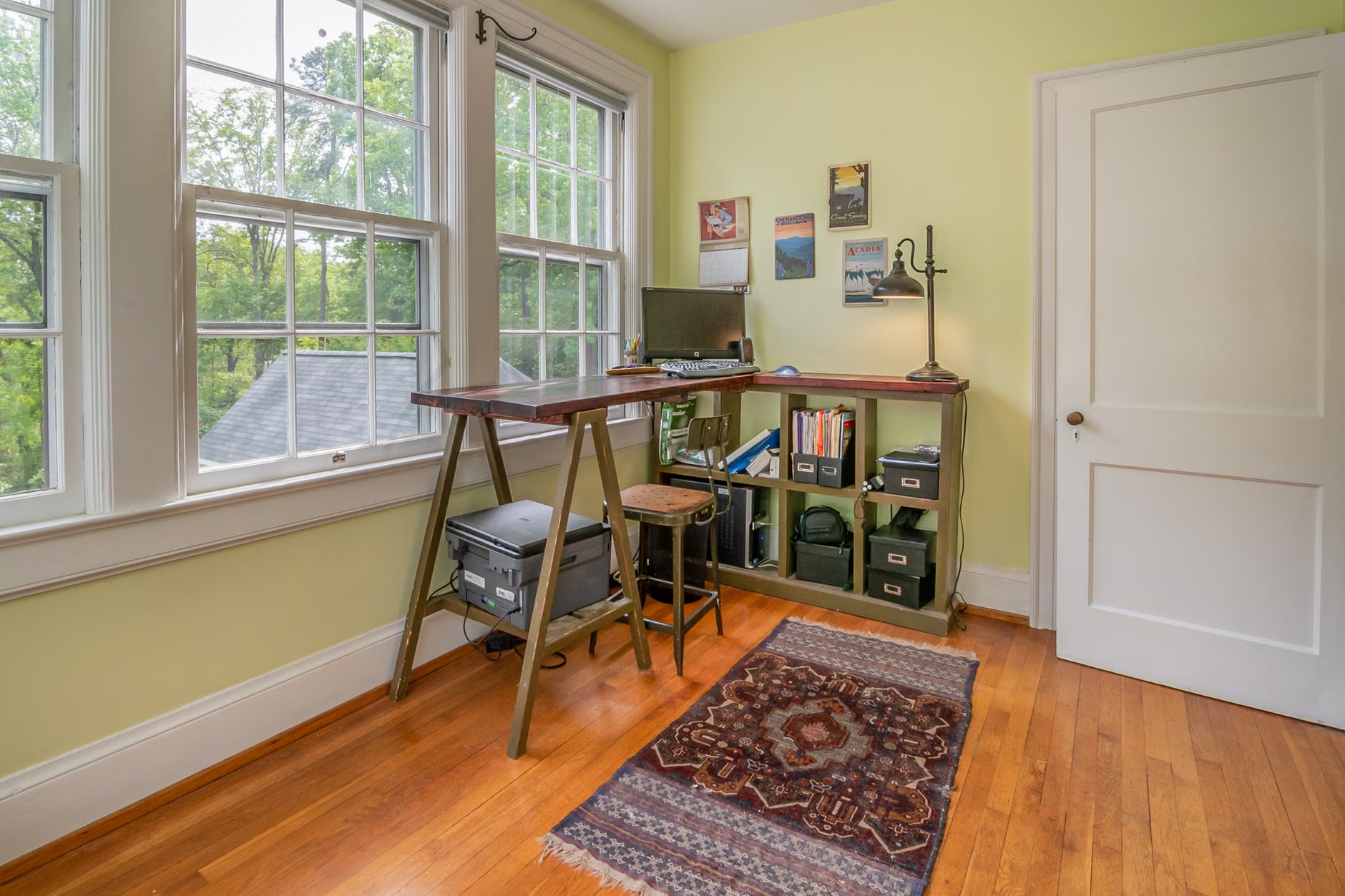
If you are working from home, try to position your desk so your back is to your child, or vice versa. If that’s impossible, use a simple room divider or a strategically placed bookshelf. This creates a psychological boundary that reduces the sensory load of “being observed.”
Remember, the goal of the sensory audit is not to create a sterile environment. It is to create a predictable one. When the brain knows exactly what to expect from its surroundings, it can finally stop scanning for threats or distractions and start focusing on the work.
Implementation: How to Start Today
Don’t try to change everything at once. Start with a “Saturday Audit.”
- The 10-Minute Walkthrough: Walk through your child’s study area with a notepad. Write down every single thing that catches your eye, sounds weird, or feels uncomfortable.
- The Elimination Phase: Remove the top three distractions. If it’s a pile of books, move it. If it’s a flickering light, fix it. If it’s a high-traffic hallway, move the desk.
- The Testing Period: Implement these changes for one week. If the “homework struggle” decreases, you’ve found the culprit. If not, revisit your list.
This process is iterative. As your child grows, their sensory needs will change. A desk that worked for a seven-year-old will likely be a sensory nightmare for an eleven-year-old. Treat the space as a living, breathing part of their education, not a static piece of furniture.
Frequently Asked Questions
Q: Does my child really need a dedicated room for study?
A: No. In fact, a dedicated room can sometimes feel isolating. A “dedicated space”—defined by a specific desk, chair, and lighting setup—is far more important than having a separate room. The key is consistency, not isolation.
Q: How do I handle sensory overload in a small apartment?
A: Focus on “vertical” boundaries. If you cannot move the desk, use a visual screen (like a folding partition) to block the view of the living area. Use noise-canceling headphones to create an “auditory wall.” These two steps can simulate a private office in the middle of a busy living room.
Q: Is it okay for my child to study on the floor or a sofa?
A: It is okay only if it is a planned sensory choice. Some children focus better when they have more freedom to move. However, if they are “slumping” (losing ergonomic support), their focus will drop within minutes. If they study on the floor, ensure they have a firm back support against a wall to maintain a neutral spine.
Final Thoughts
Parenting in the modern era is often about managing inputs. We filter the content our children see online, we control the food they eat, and we curate the activities they join. Applying that same level of intentionality to their physical study environment is the missing piece of the puzzle.
You don’t need a massive budget or a home renovation to make this work. You just need to be observant. Look at the space through their eyes, listen to the background hums they are forced to ignore, and make the small, consistent adjustments that clear the path for their best work. Your job isn’t to force them to focus; it’s to remove the obstacles that make focusing impossible.
For more detailed research on ergonomic standards for children, visit the Chartered Institute of Ergonomics and Human Factors, which provides comprehensive guides on workstation setup for all ages.