- Visual Noise Reduction: Slow living is not about minimalism; it is about “intentional editing.” Reducing visual stimuli by 40% in common areas significantly lowers cortisol levels for both parents and children.
- Zoning vs. Open Plan: In urban apartments, create “psychological zones” using rugs or lighting rather than physical barriers to maintain a sense of order without sacrificing space.
- High-Utility, Low-Maintenance Materials: Choose materials that age well—like solid wood, wool, or linen—which remove the need for constant “perfect” upkeep, allowing the home to be lived in without stress.
The most effective way to start a “slow-living” interior design project is to stop trying to make your home look like a showroom and start making it work like an ecosystem. For urban parents, the challenge isn’t just the lack of square footage; it is the constant friction between the need for order and the chaos of raising children in a city environment. Slow living in a design context is the practice of removing unnecessary friction from your domestic environment so that you can spend your limited energy on people rather than objects.
Why Your Home Architecture Impacts Your Parenting Stress
We often talk about “work-life balance,” but we rarely discuss “environment-life balance.” When you live in a city, your home is frequently the only space you can control. However, if your interior design is built around high-maintenance aesthetics—think white glass coffee tables, delicate rugs, or open-shelf displays that require constant tidying—you are essentially living in a home that demands labor from you.
For parents in their 30s and 40s, the “slow-living” shift is a survival mechanism. It is about shifting from a reactive environment (where you are constantly cleaning up or protecting furniture) to a proactive one (where the home supports your daily rhythm). Research in environmental psychology suggests that “visual clutter” increases cognitive load. If you are constantly scanning a room filled with toys, cables, and mismatched decor, your brain never enters a full rest state. This is why you might feel exhausted even when you are sitting on the couch.
To implement this, you must treat your home as a series of “activity nodes.” Instead of designing for how a room looks in a photo, design for the specific behavior that happens there at 6:00 PM. If your living room is where the family gathers, every single item in that room must either serve a functional purpose or provide genuine psychological comfort. Everything else is just noise.
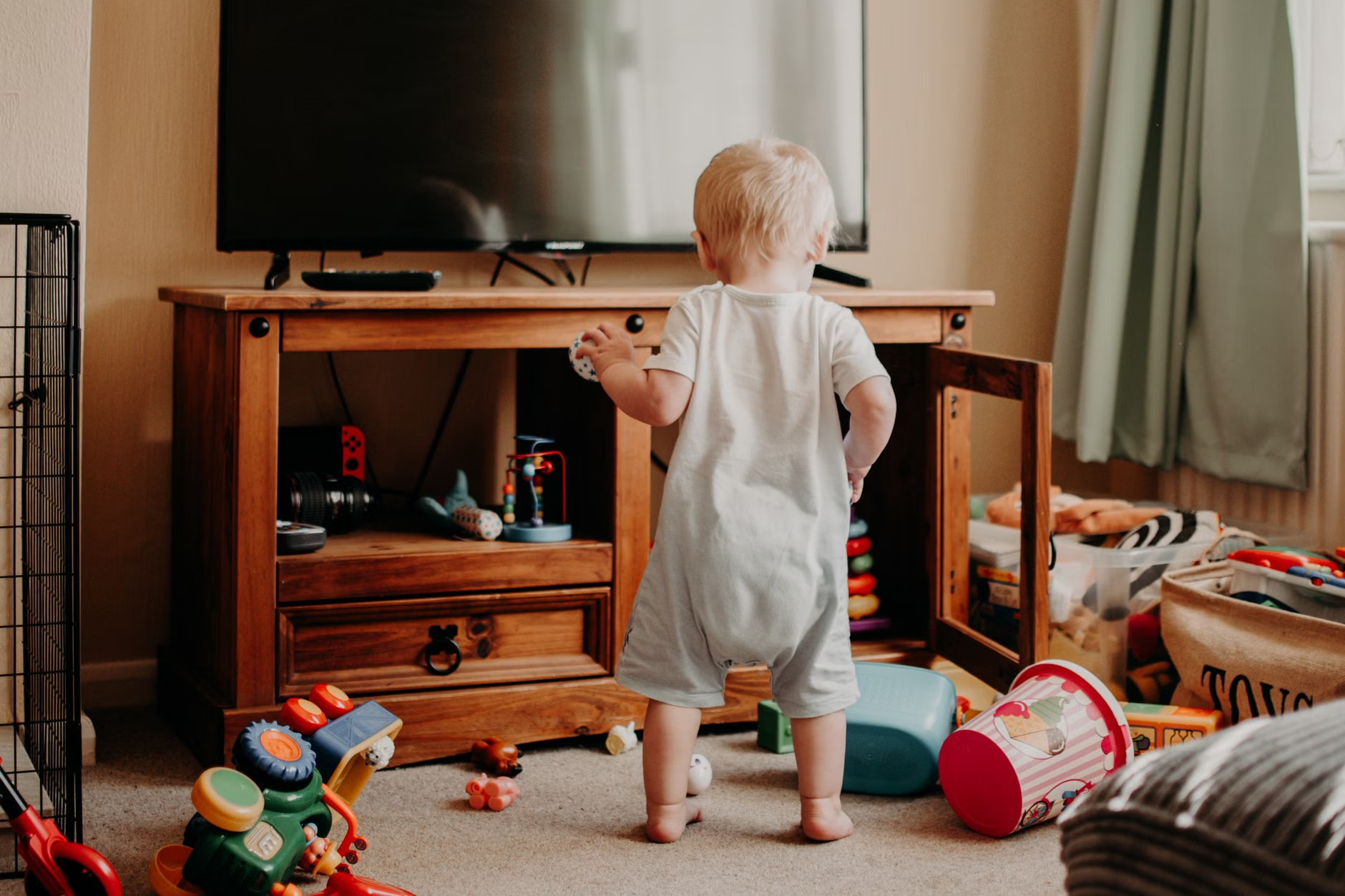
The Principle of “Intentional Editing” in High-Density Living
In a small urban apartment, you cannot hide clutter. You can only manage the volume of what you own. Intentional editing is the process of removing 30% of your current non-essential decor and replacing it with items that have high sensory value. This isn’t minimalism for the sake of emptiness; it is “sensory minimalism” for the sake of clarity.
Think about your surfaces. A kitchen island or a dining table is a “gravity well” for mail, keys, and school forms. When these surfaces are cluttered, the entire room feels chaotic. To combat this, implement the “One-Touch Rule”: an item should be touched once to be put away. To make this possible, your storage must be at the point of use. If your children need art supplies, the storage bin shouldn’t be in a closet in another room; it should be integrated into the living area in a way that is aesthetically pleasing.
Consider the following comparison for your storage strategy:
| Strategy | Impact on Urban Life | Maintenance Level |
|---|---|---|
| Open Shelving | High visual noise, requires daily styling. | High |
| Closed Cabinetry | Hides clutter, allows for “hidden” chaos. | Low |
| Baskets/Natural Bins | Tactile, easy for children to use, hides items. | Very Low |
The “Baskets” approach is almost always the winner for parents. It allows for a “quick-reset” at the end of the day. You don’t need to organize every Lego brick; you just need to clear the floor. This is the essence of slow living: the ability to transition from “active play” to “calm evening” in under five minutes.
Creating Psychological Zones Without Adding Walls
Urban parents often feel the need to physically separate kid spaces from adult spaces. In a 70-square-meter apartment, that is usually impossible. Instead, use “zoning.” Zoning is the practice of using visual cues to tell your brain, “This is where we relax,” and “This is where we work or play.”
You can achieve this through:
- Lighting Temperature: Use warm, low-level lighting (2700K or below) in the evening to signal the transition to rest. Avoid bright, overhead lighting in living areas.
- Rug Placement: A large rug acts as an “anchor” for a room. It defines the living area as a distinct zone, separating it from the hallway or the kitchen, even in an open-plan layout.
- Texture Shifts: Use different textures to delineate areas. For example, a wool rug under the coffee table provides a soft, “adult” area, while a cork mat or a low-pile cotton rug defines the “kids’ corner.”
The common mistake here is buying furniture that is too large for the room. In a small space, “oversized” furniture makes the room feel smaller and more claustrophobic. Instead, opt for “low-profile” furniture. When the eye-line is kept low, the ceiling feels higher, and the room feels more expansive. This is a classic trick used in Japanese interior design, which is the foundational philosophy behind many modern slow-living movements.
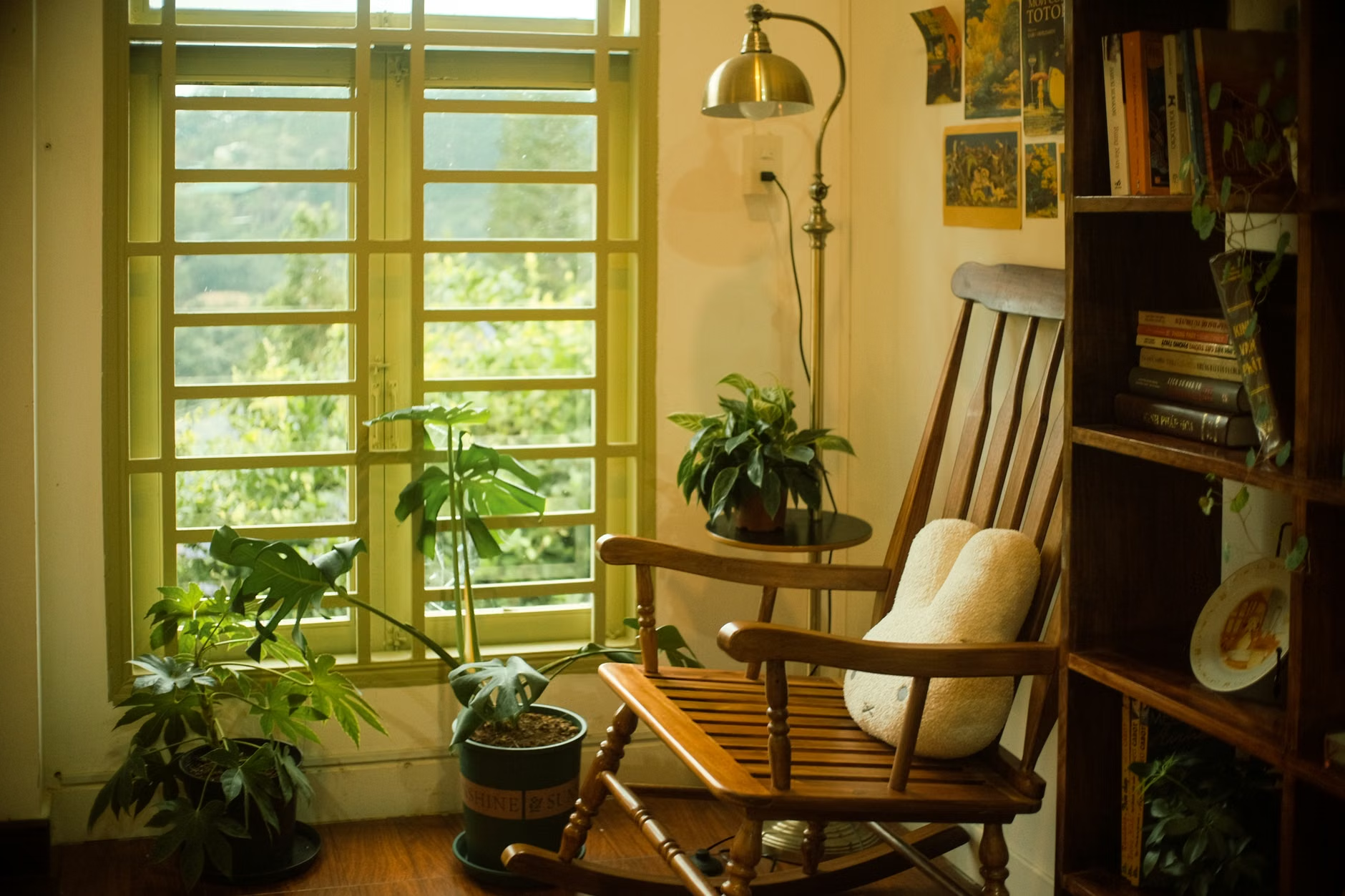
Materiality: Why “Natural” Actually Saves You Time
The materials you choose define how much “care” your home requires. Plastic, cheap laminates, and high-gloss surfaces show every fingerprint, scratch, and dust particle. They demand to be cleaned constantly to look good. Slow living emphasizes materials that “age with grace.”
Solid wood (oak, walnut, ash) develops a patina over time. Small scratches or dents from family life don’t ruin the piece; they add to its character. Linen and heavy cotton fabrics are breathable and, when wrinkled, look intentional rather than sloppy. By choosing materials that don’t require perfection, you remove the anxiety of “maintaining” your home.
Decision Criteria for Materials:
- Does it require a specialized cleaner? If yes, avoid it for high-traffic areas.
- Does it show high-contrast dirt (like white surfaces)? If yes, it will cause you stress in a household with children.
- Is it tactile? Does it feel good to touch? If it doesn’t feel good, you won’t use it, and it becomes dead weight in your home.
Many urban parents fall into the trap of buying “disposable” furniture—cheap pieces meant to last only until the kids are older. This is a false economy. Not only does it increase the amount of waste in your home, but it also creates a cycle of constant replacement. Investing in one or two high-quality, durable pieces that can withstand a decade of use is actually a core pillar of a sustainable, slow-living lifestyle.
The “Kitchen Island” Philosophy: Reclaiming the Heart of the Home
The kitchen is often the most cluttered room in an urban household. It is the landing strip for groceries, school bags, and mail. To bring a “slow” feel to your kitchen, you must treat your countertops as “sacred space.”
If you have an island, dedicate one side to “prep” and the other to “living.” Keep the prep side completely clear of everything except the essentials you use every day. If you don’t use your toaster more than once a day, put it in a cabinet. The goal is to maximize the “empty” space on your counters. This creates a visual “pause” every time you walk into the kitchen.
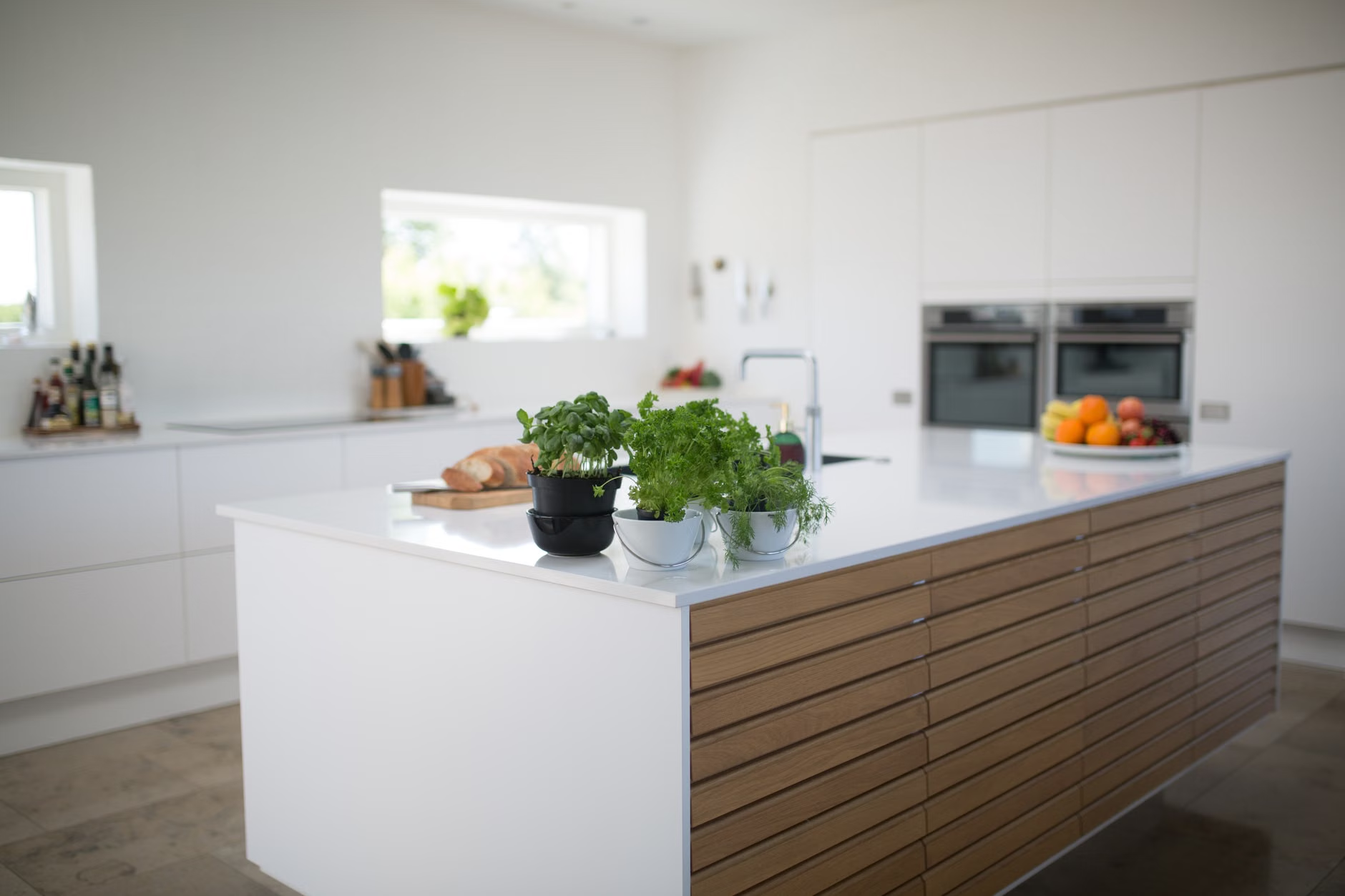
Furthermore, consider your kitchen workflow. If you are constantly moving back and forth across the room to get a cutting board or a spice, you are creating unnecessary friction. Standardize your kitchen layout based on the “triangle rule”: the fridge, the stove, and the sink should form a triangle that allows you to move with minimal steps. If your current apartment layout doesn’t allow for this, use storage solutions (like magnetic strips or hanging racks) to bring your most-used tools within arm’s reach of your primary prep area.
Common Misconceptions and Hidden Costs
The biggest misconception about slow living is that it is expensive. People see Instagram photos of expensive, artisanal furniture and assume that is the entry price. In reality, slow living is about subtraction, not addition. It is often cheaper to live a slow-living lifestyle because you stop buying “filler” decor and cheap plastic organizers that break after six months.
Another overlooked variable is the “maintenance tax.” Every object you own has a maintenance tax—the time it takes to clean it, move it, fix it, or worry about it. If you have a shelf full of small, fragile decorative items, you are paying a high maintenance tax every time you dust. By removing these, you are “saving” hours of labor over the course of a year. That is time you can spend sleeping, playing with your children, or simply sitting in silence.
Be wary of “organizational systems” sold in big-box stores. Many of them are designed to help you store *more* stuff, which is the opposite of the goal. Before you buy a new storage bin, ask yourself: “Am I buying this to organize something I actually need, or am I buying it to justify keeping something I should get rid of?” If you can’t justify the item itself, don’t buy the container.
Practical Next Steps for Your Home
You don’t need to renovate your home to start. You can begin today with these three steps:
- The 10-Minute Reset: Pick one room. Set a timer for 10 minutes. Remove everything that doesn’t belong in that room and put it in a “relocation bin.” Do not try to organize the bin yet. Just clear the space. You will immediately feel the difference in the room’s energy.
- Light Inventory: Check your lightbulbs. Replace any cool-toned (blue/white) bulbs in living areas with “warm white” (2700K-3000K). This single change creates a massive shift in how a room “feels” in the evening.
- Surface Clearing: Clear your dining table or kitchen island completely. Put everything in a drawer or a box. Live with it like that for 48 hours. You will quickly learn which items you actually need on your surfaces and which were just “clutter by default.”
Slow living is a continuous process of editing. It isn’t a final destination where you achieve the perfect, Pinterest-ready home. It is a state of mind where you prioritize your well-being and your family’s peace over the aesthetic demands of your possessions. By stripping away the unnecessary, you aren’t making your life smaller; you are making your life more manageable, more intentional, and ultimately, more enjoyable.
Remember that your home should be the place where you recover from the world, not another place where you have to compete with it. Start small, focus on the areas that cause you the most daily frustration, and let the rest happen at its own pace. You will find that as your home becomes lighter, your mind will follow suit.
Frequently Asked Questions
Q: Does slow living mean I have to get rid of all my children’s toys?
A: Absolutely not. It means “curating” them. Try a rotation system where only 30% of the toys are out at any given time. The rest are stored in a closet. This keeps the living area manageable and actually makes the toys more engaging for your children because they aren’t overwhelmed by choice.
Q: How do I maintain this style when I live in a rental with limited options?
A: Focus on “soft” changes that you can take with you: lighting, rugs, curtains, and storage bins. These four elements define 80% of a room’s atmosphere. Avoid changing permanent fixtures unless your landlord agrees, and focus on maximizing the utility of the space you have through better storage, not structural changes.
Q: I have a busy career and two young kids; is this realistic for me?
A: It is more realistic for you than for anyone else. Because your time is so limited, you cannot afford the “maintenance tax” of a cluttered home. Focus on the “10-minute reset” mentioned above. You don’t need to be perfect; you just need to ensure your home isn’t actively working against your need for rest.
For further reading on environmental psychology and its impact on the home, visit the Psychology Today archive on home environment and stress reduction. Additionally, the US EPA’s resources on indoor air quality provide great tips on choosing low-VOC materials, which is an essential part of creating a healthy, slow-living home.