- Quiet-Tourism is not just ‘slow travel’; it is a deliberate choice to prioritize low-density destinations where the primary activity is observation rather than consumption.
- Logistics are the biggest hurdle for parents; you must treat your rural destination like a self-contained ecosystem, prioritizing proximity to local grocers over ‘sightseeing’ proximity.
- Success depends on the ‘Three-Day Rule’; commit to one location for at least 72 hours to bypass the ‘transition stress’ that keeps your nervous system in high-alert mode.
The most effective way to recover from the relentless pace of modern life isn’t a luxury resort with a packed itinerary; it is the quiet, often overlooked, rural village. If you are in your 30s or 40s, you likely know the specific exhaustion that comes from ‘vacationing’—the stress of booking, the pressure to see every landmark, and the inevitable return to the office feeling like you need another week off just to recover from the travel itself. Quiet-Tourism is the antidote to this cycle.
Quiet-Tourism isn’t a new concept, but it has gained significant traction as a reaction to over-tourism. It is the practice of visiting less-populated, rural, or remote areas where the objective is not to ‘tick boxes’ but to integrate into a slower pace of life. For parents juggling work and family, this provides a unique benefit: you aren’t chasing crowds, and you aren’t managing the high-stimulation environment of a major tourist hub. But how do you pull this off without the logistical nightmare of being stranded in the middle of nowhere?
Why the ‘Quiet-Tourism’ Trend Matters for Your Mental Load
We are living in an era of ‘decision fatigue.’ Between managing school schedules, work deadlines, and household maintenance, the average person in their 30s or 40s makes hundreds of micro-decisions every day. When you choose a high-traffic tourist destination, you are simply adding more decisions: where to eat in a crowded district, how to navigate public transport with children, and how to manage the sensory overload of noisy streets.
Quiet-Tourism shifts the burden. By choosing a rural village, you are intentionally narrowing your scope. The ‘what to do’ is replaced by ‘being.’ This isn’t just a romanticized idea; it’s a psychological reset. Research into environmental psychology suggests that ‘soft fascination’—the kind of attention we give to nature or quiet, non-demanding environments—allows the brain’s directed-attention mechanism to rest. This is exactly what you need when you’re feeling burnt out.
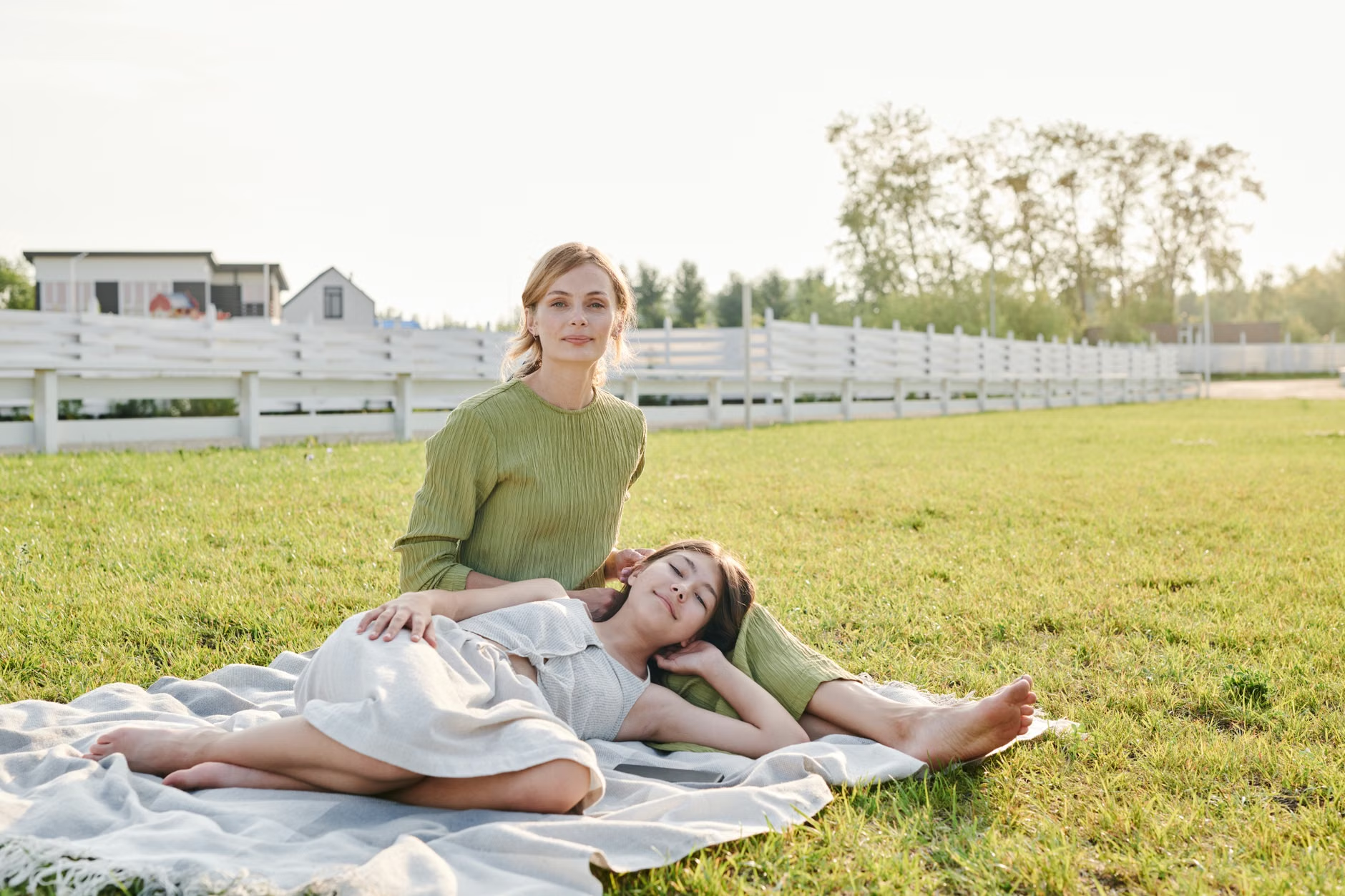
However, there is a common misconception: people think rural travel means ‘roughing it.’ It doesn’t. Modern Quiet-Tourism is often facilitated by high-speed internet and well-equipped vacation rentals. You can have the silence of a mountain village without sacrificing the ability to order groceries or handle a work emergency. The goal is to find that ‘sweet spot’ of isolation—enough to feel away from the grind, but enough infrastructure to handle a minor crisis.
The Logistics of Rural Exploration: Avoiding the ‘Stranded’ Trap
The biggest mistake most travelers make when attempting their first rural trip is assuming that ‘remote’ means ‘self-sufficient.’ If you are traveling with children or have specific dietary or medical needs, you cannot treat a village like a city. You need a pre-trip audit. Before you book, check the following criteria:
| Checklist Item | Why it Matters | The ‘Quiet’ Standard |
|---|---|---|
| Grocery Proximity | Prevents daily stress of driving to find food. | Within 15 minutes by car or walking. |
| Connectivity | Ensures you aren’t isolated if an emergency arises. | Verified 4G/5G or stable Wi-Fi (test before booking). |
| Healthcare Access | Peace of mind for parents. | Urgent care or hospital within 30-40 minutes. |
When you look at a rental listing, don’t just look at the aesthetic of the room. Use Google Maps to calculate the distance to the nearest pharmacy and grocery store. If the closest shop is an hour away, you aren’t doing ‘Quiet-Tourism’; you are doing ‘logistical survival.’ The joy of this trend is in the freedom from stress, and nothing creates stress faster than realizing you’re out of milk or a necessary medication in a place where shops close at 4:00 PM.
The ‘Three-Day Rule’ and Why You Need It
If you have ever gone on a weekend trip and felt like you didn’t actually relax until you were packing to leave, you have experienced the ‘transition lag.’ Our nervous systems are accustomed to a baseline of high stimulation. When you abruptly move from that to a quiet village, your brain often interprets the silence as a ‘missing’ signal and keeps you on edge for the first 48 hours.
To combat this, commit to a minimum of three nights. The first day is for arrival and ‘de-escalation.’ Don’t plan activities. Let the family adjust to the silence. The second day is for exploration—a short walk, a local market, or just sitting in a park. The third day is for total rest. By the fourth day, you will find that your internal rhythm has finally slowed down to match the environment. If you only stay for one or two nights, you are effectively paying for the stress of travel without reaping the benefits of the destination.
Building Your Daily Rhythm: A Practical Framework
Without the pressure of ‘must-see’ landmarks, you might feel a strange sense of guilt or boredom. This is normal. Combat this by creating a ‘soft structure’ for your day. Instead of a rigid itinerary, use ‘anchor points.’
Morning: The ‘Local Ritual.’ Find the nearest bakery or market. Let this be your only ‘task’ of the day. It gets you out of the house, gives you a reason to interact with the local community, and provides a sense of accomplishment without intensity.
Midday: The ‘Nature Buffer.’ This is when you head outdoors. Whether it’s a forest trail, a riverbank, or a village square, ensure there is no screen time. This is the time for the ‘soft fascination’ mentioned earlier. For children, this is usually when they move from ‘bored’ to ‘creative.’ Don’t rush this transition.
Evening: The ‘Cozy Reset.’ This is the time to leverage the amenities of your rental. Since you aren’t out eating at restaurants, use this time to cook a simple, local meal. This is often the most memorable part of the trip for families. It turns a place you are ‘visiting’ into a place you are ‘living.’

Common Mistakes to Avoid
Over-packing the schedule: Even in a quiet village, people try to ‘do things.’ If you find yourself looking up ‘top 10 things to do in X village,’ stop. The goal is to find the things that aren’t on the internet. Ask a local shopkeeper where they go for a walk. That is your itinerary.
Ignoring the local ‘quiet’ hours: Many rural areas in Europe, Japan, and parts of North America have strict noise or social norms. What is considered ‘lively’ in a city might be considered ‘disruptive’ in a village. Respect these norms; they are part of the charm and the peace you are paying for.
Underestimating the ‘Internet Vacuum’: While you want to unplug, you still need to be reachable. If you are traveling to a mountainous or remote area, verify the cellular service provider’s coverage map. Do not rely on the host’s word alone. Check the signal strength in the specific region using tools like OpenSignal to see real-world performance data.
The Financial and Social Reality of Quiet-Tourism
One of the hidden benefits of Quiet-Tourism is the cost. Because these areas are not ‘hot’ tourist spots, your budget goes significantly further. You can often rent a house with a garden or a historic cottage for the price of a standard hotel room in a major city. However, you must account for the ‘transportation premium.’ You will likely need to rent a car, as rural public transit is often infrequent or non-existent. Factor this into your budget early.
Socially, Quiet-Tourism is a different beast. You aren’t meeting other tourists; you are interacting with residents. This requires a level of courtesy that is sometimes lost in mass tourism. Learn a few phrases of the local language if you are traveling internationally. It goes a long way in a village where your presence is noticed. A simple ‘good morning’ in the local dialect can change your entire experience from being an ‘outsider’ to being a ‘guest.’
How to Start Planning Your First Trip
If you are ready to try this, don’t overcomplicate the selection process. Follow these three steps:
- The ‘Radius’ Test: Select a major city you would normally visit. Look at a map and draw a 100-kilometer radius around it. Look for the small, non-descript dots on the map within that circle. These are your candidates.
- The ‘Rental Filter’: Search for properties that emphasize ‘privacy,’ ‘garden,’ or ‘view.’ Avoid listings that emphasize ‘proximity to attractions.’ If the listing talks about being ‘near the city center,’ it’s not the right place.
- The ‘Grocery Check’: Once you find a potential spot, use Street View on Google Maps to look at the nearest village center. If you see a small market or a bakery, you have a winner.
Finally, remember that the goal is not to find the ‘perfect’ village. The goal is to find a place where you can breathe. If the trip feels slightly ’empty’ at first, congratulate yourself. You have successfully bypassed the noise. Embrace the empty space in your schedule—it is the rarest commodity you have in your 30s and 40s.
Frequently Asked Questions
1. Is Quiet-Tourism suitable for young children who might get bored?
Children adapt to the pace of their parents. If you are constantly looking for the next ‘activity,’ they will expect it. If you provide them with open space and a few simple tools—a sketchbook, a magnifying glass, or just the freedom to roam a safe garden—they often become more creative and less demanding than they are in a high-stimulation city environment.
2. What if I have a work emergency and need high-speed internet?
Always verify the upload and download speeds with the host before booking. Ask them to send a screenshot of a speed test from their router. If you are in a very remote area, consider bringing a portable 4G/5G mobile hotspot device as a backup, which can connect to local cellular networks independently of the house Wi-Fi.
3. How do I handle the ‘loneliness’ of being in a very quiet place?
The feeling of loneliness is often just the absence of background noise. If you feel it, lean into it. Use the time for things you never get to do: read a physical book, write in a journal, or have an uninterrupted conversation with your partner. If you need social contact, visit the local market or café at the same time every day; you will quickly become a ‘familiar face’ to the locals.
For more information on sustainable travel practices and protecting rural communities, you can review the guidelines provided by the World Tourism Organization (UNWTO) on sustainable development in tourism.