- Emotional Granularity Matters: Moving beyond “happy” and “sad” helps toddlers regulate their nervous systems and reduces the frequency of “unexplained” meltdowns.
- Model, Don’t Just Teach: Your own verbal narration of your complex feelings—such as feeling “frustrated” rather than just “angry”—is the primary blueprint for your child’s development.
- Consistency Over Intensity: You don’t need a complex curriculum; simply naming emotions during daily transitions (like bath time or leaving the park) is more effective than scheduled “lessons.”
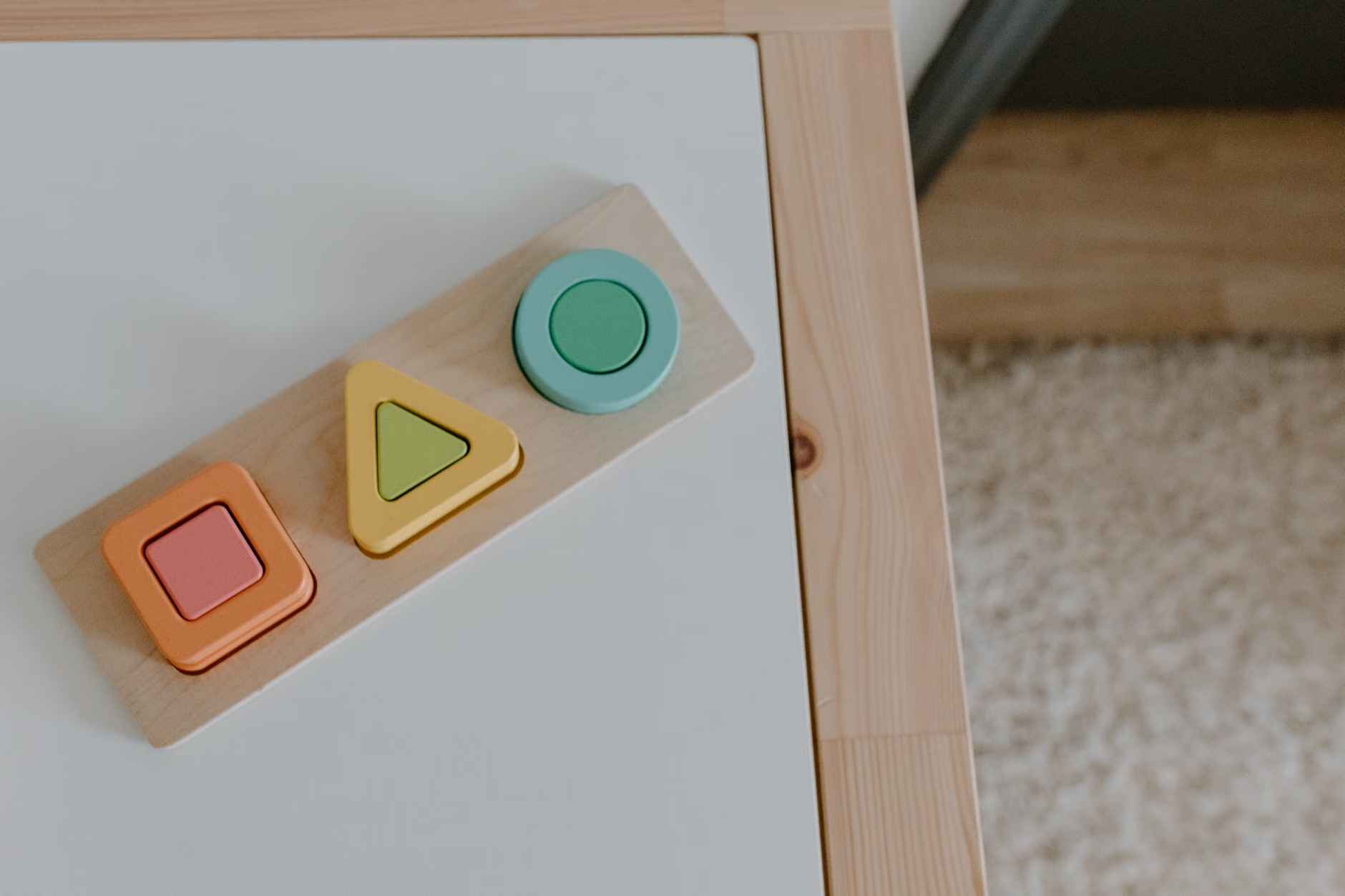
The most effective way to decrease the intensity of toddler tantrums is to provide them with the linguistic tools to describe the internal storm they are experiencing. When a child screams because their toast was cut into a triangle instead of a square, they aren’t necessarily being “difficult”; they are experiencing a physiological surge of frustration or disappointment for which they have no name. Without a label, the emotion remains a vague, terrifying, and all-consuming physical state. By building a robust emotional vocabulary, you give your child a handle to grab onto, allowing them to transform a chaotic reaction into a manageable experience.
Why “Big Feelings” Need Specific Names
In developmental psychology, the concept of “emotional granularity” refers to the ability to identify and label specific emotions rather than grouping them into broad, imprecise categories. For a toddler, everything is often reduced to “happy,” “sad,” or “mad.” However, frustration is not the same as anger, and disappointment is not the same as sadness. When you help your child distinguish between these states, you are helping them build the neural pathways required for self-regulation.
Consider the difference between a child saying “I’m mad” and a child saying “I’m frustrated because the tower fell.” The latter implies a cause-and-effect understanding that shifts the child from an impulsive state to a cognitive one. This shift is the foundation of emotional intelligence. It is the difference between a child who lashes out and a child who learns to ask for help or take a breath.
Research published in journals like Developmental Psychology suggests that children who are encouraged to talk about their emotions at a young age demonstrate better social competence and fewer behavioral problems as they enter school. This isn’t about raising a child who never gets upset; it’s about raising a child who understands what they are feeling. When they understand, they can communicate. When they can communicate, the need for physical outbursts often diminishes significantly.
The Parent’s Role: Becoming an Emotional Narrator
You don’t need a degree in psychology to facilitate this. You simply need to become an “emotional narrator.” This involves consistently verbalizing your own emotions and identifying the emotions you observe in your child. It is a subtle shift in how you interact throughout the day. Instead of saying, “Stop crying,” you might say, “I see you are feeling disappointed because we have to leave the playground.”
The key here is to validate the feeling before you address the behavior. Validation does not mean you agree with the behavior or that you are going to change the rules. It simply means you are acknowledging the reality of their internal experience. When a child feels heard, their nervous system begins to down-regulate. This creates the “teachable moment” where they are actually capable of hearing your explanation.
Mapping Out the “Emotional Palette”
To help your child, you need to expand your own vocabulary first. Below is a framework for introducing emotions beyond the basics, categorized by how they might appear in a toddler’s daily life.
| Category | Basic Term | Advanced Term (Target) |
|---|---|---|
| Discomfort | Mad | Frustrated, Jealous, Annoyed |
| Low Mood | Sad | Disappointed, Lonely, Hurt |
| Excitement | Happy | Proud, Excited, Relieved |
Using these terms in context is essential. If you are struggling to build a piece of furniture and feel your own frustration rising, label it out loud: “I am feeling quite frustrated because these instructions are confusing.” This teaches your child two things: first, that it is okay to feel frustrated, and second, that even adults have to navigate these feelings. It normalizes the experience of “negative” emotions, which is vital for long-term mental health.

Integrating Emotional Learning into Daily Routines
Many parents make the mistake of thinking this requires a “lesson” or a “sit-down session.” In reality, the best learning happens in the “in-between” moments. Routines are the perfect container for this because they are predictable, which makes them safe spaces for exploring feelings.
The “Transition Check-in”
Transitions—like moving from playtime to bath time or from home to daycare—are prime territory for meltdowns. Use these moments to check in. “I notice you’re having a hard time stopping your game. Are you feeling frustrated that playtime is over?” This simple question stops the cycle of demand-and-refusal and replaces it with a moment of connection.
The “Storytime Reflection”
When reading books, pause to analyze the characters. “Look at the rabbit’s face. Do you think he looks happy, or does he look a bit worried? Why do you think he feels that way?” This allows your child to practice empathy and emotional recognition on a third party, which is much less threatening than analyzing their own feelings in the heat of a moment.
The “End-of-Day Review”
During a calm moment, perhaps while eating dinner or doing the bedtime routine, ask, “What was the most exciting thing that happened today? Was there anything that made you feel a little sad?” This habit encourages reflection and helps them organize their day in their mind. It also demonstrates that you are interested in their internal world, not just their external behavior.
Common Pitfalls and How to Avoid Them
Even with the best intentions, parents often fall into patterns that inadvertently stifle emotional growth. Recognizing these is the first step toward correcting them.
- The “Happiness Trap”: We often rush to make our children happy the moment they show signs of distress. By distracting them or quickly offering a treat to “stop the tears,” we accidentally teach them that sadness is something to be avoided or suppressed rather than felt and processed. Let them sit with the discomfort for a moment. Your presence is the soothing agent, not the distraction.
- Ignoring the “Positive” Emotions: We are quick to label anger and sadness, but we often forget to label joy, pride, or relief. Helping a child recognize when they feel “proud of themselves” for completing a puzzle is just as important as helping them name “frustration.” It builds self-efficacy.
- Over-intellectualizing: If you use words that are too complex or speak in paragraphs, you will lose them. Keep it simple. Use one or two feeling words, and keep your sentences short. Focus on the feeling, not the explanation.
Another common mistake is assuming that naming an emotion will immediately fix the behavior. It won’t. If your child is in the middle of a full-blown tantrum, their prefrontal cortex—the part of the brain responsible for logic and language—is essentially offline. In that moment, naming the emotion is a tool for you to stay calm and for them to feel seen, but it is not a tool for immediate behavior modification. The logic comes later, once they have calmed down.

The Long-Term Benefit: Resilience
The ultimate goal of building an emotional vocabulary is resilience. When a person can articulate what they are feeling, they are less likely to be overwhelmed by those feelings. They are better able to communicate their needs to others, set boundaries, and seek help when they are struggling. This is a skill that will serve them through school, friendships, and eventually, their own professional lives and personal relationships.
In your 30s and 40s, you are likely navigating your own complex emotional landscapes—managing career stress, relationship dynamics, and the constant balancing act of modern parenting. By teaching your child these skills, you are often relearning them yourself. It is a parallel journey. When you model healthy emotional expression, you aren’t just teaching your child; you are refining your own ability to handle the inevitable stressors of life.
Remember that this is a marathon, not a sprint. There will be days when your child is perfectly capable of saying, “I am feeling very frustrated,” and days when they revert to screaming at the top of their lungs. Both are normal. The goal is to provide the consistent, gentle nudge toward language. Over months and years, that vocabulary will become a natural part of how they interact with the world.
Final Thoughts for the Week Ahead
Start small. Don’t try to overhaul your entire parenting style overnight. Pick one routine—perhaps the bedtime routine—and dedicate that time to checking in on how the day felt. Use the vocabulary table provided earlier as a guide. When you find yourself getting frustrated, narrate it. When you see your child struggling, label the feeling rather than the action. You will likely find that as your child’s emotional vocabulary grows, the “big” reactions start to shrink, replaced by a much more manageable and rewarding level of communication.
For further reading on the science behind emotional development, the Center on the Developing Child at Harvard University offers excellent resources on the “serve and return” interaction style, which is the gold standard for supporting this kind of development. You can find their insights on early brain development at developingchild.harvard.edu.
Frequently Asked Questions
1. My toddler is only two; is it too early to start using words like “frustrated” or “disappointed”?
Not at all. While they may not be able to say the words back to you immediately, they are absorbing the association between the physical sensation and the label. By the time they are three or four, they will likely start using these words spontaneously. The key is to start early so that the language is already in their ears when they are ready to speak it.
2. What should I do if my child rejects my attempts to label their feelings?
If you say, “You seem frustrated,” and they shout, “I’m not frustrated, I’m mad!”—accept the correction. Do not argue. Say, “Oh, I see, you are feeling mad. Thank you for telling me.” This is a huge win. You have successfully engaged them in a conversation about their internal state, even if your initial guess was slightly off. The act of them correcting you is a demonstration of emotional self-awareness.
3. Can I use technology or apps to help with this?
There are many apps and digital flashcards available, but for toddlers, physical interaction is superior. Screens tend to be passive. A wooden board, a printed chart, or even just your own face are much more effective tools for teaching emotional recognition. Use technology to look up ideas if you wish, but keep the actual “teaching” of the emotions in the real, physical world where you are present and engaged.