Co-regulation is not just for toddlers; it is the most effective tool you have to help your school-aged child navigate the complex social and emotional demands of growing up.
- Biological Synchrony: Co-regulation works by using your own calm nervous system to help stabilize your child’s, which is essential for developing long-term self-regulation.
- The Playtime Advantage: Play is a “low-stakes” environment where children are more receptive to learning emotional boundaries than during moments of high conflict.
- Shift from “Fixing” to “Modeling”: Your goal isn’t to prevent your child from feeling frustrated; it is to teach them how to stay regulated while they feel that frustration.
Why Your 8-Year-Old Still Needs Your “Emotional Anchor”
If you have a child between the ages of 6 and 12, you might feel that the “tantrum phase” should be well behind you. Yet, here you are, dealing with a slammed bedroom door because they lost at a video game or a full-blown meltdown because a school project didn’t go as planned. It is easy to assume that at this age, children should be able to “self-regulate.” However, neuroscience tells us that the prefrontal cortex—the part of the brain responsible for impulse control and emotional regulation—doesn’t fully mature until the mid-20s.
When your child is overwhelmed, their “downstairs brain” (the amygdala, which handles fight-or-flight responses) takes over. They literally cannot “think” their way out of a meltdown. This is where co-regulation comes in. It is the practice of lending your calm, regulated nervous system to your child until they can regain their own internal balance. Think of it like a battery charger: when your child’s emotional battery is drained or surging with chaos, they need to plug into your calm to recharge.
The common mistake parents make is demanding self-regulation before the child has had enough experience with co-regulation. If you tell an agitated 10-year-old to “just breathe and calm down,” you are asking them to perform a biological feat their brain is currently incapable of. Instead, play—structured, low-pressure interaction—is the perfect laboratory to practice these skills when the stakes are low.
The Physiology of Play: Why “Playing” is Actually “Training”
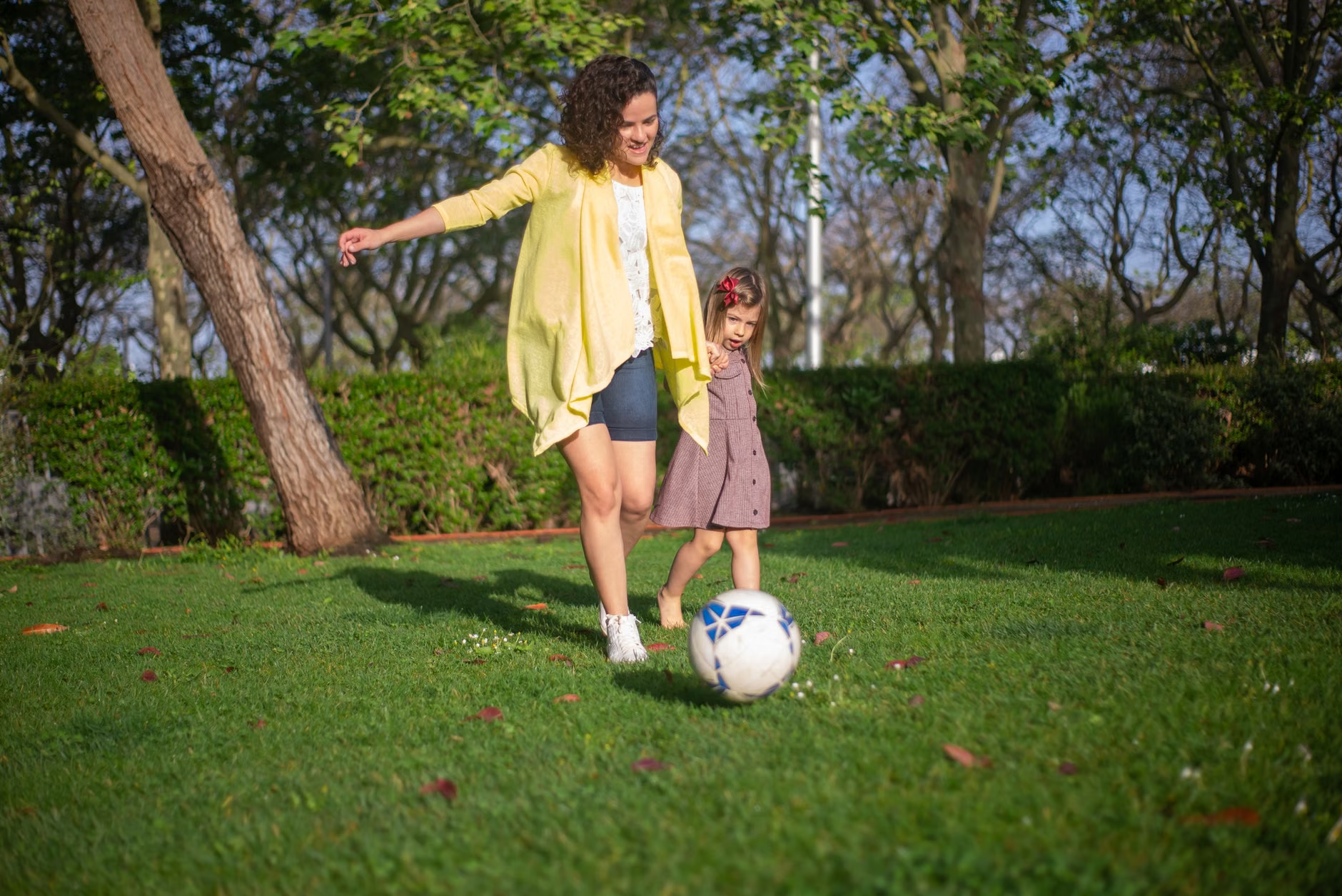
Play is not just a way to kill time; it is a fundamental biological drive. For school-aged children, play is where they test social hierarchies, learn to lose, manage disappointment, and practice cooperation. When you engage in play as a co-regulator, you are doing more than just hanging out. You are monitoring their “window of tolerance.”
The window of tolerance is the zone where a child can handle emotional input without becoming hyper-aroused (angry, chaotic) or hypo-aroused (shutting down, dissociating). During play, you can see this window in real-time. If your child starts to get too competitive, their voice rises, or their movements become jerky, they are hitting the edge of their window. By staying calm, mirroring their energy, and gently redirecting, you help them widen that window.
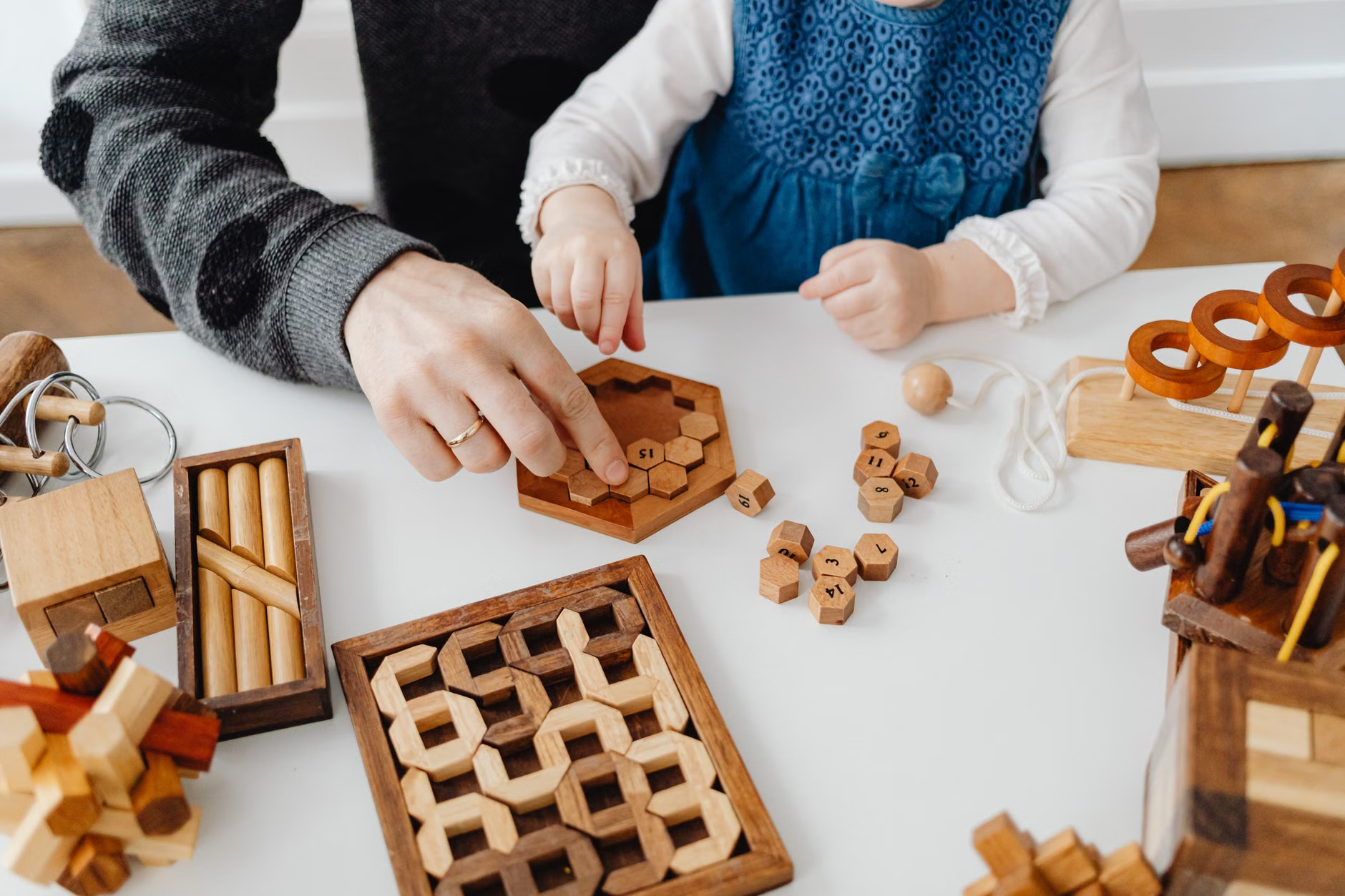
Consider the difference between a high-stakes moment and a play moment:
| Feature | High-Stakes Conflict | Co-Regulation Play |
|---|---|---|
| Brain State | Amygdala-driven (Flight/Fight) | Prefrontal cortex engaged |
| Goal | Conflict resolution | Skill acquisition |
| Parent Role | De-escalator | Coach/Partner |
| Learning Type | Reactive | Proactive |
In the “Co-Regulation Play” scenario, the parent is not just waiting for the child to calm down; the parent is actively modeling how to handle the ups and downs of the game. If you lose, you show how to say, “Wow, that was a tough loss. I’m disappointed, but I had fun playing.” This is a masterclass in emotional regulation that the child observes and eventually adopts.
How to Implement “Co-Regulation Play” in Your Daily Routine
You don’t need a degree in psychology to do this. In fact, the best co-regulation happens during mundane, low-effort activities. The key is to be present and to monitor your own emotional state. If you are stressed about work or household chores, your child will sense it, and your ability to co-regulate will be compromised. Before engaging in play, take a “check-in” breath for yourself.
1. Choose the Right Medium
Choose activities that require focus but are not overly stimulating. Strategic board games, LEGO building, or collaborative art projects are ideal. Avoid high-octane video games that trigger adrenaline spikes, as these make the process of staying regulated much harder for a child who is already struggling with emotional control.
2. The “Mirroring” Technique
Mirroring is a powerful tool. If your child is excited, match their excitement but keep it contained. If they are quiet and focused, lower your voice and slow your movements. By matching them first, you “connect” with their current state. Once you have connected, you can slowly shift the energy toward the desired state (e.g., calm, patience, cooperation).
3. Narrating the Internal State
As you play, verbalize the emotional process. Say things like, “I’m starting to feel a bit frustrated because I can’t find this piece, so I’m going to take a deep breath before I look again.” This externalizes the internal regulation process. You are showing them the “how-to” of emotional management.
Common Pitfalls: What to Avoid
One of the most frequent mistakes is “fixing” rather than “supporting.” If your child is struggling to build a tower, the urge is to jump in and do it for them to stop their frustration. This is a missed opportunity. Instead, stay by their side and offer verbal support: “That looks tricky. That piece is tricky, isn’t it? Let’s look at the shape together.” You are supporting their effort, not taking over their struggle.
Another common error is “forced positivity.” If your child is failing at a game and feeling genuinely upset, telling them “it’s just a game, don’t worry” invalidates their experience. Their frustration is real, even if the cause seems trivial to you. A better approach is validation: “I can see you’re really disappointed. It’s hard when things don’t go the way you planned.”
Creating a “Regulation-Friendly” Environment
Sometimes, the environment itself is the enemy of regulation. If your living space is constantly cluttered or noisy, it’s hard for a child to find their “center.” Consider creating a small, dedicated space for calm activities. It doesn’t need to be a separate room; a corner with a few cushions, some books, and a puzzle board can serve as a designated “low-stimulation” zone.
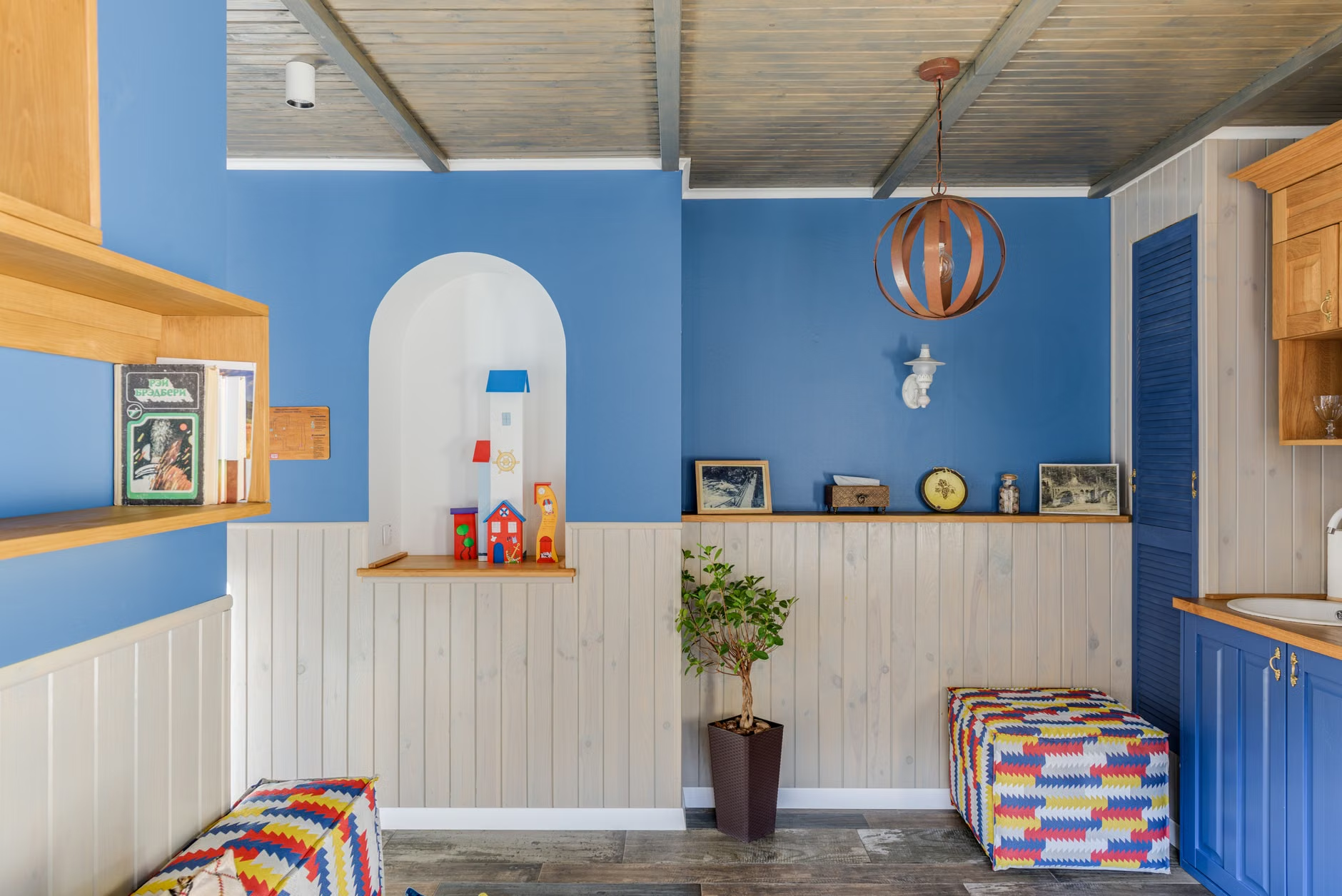
This space isn’t a “time-out” zone; it’s a “reset” zone. When you see your child getting overwhelmed during play, you can suggest, “Let’s move this to the cozy corner so we can focus better.” This teaches the child to recognize when they need to change their environment to manage their internal state—a skill they will use for the rest of their lives.
The Long-Term ROI of Co-Regulation
Why go through all this effort? Because the ability to regulate emotions is the single most important predictor of long-term success, from academic performance to healthy relationships. Children who are consistently co-regulated by their parents develop what researchers call “secure attachment.” This isn’t just about “being close”; it’s about the child knowing that their emotions are manageable because they have a reliable partner to help them manage them.
As your child reaches their teens, they will begin to internalize these interactions. The “voice” you used to calm them down will eventually become their own internal voice. When they face a stressful exam or a social conflict in high school, they will have the tools to talk themselves down, take a breath, and look at the situation objectively. You are essentially building their internal “stress management” infrastructure.
Practical Next Steps for Your Family
You don’t need to change your parenting style overnight. Start small. Pick one 15-minute window per day—perhaps after school or right before dinner—where you engage in “co-regulation play.”
- Identify the trigger: Notice what usually causes your child to lose their cool (e.g., transitions, losing at games, feeling rushed).
- Prepare your own state: Before starting the activity, ensure you aren’t bringing your own stress into the room.
- Observe, don’t judge: Spend the first five minutes just watching how they play. What is their natural rhythm?
- Model, don’t lecture: Keep the conversation focused on the activity, not on “lessons” you want them to learn.
Remember, this is a practice, not a performance. There will be days when you lose your own patience. That is okay. When that happens, apologize: “I’m sorry I got frustrated. I need to take a minute to breathe, and then we can try again.” Even your own recovery from an emotional slip-up is a powerful lesson in regulation for your child.
Ultimately, co-regulation is about connection. It’s the physical, emotional, and social message that says, “You are not alone in your feelings, and we can handle this together.” That message is more powerful than any lecture, reward system, or punishment ever could be.
Frequently Asked Questions
Does co-regulation mean I have to let my child win every game?
Absolutely not. If you always let them win, you rob them of the chance to practice handling the disappointment of losing in a safe, supported environment. The goal is to support them through the loss, not to prevent it. If they lose, acknowledge their frustration (“I know that stings, you worked hard for that win”) and model how to be a gracious loser yourself.
What if my child is too old for “play”?
The definition of play changes as children grow. For a 12-year-old, “play” might be working together on a collaborative project, cooking a complex recipe, or even just listening to music and discussing the lyrics. The core elements—shared focus, low-pressure interaction, and emotional attunement—remain the same regardless of the activity.
How long does it take for a child to learn to self-regulate?
There is no “finish line.” This is a developmental process that continues through adolescence and into early adulthood. You are building a foundation. The goal isn’t to reach a point where they never lose their temper; it’s to reach a point where they can recover from that temper faster and with more self-awareness. Be patient with the process and focus on the connection, not the speed of progress.
Resources for further reading: