The secret to surviving a three-generation heritage trip—where you, your parents, and your children traverse the globe together—isn’t about bringing everything you own; it is about creating a modular packing system that anticipates the specific friction points of different life stages.
- The “One-Bag-Per-Person” Rule: Regardless of age, every person capable of walking should manage their own primary carry-on, reducing the “mule” burden on the primary caregiver.
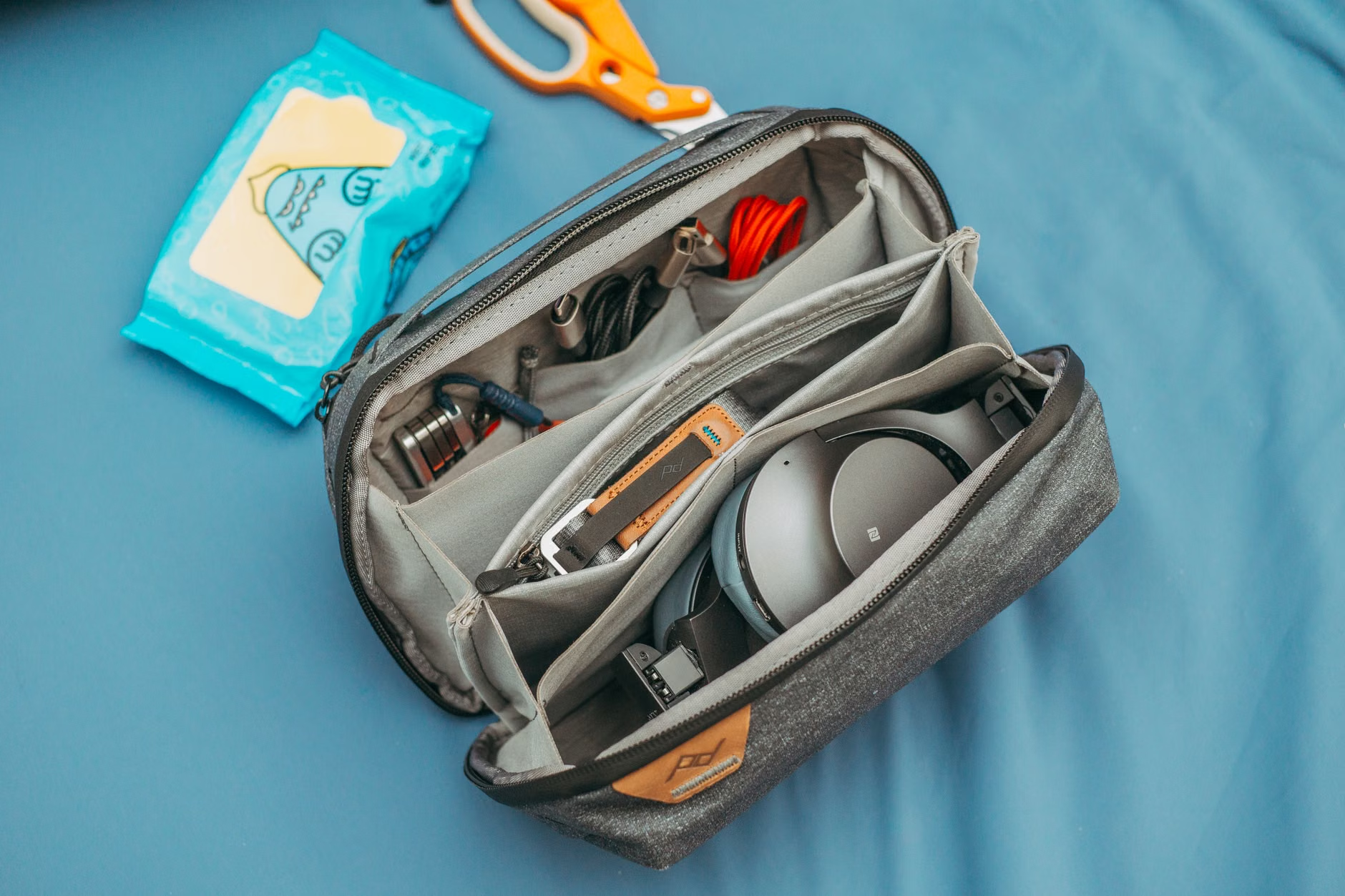
- The Shared Tech & Medical Hub: Centralize high-value items like chargers, universal adapters, and prescriptions in a single, accessible “command pouch” rather than scattering them across different bags.
- Strategic Redundancy: Only duplicate items that are mission-critical (e.g., medication, travel documents), while sharing bulky items like umbrellas or heavy cameras to save weight.
If you are in your 30s or 40s, you are likely the “sandwich” of your family travel group. You are managing the logistics for your energetic toddlers and your parents, who may have their own mobility or comfort requirements. The goal of a heritage trip—often visiting ancestral homes or culturally significant sites—is to create memories, not to spend three hours in a hotel lobby arguing over who packed the international power adapter or the specific prescription medication. Let’s break down how to pack for three distinct generations without losing your mind.
The Anatomy of a Three-Generation Packing List
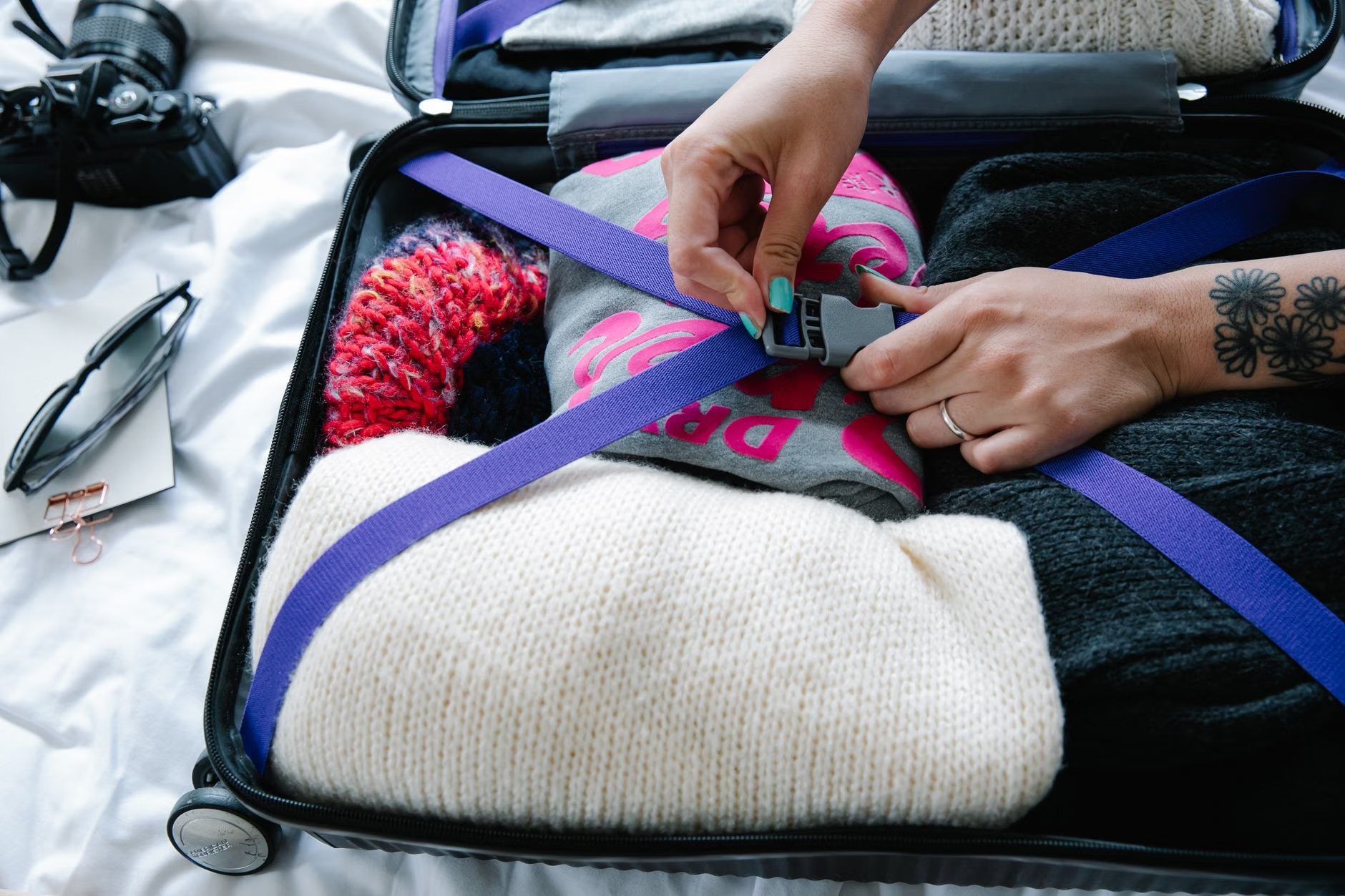
Most travelers fall into the trap of packing by category (e.g., “all the clothes go here”). For a three-generation trip, you must pack by accessibility and responsibility. When you are moving through a transit hub with a grandparent who needs a slower pace and a child who needs a constant stream of snacks, you cannot afford to dig through a single communal suitcase to find a single item.
Divide your gear into three tiers: The Personal Carry-On (essentials for the individual), The Command Hub (shared items for the group), and The Checked Bulk (non-essentials or items for long-term stays). By shifting the responsibility to each individual (where age-appropriate), you foster independence and reduce your own mental load.
The “Command Hub” Concept
In a group of six or more, you need one designated bag that contains the “group glue.” This isn’t your personal backpack; it is a dedicated, easily accessible pouch or small bag that stays with the lead organizer (that’s likely you). This hub should never be checked. It must contain the items that, if lost, would derail the entire trip.
| Category | Items to Include | Why It Matters |
|---|---|---|
| Documentation | Passports, visas, insurance, hotel addresses. | Prevents panic at border control. |
| Tech Hub | Universal adapter, multi-port USB hub, power banks. | Avoids “charger wars” in the hotel. |
| Emergency Kit | Basic OTC meds, band-aids, hand sanitizer. | Handles minor issues without finding a pharmacy. |
The “Command Hub” should be light enough to carry comfortably for four hours of walking. If it gets too heavy, you have overpacked. If you find yourself carrying three different types of laptop chargers, you are doing it wrong. Simplify your tech: use a single GaN (Gallium Nitride) charger that can power multiple devices simultaneously via USB-C. This one switch can save nearly a pound of weight and significant frustration.
Managing Generational Needs: The “Must-Haves” vs. “Nice-to-Haves”
Every generation has a different definition of “essential.” For your children, it might be a specific comfort object. For your parents, it might be a specific brand of tea or a comfortable pair of walking shoes they have broken in over months. The mistake most people make is trying to force a uniform packing standard on everyone.
The Grandparent Tier: Comfort and Mobility
When traveling with seniors, the primary goal is minimizing physical stress. If they are accustomed to a specific level of comfort at home, do not assume they will be fine without it abroad. However, you must weigh this against the reality of mobility.
- Footwear: Never bring new shoes. Ensure they have orthotics or supportive insoles that are already “tested” for long walking days.
- Layering: Older adults often experience temperature regulation issues differently. Pack a lightweight, high-quality merino wool cardigan—it is breathable, warm, and compact.
- Medical Management: Bring at least 1.5x the required dosage of any prescription medication. Keep a digital scan of prescriptions in your “Command Hub” in case of loss.
The Parenting Tier: The “Distraction” Strategy
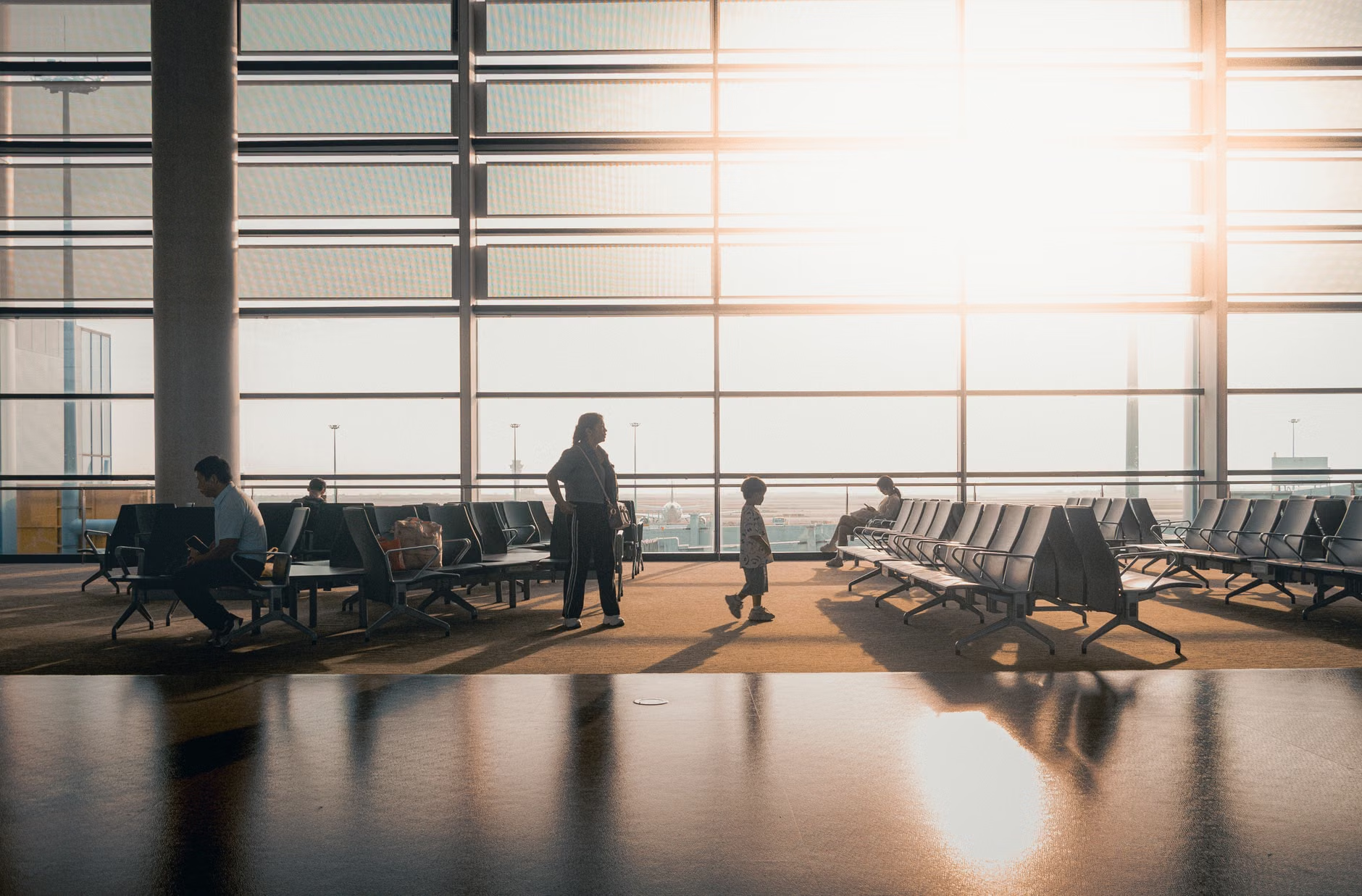
If you are in your 30s or 40s, your packing list for children is essentially a list of “distractions.” The key is to avoid bulky toys. Use digital media as a tool, but supplement with low-tech, high-engagement items.
- The Activity Pouch: Focus on items that occupy a child for 20+ minutes: sticker books, travel-sized magnetic drawing pads, or audiobooks on a tablet.
- The “Emergency Snack” Buffer: Regardless of where you are going, your children will be hungry at the exact moment you are in a transit line. Keep a “no-spill” snack container in the outer pocket of their bag.
- Clothing Layers: Kids spill things. Pack two extra outfits in a waterproof bag—not just for the flight, but for the first 24 hours of the trip in case checked luggage is delayed.
The Hidden Costs of Overpacking
In the world of international travel, weight is a tax. Every extra kilogram you carry is a physical tax on your body and a potential financial tax at the check-in counter. When you are managing a group, “just in case” items are your worst enemy. If you are going to a major city, you can buy almost anything you forgot. If you are going to a remote village, you need to be more prepared, but you should still prioritize versatility over quantity.
Common mistake: Carrying full-sized toiletries. Unless you have a specific skin condition, use the hotel-provided soap or buy local brands. It’s part of the heritage experience. If you must bring your own, use 30ml silicone squeeze tubes. They are durable, leak-proof, and save massive amounts of space.
Another overlooked variable is the “Cultural Context” of dress. Many heritage sites (churches, temples, ancestral shrines) have strict dress codes. Rather than packing a specific outfit for every occasion, pack a lightweight, foldable scarf or a sarong. It serves as a modesty cover for religious sites, a blanket on a drafty plane, or an extra layer if the weather turns cold. It is the ultimate multi-purpose tool.
Technology: The Great Equalizer (or Divider)
Technology can either be the tool that saves your trip or the source of your biggest arguments. For a multi-generational group, keep your tech stack simple.
- Connectivity: Research whether an eSIM (like Airalo or Holafly) is viable for your destination. It is significantly cheaper and less stressful than hunting for physical SIM cards at 2 AM in a foreign airport.
- Navigation: Download offline maps (Google Maps or Maps.me) for every city you visit. Do not rely on local data roaming to find your way back to the hotel.
- Communication: Set up a shared digital folder or a group chat (WhatsApp or Signal) before you leave. Use this to share photos, hotel codes, and meeting points.
If your parents are not tech-savvy, do not force a complex app on them. Print out a “cheat sheet” on a single piece of paper: the hotel address in the local language, the emergency phone number, and a simple map. This provides them with agency and reduces the need for them to constantly ask you for information.
Dealing with the “Heritage” Aspect
Since this is a heritage trip, you are likely planning to visit places that are meaningful to your family history. This often involves visiting older relatives or ancestral homes. Pack a small, thoughtful gift from your home country—something small, non-perishable, and culturally appropriate. It acts as a perfect icebreaker when you arrive.
Because these trips are often emotionally charged, your packing list should also include a “mental buffer.” This means don’t pack your schedule so tightly that you have no time to breathe. If you are packing for four locations in five days, you are going to fail. Leave space in your luggage—and in your itinerary—for the unexpected.
Refining Your Strategy: A Step-by-Step Execution
To successfully pack for three generations, follow these steps in order, one week before you leave:
Step 1: The Inventory Audit (7 days out). Have everyone lay out what they *think* they need. Then, remove 25% of the clothing. You will rarely regret having less, but you will always regret dragging a heavy suitcase over cobblestone streets.
Step 2: The Weight Test. Can every adult lift their own bag over their head? If not, it is too heavy. Can every child carry their own backpack for 15 minutes? If not, it is too heavy.
Step 3: The “Command Hub” Finalization. Verify that you have copies of all travel documents in both physical and digital formats. Ensure that the “Command Hub” is easily accessible in your carry-on.
Step 4: The Final Scan. Just before heading to the airport, do a mental check: “Do I have the passports? Do I have the medication? Do I have the chargers?” If the answer is yes, you are ready. Everything else is replaceable.
Common Misconceptions About Multi-Gen Travel
One of the biggest myths is that you must do everything together as a group. This is the fastest path to exhaustion and conflict. It is perfectly acceptable—and often necessary—for the group to split up. Perhaps the grandparents want to rest at the hotel while you take the children to a park. If you have packed correctly, everyone has what they need to be independent for a few hours.
Another misconception is that you need to pack for the “worst-case scenario.” While you should be prepared for emergencies, packing for every possible weather event or social situation is unrealistic. Focus on the 80/20 rule: 80% of your travel needs will be met by 20% of your items. Pack for the climate, not for the hypothetical disaster.
When you are in your 30s and 40s, you are managing your own life, your children’s needs, and your parents’ expectations. It is a lot. The packing list is not just about clothes; it is about infrastructure. By creating a system that is modular, accessible, and shared, you are building the foundation for a smoother, more enjoyable experience.
Remember that the items you bring are merely tools to facilitate the experience. If you find yourself spending more time worrying about your gear than enjoying the heritage site, re-evaluate. The goal is to be present with your family. If you have to spend an extra $20 to buy an item you forgot, that is a small price to pay for the peace of mind that comes with traveling light.
Finally, encourage your children and your parents to take ownership of their own belongings. It is a great way to build confidence in the younger generation and maintain a sense of autonomy in the older one. Your job is to be the coordinator, not the pack-mule for everyone.
Frequently Asked Questions
1. How do I handle medication for three generations if we are traveling to different countries?
Always carry original packaging for all prescription medications. If you are crossing borders, carry a doctor’s letter for any controlled substances. Keep all medications in your carry-on luggage—never check them. If you have a large amount of medication, split it between two people’s carry-ons in case one bag is lost.
2. What if my parents refuse to pack light?
This is a common struggle. Focus on the “one bag” rule for the airport transit. If they insist on bringing a large suitcase, ensure they are physically capable of managing it, or proactively budget for taxis and porters. Do not take on the burden of their heavy luggage yourself; it will only lead to resentment and physical fatigue.
3. How do I manage the “tech gap” between my kids and my parents?
Don’t try to bridge it. Let your kids use their tablets and let your parents use their physical books or newspapers. The point of a family trip is to share experiences, not to share the same hobbies. Providing them with separate, low-maintenance entertainment options will actually make your group time more harmonious.
For more information on international travel requirements, visit the IATA Travel Centre to check specific passport and visa regulations based on your destination and citizenship.
Final Takeaway: Prioritize accessibility, modularity, and individual responsibility. By reducing the physical weight of your luggage and the mental weight of your logistics, you create the space to actually enjoy the heritage you are traveling to discover. Pack less, organize better, and keep your “Command Hub” close.