The most effective way to help a teen improve their academic performance isn’t by nagging them to study harder; it is by optimizing their physical environment to support their developing executive functions. Executive functions—the cognitive processes responsible for planning, focusing attention, remembering instructions, and juggling multiple tasks—are still under construction during the teenage years, and a chaotic desk acts as a constant, low-level cognitive tax that drains their limited mental energy before they even open a textbook.
- Visual noise is a primary distraction: Reducing the number of non-essential items on the desktop surface directly lowers the cognitive load on a teen’s working memory.
- The “Grab-and-Go” Principle: Organizing materials by specific task rather than by subject reduces the friction required to start a project, which is critical for teens struggling with task initiation.
- Ergonomics as a focus tool: A desk setup that requires constant physical adjustment or causes discomfort forces the brain to divert resources from learning to physical regulation.
Why the Physical Environment Dictates Cognitive Output
We often treat a desk as a piece of furniture, but for a teenager, it is an extension of their prefrontal cortex. When a teen sits down to study, their brain is already fighting a battle against distractions, social anxieties, and the sheer volume of information they need to process. If they have to clear a pile of junk, search for a working pen, or adjust a wobbly monitor stand, they are expending “executive function capital” on logistics rather than on the content they need to master.
Research into cognitive load theory suggests that our working memory has a limited capacity. When the environment is cluttered, the brain processes that visual information subconsciously. This is why a “messy desk” isn’t just an aesthetic problem; it is a signal to the brain that there are many unfinished tasks, leading to a state of mild, chronic overwhelm. By streamlining the desk, you are essentially outsourcing some of the organization that their developing brain is currently struggling to handle on its own.
Think of it like a professional cockpit. A pilot does not have a pile of snacks, old receipts, and random loose papers scattered across the instrument panel. Everything is placed where it is needed, when it is needed. For your teen, the “cockpit” needs to be reset every single day. If the desk is cluttered at the end of a study session, the barrier to entry for the next day becomes significantly higher.
1. Establishing the ‘Zero-State’ Desktop Surface
The “Zero-State” is a concept borrowed from minimalist productivity experts: the desk should be completely clear of everything except what is required for the current, specific task. If your teen is writing an essay, the only things on the desk should be the laptop, one notebook, and perhaps a water bottle.
The common mistake parents make is buying “organizers” that just give the teen more places to store clutter. Instead, focus on removing items. If they have a collection of decorative figures, fidget toys, or loose papers, move them to a different part of the room. The surface of the desk should be a “neutral zone.”
Step-by-step implementation:
- The 30-Second Reset: Teach your teen that the study session is not over until the desk is back to its “Zero-State.” This builds a habit of closure.
- Vertical Storage: If they need reference books, move them to a shelf above the desk rather than stacking them on the workspace.
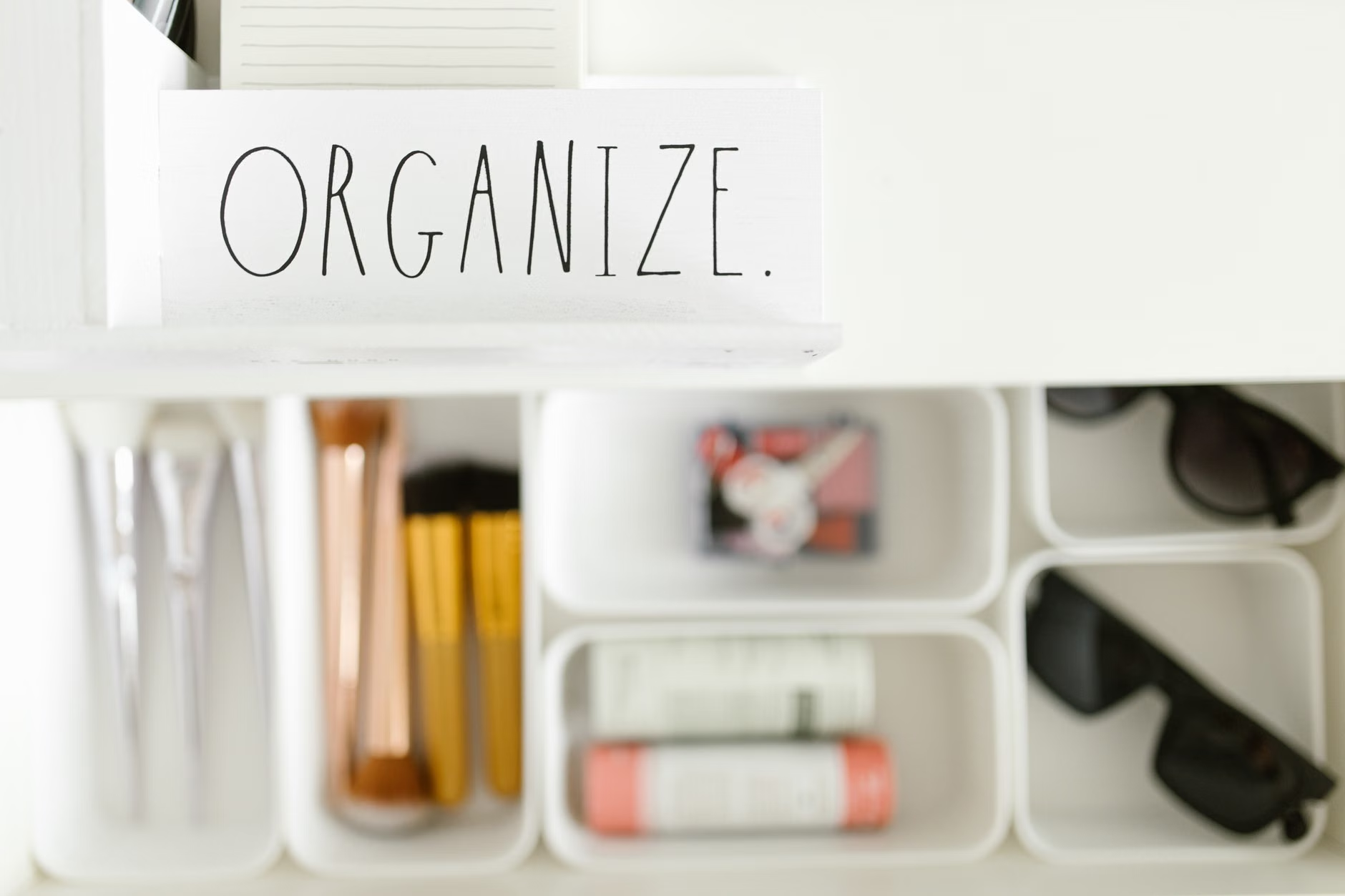
- The “In-Tray” Method: If they have loose papers that they aren’t sure how to file yet, provide one single “in-box” tray. If the tray is full, it’s time to organize. This prevents the “piles” from migrating onto the desk surface.
2. Managing Sensory Input: The Overlooked Variable
Teens with developing executive functions are often hypersensitive to their environment. A flickering light, the hum of a computer fan, or even the visual clutter of a wall calendar can be enough to break their concentration. This is where many parents go wrong—they assume “a desk is a desk.”
Consider the lighting. Overhead lighting is often insufficient and creates shadows. A dedicated task lamp with adjustable color temperature can help signal to the brain that it is “work time.” Blue-toned light is energizing, while warmer tones are better for long reading sessions. Encouraging your teen to adjust this according to their energy levels is a lesson in self-regulation.
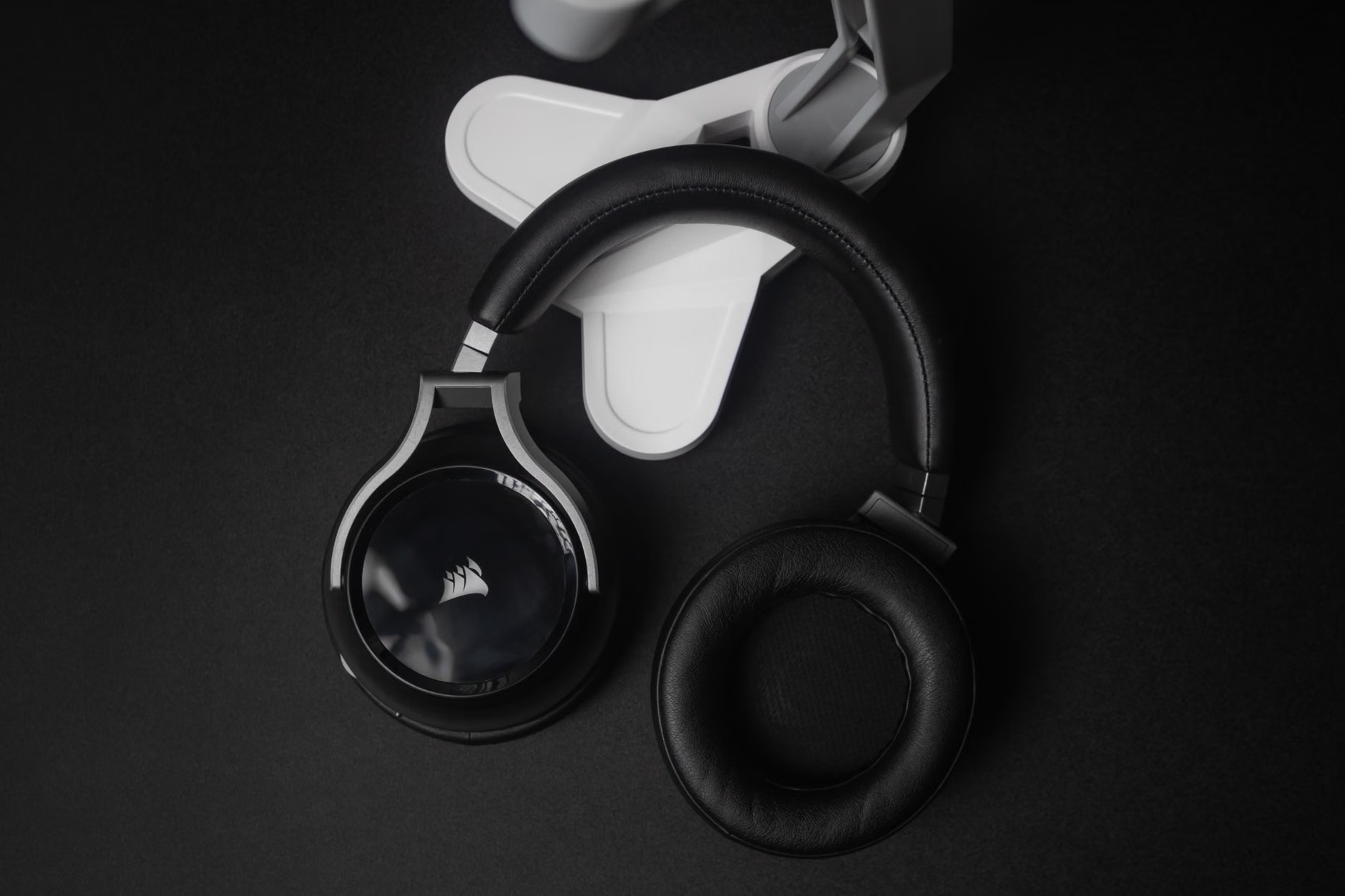
Sound is the other major factor. Many teens insist on listening to music while studying, which can be beneficial for some but detrimental for others. If your teen is struggling to focus, suggest noise-canceling headphones. It is not about blocking out the world, but about creating a consistent, controlled sensory environment. If they are distracted by their phone, the solution is not just “put it away,” but “put it in a drawer or another room.” The mere presence of a smartphone, even face down, has been shown to reduce cognitive capacity.
3. The ‘Grab-and-Go’ Organizational System
Task initiation—the ability to start a project—is one of the most common executive function struggles in teens. If a teen has to find their calculator, then their textbook, then their notes, the friction of starting becomes a massive hurdle. By the time they have gathered their materials, their motivation has evaporated.
The solution is to organize by activity rather than by subject. If your teen takes a science class, keep all items related to that class in a single, mobile bin or drawer that can be pulled out and placed on the desk. This “kit” approach ensures that everything is present and accounted for before the work begins.
| Strategy | Problem Solved | Best For |
|---|---|---|
| Task-Based Bins | Difficulty starting tasks | Teens who lose materials or struggle with planning |
| Visual Timers | Time blindness | Teens who underestimate how long tasks take |
| Minimalist Surface | Overstimulation/Distraction | Teens who get overwhelmed by clutter |
| Ergonomic Anchoring | Physical fatigue | Teens who fidget or shift constantly |
The table above highlights how different strategies address specific executive function deficits. For example, if your teen struggles with “time blindness”—the inability to sense the passage of time—a digital clock is often ignored. An analog visual timer, which shows a red disc disappearing as time elapses, provides a visceral sense of urgency that is far more effective.
4. Ergonomics and the Physicality of Focus
We rarely connect posture to cognitive performance, but they are inextricably linked. If a teen is slouching, their breathing is restricted, which reduces oxygen flow. If their chair is uncomfortable, they are subconsciously shifting their weight, which consumes mental energy. A teenager’s body is growing rapidly; a chair that was fine last year might be causing back strain today.
The 90-90-90 Rule: When sitting at the desk, the teen’s elbows should be at a 90-degree angle, their hips at 90 degrees, and their knees at 90 degrees. Their feet should be flat on the floor. If they are too short for the desk, use a footrest. If the desk is too high, raise the chair and use a footrest. This physical stability allows the brain to focus entirely on the task at hand rather than on maintaining comfort.
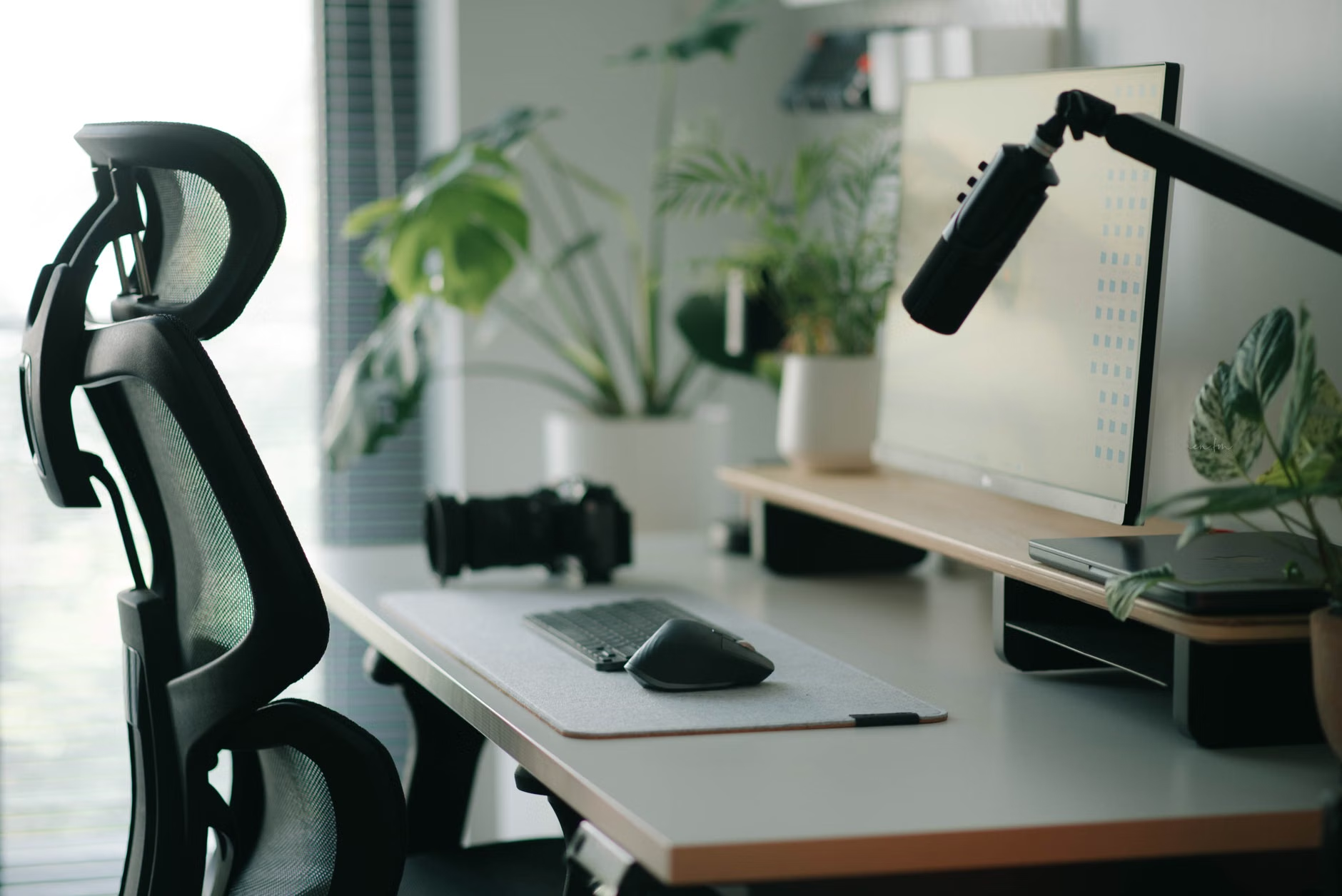
Don’t fall for the “gaming chair” aesthetic trap. Many gaming chairs are designed for style, not for long-term ergonomic support. Look for office chairs that offer lumbar support and adjustable armrests. The goal is to make the body “disappear” so that the mind can engage with the work.
5. The Hidden Cost: Digital Hygiene
While the desk is a physical space, the computer screen is a digital workspace. If your teen’s laptop desktop is covered in 50 random files, or if they have 40 browser tabs open, they are essentially sitting at a “digital messy desk.” This is a major source of executive function failure.
Implement a “one-project, one-window” rule. If they are working on a history essay, the only tabs open should be those related to that essay. If they need to check their email, they must close the essay tabs first. This forces the brain to switch contexts intentionally rather than mindlessly drifting between unrelated tasks.
Additionally, disable non-essential notifications on their study device. A ping from a social media app is a “cognitive hijack.” It pulls the teen out of a deep-work state, and it can take up to 20 minutes to get back to that same level of focus. By silencing these notifications during study hours, you are protecting their ability to enter a “flow state.”
Addressing Common Misconceptions
A common misconception is that a “creative” or “chaotic” desk is good for a creative teen. While some people do work well in a cluttered environment, most teens—especially those who struggle with executive function—do not. They often mistake the chaos of their desk for productivity. If your teen insists they “know where everything is,” challenge them to a test: ask them to find a specific paper from three weeks ago. If it takes them more than 30 seconds, their system is failing them.
Another myth is that parents should “fix” the desk for the teen. This is counterproductive. The goal is to teach the teen how to manage their own environment. Work with them to set up the system, but let them maintain it. If it falls apart, use it as a learning opportunity. Ask: “What happened this week that made the desk get this messy?” rather than “Why is your desk so messy?” The former invites problem-solving; the latter invites defensiveness.
Finally, recognize that the “ideal” desk setup is a moving target. As your teen’s classes change, their needs will change. Check in once a month. Ask them if the current setup is helping them or if it feels like a hindrance. By treating the desk as a collaborative experiment, you shift the dynamic from “parent vs. teen” to “coach vs. athlete.”
Practical Next Steps for Parents
Start by observing your teen for one evening while they study. Do not interfere. Just watch for “friction points.” Do they keep getting up to find supplies? Do they look distracted by the items on their desk? Do they seem physically uncomfortable? Take notes on these moments.
Once you have identified the friction points, pick one area to improve this weekend. Do not try to overhaul the entire room at once. If they are constantly hunting for pens, start with the drawer organization. If they are distracted by visual clutter, start with the “Zero-State” surface policy. Success breeds success; by fixing one small, annoying aspect of their study life, you demonstrate the value of the environment and gain their buy-in for future improvements.
Remember that for a teen in their mid-teens, the desk is one of the few places they have control over. Respect their autonomy, but provide the tools and the framework for them to succeed. You aren’t building a desk; you are building a habit of self-regulation that will serve them long after they leave for university or the workplace.
For more on the science of executive function and how it relates to academic success, you can refer to the resources provided by the Center on the Developing Child at Harvard University. Their research confirms that supportive environments are key to strengthening these essential brain circuits.
Frequently Asked Questions
1. My teen says they study better with music and a messy desk; should I force them to change?
Instead of forcing a change, propose an A/B test. Ask them to try your “Zero-State” desk and noise-canceling headphones for one week. If their grades or the time it takes to finish homework improves, they will likely adopt the changes themselves. If there is no difference, then their current method is working for them, and you can focus on other areas.
2. What if we have a very small room and no space for a large, ergonomic desk?
Verticality is your best friend. Use wall-mounted shelves to clear the desk surface. If the desk is too small, use a “rolling cart” system where all supplies are stored in a cart that can be tucked away under the desk when not in use. The goal is not the size of the desk, but the clarity of the workspace when they are actually working.
3. How often should we “reset” the desk to keep it organized?
The desk should be reset to “Zero-State” at the end of every single study session. This takes less than a minute and prevents the accumulation of “mental debt” for the next day. If they are in a rush, a “good enough” reset—where papers are put in a tray and the surface is cleared—is better than nothing.
By investing a little time into the physical architecture of your teen’s workspace, you are providing them with a silent partner in their academic journey. Keep the desk clear, the ergonomics sound, and the focus on the task, and you will be surprised at how much easier the work becomes for them.