Key Takeaways:
- Design for repairability is becoming a legal mandate: New “Right-to-Repair” laws mean manufacturers are increasingly required to provide spare parts and manuals to the public, not just authorized service centers.
- Check the “Repairability Score” before you buy: Countries like France have pioneered standardized repairability indexes; look for these labels when shopping to avoid “disposable” appliances.
- Software locks are the new barrier: Even if you can physically fix a machine, some manufacturers use “parts pairing” software that disables replacement components unless a technician authorizes them—avoid brands that rely heavily on this practice.
If you have ever stared at a three-year-old dishwasher that stopped working because of a single, cheap plastic latch, only to be told by a technician that “it’s not worth fixing,” you have felt the frustration of the modern disposable economy. We live in an era where appliances are often designed to be replaced rather than repaired. However, a global shift is underway. The “Right-to-Repair” movement is moving from niche activist circles into actual government legislation, changing the way we interact with the machines that keep our households running.
For those of us in our 30s and 40s—balancing school runs, career demands, and the constant hum of domestic chores—this isn’t just about politics. It is about your wallet and your weekend time. Understanding how these laws work, and more importantly, how to shop for appliances that actually respect your right to fix them, can save you thousands of dollars over the next decade.
What “Right-to-Repair” Actually Means for Your Home
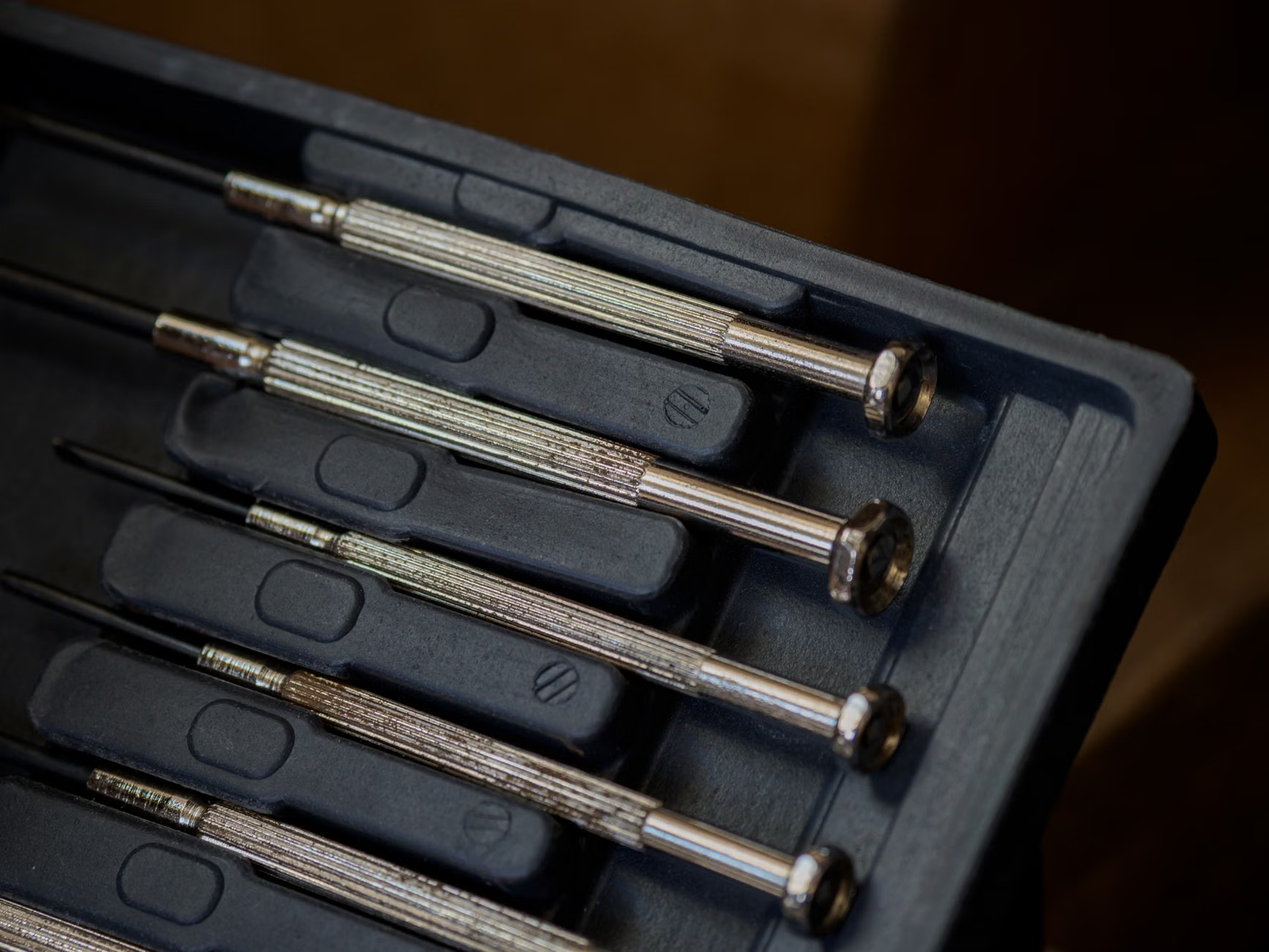
At its core, Right-to-Repair is a legislative effort to break the monopoly that manufacturers hold over the maintenance of their products. Historically, companies have used three main tactics to prevent you from fixing your own appliances: proprietary screws that require specialized tools, the withholding of service manuals, and the restriction of spare part sales to “authorized” repair networks that charge premium labor rates.
When we talk about this legislation today, we are talking about laws that force manufacturers to make these three things accessible. In the European Union, the “Ecodesign” regulations are setting a global benchmark. In the United States, several states, including New York and California, have passed or are debating legislation that requires companies to provide diagnostic tools, manuals, and parts to independent repair shops and consumers.
Why does this matter to you? It shifts the power dynamic. Without these laws, you are essentially “leasing” your appliance from the manufacturer. If it breaks, they decide if it’s worth fixing, and they control the price of that repair. With Right-to-Repair, you gain the agency to either perform the repair yourself or hire a local, independent technician who doesn’t have to pay a “licensing fee” to the manufacturer just to buy a replacement part.
The Hidden Trap: Why Some Appliances Are “Unfixable”
Not all appliances are created equal. Even if a law says you have the right to repair, some manufacturers have engineered their products to make that right practically impossible. This is often referred to as “designing for the landfill.”
The most common offender is the use of non-standard fasteners. If you open the back of a machine and see screws that require a “tri-wing” or a custom proprietary bit, the manufacturer is actively discouraging you from looking inside. Another major issue is “gluing.” Many modern appliances, particularly smaller ones like blenders or coffee machines, have components that are glued together rather than screwed. Once you break the seal to fix a motor, you often destroy the casing entirely.
Decision Rule: Before buying any appliance, perform a “screwdrivers test.” Search the model number on a site like iFixit or a major parts retailer. If you cannot find a “exploded view” diagram or a list of replacement parts for that model, assume it is designed to be disposable. If the manufacturer does not list parts for sale on their own website, they are likely practicing “parts locking,” where they force you into their service ecosystem.
The Rise of the Repairability Index
One of the most useful tools currently available to consumers is the Repairability Index. Pioneered in France, this is a mandatory label on many electronic and home appliances. It provides a score out of 10 based on how easy it is to disassemble, the availability of spare parts, the price of those parts, and the access to documentation.
If you are shopping for a new washing machine or refrigerator, look for these scores. A machine with a score of 8/10 or higher is significantly more likely to last 10+ years than one with a 4/10. Even if your country doesn’t legally mandate this label yet, many manufacturers are beginning to use it as a marketing point in international markets. If a brand is proud of its repairability score, they are likely building a better product.
| Feature | High Repairability (8-10) | Low Repairability (1-4) |
|---|---|---|
| Fasteners | Standard Phillips or Torx screws | Proprietary bits, rivets, or glue |
| Parts Availability | Available for 7-10+ years | Discontinued after 2-3 years |
| Documentation | Publicly available repair manuals | Internal “technician only” access |
| Component Design | Modular (swap a board, not the unit) | Integrated (everything soldered to one board) |
This table illustrates the difference between a machine built to last and one built to fail. When you are in the store or browsing online, don’t just look at the energy rating; look at the construction. A machine that is easy to open is a machine that is easy to clean, which in itself extends the life of the appliance.
The “Parts Pairing” Problem: A Warning
There is a new, insidious trend that Right-to-Repair laws are currently fighting: software-based parts pairing. This occurs when a manufacturer puts a microchip on a replacement part (like a heating element or a motor). When you install that new, perfectly functional part, the appliance’s main computer checks for a digital “handshake.” If it doesn’t recognize the serial number of the new part, it refuses to operate.
This is the ultimate barrier to repair. Even if you have the skills, the tools, and the part, the machine is programmed to reject the fix. This is prevalent in high-end “smart” appliances. If you see a feature labeled “Smart Diagnostics” or “Connected Home,” take a moment to research whether that model requires authorized digital activation for simple part swaps. Often, the “smart” features are not worth the trade-off of losing your ability to perform a simple, manual repair.
Practical Steps to Take When an Appliance Fails
When an appliance breaks, the natural instinct is to call the manufacturer’s support line. However, this is often the most expensive path. Before you do that, follow this hierarchy of action:
- The Reset Protocol: Many “failures” in modern appliances are just software glitches. Unplug the unit for a full 10 minutes to drain the capacitors. Some machines have a hidden “factory reset” button combination. Check the manual or a quick Google search for “[Model Number] reset.”
- Identify the Error Code: Modern appliances are surprisingly chatty. If the display is flashing, it is usually giving you a diagnostic code. Search that code + your model number. You will often find forums where other owners have faced the exact same issue and solved it with a $15 part.
- Search for the “Exploded View”: Every major manufacturer has a parts website. Even if they don’t sell to you directly, they usually host the schematic. Look at the diagram. Is the part that failed a modular piece (like a pump or a sensor)? If so, it is likely a candidate for a DIY fix.
- Check Independent Parts Suppliers: Sites like RepairClinic or PartSelect (in North America) or local equivalents often carry third-party compatible parts that are significantly cheaper than the OEM (Original Equipment Manufacturer) branded parts.
Common Mistake: Do not buy a replacement part until you have physically disassembled the machine to confirm the part number. Manufacturers often change parts mid-production run, even for the same model number. Always check the sticker on the actual failed component.
Tools You Should Have in Your Household
You don’t need to be an engineer to handle 80% of common appliance failures. A basic “household repair kit” should cost less than $50 and will pay for itself the first time you avoid a $150 service call.
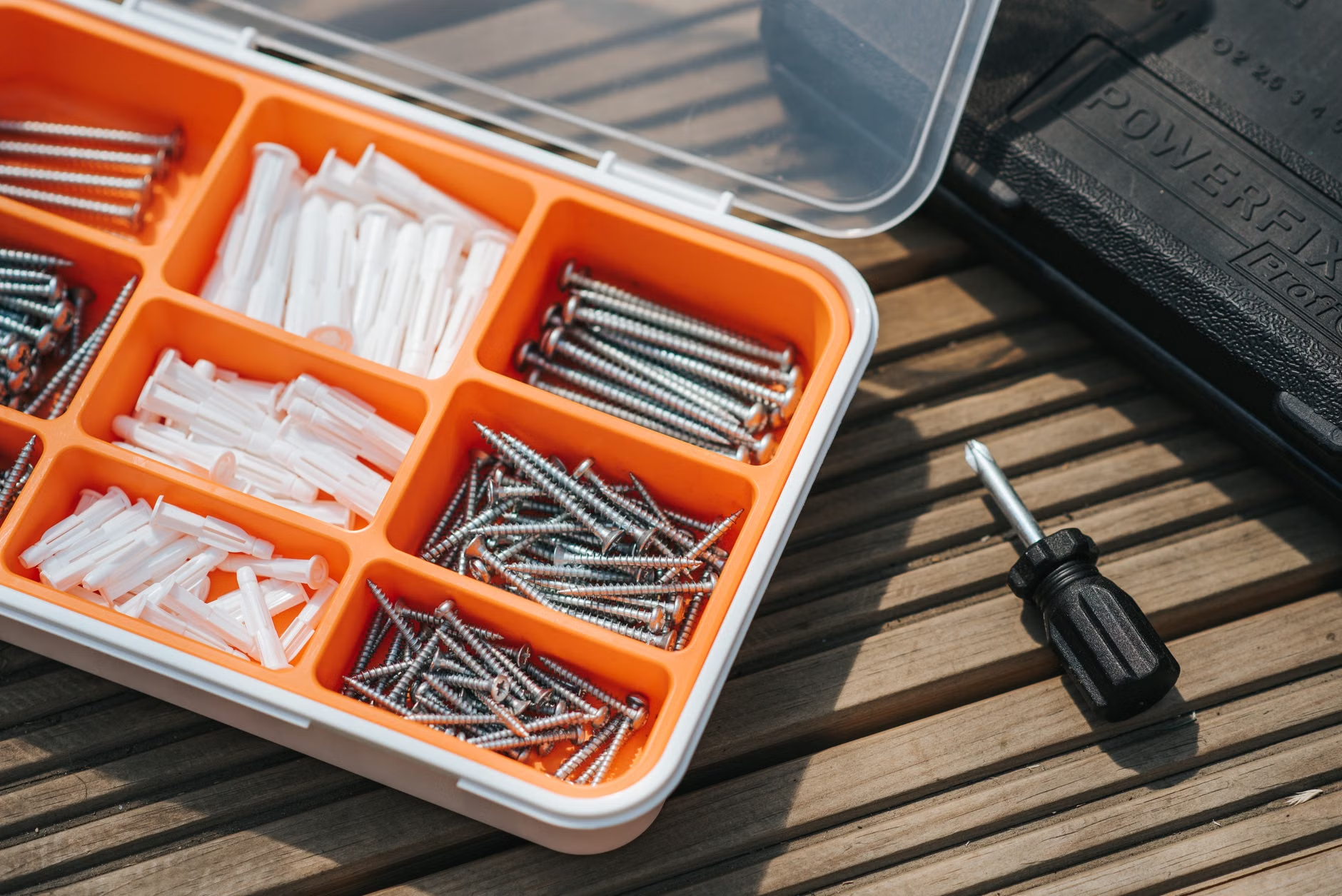
- A quality multi-bit screwdriver set: Look for one that includes Torx (star-shaped) bits, as these are the industry standard for most appliances.
- A digital multimeter: This is the secret weapon for determining if a part is actually broken or if it’s just a loose wire. It measures electrical continuity. If a heating element doesn’t have continuity, it’s dead. If it does, your problem is elsewhere.
- Needle-nose pliers: Essential for removing small connectors or retrieving dropped screws.
- A plastic pry tool: Used to open plastic housings without marring the finish or breaking the tabs.
If you aren’t comfortable using these, that is perfectly fine. However, even if you hire a professional, having the knowledge of what the part is and how much it costs prevents you from being overcharged for a simple repair.
Why This Matters for Parenting and Life Balance
In our 30s and 40s, we are often managing the “maintenance phase” of life. We are replacing the appliances we bought in our 20s. We are dealing with the inevitable breakdowns that come with a household full of kids. The Right-to-Repair movement isn’t just about saving money; it is about reclaiming time. If you can fix a dryer in 30 minutes on a Saturday morning, you don’t have to wait three days for a technician who gives you a four-hour arrival window.
Furthermore, there is a powerful lesson here for our children. When they see us fix a toaster rather than throwing it in the bin, we teach them about value, resourcefulness, and the mechanics of the world around them. We move away from a culture of consumption and toward a culture of stewardship. It is a small change, but it ripples outward.
Final Insight: The most “sustainable” appliance is the one you already own. If you have an older machine that is built like a tank, keep it running as long as possible. The efficiency gains in new appliances are often marginal compared to the massive environmental and financial cost of manufacturing and shipping a brand-new unit. Only replace when the cost of parts and your time exceeds the value of the repair.
Frequently Asked Questions
1. Does repairing my appliance myself void the warranty?
In many jurisdictions, such as the US under the Magnuson-Moss Warranty Act, simply opening your device or performing a repair does not automatically void your warranty unless the manufacturer can prove that your repair caused the specific damage you are claiming. However, always check your specific warranty document. If you are nervous, perform the simple, non-destructive fixes yourself, and leave anything involving high-voltage capacitors or gas lines to professionals.
2. Are “Smart” appliances worth the extra cost?
Generally, no. The “smart” features—like Wi-Fi connectivity or app-based alerts—rarely improve the core function of the appliance (cleaning or cooling) and they add significant points of failure. The more complex the electronics, the more likely you are to encounter the “parts pairing” issues mentioned earlier. Stick to “dumb” machines with mechanical dials or simple digital interfaces whenever possible; they last longer and are easier to fix.
3. Where can I find reliable repair manuals for my specific model?
Start with the manufacturer’s official support site, but if that fails, iFixit.com is the gold standard for crowd-sourced repair guides. Additionally, YouTube is an incredible resource—search for your model number + the issue (e.g., “Samsung washer LE error”). You will almost certainly find a video guide that walks you through the exact repair, step-by-step. Always look for videos that show the actual disassembly process.
Useful Resources:
- iFixit – The Free Repair Manual
- Right to Repair Europe – Policy and Updates
- FTC: Nixing the “Fix-It” Traps (Consumer Information)
The transition to a more repair-friendly world is not going to happen overnight, but by voting with your wallet and choosing brands that prioritize longevity, you are accelerating the change. Keep your tools handy, look for the repairability score, and don’t be afraid to open the back panel. You might be surprised at how much you can handle on your own.