The most effective way to experience a premium coastal rail route without the premium price tag is to treat your booking like a logistical operation rather than an impulse buy. By targeting specific off-peak windows—typically mid-week, mid-morning, or late evening—you can secure fares up to 60% lower than standard weekend pricing while avoiding the crush of tourists that ruins the view.
- The 10:00 AM to 3:00 PM Rule: Most rail operators define ‘off-peak’ based on commuter flow; traveling between the morning and evening rush hours is your golden ticket to lower fares and empty carriages.
- Tuesday and Wednesday Advantage: Mid-week travel consistently yields lower dynamic pricing compared to the surge-priced Friday afternoon and Sunday evening slots.
- Advance Booking vs. Flexi-Tickets: If you are traveling as a family, the rigidity of ‘Advance’ tickets (which lock you into a specific time) is a trade-off for significant savings, whereas ‘Anytime’ tickets offer peace of mind at a premium.
Why Coastal Rail Travel Requires a Different Strategy
We’ve all seen the social media posts: a serene shot of a train winding along a cliff edge, the ocean sparkling in the distance. In reality, that same train is often packed with commuters, day-trippers, and families struggling with luggage. For those of us in our 30s and 40s, juggling professional responsibilities and parenting, the “scenic journey” can quickly devolve into a logistical nightmare if not planned correctly.
Coastal routes are unique because they aren’t just transit—they are destinations. Unlike inner-city rail, these routes are prone to extreme seasonal and weekend demand. Understanding how to navigate the “off-peak” classification is not just about saving money; it is about reclaiming the sanity of the journey. When you travel during off-peak times, you aren’t just paying less; you are securing the space necessary to keep children entertained, manage your laptop for a quick work check-in, and actually see the coastline through a window that isn’t obstructed by a stranger’s backpack.
Defining the ‘Off-Peak’ Window: More Than Just a Time
It is a common misconception that “off-peak” is a universal, static time period. In reality, it is a dynamic pricing strategy employed by rail companies to balance demand. If you assume that 10:00 AM is always off-peak, you might be unpleasantly surprised to find peak-rate pricing on a Friday morning during a local school holiday.
To master this, you must look at the operator’s specific definitions. Most major rail networks (such as those in the UK, parts of Europe, and Australia) utilize these broad categories:
| Category | Typical Timing | Strategy |
|---|---|---|
| Peak | 06:30–09:30 & 16:00–19:00 | Avoid entirely unless unavoidable. |
| Off-Peak | 10:00–15:59 & After 19:00 | Best for value and comfort. |
| Super Off-Peak | Weekends & Mid-day Tuesday/Wednesday | Maximum savings; ideal for flexible schedules. |
The “why” behind this is simple: rail operators want to discourage people from adding to the crush of commuters. If you have the flexibility to shift your departure by even two hours, you can move from a high-demand slot to a low-demand one. For a family of four, this difference can amount to hundreds of dollars, which is better spent on experiences at your destination rather than on a train ticket.
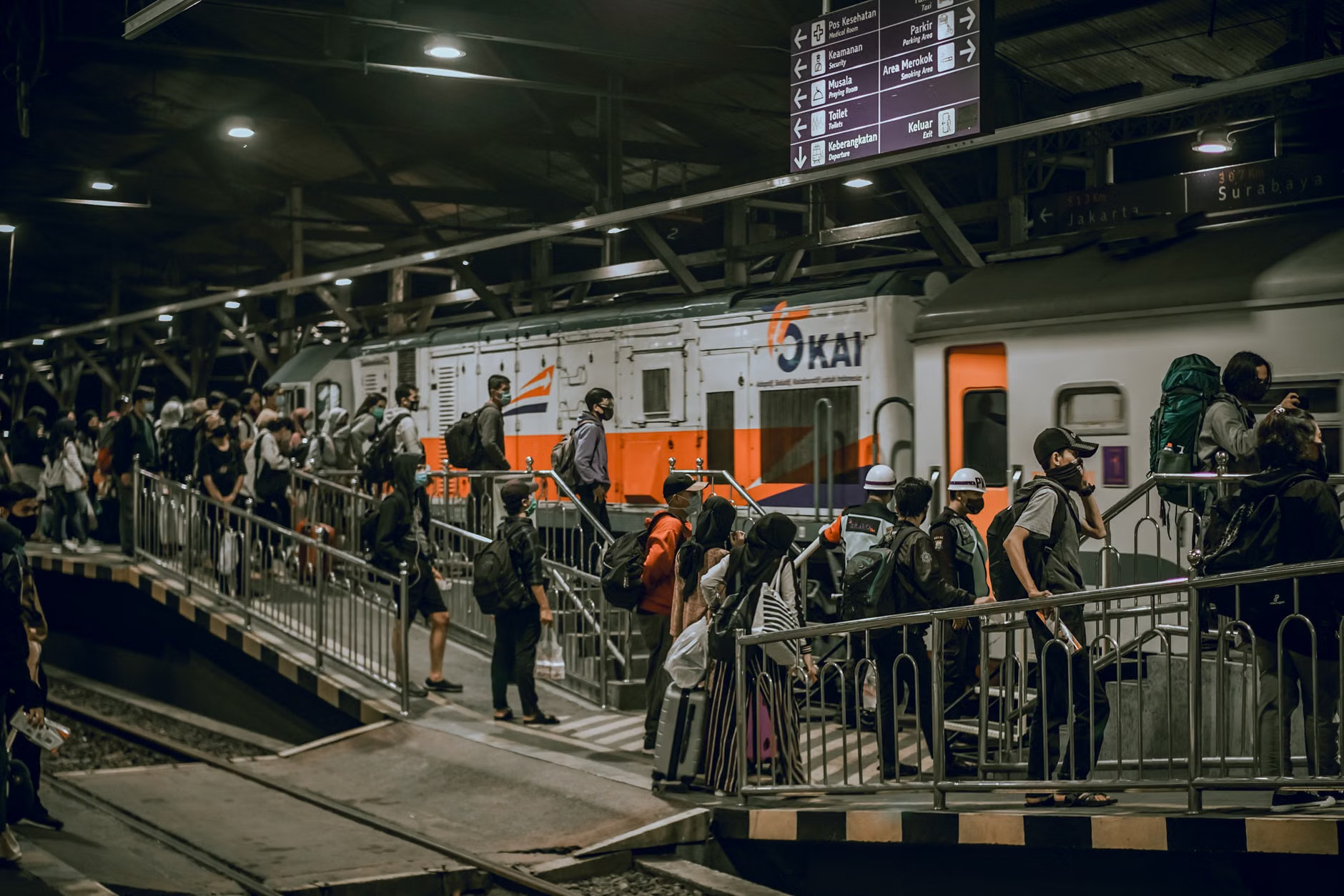
The Logistics of Family Travel on Scenic Routes
Traveling with children on a long-distance coastal train requires a different set of priorities. When you are booking off-peak, you have the advantage of choosing your seats. This is the most overlooked variable in rail travel. Many people simply click “book” and let the system assign them a random seat, often in the middle of a carriage or, worse, in a “quiet zone.”
When traveling with kids, your priority should be the “family area” or the proximity to the luggage rack. If you are on a route like the West Highland Line in Scotland or the Pacific Surfliner in California, the view is the main attraction. Research the route beforehand to determine which side of the train offers the best coastal views—usually the side facing the ocean. If you book an off-peak ticket, you are more likely to have the freedom to move to an empty seat on the “view side” once the train departs.
A common mistake is assuming that “off-peak” means “empty.” While it is certainly quieter, popular scenic routes are almost always busy during the summer months. Always book a seat reservation if the operator allows it. If you are traveling with a stroller, check if the train has a dedicated multi-purpose area. If not, look for seats near the end of the carriage where you have floor space to park the stroller without blocking the aisle.
Technology as Your Travel Agent
Do not rely on the physical ticket counter at the station. In the current era of rail travel, the best deals are almost exclusively digital. Apps like Trainline, Omio, or the official carrier apps use algorithms that show you the price difference for shifting your departure time by just 30 minutes. Use these tools to perform a “price comparison” across different days of the week.
One pro-tip for the tech-savvy parent: set a price alert. If you are planning a trip three months out, many platforms allow you to track the price of specific routes. When the price drops—which it often does during promotional windows—you will receive a notification. This is significantly more effective than checking manually every few days.
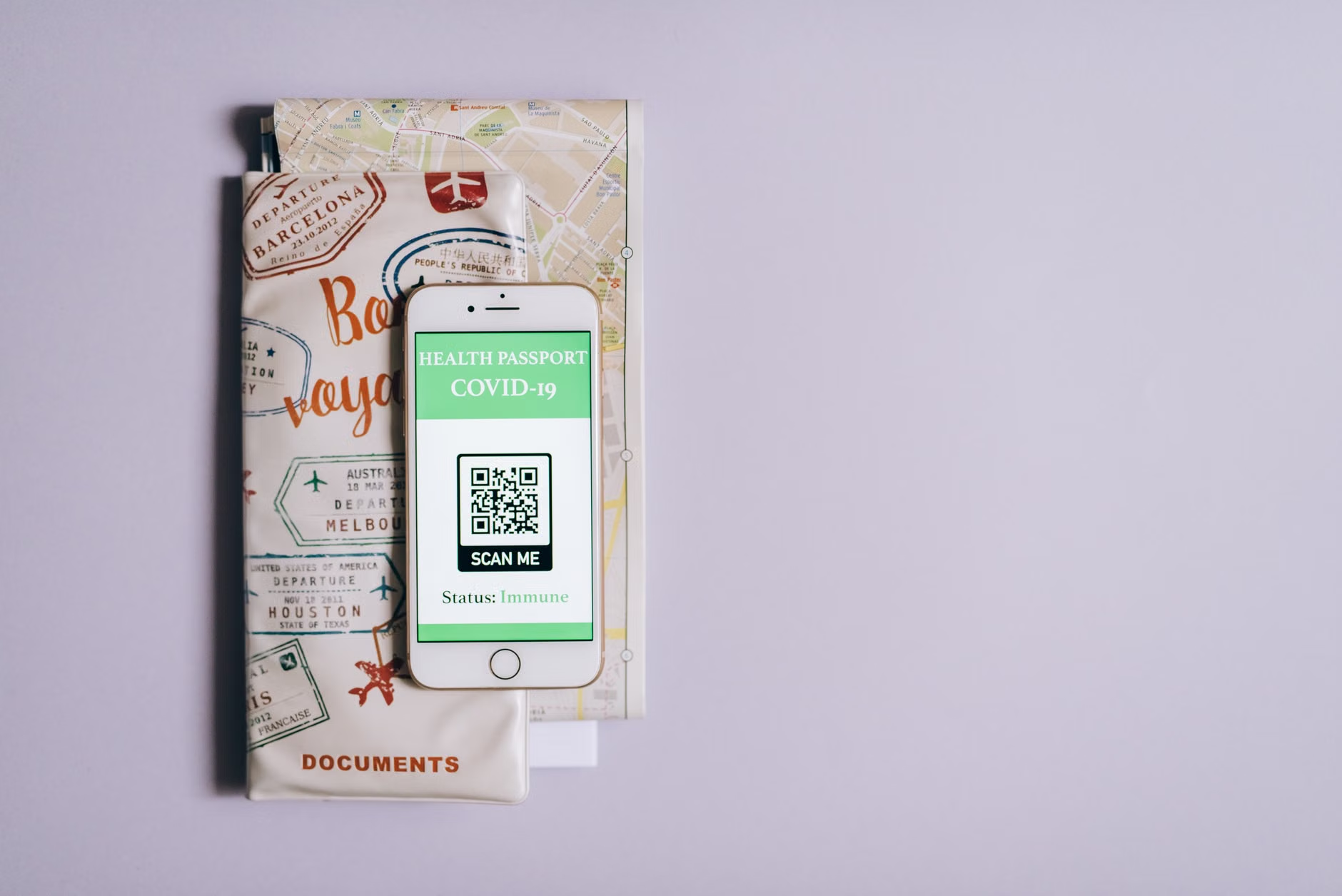
The Hidden Costs of ‘Cheap’ Tickets
It is easy to get caught up in the excitement of a low fare, but always scrutinize the terms. The cheapest tickets are almost always “Advance” tickets. These are non-refundable and non-changeable. If you are traveling with children, this is a significant risk. What if someone wakes up with a fever? What if a nap schedule goes sideways and you miss the train?
If you are traveling with a partner or family, the “Split-Ticketing” strategy can also save you money. This involves buying two tickets for a single journey—for example, one from Station A to Station B, and another from Station B to Station C—even if you stay on the same train the whole time. It sounds counter-intuitive, but rail pricing systems often treat these as separate segments, allowing you to bypass the higher pricing of a “long-distance” ticket.
Always weigh the cost of a “Flexi” ticket against the cost of a potential missed train. If a flexible ticket costs $30 more but saves you the cost of a completely new ticket if plans change, it is often the more rational financial decision for a parent. Consider it an insurance policy for your travel schedule.
Step-by-Step Execution for Your Next Trip
To put this into practice, follow this decision framework before you finalize your booking:
- Identify the Route Constraints: Does the train offer seat reservations? Is there a dedicated family/luggage area? Check the operator’s website specifically for the “rolling stock” (the type of train) used on your route.
- The 48-Hour Rule: Check the price for your desired day, then check the day before and the day after. If the price difference is significant, adjust your hotel booking to match the cheaper travel day. Often, the savings on the train ticket cover the cost of an extra night in a hotel.
- The Seat Selection Audit: Once you have your ticket, immediately log in to the “Manage My Booking” section. If you can select seats, look for a table-seat configuration. Having a table is essential for keeping kids occupied with snacks, coloring, or digital devices.
- The Pre-Departure Check: Download the offline map of your destination and the train operator’s app 24 hours before you leave. Ensure your digital tickets are saved in your phone’s wallet so you aren’t scrambling for a signal at the station.
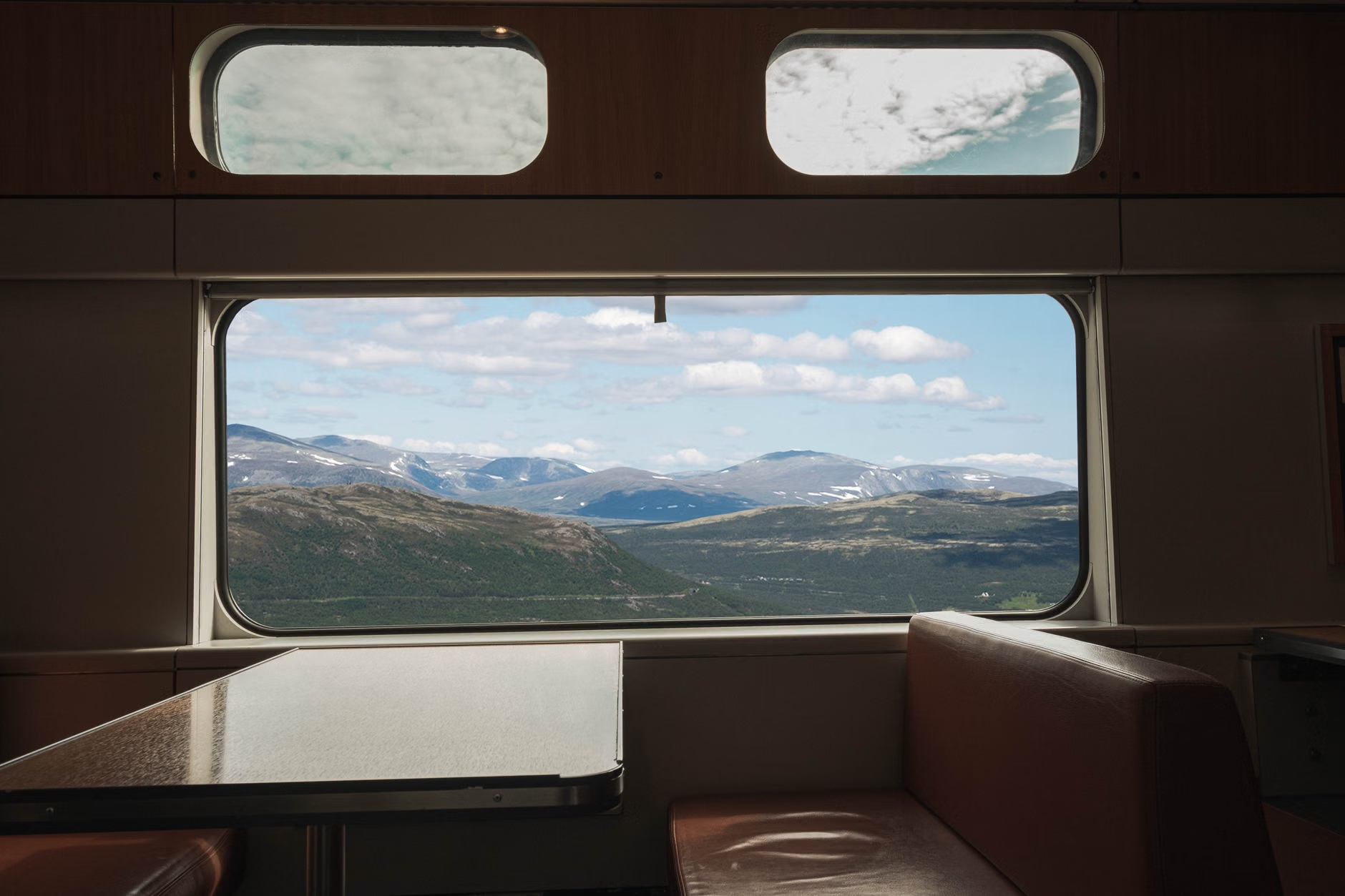
Maximizing the Experience: Beyond the Ticket
Once you are on the train, the goal is to balance the scenic enjoyment with the practical realities of parenting. If your children are young, bring “new” distractions—small, inexpensive toys or books they haven’t seen before. They will hold their attention for much longer than their familiar favorites. For the adults, bring noise-canceling headphones. Even in an off-peak carriage, train travel can be noisy, and having a way to zone out while looking at the water is a luxury that makes the trip feel like a genuine break.
Remember that coastal routes often have limited food options on board. While some trains have bistro cars, they are frequently understaffed or overpriced. Pack your own snacks and drinks. Not only does this save money, but it also avoids the disappointment of finding out the food trolley has run out of kid-friendly options by the time it reaches your carriage.
Finally, embrace the slowness. Rail travel is inherently slower than flying or driving, and that is its greatest asset. When the train slows down to navigate a curve along the coast, don’t look at your phone. Use that as a natural “pause” in your day to appreciate the view. If you have done the work to secure an off-peak, non-crowded carriage, you have earned the right to simply sit, watch, and breathe.
Common Misconceptions and Troubleshooting
One common mistake is assuming that all trains on a coastal route offer the same quality of service. Always check the reviews of the train operator. Some routes are serviced by luxury, refurbished carriages, while others might be older, commuter-style trains with limited amenities. If you have a choice between two operators on the same route, the extra $10 for a more comfortable, reliable operator is almost always worth it.
Another issue is “station anxiety.” Many people arrive at the station an hour early, fearing missed connections. If you have booked an off-peak, seat-reserved ticket, you don’t need to arrive more than 15-20 minutes early. Use that extra time at home or at your hotel to relax. If you are traveling with a lot of luggage, however, add 10 minutes to that buffer to account for the slow walk to the platform.
If you encounter a delay, don’t panic. Most major rail networks have a “Delay Repay” policy. If your train is delayed by more than 30 or 60 minutes, you are usually entitled to a partial or full refund. Keep your ticket, take a screenshot of the delay notice on the app, and submit your claim as soon as you arrive. It’s a simple process that many people ignore, leaving money on the table.
Conclusion: The Value of Intentional Travel
The secret to off-peak coastal rail travel is not about luck; it is about intentionality. By choosing your time, your seat, and your ticket type with the same care you would apply to any other household budget decision, you transform a generic transit experience into a memorable part of your trip. You are not just getting from A to B; you are taking the scenic route, on your own terms, without the stress of peak-hour crowds.
Take the time to research the specific operator’s terms, use the digital tools at your disposal to compare prices, and prioritize the comfort of your family over the convenience of a “default” booking. The savings you accrue are the bonus; the real reward is the ability to enjoy the coastline in peace.
Frequently Asked Questions
Q: Can I really get a refund if my train is delayed, even on a cheap ticket?
A: Yes. In most regions (such as the UK and Europe), delay compensation is based on the length of the delay rather than the type of ticket you purchased. Always check the specific operator’s “Delay Repay” policy on their official website as soon as you experience a significant delay.
Q: Is it worth upgrading to first class for coastal routes?
A: If the price difference is small (often the case during off-peak times), it can be worth it for the extra space and the quiet environment. However, if the price difference is substantial, stick to standard class and use your research to pick a seat in a less-crowded carriage. The view out the window is exactly the same from both classes.
Q: How far in advance should I book to get the best off-peak rates?
A: Most rail operators release their tickets 8 to 12 weeks in advance. Setting a calendar reminder to check the pricing as soon as they are released is the most reliable way to secure the lowest possible fare. Waiting until the last minute almost guarantees you will pay peak prices, regardless of when you travel.
For further information on specific rail policies and to plan your journey, consult the official national rail websites for your destination, such as National Rail Enquiries (UK) or the relevant regional transit authority websites.