- Sensory modulation is a physiological necessity, not a luxury; by creating a dedicated ‘reset’ station, you reduce the likelihood of post-school meltdowns by addressing overstimulation proactively.
- The ‘3-Zone’ approach works best: organize your space into a calming area (low input), an active area (proprioceptive input), and a transition area (task-switching support).
- Consistency outweighs equipment: a high-tech sensory room is less effective than a simple, predictable routine that allows the child to self-regulate at the same time and place every day.
The most effective way to prevent the “after-school meltdown” is to stop treating it as a behavioral problem and start treating it as a physiological one. For many neurodivergent children—including those with ADHD, autism, or sensory processing differences—the school day is an endurance test of noise, social masking, and forced executive function. By the time they reach their front door, their sensory “bucket” is often overflowing. A dedicated sensory-integration station acts as a pressure valve, allowing your child to regulate their nervous system before they attempt to tackle homework, chores, or family social time.

Understanding the Physiological “After-School Hangover”
If you have ever come home from a high-stress job, needing to sit in a dark room for twenty minutes before you can even speak to your partner, you have experienced a form of sensory fatigue. Now, imagine that feeling magnified by a school environment where you are expected to sit still, process complex verbal instructions, and navigate unpredictable social dynamics for seven hours straight. For the neurodivergent brain, this is not just “tiring”—it is a state of sensory overload.
When the brain is in overload, the prefrontal cortex—the part responsible for logic, emotional regulation, and planning—goes offline. This is why “simple” requests like “go hang up your backpack” can suddenly trigger a massive emotional reaction. The child isn’t being defiant; they are literally unable to access the cognitive resources required to follow instructions. A sensory-integration station provides the “input” required to bring the nervous system back to a baseline state. This isn’t about coddling; it is about providing the physiological tools needed to transition from the high-stimulation world of school to the lower-stimulation environment of home.
The Three-Zone Framework for Home Integration
You don’t need a dedicated room or expensive clinical equipment to create an effective station. You need a space that offers three specific types of input: calming (to reduce arousal), active (to provide proprioceptive feedback), and transitional (to bridge the gap between school and home).
1. The Calming Zone: Reducing Sensory Input
The goal here is to minimize external stimuli. This area should be visually quiet and physically soft. Think of this as a “retreat” space. A small pop-up tent or a corner draped with heavy blankets works wonders. The key here is limitation. Do not fill this area with toys or screens. It should be a place where the child can sit or lie down and feel the boundaries of their own body.
2. The Active Zone: Proprioceptive Input
Proprioception is the sense of where our body is in space. Many neurodivergent children find that heavy work—pushing, pulling, or lifting—helps them “feel” their body again after a day of being forced to be still. This zone might include a weighted lap pad, a compression vest, or even a small indoor trampoline. If space is tight, a simple wall-push exercise—where the child stands against a wall and pushes with their hands—can provide the same neurological grounding.
3. The Transitional Zone: Reducing Executive Demand
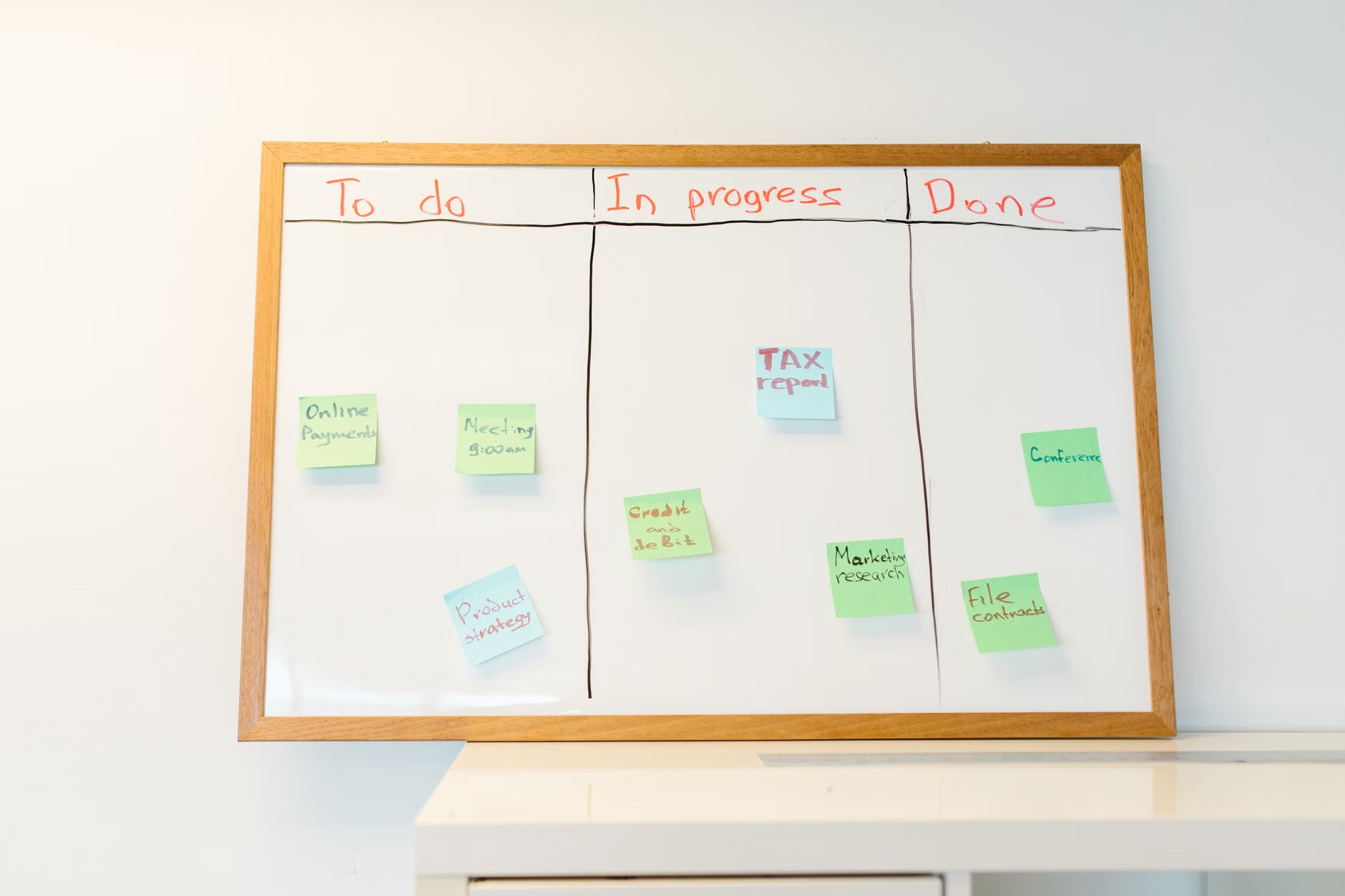
This is where you bridge the gap. Transitioning from “school mode” to “home mode” is a high-demand task. Use visual aids like a simple checklist or a timer to make the transition predictable. For many, a “first-then” board is essential: “First, spend 10 minutes in the sensory station, then we will have a snack.” This removes the need for the child to negotiate or guess what is expected of them.
Designing for Your Child: A Decision Matrix
Not every child needs the same input. Some children are “sensory seekers” and need intense movement to regulate, while others are “sensory avoiders” who need deep pressure and quiet. Observe your child’s behavior during the first hour after school to determine which category fits their current state.
| Child’s Profile | Common Behaviors | Recommended Station Focus |
|---|---|---|
| The Sensory Seeker | Jumping, crashing into furniture, loud vocalizations, constant movement. | Heavy work, swinging, climbing, tactile bins (sand/clay). |
| The Sensory Avoider | Hiding under tables, covering ears, irritability, shutting down. | Deep pressure (weighted blankets), dim light, white noise, solitude. |
| The Mixed Regulator | Fluctuates between seeking and avoiding; unpredictable outbursts. | A balanced mix of both; emphasis on choice and self-selection. |
If your child is a Sensory Seeker, do not force them into a dark, quiet tent; they will likely feel more agitated. Instead, provide a crash pad or a heavy gym mat where they can safely release energy. Conversely, if your child is a Sensory Avoider, a high-energy movement station will likely increase their stress. Tailoring the space to their specific needs is the difference between a “reset” and a “trigger.”
Common Mistakes to Avoid
One of the most common pitfalls parents encounter is “over-equipping.” It is tempting to buy every sensory toy on the market, but too many choices can actually increase cognitive load. A sensory station should be a place of predictability, not a toy store. If your child has to choose from ten different items, you have just moved the task from “sensory regulation” to “decision making,” which is exactly what they are trying to avoid.
Another mistake is making the station a “reward” or a “punishment.” If you say, “If you are good, you can go to the sensory corner,” you are teaching your child that their physiological needs are contingent on their behavior. This is counterproductive. The station should be a neutral, accessible tool, like a glass of water or a chair. It is available when they need it, no questions asked.
Finally, avoid the “one-size-fits-all” trap. Just because an occupational therapist recommended a weighted blanket for one child does not mean it will work for yours. Always monitor the effectiveness. If your child uses the station and emerges more agitated than before, it is time to pivot. Keep a simple log for one week: What time did they use it? What tools did they choose? How long did they stay? What was their mood afterward? This data will be more valuable than any generic advice.
Implementation: A Step-by-Step Guide
Step 1: Identify the Location. It should be out of the main thoroughfare of the house. A corner of the living room or a quiet end of a hallway is often better than a bedroom, as it keeps the child connected to the family while still providing a boundary.
Step 2: Select the Tools. Start with three items: one for movement (e.g., a wobble cushion), one for tactile input (e.g., a bin of dried beans or kinetic sand), and one for deep pressure (e.g., a heavy blanket). Do not add more until you know how your child interacts with these three.
Step 3: Establish the Routine. The station is most effective when it is part of a ritual. For example, “Shoes off, backpack in the bin, five minutes in the sensory station, then we sit for a snack.” When the sequence becomes a habit, the brain begins to anticipate the regulation, which makes the transition smoother.
Step 4: Monitor and Refine. After two weeks, ask your child what they like and what they don’t. If they never touch the wobble cushion, swap it out. The station should evolve as your child grows and their sensory needs shift.

The Hidden Cost of Ignoring Sensory Needs
Many parents worry that by creating a “special” space, they are preventing their child from learning to “cope with the real world.” This is a fundamental misunderstanding of neurodivergent development. We are not teaching children to avoid the world; we are teaching them to recognize their own physiological state and to employ tools to manage it. This is a life skill that will serve them far better than forced compliance. A child who learns that they need a five-minute break to regulate is a child who will grow into an adult who knows how to manage their stress levels in a professional environment.
Furthermore, the “hidden cost” of ignoring these needs is the erosion of the parent-child relationship. When you are constantly managing meltdowns, the home environment becomes a site of conflict. By proactively managing sensory input, you are creating a foundation of safety. When a child feels safe, they are more capable of connection, communication, and cooperation. The sensory station is not just a place for the child; it is a tool for the entire family to maintain a healthier, more predictable dynamic.
Refining the Strategy: Long-Term Success
As your child matures, the station should evolve. A teenager might not want a pop-up tent, but they might appreciate noise-canceling headphones and a specific chair in a quiet corner of the library or their room. The principle remains the same: identify the sensory input that helps them reset and ensure it is accessible. The goal is to move from parent-led regulation to self-regulation. Eventually, you will see your child seek out these tools independently when they feel the “after-school hang-over” approaching. That independence is the ultimate goal.
Be patient with the process. Some children take to these tools immediately, while others require weeks of encouragement. If you find yourself frustrated, remember that you are building a bridge between their internal experience and the external world. That is a complex task for any child, and your support is the most critical variable in their success.
Frequently Asked Questions
Q: My child refuses to use the sensory station. What am I doing wrong?
A: It is likely that the station is either too overstimulating or not stimulating enough. Try observing what they gravitate toward when they are stressed—do they want to hide, or do they want to run? Adjust the equipment to match that impulse. Also, ensure the station is not being framed as a “time-out” or a mandatory chore, which can cause resistance.
Q: How long should a child spend in the sensory station?
A: There is no fixed time. It is about the effect, not the duration. For most children, 5 to 15 minutes is sufficient to shift their nervous system. If they are staying for an hour, they may be using it to avoid other tasks, in which case you may need to introduce a timer to help with the transition out of the station.
Q: Does this work for kids who aren’t diagnosed with autism or ADHD?
A: Absolutely. Many children—and adults—have sensory processing differences that aren’t severe enough for a clinical diagnosis but still impact their daily life. If your child regularly struggles with the transition from school to home, they will likely benefit from a structured sensory reset regardless of their diagnostic status.
For further reading on sensory processing and supporting neurodivergent children, you can refer to the resources provided by the STAR Institute for Sensory Processing, which offers evidence-based insights into how sensory integration functions in everyday life.