- Resale Value Matters: Not all luxury items are investments; focus on “classic” styles with high historical resale stability rather than seasonal trends.
- Authentication is Non-Negotiable: Always use platforms that offer professional, third-party physical inspection before the item is shipped to you.
- The “Total Cost of Ownership” Rule: When buying second-hand, factor in maintenance costs like professional cleaning, leather conditioning, and potential hardware repair.
Buying second-hand luxury isn’t just about saving money; it’s about shifting your mindset from “fast consumption” to “curated ownership.” For those of us in our 30s and 40s, balancing the chaotic demands of parenting, professional growth, and household budgets, the allure of a high-quality item that lasts a decade is far stronger than the fleeting thrill of a seasonal trend.
The global resale market for luxury goods has evolved from dusty vintage shops to sophisticated digital ecosystems. But with this shift comes the risk of high-end counterfeits and fluctuating market values. If you are considering your first “pre-loved” purchase, the goal is to treat it like a financial decision, not just a lifestyle upgrade.
Why the “Pre-Loved” Market is Actually a Financial Strategy
In your 30s and 40s, your time is at a premium. You don’t have the luxury of chasing trends that go out of style in six months. The rise of the second-hand luxury market—driven by platforms like Vestiaire Collective, The RealReal, and Rebag—has democratized access to heritage brands, but it has also created a new set of rules for the savvy shopper.
The primary reason to buy second-hand is depreciation mitigation. When you buy a brand-new luxury bag, you lose 20% to 40% of its value the moment you walk out of the boutique. By purchasing a model that is three to five years old, that initial “new car” depreciation has already been absorbed by the first owner. You are effectively paying for the utility and the brand equity, not the marketing markup.
However, this is only true if you buy the right items. A common mistake is buying “hype” items—the neon-colored, limited-edition runway pieces that everyone talks about for one season. These items often crash in value once the trend passes. Instead, look for “iconic” pieces: items that have maintained a consistent retail price increase over the last decade. These are the items that act as a hedge against inflation.
The Hidden Math: Total Cost of Ownership (TCO)
Many shoppers make the mistake of looking only at the sticker price. When you buy second-hand, you need to calculate the Total Cost of Ownership. This includes the purchase price, shipping, taxes, and—most importantly—the cost of refurbishment.
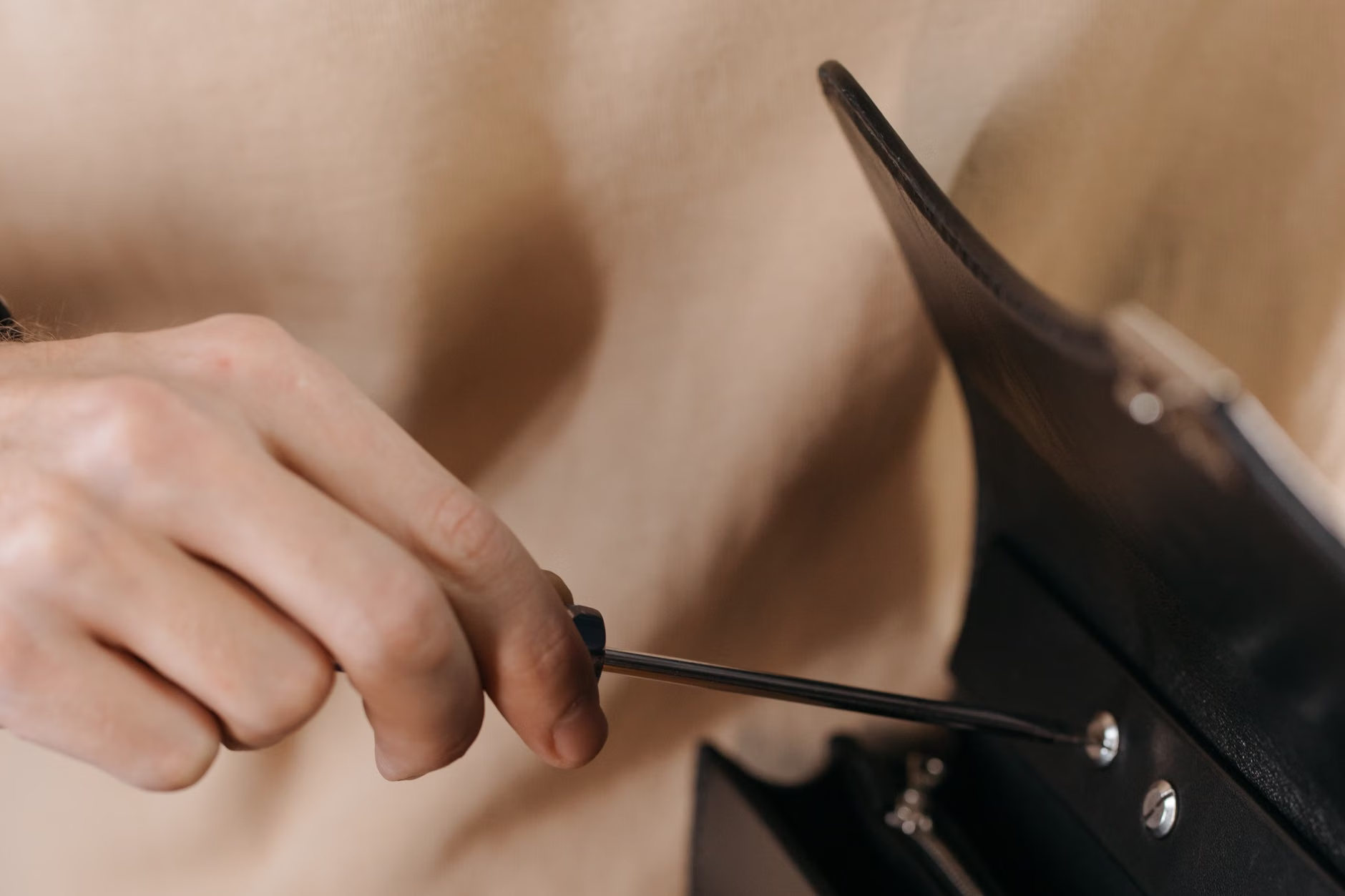
Think of it like buying a house. You wouldn’t buy a fixer-upper without accounting for the roof repairs. A vintage leather bag might look great in photos, but if the glazing (the protective coating on the edges) is cracking or the lining is sticky, you are looking at an additional $150 to $300 in professional repair costs.
| Cost Factor | Consideration for the Buyer |
|---|---|
| Purchase Price | Ensure it is at least 30-40% below current retail for a “Good” condition item. |
| Authentication Fee | Check if the platform includes this or if you need to pay a third party (e.g., Entrupy). |
| Maintenance | Factor in leather spa services, hardware polishing, or professional cleaning. |
| Resale Potential | Choose neutral colors (black, tan, navy) for the highest liquidity. |
If you find a bag for $1,200 that requires $300 in repairs, your real cost is $1,500. Always compare this “real cost” to the price of a brand-new alternative or a slightly more expensive, mint-condition version of the same bag. Often, the mint-condition item is the better deal because it saves you the time and stress of managing repairs.
How to Spot a “Fake” in the Digital Age
Counterfeits have become frighteningly sophisticated. In the industry, we call these “superfakes”—items that use high-quality leather and near-perfect hardware, designed specifically to fool standard authentication checks. As a consumer, your best defense is to buy from platforms that provide physical authentication, not just digital verification.
Never rely on photos alone. If a seller on a peer-to-peer marketplace (like eBay or Poshmark) refuses to provide clear, high-resolution photos of the date code, the stitching, and the underside of the hardware, walk away. These are the “tells” that counterfeiters struggle to replicate perfectly.
Here is a checklist for your pre-purchase inspection:
- The Hardware Test: Authentic luxury hardware is usually heavy, solid, and does not chip. If the gold plating looks like it’s peeling off to reveal silver or plastic underneath, it is a red flag.
- The Stitching Test: Look for consistency. High-end brands use a specific thread tension. If the stitches are uneven, slanted, or look like they were done by a standard sewing machine, be extremely cautious.
- The Smell Test: This is harder to do online, but it’s a classic for a reason. High-quality leather has a distinct, earthy scent. Synthetic materials or cheap “bonded” leather often smell like chemicals or glue.
Why “Condition” is Subjective and How to Manage It
Every marketplace has its own grading scale: “Excellent,” “Very Good,” “Good,” and “Fair.” These are not standardized across the industry. A “Good” bag on one platform might be considered “Fair” on another. This is where your ability to read between the lines is crucial.
When you see a description that says “signs of wear consistent with age,” ask for specific, high-contrast photos of those areas. If the seller is vague, assume the damage is worse than they are letting on. A common trick is to photograph the item in low light or from a distance to hide scuffs or hardware tarnishing. If the seller can’t provide a photo under bright, direct light, it’s a warning sign.
For parents, I highly recommend looking for “durable” materials. While lambskin is buttery soft and luxurious, it is notoriously fragile. It scratches if you look at it the wrong way. If you are carrying a diaper bag or juggling kids, look for grained leathers (like caviar or pebbled leather). They are much more forgiving, show fewer scratches, and maintain their “newness” for years longer than smooth skins.
The Psychology of “The Investment Piece”
We often tell ourselves we are buying an “investment piece” to justify the expense. But let’s be honest: most luxury goods are consumption, not investments. They don’t pay dividends, and they require storage and care. However, they *can* be stores of value if you choose correctly.
The most stable items are those that have been in production for 20+ years. Brands like Hermès, Chanel, and Louis Vuitton have specific models that are effectively “currency.” Because these brands raise their retail prices annually, the second-hand market for these specific models tends to track upward as well. If you buy a classic model in good condition, you are likely to get most of your money back if you decide to sell it three years later. This is the definition of a “smart” luxury purchase.
Avoid buying “seasonal” colors. While a lime green bag might look fun for a summer, it is incredibly difficult to resell. If you want to play with trends, do it with accessories (scarves, small leather goods) or lower-priced items. Keep your main “investment” purchases in neutral tones like black, taupe, or navy.
Building Your Personal “Luxury Archive”
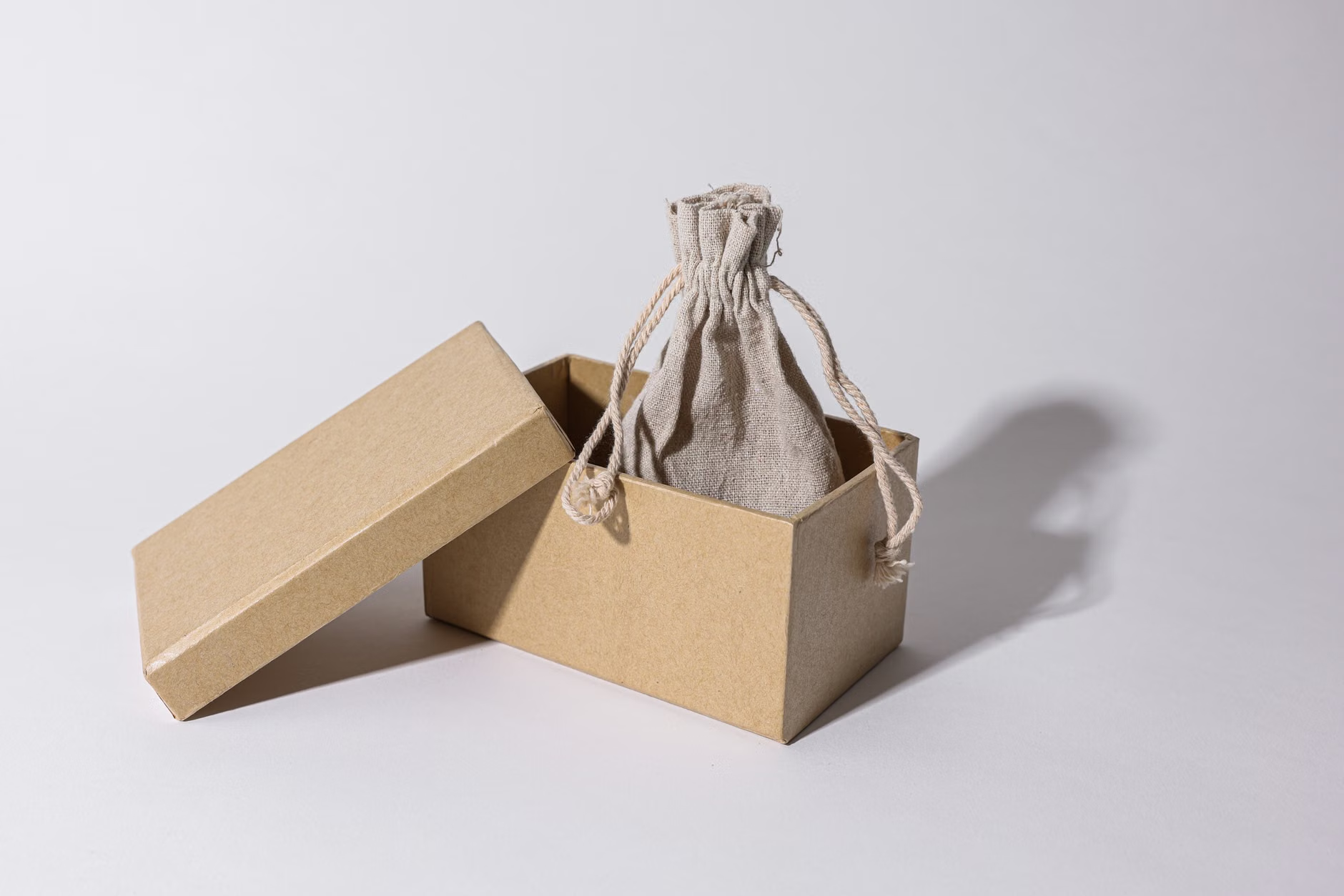
If you decide to start building a collection, treat it like an archive. Keep everything. The original dust bag, the authenticity card, the box, and even the original receipt (with your personal info redacted). When you eventually decide to trade up or sell, having the full “set” can increase the resale value by 10% to 15%.
This is a significant difference. If you are selling a bag for $2,000, that 15% is $300—the cost of a professional cleaning or a nice dinner out. It’s a simple habit that pays off in the long run.
Also, consider the storage environment. Luxury leather is a natural material. It needs to breathe. Don’t store your bags in plastic bins, which can trap moisture and cause mold. Use the dust bags provided, and if you live in a humid climate, keep a few silica gel packets in the closet to prevent moisture damage. These small, low-effort habits preserve the value of your purchase for years.
Practical Next Steps for the Modern Shopper
If you are ready to make your first purchase, don’t rush. Start by observing the market for a month. Pick three models you like and track their prices on two or three reputable sites. You will quickly learn what a “good” price looks like versus a “desperation” price.
Step-by-step approach:
- Research: Identify the specific model and color you want.
- Monitor: Check prices across platforms for 4 weeks to understand the “floor” price.
- Verify: Only buy from platforms that offer a money-back guarantee on authenticity.
- Inspect: Once it arrives, document the condition immediately. If it doesn’t match the listing, initiate a return process right away.
- Maintain: Use the right products (leather conditioner vs. cleaner) and store them properly.
The second-hand luxury movement is a fantastic way to enjoy high-quality goods without the guilt of overconsumption. It rewards the patient, the observant, and the practical. By treating your purchases with the same logic you apply to your household budget, you can build a collection that brings you joy and retains its value through the years.
Frequently Asked Questions
Q: Is it ever worth buying an item that needs repair?
A: Only if the total cost (purchase price + repair) is significantly lower than the market price for an item in “Excellent” condition. Always get a quote from a specialist repair shop before you commit to the purchase.
Q: How do I know if a seller is trustworthy on peer-to-peer sites?
A: Look for sellers with long account histories and consistent positive feedback. Avoid “new” accounts with no history selling high-value items at prices that seem “too good to be true.” If the price is 70% off market value, it is almost certainly a scam.
Q: What is the single best material for a long-lasting luxury bag?
A: Grained or pebbled leathers are generally the most durable. They resist scratches and maintain their structure better than smooth, soft leathers like lambskin or unlined suede.
For further reading on luxury market trends and authentication standards, you can check the official reports from the Business of Fashion regarding the secondary market growth, or visit the brand-specific repair pages on official manufacturer websites to understand the cost of long-term maintenance.
Remember: the goal is to enjoy the item. If you’re too afraid to use it because you’re worried about wear, it isn’t serving its purpose. Buy quality, care for it, and enjoy it. That is the true essence of luxury.