The most effective way to guarantee a successful harvest in your own backyard is not by purchasing expensive, mass-produced seeds from a global catalog, but by planting seeds that have already proven they can thrive in your specific neighborhood’s micro-climate.
- Climate Adaptation: Seeds passed down through local swaps have been naturally selected to survive your specific temperature fluctuations, soil pH, and local pest pressures.
- Cost-Efficiency: Participating in hyper-local seed swaps effectively reduces your gardening startup costs to near zero, while providing access to heirloom varieties rarely found in big-box stores.
- Community Resilience: Beyond the garden, these swaps serve as a low-pressure social anchor, helping busy parents and professionals build genuine, trust-based connections within their immediate vicinity.
If you have ever spent an entire weekend preparing garden beds, purchasing high-end seedlings, and meticulously watering them, only to watch them wither during a freak frost or a sudden heatwave, you understand the frustration of gardening against the odds. The “hyper-local” seed swap movement is the antidote to this cycle. It is a trend gaining massive traction among adults in their 30s and 40s who are looking for ways to integrate sustainable, hands-on activities into their busy lives without the steep learning curve of commercial agriculture.
Why Your Backyard Needs ‘Native-Adjacent’ Genetics
When you buy seeds from a large national or international distributor, you are often buying seeds that have been bred for “general” success. These plants are designed to look good in a catalog and survive shipping. However, they lack the “memory” of your specific environment. A seed that has been saved for three generations by your neighbor three blocks over has already survived your specific rainfall patterns, your local soil mineral content, and the specific insects that plague your zip code.
This is the essence of epigenetics in the garden. Plants adapt to their surroundings, and by saving seeds from the strongest, most resilient plants in your immediate area, you are effectively breeding a version of that plant that is perfectly tuned to your life. For a parent balancing a full-time job and childcare, the goal is not to become a full-time farmer, but to maximize the success of a few high-yield plants. A tomato plant that is already “acclimated” to your neighborhood requires less intervention, less fertilizer, and less water to thrive.
Consider the common mistake of “catalog reliance.” Many new gardeners assume that if a plant is labeled “easy to grow,” it will be easy to grow everywhere. This is a fallacy. A plant deemed “hardy” in a temperate zone might struggle in a high-humidity coastal region. By sourcing seeds from people within a 5-to-10-mile radius, you ensure the genetic material is already optimized for your specific frost dates and sunlight exposure.
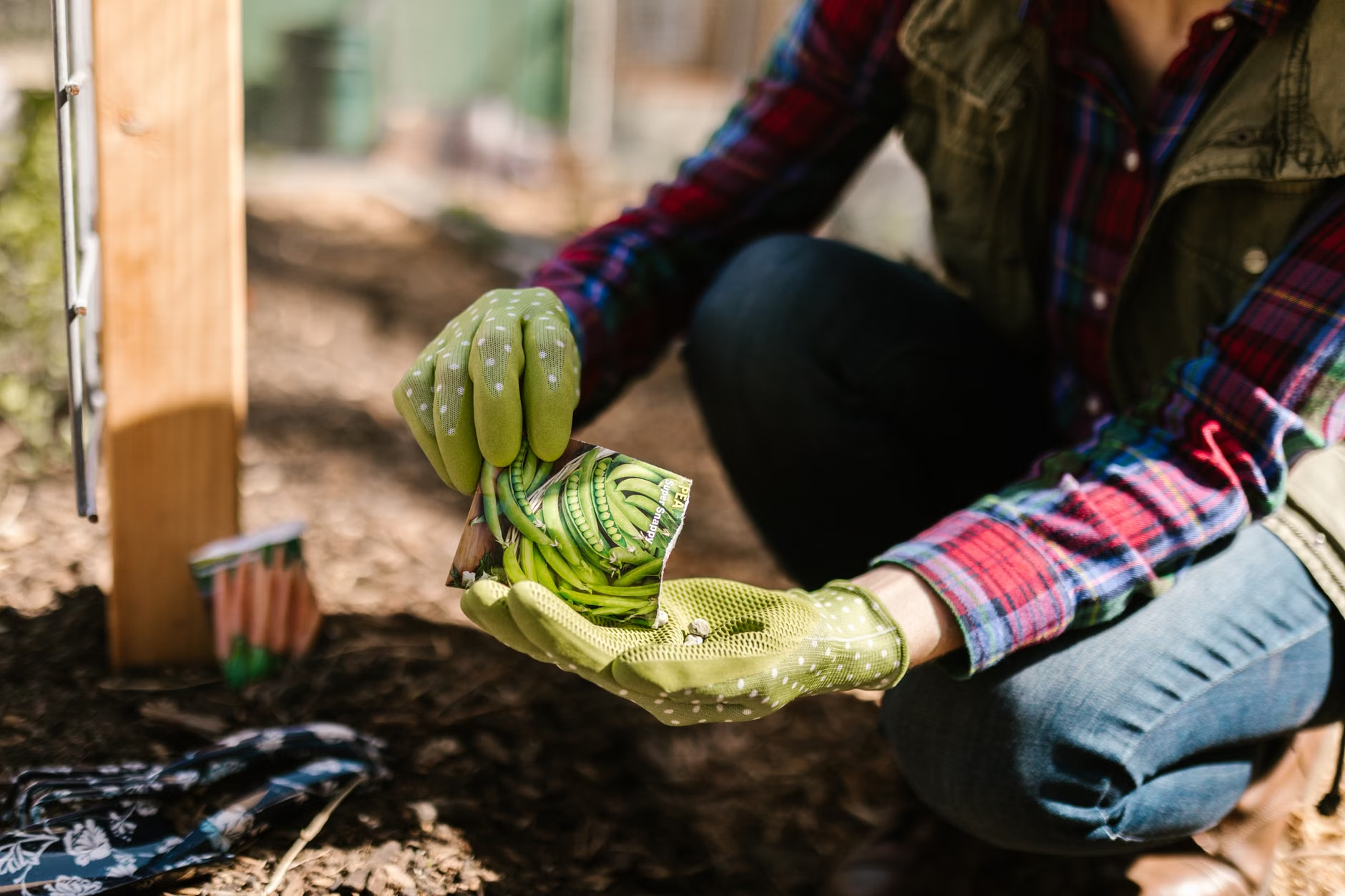
The Mechanics of a Successful Hyper-Local Swap
A hyper-local seed swap is significantly more intimate and effective than a large-scale gardening expo. Because these events are often organized via neighborhood apps (like Nextdoor or local Facebook groups) or through community libraries, they operate on a basis of high trust and low transaction cost. To get started, you don’t need to be an expert; you just need to be organized.
Step-by-Step Guide to Hosting or Joining a Swap:
| Phase | Actionable Task |
|---|---|
| Preparation | Organize seeds in clear, labeled paper envelopes. Include the plant variety, the year harvested, and any notes on its performance (e.g., “thrived in shade”). |
| Verification | Ensure seeds are “open-pollinated” or “heirloom.” Avoid F1 hybrids, as they do not grow “true to type” in the next generation. |
| The Swap | Focus on conversation. Ask the swapper: “How did this handle the dry spell in July?” rather than just taking the packet. |
The most common mistake beginners make is bringing commercial seed packets that they never opened. While this is helpful for the community, the real value lies in “saved seeds.” If you are just starting, bring packets of high-quality, non-GMO seeds you purchased to trade for the “local gems” that others have brought. Over time, you will transition to trading your own saved seeds, which is where the real community value is built.
The Hidden Social Infrastructure of Gardening
For those of us in our 30s and 40s, finding time to build new friendships can feel like another item on a never-ending to-do list. The hyper-local seed swap acts as a “third space”—a social environment that isn’t work or home. Because the interaction is centered around a shared, productive hobby, the social friction is extremely low.
Unlike a networking event or a sports league, a seed swap has a natural “on-ramp” and “off-ramp.” You talk about the seeds, share a quick tip about dealing with aphids, swap contact info if you want to, and move on. It is a low-stakes, high-reward social structure. It is particularly valuable for parents, as it provides a way to model community participation for children. Showing your child that food comes from a local, collaborative effort rather than just a grocery store shelf is a powerful, understated lesson in sustainability.
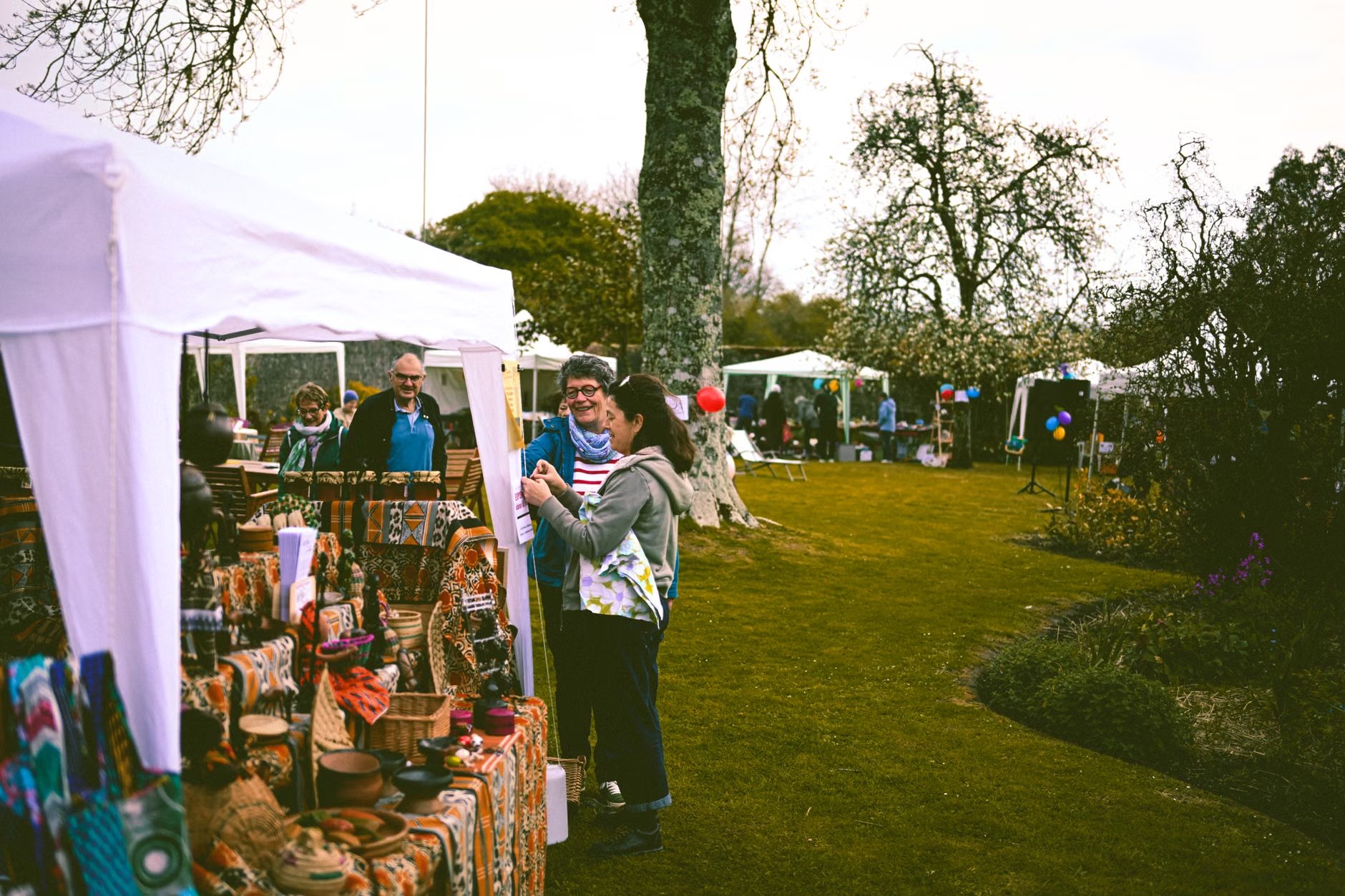
Addressing the Risks: Pests, Pathogens, and Privacy
While the benefits are clear, it is important to address the reality of “swapping” biological material. One of the biggest concerns for serious gardeners is the transmission of soil-borne pathogens or pests. When you receive seeds from a stranger, you have no way of knowing if their garden was infested with something like powdery mildew or root-knot nematodes.
Decision Criteria for Safe Swapping:
- Visual Inspection: Always check the seeds for signs of mold, discoloration, or tiny holes (which indicate insect damage). If the seeds look “off,” don’t plant them.
- Source Vetting: Prioritize swapping with people you can talk to. If someone can explain exactly how they processed and stored their seeds, the risk of contamination drops significantly.
- Quarantine Protocol: If you are unsure about the health of a seed batch, start them in a separate container away from your main garden beds. If they show signs of disease, destroy them rather than introducing them to your soil.
Another consideration is privacy. In the age of digital apps, ensure that your swap event is held in a public space (like a community park or library) rather than at a private residence, especially if you are coordinating through an online platform. Keep your home address private until you have established a long-term, trusted relationship with your gardening peers.
Beyond the Garden: The Economic Reality of Seed Saving
Let’s talk numbers. A single packet of heirloom seeds from a specialty boutique can cost between $4 and $8. If you are planting 20 varieties, that’s a $160 investment before you even buy soil or fertilizer. By entering the hyper-local swap economy, you reduce that cost to the price of paper envelopes and a pen.
However, the real economic benefit is “yield reliability.” If you save seeds from a zucchini plant that produced 15 fruits per plant in your local conditions, you are essentially guaranteeing a higher return on your labor. In commercial farming, this is what professional growers call “performance optimization.” In your backyard, it just means you aren’t spending time and water on plants that aren’t going to produce.
Furthermore, you are preserving genetic diversity. Commercial seed catalogs are increasingly consolidating, with many companies owned by a handful of global conglomerates. By swapping heirloom and open-pollinated seeds locally, you are participating in a decentralized network that keeps rare, delicious, and hardy varieties alive. This is not just a trend; it is a form of local food security.
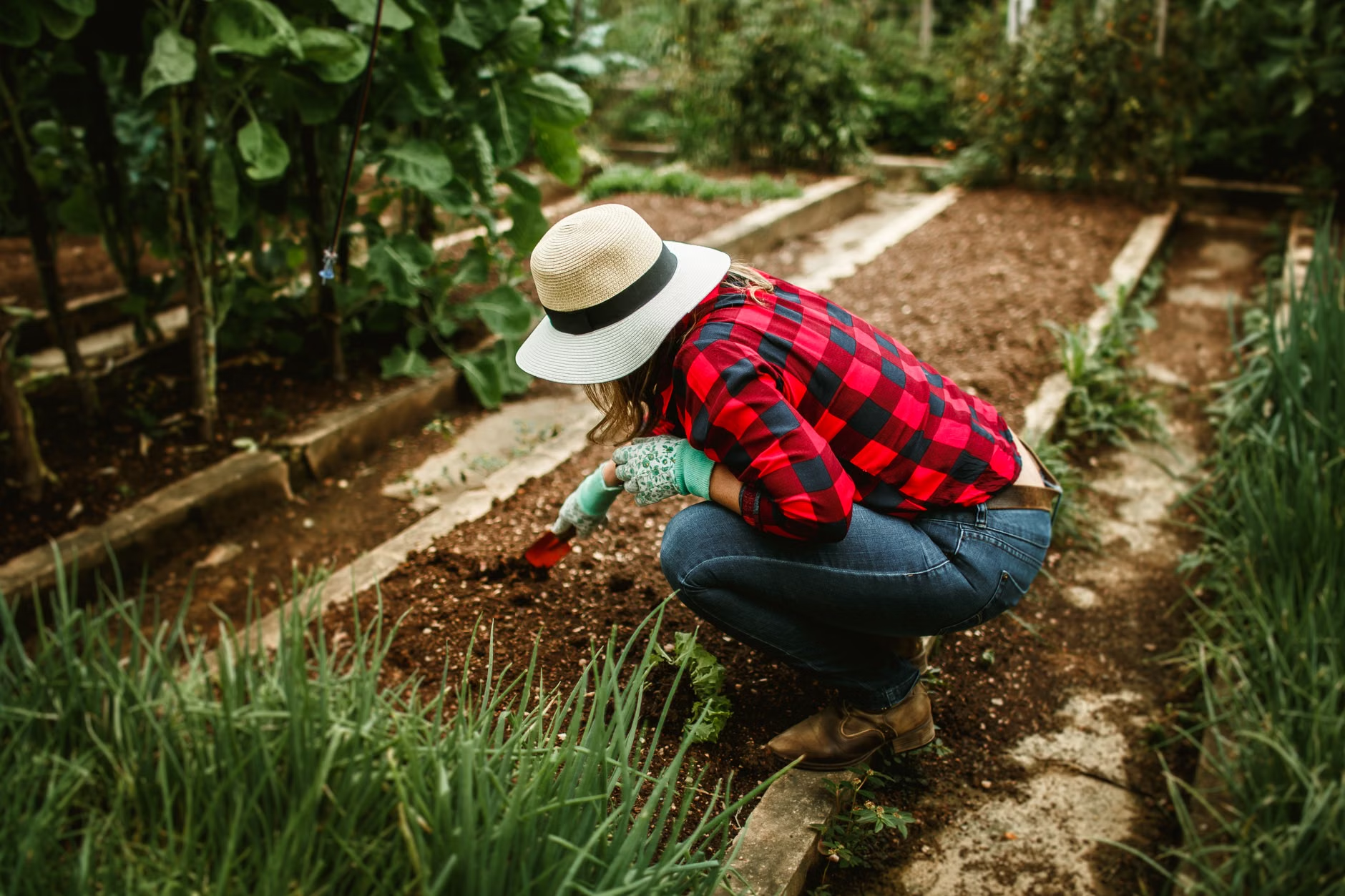
Practical Implementation: Starting Your Own Seed Library
If you find that your neighborhood doesn’t have a formal swap, don’t wait for one to appear. You can start a “seed library” with very little effort. A simple wooden box placed in a community center, a church lobby, or even a weather-proof box on a front porch can serve as a hub. The “take a seed, leave a seed” model is self-sustaining and requires only minimal maintenance.
When starting a hub, post a simple list of “rules” on the lid:
- Only share open-pollinated or heirloom varieties (no hybrids).
- Include the name of the plant and the year it was harvested.
- If you are a beginner, it is okay to take seeds without leaving any yet—just commit to bringing some back at the end of the season.
This creates a culture of reciprocity. By setting these simple, clear expectations, you prevent the library from becoming a dumping ground for low-quality or expired commercial seeds.
Common Misconceptions and Troubleshooting
A common misconception is that “all seeds are the same.” People often think that a tomato seed is just a tomato seed. However, the genetic variation within species is massive. Another issue is storage. Many people try to store seeds in their garage or shed, where temperature fluctuations destroy the embryo inside the seed. Seeds should be stored in a cool, dark, and dry place. A simple silica gel packet in a glass jar kept in a closet is often better than any fancy garden shed storage.
If you find that your seeds are not germinating, check your storage conditions first. If you are getting seeds from others, ask them, “How did you dry these?” If they weren’t dried properly before being bagged, they may have molded internally, even if they look fine on the outside. This is a common “hidden” issue that experienced gardeners learn to navigate through trial and error.
For those working with limited space—such as balcony gardeners or those with small urban plots—the hyper-local approach is even more critical. You don’t have the luxury of “testing” 20 varieties to see which one works. You need the one that is guaranteed to perform. Sourcing from a neighbor who has successfully grown a plant on a similar-sized balcony provides you with a “proven performer” that is statistically much more likely to succeed in your specific light and wind conditions.
The Future of Your Local Food System
As we look toward a future where supply chains may become increasingly volatile, the ability to produce even a small percentage of your own food is a valuable skill. But it isn’t just about survival; it’s about the quality of life. The flavor of a tomato grown from a locally-adapted, heirloom seed is objectively different from the flavor of a mass-market tomato picked green and ripened in a shipping container. The nutritional density, the texture, and the sheer joy of harvesting something you helped “evolve” to fit your life is unmatched.
The hyper-local seed swap is a bridge between the convenience of modern life and the wisdom of traditional agriculture. It allows you to be part of a community that values resilience, quality, and connection. As you move forward, remember that the most important thing you can do is start small. You don’t need a massive garden to make a difference. You just need a few envelopes, a curious mind, and a willingness to share what you have with the person living next door.
The next time you see a neighbor working in their garden, don’t just wave. Ask them what they are growing and if they have any seeds to share. You might be surprised by how quickly a simple question can lead to a more bountiful garden and a stronger community. Gardening is, at its heart, a practice of patience, but the rewards—both in food and in friendship—are worth every bit of the effort.
Frequently Asked Questions
- What if I am a complete beginner and have no seeds to swap?
That is perfectly fine. Most community seed swaps are designed to be inclusive. You can start by attending and asking questions. Many experienced gardeners are happy to provide “starter” seeds to newcomers, provided you show a genuine interest in learning how to grow them and hopefully return some seeds in the future. - Are there any legal or regulatory issues with seed swapping?
In most regions, non-commercial seed swapping between individuals is unregulated. However, if you are planning to organize a large-scale event, it is always a good idea to check with your local agricultural extension office or community center to ensure you are complying with any local bylaws regarding public gatherings or the distribution of plant materials. - How long do seeds actually stay viable for swapping?
It varies by species. While some seeds, like parsnips, have a short shelf life (1-2 years), others, like tomatoes and beans, can remain viable for 4-5 years or longer if stored correctly. Always check the harvest year on the label. If you are unsure, you can perform a simple “germination test” by placing a few seeds on a damp paper towel in a warm spot to see if they sprout before you commit to planting a whole tray.
For further reading on heirloom varieties and community seed saving, you can explore the resources provided by the Seed Savers Exchange, which offers extensive guides on how to preserve genetic diversity in your own backyard.