- The “Rail-First” Rule: Prioritize train routes for coastal trips to avoid the “bottleneck effect” of seasonal highway traffic, which often turns 3-hour drives into 6-hour endurance tests.
- Hidden Economic Value: While train tickets may look pricier than gas, they effectively eliminate parking fees, rental car insurance, and the “fatigue tax” of driving, often resulting in lower total trip costs.
- The Mobility Shift: Using rail allows for “hub-and-spoke” travel, where you stay in a walkable coastal town and use local transit, significantly reducing the logistical burden on parents.
If you are in your 30s or 40s, you know the specific, quiet horror of being trapped in a car on a coastal highway with a toddler who has decided that today is the day they hate their car seat. You are three hours into a drive that should have taken two, the GPS is flashing a deep, angry red, and the “scenic route” has become a parking lot of other frustrated families. This is the reality of modern family travel, where the dream of a relaxing coastal getaway is frequently crushed by the logistics of getting there.
The “Rail-First” strategy is a shift in perspective. Instead of treating the car as the default, you treat the train as the primary vessel for your journey, using the car only as a last resort. This isn’t just about being eco-friendly; it is about reclaiming your sanity and your time. When you choose the rails, you aren’t just moving from point A to point B; you are changing the nature of the travel experience from a high-stress endurance test into a manageable, often enjoyable, part of the vacation.
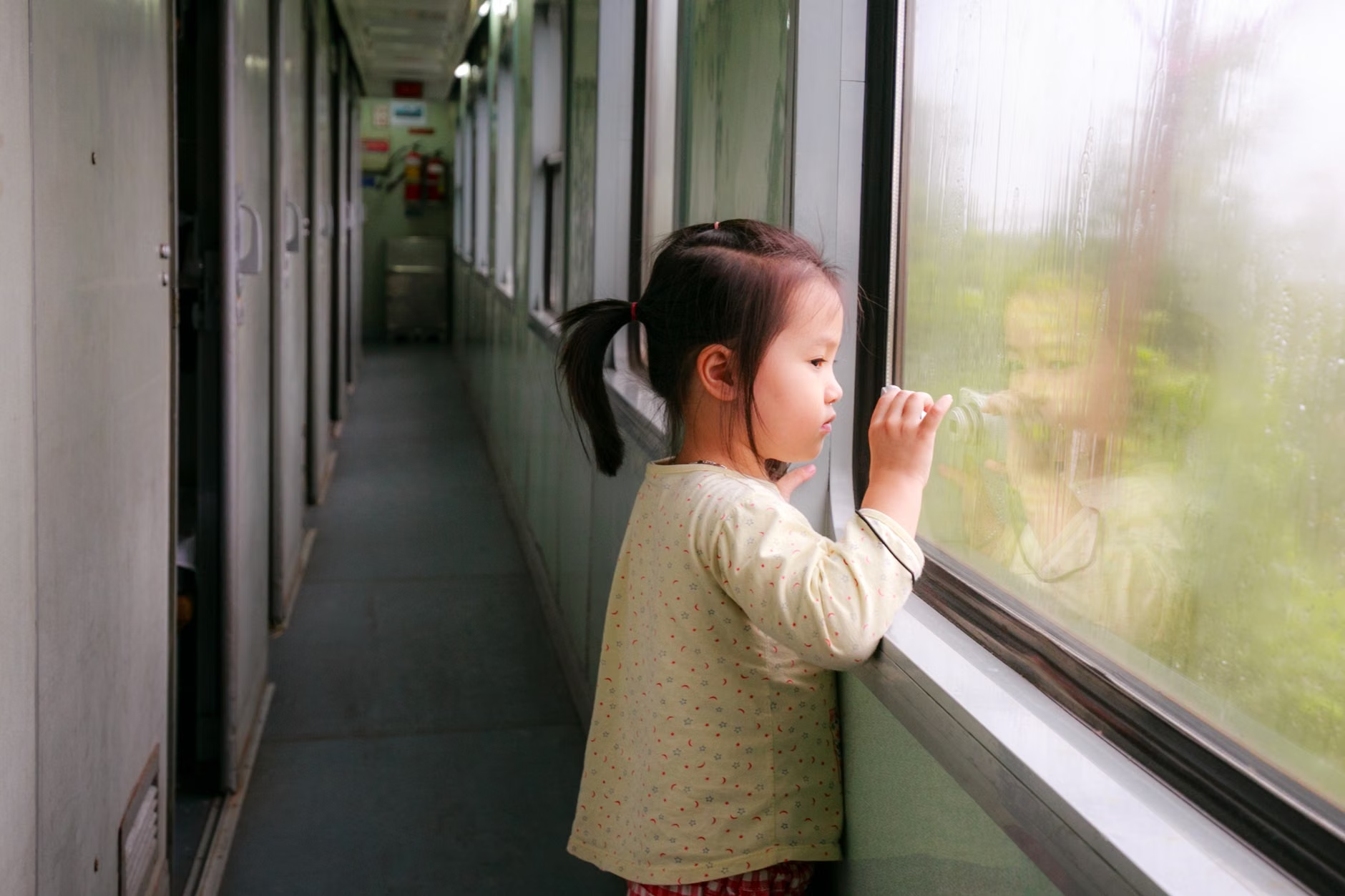
Why Coastal Highway Traffic is the Ultimate Parent Trap
Coastal regions are notorious for “bottleneck geography.” Because these areas are often defined by a single main road or highway running parallel to the water, any surge in tourism leads to total gridlock. For parents, this is a nightmare. Unlike solo travelers or younger couples who might shrug off a traffic jam, parents have a ticking clock: the nap schedule, the snack schedule, and the “how long until we can get out of this seat” threshold.
The “bottleneck effect” doesn’t just add time; it introduces unpredictability. When you drive, you are at the mercy of road accidents, construction, and peak holiday traffic. Research on travel stress consistently shows that “active control” (driving) is significantly more taxing than “passive travel” (being a passenger). When you drive, you are constantly processing visual information, managing road hazards, and navigating. By shifting to rail, you move from an active, high-stress role to a passive, low-stress role, freeing up your cognitive bandwidth to actually interact with your children.
Let’s look at a typical scenario: A family of four traveling from a major city to a coastal resort town 200 miles away. If you drive, you are looking at roughly 4 hours of driving under ideal conditions. On a holiday weekend, this often balloons to 6 or 7 hours. If you take the train, the travel time is fixed. The track doesn’t get “congested” in the way a highway does. You might have to navigate a station, but once you are on the train, your arrival time is largely set in stone. This predictability is the single most valuable asset for a parent.
Calculating the “Fatigue Tax” and Hidden Costs
A common argument against rail travel is the perceived higher cost. People look at the price of four train tickets and compare it strictly to the price of a tank of gas. This is a flawed calculation. To truly compare the costs, you need to account for the “Fatigue Tax” and the hidden costs of car travel.
When you drive, you are paying for more than just gasoline. You are paying for vehicle depreciation, potential parking fees in tourist-heavy coastal towns, and the cost of convenience food you buy because you are too tired to pack a proper lunch. If you are renting a car, you have to add the daily rental fee and insurance.
| Expense Category | Driving (Personal Car) | Rail Travel |
|---|---|---|
| Fuel/Tickets | Low (Gas only) | High (Per person) |
| Parking Fees | High (Coastal premiums) | Zero |
| Rental/Wear & Tear | Significant | None |
| Stress/Fatigue | High | Low |
| Total Real Cost | Often Higher | Often Lower |
The “Fatigue Tax” is the cost of your time and energy. If you arrive at your destination exhausted from a 7-hour drive, you have effectively “wasted” the first day of your vacation. You aren’t playing on the beach; you are recovering in the hotel room. When you factor in the value of your time—your hourly rate multiplied by the hours lost to traffic—the train almost always wins. It allows you to step off the train and head straight to the beach, refreshed and ready to engage.
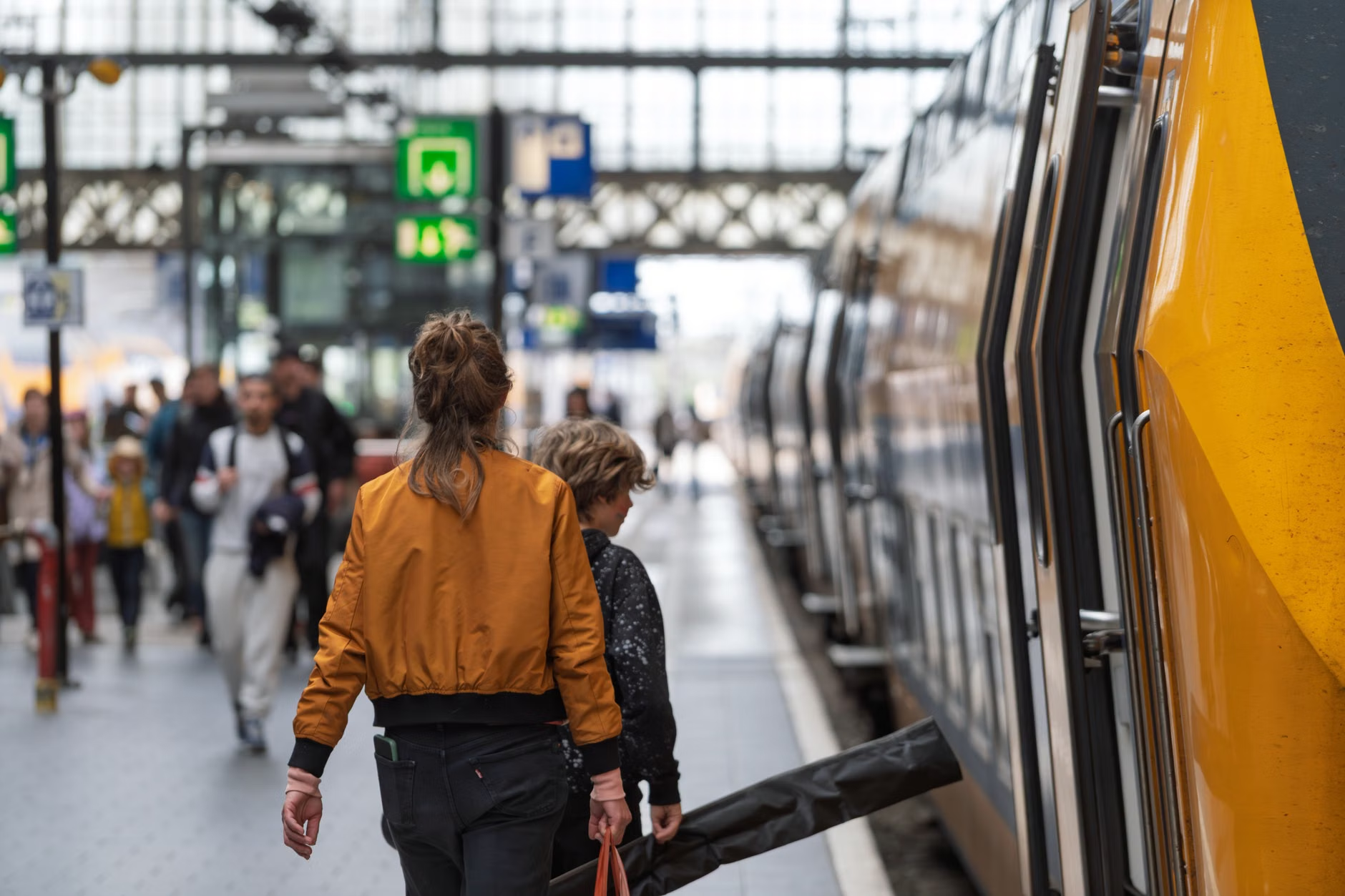
Executing the “Rail-First” Strategy: Step-by-Step
Moving to a rail-first model requires a change in how you plan your itinerary. It isn’t just about booking a ticket; it’s about optimizing your entire trip around the station-to-hotel connection.
Step 1: The “Hub-and-Spoke” Selection
Choose a destination that is truly walkable or well-connected by local transit from the train station. This is the “hub.” If your destination requires a car to get to the grocery store, the beach, and the restaurant, it is not a good candidate for a rail-first trip. Look for coastal towns that have invested in pedestrian infrastructure. Many European coastal towns, and an increasing number of North American seaside destinations, are designed with the train station as the central point of arrival.
Step 2: The “Light-Load” Packing Standard
The biggest barrier to train travel is luggage. If you are hauling three massive suitcases, a stroller, and a portable crib, the train becomes a logistical nightmare. The rail-first strategy demands a minimalist approach. Use packing cubes, rent bulky gear (like cribs or beach chairs) at your destination, or use a luggage forwarding service if you are traveling for an extended period. If you can carry it, you can take the train.
Step 3: Station-Level Logistics
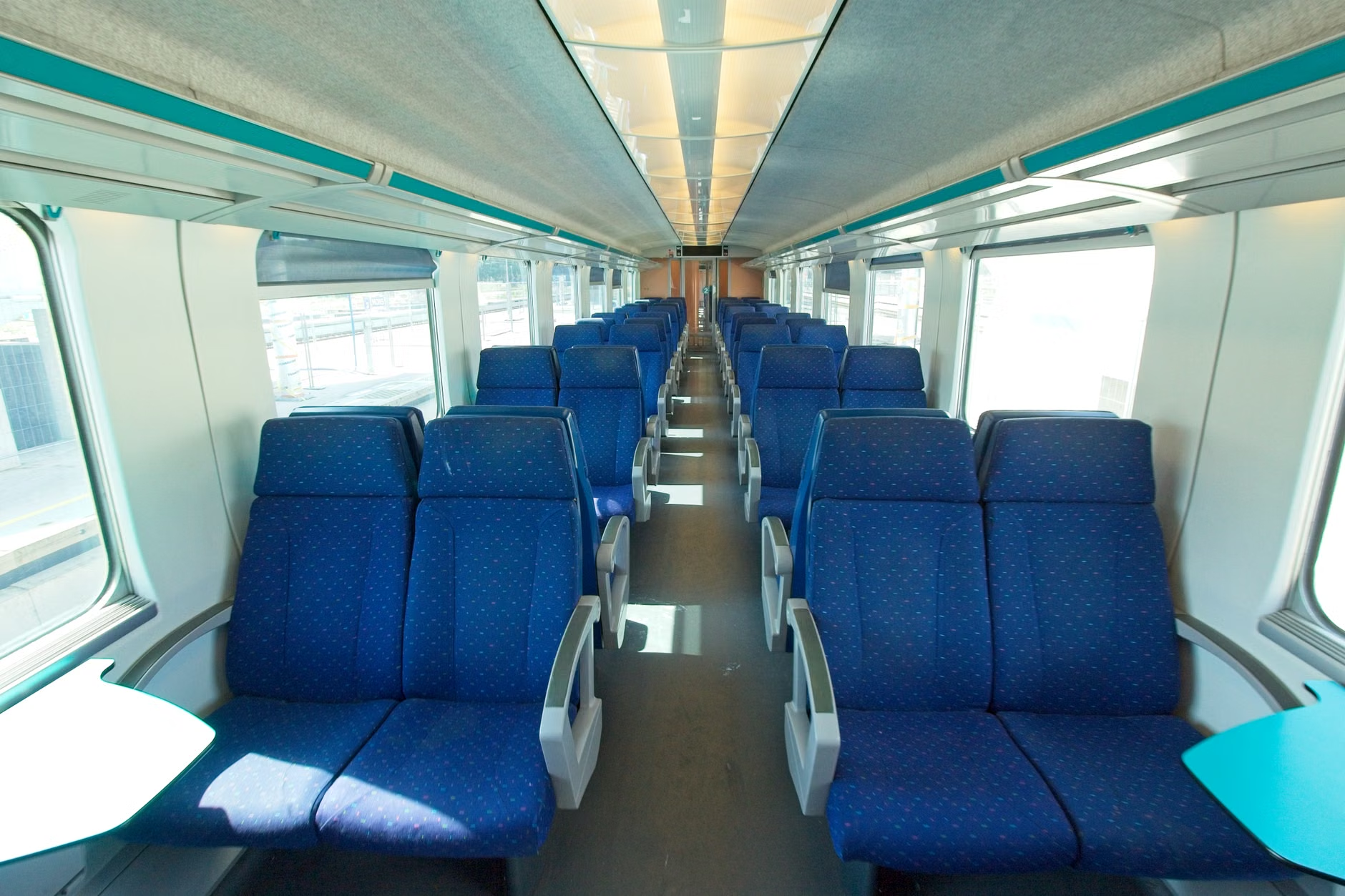
Always arrive at the station 30 minutes before departure. This isn’t for security theater; it’s to ensure you have time to find your platform, get the kids to the bathroom, and secure your luggage without rushing. If you are traveling with young children, choose seats with a table. This is the “golden ticket” for rail travel. It provides a flat surface for coloring, tablets, or snacks, which keeps children occupied in a way that a standard airline-style seat never will.
Overcoming Common Misconceptions and Hurdles
Many parents avoid trains because they fear the “public space” aspect. They worry about their child having a meltdown in front of strangers. Here is the reality: a meltdown on a train is significantly easier to manage than a meltdown in a car at 65 mph. On a train, you can stand up. You can walk to the vestibule. You can visit the cafe car. You have space to move. In a car, you are strapped into a small box where the only solution to a tantrum is to pull over on the shoulder of a highway, which is often dangerous and rarely solves the underlying issue.
Another misconception is that trains are “inflexible.” People feel that having a car gives them “freedom.” But is it really freedom if you are stuck in a traffic jam? True freedom is the ability to use your travel time productively. On a train, you can read, play games with your kids, or even catch up on work. You are not tethered to the steering wheel. You are free to be a parent, not a chauffeur.
The Hidden Variables: When Rail-First Needs Adjustment
While the rail-first strategy is generally superior, it isn’t a universal law. There are specific conditions where you might need to revert to a car. For instance, if your destination is a remote coastal village with no public transit, the “last mile” problem (getting from the station to your accommodation) might be too expensive or difficult to manage with a family. In these cases, look for a “hybrid” approach: take the train to the nearest major hub and rent a car for the final leg, or use a local taxi/rideshare service.
Be aware of the “off-peak” trap. In some regions, train schedules are drastically reduced during off-peak seasons or on weekends. Always check the official transit operator’s website for the specific dates of your travel. A route that looks perfect on a Tuesday afternoon might be non-existent on a Sunday morning. Use tools like Rome2Rio or local transit authority apps to verify schedules in real-time before finalizing your hotel booking.
Finalizing Your Decision: The “Rail-First” Mindset
The transition to a rail-first travel strategy is ultimately about choosing a different kind of experience. It is a choice to prioritize the journey over the destination. When you arrive at the coast by train, you have already spent hours together as a family, undistracted and un-stressed. You haven’t spent your energy fighting for a lane on the highway. You have arrived ready to enjoy the water and the sand.
If you are planning your next trip, start by looking at a rail map of your target region. If a train line runs parallel to the coast, that is your primary route. Plan your accommodation around the stations, pack light, and embrace the rhythm of the rails. It might feel like a radical change at first, but once you experience the ease of arriving at a coastal town without the headache of parking and highway rage, you will likely never want to drive to the beach again.
Start small if you are hesitant. Try a shorter, two-hour trip to a coastal town you already know. Once you see how much more relaxed your children—and you—are when you aren’t trapped in a car, the logistical effort of planning a rail trip will seem like a small price to pay for the massive gain in vacation quality.
Frequently Asked Questions
Q: What if my children are too young to sit still for a long train ride?
A: Train travel is actually easier for young children than car travel. Unlike a car, a train offers the freedom to move. You can walk your child through the carriages, visit the cafe car for a change of scenery, and sit in a seat with a table for activities. If your child is struggling, the ability to change their environment without stopping the entire journey is a massive advantage over being stuck in a car seat.
Q: Is rail travel really cheaper when you account for tickets for the whole family?
A: It depends on the distance and the number of people, but you must calculate the “total cost of ownership” for the trip. Add up gas, tolls, parking fees at your destination, and the cost of renting a car if you don’t own one. Often, the savings on parking alone (which can be $30-$50 per day in popular coastal towns) cover a significant portion of the train tickets. Use a travel cost calculator to compare the two options honestly.
Q: What is the best way to handle luggage on a train with kids?
A: The key is the “one-bag-per-person” rule. If you have children, they should have their own small backpack with their activities and a change of clothes. Use a single, large suitcase for the family’s shared items. If you are struggling to manage luggage, look for trains that offer luggage storage or consider using a luggage forwarding service, which is becoming increasingly common in major tourist regions and allows you to travel hands-free.
For more information on planning your rail journey, you can visit the official websites of major regional rail operators, such as Amtrak in North America or Eurail for international travel, both of which offer route planners that help you calculate travel times and connectivity.
Note: This guide is intended for informational purposes. Always check local transit policies, as rules regarding strollers, luggage, and child seating vary by carrier and country.