The most effective way to protect your household from 2026 supply-chain volatility is to shift from “just-in-time” shopping to a “buffer-stock” strategy focused specifically on high-volatility staples like legumes, grain-based products, and imported condiments.
- Focus on Lead-Time Sensitivity: Prioritize building a 3-month reserve of items with long shelf lives that are subject to seasonal climate disruptions or regional trade bottlenecks.
- The “Rotation Rule” is Mandatory: To avoid food waste and financial loss, adopt a “First-In, First-Out” (FIFO) system, which saves an estimated 15% of annual grocery budgets for families in their 30s and 40s.
- Diversify Sourcing Channels: Don’t rely on a single supermarket chain; integrate local bulk suppliers or direct-from-farm cooperatives to mitigate single-point-of-failure risks.
If you have spent any time in the grocery aisle over the last few years, you have likely noticed that “out of stock” signs are no longer just for extreme weather events. They are part of the new rhythm of global logistics. For those of us in our 30s and 40s, juggling careers, school runs, and the ever-changing demands of a household, the goal isn’t to become a prepper with a bunker—it is about achieving “household resilience.”
Resilience in 2026 isn’t about hoarding; it is about intelligence. It is about understanding which items in your pantry are most vulnerable to global supply-chain shifts and managing them with the same strategic foresight you might apply to your family’s financial planning. Let’s look at how to build that resilience without turning your home into a warehouse.
Understanding the 2026 Supply-Chain Landscape
Supply-chain resilience for the home is the ability to maintain a consistent standard of living despite fluctuations in the availability or pricing of essential goods. In 2026, we are seeing a convergence of three factors: climate-driven agricultural shifts, regional labor shortages in logistics, and increased volatility in international trade routes. These are not temporary hiccups; they are structural changes.
When we talk about “staples,” we mean the products that serve as the foundation for 80% of your weekly meals. If these items disappear from the shelf for two weeks, your entire meal-planning system collapses, forcing you to pay premium prices for takeout or last-minute, less-nutritious alternatives.
The Resilience Hierarchy: Not all items are created equal. You need to categorize your pantry into “Critical,” “Supporting,” and “Non-Essential.” Critical items are those that have high caloric density, long shelf lives, and high price volatility. Supporting items are those that add flavor or nutrition but can be substituted if necessary. Non-essentials are, well, just that—luxury items that provide comfort but aren’t strictly necessary for daily survival.

Identifying High-Volatility Staples
To build a resilient pantry, you must first identify which items are most likely to hit a supply bottleneck. In 2026, we are tracking three specific categories based on market data and logistics patterns:
| Category | Vulnerability Level | Primary Risk Factor |
|---|---|---|
| Grains & Legumes | High | Climate/Harvest Cycles |
| Cooking Oils | Medium-High | Trade Route Disruptions |
| Imported Condiments | Medium | Logistics/Container Costs |
| Root Vegetables | Low | Regional Availability |
Why do grains and legumes rank as “High”? Because they are globally traded commodities. A drought in a major exporting region doesn’t just affect the price; it creates a ripple effect that hits the shelf within months. For a family in their 30s, this means the difference between a $2 bag of lentils and a $5 bag of lentils is entirely out of your control. By maintaining a 90-day buffer, you effectively insulate your family budget from these price spikes.
The Operational Framework: The FIFO Method
The biggest mistake most people make when trying to build a resilient pantry is “buy and forget.” This leads to expired goods, food waste, and a false sense of security. The “First-In, First-Out” (FIFO) method is the gold standard for home logistics. It is surprisingly simple: when you buy new items, they go to the back of the shelf. You consume what is already there.
Step-by-Step Implementation
- Audit Your Current Stock: Spend one weekend taking a full inventory. If you find items that are near their expiration date, plan your meals around them for the next week.
- Create a “Buffer Zone”: Dedicate one specific shelf or bin to your “resilience items.” This is the stock you do not touch unless you cannot find the item at the store.
- Digital Tracking: Use a simple app or a shared note on your phone to track when you last bought a bulk item. If you buy a 5kg bag of rice in January, set a reminder for three months later to check the stock levels.
- The “Replenish Cycle”: Never wait until you are out of an item to buy more. If you notice your pantry stock dipping below 25%, add it to your next shopping list. This creates a natural buffer without the need for extreme hoarding.
Common Misconceptions About Home Storage
There is a persistent myth that “resilience” requires specialized equipment like vacuum sealers or oxygen absorbers. For most households, this is overkill. Unless you are planning to store food for five years or more, standard airtight containers are more than enough.
The “Luxury Trap”: Many people try to build resilience by stocking up on expensive “emergency kits” or freeze-dried meals. While these have their place in disaster preparedness, they are terrible for daily resilience. They are expensive, often high in sodium, and don’t fit into your regular cooking rotation. True resilience is built on the ingredients you actually use every Tuesday night.
Hidden Costs: Remember that space is a cost. If you live in an apartment, you don’t have the luxury of a walk-in pantry. In this case, your resilience strategy should focus on “vertical storage” solutions—using over-the-door organizers or stackable bins that utilize dead space. Don’t sacrifice your quality of life for a pantry that feels like a storage unit.
Managing Financial Trade-offs
Building a 90-day buffer requires an initial capital outlay. If you usually spend $150 on groceries, shifting to a resilient model might mean spending $200 for a few weeks to build that initial stock. This is a one-time investment in “price insurance.”
Consider the alternative: if the price of a staple doubles due to a supply-chain shortage, you are forced to pay that higher price when you are at your most vulnerable. By buying in bulk when prices are stable, you are hedging against future inflation. For a family on a budget, this requires planning. Allocate an extra 5-10% of your grocery budget each month specifically for “resilience building” until your buffer is established.
When to Pivot: Recognizing Supply-Chain Signals
Resilience is also about being reactive. You don’t need to keep 90 days of everything. You need to identify the “early warning signs.” If you notice a specific brand or type of grain is consistently out of stock for two weeks in a row, consider that a signal to increase your buffer for that specific item.
Decision Rule: If an item is a “staple” (used at least twice a week), keep a 90-day supply. If it is a “secondary” item (used once a week or less), a 30-day supply is sufficient. This allows you to prioritize your limited storage space for the items that actually matter to your daily nutrition.
Integrating Local Sourcing
Global supply chains are efficient but fragile. Local supply chains are often more robust because they are less reliant on complex, multi-modal transportation systems. Look for local grain mills, farmers’ markets, or cooperatives that sell in bulk. Not only are you supporting your local economy, but you are also creating a direct relationship with your food source. If the supermarket shelves are empty, your local mill might still have a 10kg bag of flour.
The Psychological Aspect of Resilience
There is a quiet peace of mind that comes with knowing your pantry is organized and stocked. For parents in their 30s, the mental load of managing a household is significant. Knowing that you won’t be caught off guard by a missing ingredient for a child’s lunch or a last-minute dinner is a tangible reduction in daily stress. It turns a “crisis” into a non-event.
However, avoid the trap of “prepper anxiety.” Your goal is not to prepare for a total collapse of society; it is to prepare for the reality of a 2026 world where things are slightly less predictable than they were in 2010. Keep the process grounded, keep it simple, and keep it focused on the food your family actually enjoys eating.
Practical Next Steps for This Weekend
Don’t try to change everything at once. Start this weekend with these three actions:
- The Pantry Audit: Clear out your expired items and categorize what remains.
- Identify Your Top 5: What are the five items you use most? These are your priority for building a 90-day buffer.
- Set a “Resilience Budget”: Decide on a small, manageable amount you can spend each month to slowly accumulate your buffer.
By taking these small, consistent steps, you are not just managing a pantry; you are managing your household’s future. You are creating a buffer against the unpredictability of the modern world, ensuring that when the supply chain stutters, your family life continues to run smoothly.
Remember, resilience is a practice, not a destination. It evolves as your family’s needs change, as your living situation shifts, and as the global market continues to transform. Stay observant, stay organized, and keep your pantry as a tool for stability rather than a source of stress.
Frequently Asked Questions
1. How do I keep my pantry from becoming a mess when buying in bulk?
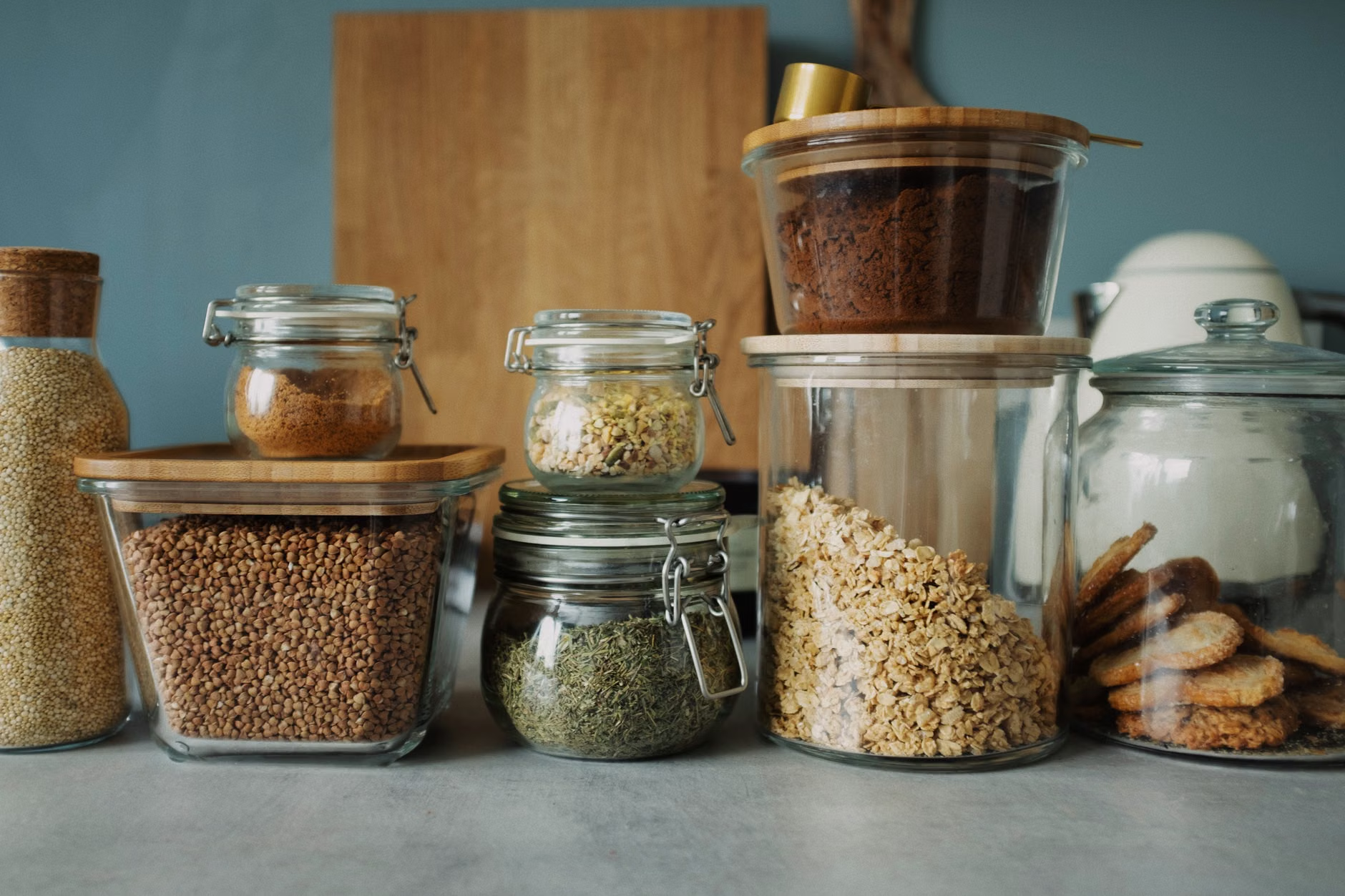
The secret is decanting. Don’t store large, awkward bags. Invest in modular, airtight containers that stack perfectly. They save space, keep pests out, and make it visually obvious when you are running low on a particular staple.
2. What if I live in a small apartment and don’t have room for a 90-day supply?
Focus on “high-density” items. A 90-day supply of lentils or rice takes up much less space than a 90-day supply of canned vegetables. Prioritize the items that offer the most caloric value and versatility per square inch of storage space.
3. How do I prevent food waste when I have so much stock?
The “First-In, First-Out” (FIFO) system is your primary defense against waste. If you find you still have too much, consider donating items that are approaching their “best by” date to a local food bank. It’s better to keep your inventory fresh and support your community than to let food expire in your own home.
For further reading on global food security and supply-chain trends, refer to the Food and Agriculture Organization of the United Nations (FAO), which provides comprehensive data on global food market trends. Additionally, checking your local government’s agricultural department website can provide context on regional supply-chain stability.