Living in a high-density urban area often means trading a backyard for a balcony or a quiet street for the constant hum of city traffic, but the most critical trade-off is often the unequal access to “green-space equity”—the fair distribution of parks, trees, and natural areas regardless of your neighborhood’s property value or density.
- The 3-30-300 Rule: Urban health experts suggest you should see 3 trees from your home, live in a neighborhood with 30% canopy cover, and be within 300 meters of a high-quality park for optimal mental and physical health.
- The Heat Island Effect: Concrete-heavy neighborhoods can be up to 7°C (12.6°F) hotter than leafier areas, directly impacting your energy bills and your children’s outdoor play time during summer.
- Advocacy is Local: Green-space equity isn’t just about massive city parks; it’s about small-scale “pocket parks” and street-level greenery that you can influence through local community boards and municipal planning petitions.
If you are in your 30s or 40s, you’ve likely felt the “nature deficit” creeping in. You’re juggling a career, perhaps managing school runs, and trying to keep the household running. When the weekend hits, the idea of trekking an hour to the nearest “real” forest feels like another chore rather than a break. This is where green-space equity becomes a tangible issue for your family’s daily life.
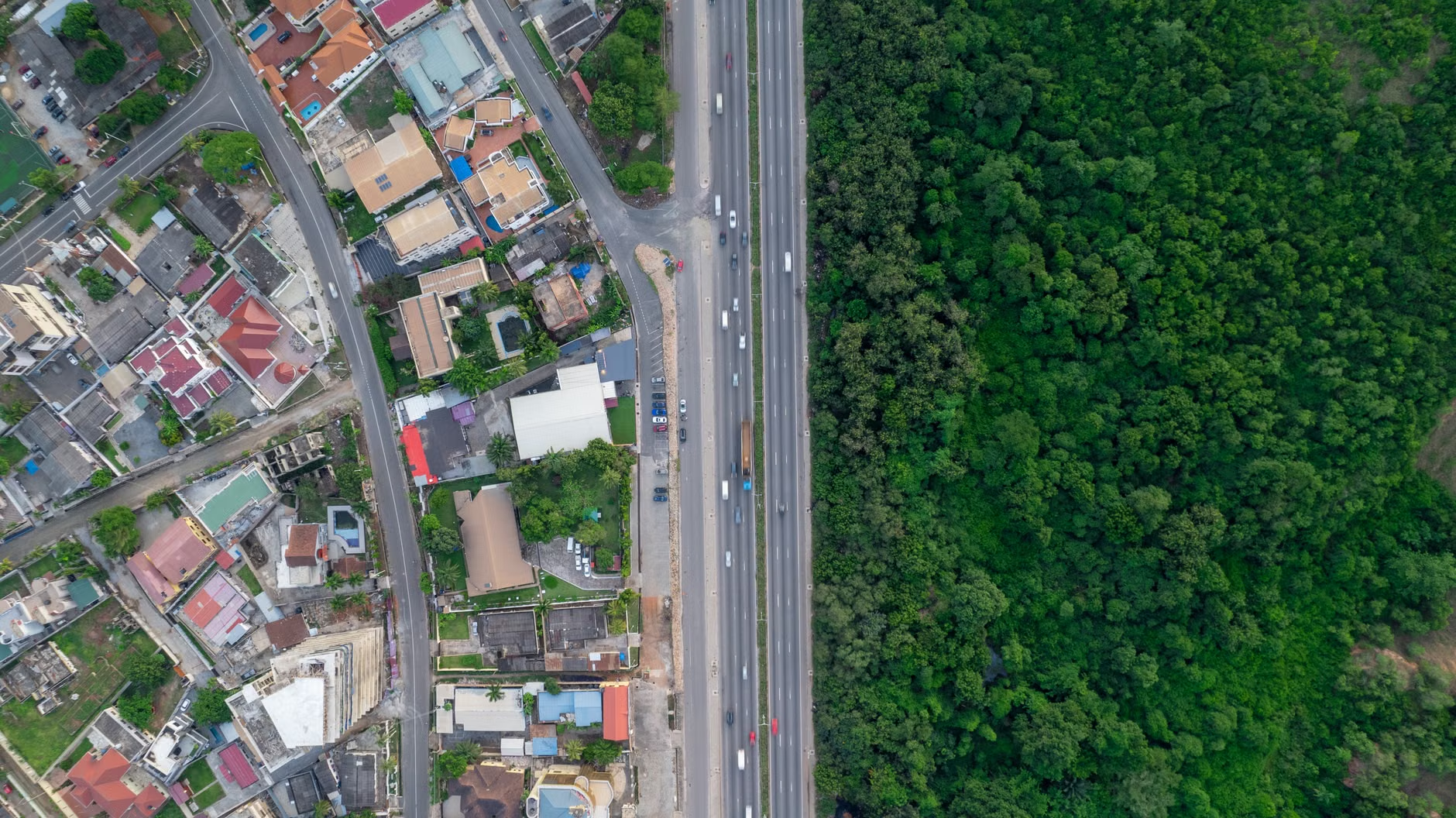
Understanding the Real Cost of Living in a Concrete Jungle
Most of us choose high-density living for the convenience—proximity to jobs, schools, and transit. However, urban planning data frequently reveals a stark disparity: affluent areas are often prioritized for tree canopy maintenance and park upgrades, while denser, lower-income, or middle-class zones are left with “grey infrastructure”—asphalt, concrete, and minimal vegetation. This isn’t just an aesthetic problem; it’s a public health disparity.
When we talk about equity, we are talking about the “Zip Code Effect.” Research published by the World Health Organization suggests that residents in areas with lower green-space access suffer from higher rates of cortisol-induced stress, respiratory issues due to poor air quality, and lower physical activity levels in children. If your neighborhood lacks a safe, green space, your children are statistically less likely to engage in “unstructured play,” which is vital for cognitive and social development.
Think about your daily routine. Does your walk to the grocery store or the school bus involve a stretch of shade? Or are you navigating heat-radiating pavement that makes even a 10-minute walk feel exhausting by mid-afternoon? This is the Urban Heat Island (UHI) effect in action. In cities like New York, London, or Singapore, the difference in temperature between a park-heavy district and a concrete-dense district can be significant enough to require higher air conditioning usage, leading to higher monthly utility costs for your family.
The 3-30-300 Rule: Your New Benchmark for Housing
If you are currently house-hunting or evaluating your current neighborhood, stop looking at “square footage” as your only metric. Start using the 3-30-300 rule, a framework popularized by urban forestry expert Cecil Konijnendijk. It’s a simple, actionable way to measure if your environment is supporting your family’s well-being.
| Metric | What it Means |
|---|---|
| 3 Trees | You should be able to see at least three trees from your living room or bedroom window. |
| 30% Canopy | Your neighborhood should have at least 30% tree canopy cover to regulate temperature and air quality. |
| 300 Meters | You should be able to reach a high-quality, safe public park or green space within a 300-meter walk. |
Why does this matter for your 30s and 40s? Because as our schedules tighten, the “friction” of nature access becomes the deciding factor. If a park is 1 kilometer away, you’ll drive there once a month. If it’s 300 meters away, you’ll walk there every evening after dinner. That frequency is what builds the habit of movement for your kids and the mental “reset” you need after a long day of screen time.
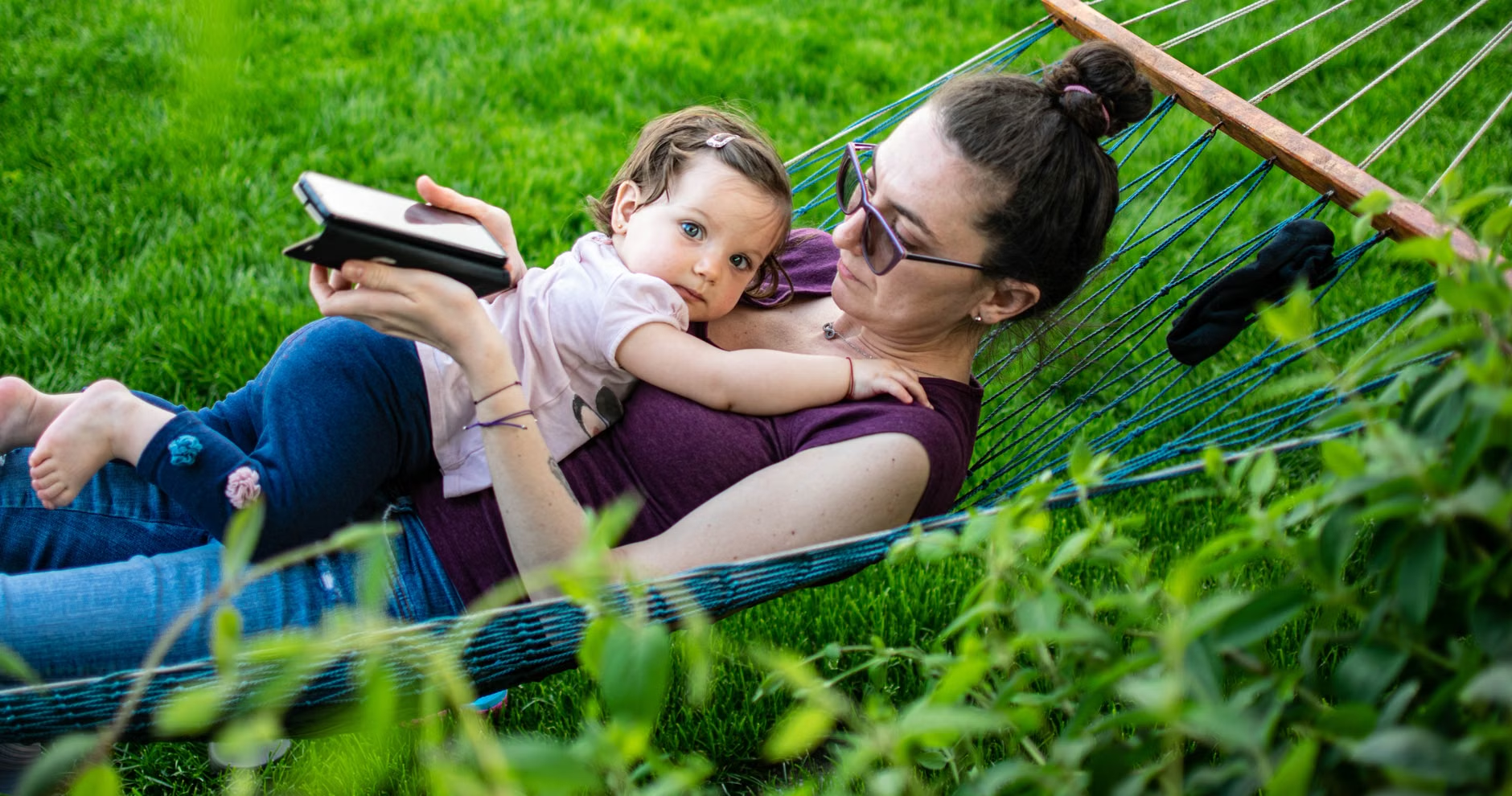
Practical Steps to Advocate for Green Equity in Your Neighborhood
You don’t need a degree in urban planning to demand better for your community. If you find that your area is lacking, you are likely part of a larger group of frustrated residents. The key is moving from “complaining” to “coordinating.”
1. Audit Your Local Access
Use platforms like Google Earth or local municipal GIS (Geographic Information System) maps to look at your neighborhood from above. Is it a sea of grey rooftops? Identify “unused” spaces—vacant lots, wide medians, or asphalt-heavy schoolyards that could be converted into “pocket parks” or rain gardens.
2. Engage with Local Community Boards
Most cities have neighborhood councils or community boards that hold public meetings. These are often boring, but they are where the budget for local infrastructure is allocated. Don’t go alone. Bring a neighbor who shares your concern. Focus your argument on safety and cooling—local governments are more likely to fund projects that reduce heat-related emergency calls or improve pedestrian safety than they are to fund “beautification.”
3. Support “Tactical Urbanism”
Sometimes, local governments are slow to act. Look for community-led initiatives like “guerrilla gardening” (with permission) or community-maintained planters. Even adding a few native plants to a barren street corner can improve the local micro-climate and foster a sense of shared responsibility among neighbors.
Common Mistake: Many parents focus only on playgrounds. While play equipment is great, a playground surrounded by nothing but hot rubber matting and metal fencing is not a true green space. Push for nature-based play areas—areas with shade trees, tall grasses, and natural topography—which are significantly better for child development than plastic slides on concrete.
The Hidden Costs of Green-Space Inequality
We often treat green space as a “luxury” or “nice-to-have,” but it is an economic and health-related necessity. The lack of green space is a “hidden tax” on your family. Consider the following trade-offs that parents in low-equity zones often face:
- The Healthcare Surcharge: Higher rates of asthma and respiratory issues in concrete-dense areas mean more frequent doctor visits, medication costs, and missed school days.
- The Cooling Premium: In a neighborhood with 30% less tree canopy, your cooling costs during summer months can be 10–15% higher than in a well-canopied neighborhood.
- The Socialization Gap: Green spaces serve as “third places”—neutral grounds where parents meet, children play, and social networks are built. A lack of these spaces leads to more isolated parenting experiences.
When you are evaluating a new home or neighborhood, look at the maintenance of the green spaces, not just their existence. A park that is overgrown, unlit, or poorly maintained is not an asset; it’s a liability. Check the city’s maintenance schedule. Is there a local “Friends of the Park” group? If there isn’t, consider it a signal that the community is not yet organized, and you might have to take the lead.
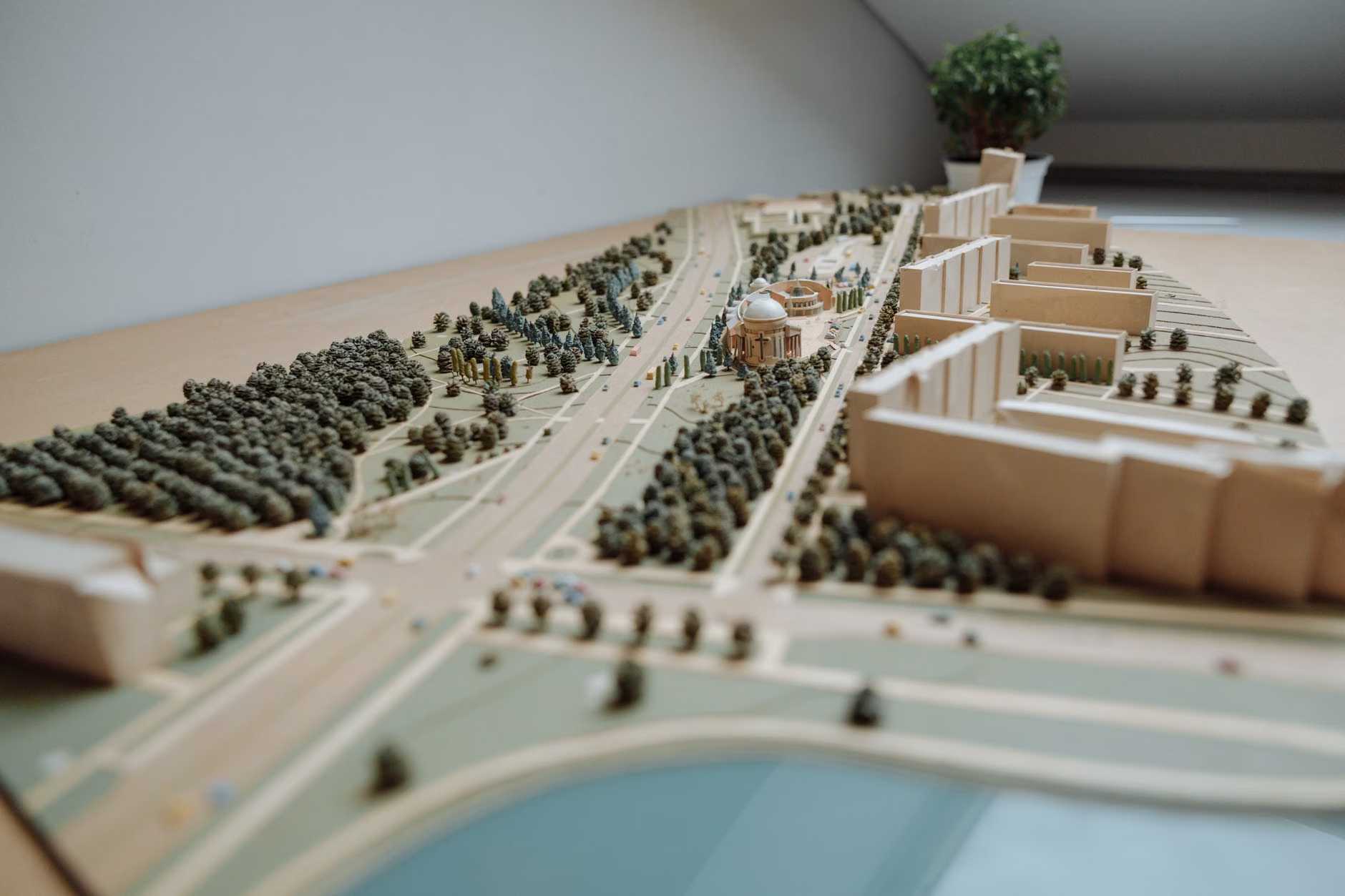
Making the “15-Minute City” Work for Your Life
The concept of the “15-minute city”—where everything you need is within a 15-minute walk or bike ride—is often debated, but the core principle holds true for families: proximity equals freedom. If you are stuck in a high-density zone that lacks nature, you are essentially “trapped” in your home or your car.
To improve your situation, you must prioritize “micro-greenery.” If your city won’t build a park, look for “green corridors.” These are paths that connect smaller green spots through tree-lined streets. Mapping these routes allows you to turn a mundane walk to the store into a nature-filled experience for your kids. Use tools like Strava or AllTrails to find these hidden walking routes in your own neighborhood that you might have missed while driving.
Decision Criterion: If you are choosing between two apartments, one with a slightly larger floor plan and one with slightly less space but closer proximity to a park, choose the park-side option. The extra square footage will eventually be filled with “stuff,” but the park provides an infinite, expanding space for your children to run, explore, and breathe. That is a permanent upgrade to your quality of life that no interior design can replicate.
Final Thoughts on Building Your Own Green Haven
Green-space equity is not just a policy goal; it is a movement toward reclaiming the city for human health. While we wait for city planners to catch up, we have to be proactive about our own environments. Whether it’s starting a balcony garden, lobbying for a tree-planting program on your block, or simply choosing to walk the “green” route instead of the “fast” route, every small action counts.
Remember that your advocacy for green space is an advocacy for your children’s right to grow up with a connection to the natural world, even in the heart of the city. Start with the 3-30-300 rule, talk to your neighbors, and don’t be afraid to ask your local council why your block is still missing its share of the canopy.
Frequently Asked Questions
1. Can I really influence urban planning as an individual?
Yes. Municipalities are highly responsive to organized groups. If you can get 5–10 neighbors to sign a petition for a specific project, like a community garden or street trees, you move from being a “complaining resident” to a “constituent with a proposal.” Contact your local city council representative’s office and ask for the “Department of Parks and Recreation” contact person for your district.
2. Is “green” always better, or can it lead to gentrification?
This is a valid concern known as “green gentrification.” When an area gets a beautiful new park, property values often rise, which can displace the very residents who needed the park most. When advocating for green spaces, it is crucial to also support policies like rent stabilization or affordable housing protections to ensure the community can afford to stay and enjoy the improvements they fought for.
3. How can I protect my children from air pollution while living in a high-density area?
Beyond advocating for more trees (which act as natural air filters), you can monitor local air quality using apps like IQAir. On days with high pollution, avoid outdoor play during peak traffic hours (usually morning and evening rush). Planting indoor air-purifying plants like snake plants or spider plants can also help improve the air quality inside your home.
Useful Resources:
– WHO Urban Health Fact Sheet
– C40 Cities: Climate Action in Urban Environments
– The Nature Conservancy: Urban Conservation Initiatives