- Specificity reduces meltdowns: When children can label their feelings as “frustrated” or “overwhelmed” rather than just “mad,” their brain’s prefrontal cortex activates, which helps calm their emotional response.
- Model, don’t lecture: You must verbally label your own complex emotions throughout the day to provide a blueprint for your child to follow.
- Context matters more than intensity: Focus on the “why” behind the emotion rather than trying to suppress the feeling itself, as this builds long-term emotional resilience.
If your child comes home from school and tells you they had a “bad” day, you are likely looking at a communication bottleneck. When a child’s emotional vocabulary is limited to basic terms like “happy,” “sad,” “mad,” or “scared,” they are essentially trying to express a complex symphony of internal states using a four-note instrument. This lack of nuance doesn’t just make it hard to talk to them; it makes it physically harder for them to regulate their nervous system.
Emotional granularity—the ability to identify and label specific emotions—is a cornerstone of emotional intelligence. For parents in their 30s and 40s juggling careers and household management, teaching this isn’t just another “parenting chore.” It is a practical survival strategy that leads to less shouting, fewer unexplained meltdowns, and more meaningful connections at the dinner table.

Why “I’m Mad” Is Actually a Failure of Communication
When a child says “I’m mad,” they are often experiencing a cocktail of feelings: disappointment, embarrassment, physical fatigue, or a sense of injustice. If they only have the word “mad,” they are forced to lump all those distinct sensations into one bucket. From a neurological perspective, labeling an emotion is known as “affect labeling.” Research from institutions like UCLA indicates that putting feelings into words can decrease activity in the amygdala—the brain’s alarm bell—and increase activity in the prefrontal cortex, which governs logic and impulse control.
Think of it like a dashboard in a car. If the only light you have is a generic “Engine Problem” sign, you’ll panic every time the car makes a noise. But if you have specific gauges for oil pressure, temperature, and battery life, you know exactly what to fix. For a school-aged child, “I’m mad” is the equivalent of that generic warning light. By expanding their vocabulary to include words like “frustrated,” “annoyed,” “jealous,” or “disappointed,” you are giving them the diagnostic tools to manage their own internal “engine.”
The Common Mistake: The “Good vs. Bad” Trap
Many of us were raised to categorize emotions as either “good” or “bad.” We label joy as good and anger or sadness as bad. When we do this, we inadvertently teach our children that certain feelings are “wrong” or “unacceptable.” This leads to emotional suppression. If a child believes being sad is “bad,” they will try to hide their sadness, which only makes the emotion fester and eventually explode in a less productive way.
Instead of good or bad, categorize emotions by their energy levels and valence (whether they feel pleasant or unpleasant). This allows a child to understand that it is okay to feel “low energy and unpleasant” (boredom) or “high energy and unpleasant” (anxiety). This distinction removes the moral judgment from their internal state.
Building the Vocabulary: A Step-by-Step Framework
You don’t need a degree in psychology to teach this. It requires consistency and a shift in how you narrate your own life. Here is a practical, four-stage approach to building emotional vocabulary for children aged 6 to 12.
Stage 1: Narrate Your Own Internal State
Children learn by watching, not by being told. If you are always “fine,” you are teaching them that emotions should be hidden. Start narrating your day using precise emotional labels. Instead of saying, “I’m tired,” try saying, “I feel a bit overwhelmed because my meeting ran late and I haven’t had a chance to finish my report.”
This does two things: it shows them that you also experience complex emotions, and it provides them with the vocabulary to describe their own overwhelming days. If you are frustrated with traffic, label it. If you are excited about a project, label it. The goal is to make the discussion of feelings as mundane as discussing the weather.
Stage 2: Use the “Emotion Wheel” Concept
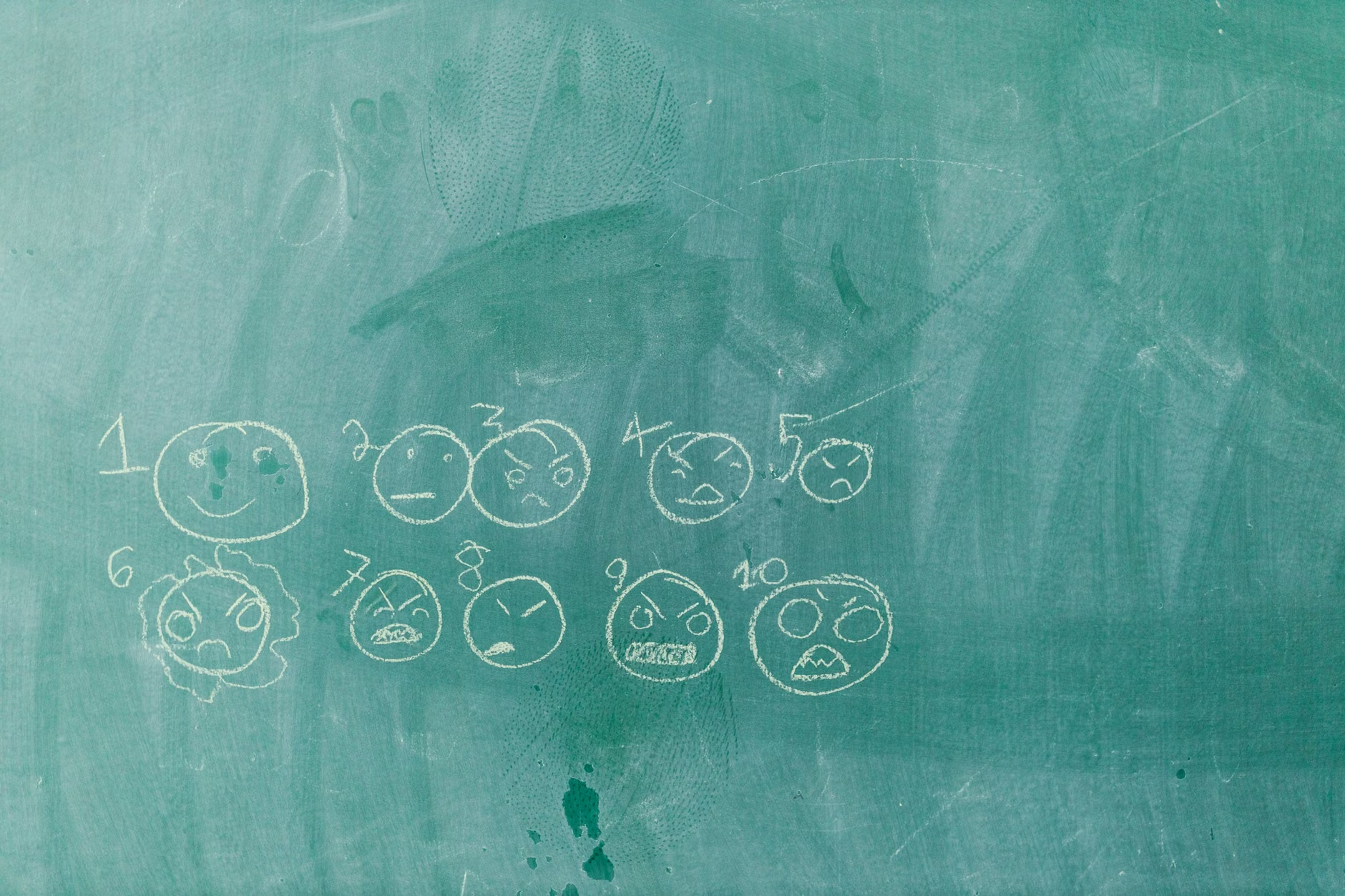
Visual aids are essential for school-aged kids. An emotion wheel is a circular chart that moves from core emotions in the center to more nuanced feelings on the outer rings. For example, the core emotion “Sad” branches out into “lonely,” “disappointed,” “ashamed,” and “grief.”
| Core Emotion | Nuanced Alternatives | Best Used When |
|---|---|---|
| Mad | Frustrated, Annoyed, Resentful, Betrayed | When a rule is broken or a goal is blocked. |
| Sad | Disappointed, Lonely, Melancholy, Hurt | When expectations aren’t met or social friction occurs. |
| Happy | Content, Excited, Proud, Relieved | When a task is finished or a milestone is reached. |
| Scared | Anxious, Nervous, Insecure, Apprehensive | When facing the unknown or a performance task. |
Keep this chart in a common area. When your child is struggling, ask them to point to a word on the wheel. This removes the pressure of having to articulate a complex feeling while they are in the middle of an emotional surge.

Stage 3: The “Name It to Tame It” Technique
Coined by Dr. Dan Siegel, this technique is about validating the feeling before trying to solve the problem. If your child is throwing a fit because they lost a game, do not start by explaining that “it’s just a game.” That invalidates their reality.
First, label it: “It looks like you’re feeling frustrated because you worked hard on that game and didn’t get the outcome you wanted.” Then, wait. Once they hear their emotion reflected back to them, they often stop the escalation because they feel understood. This is the moment where their prefrontal cortex comes back online and you can begin talking about what to do next.
Stage 4: Read and Reflect
Literature is one of the best ways to teach emotional literacy. When reading books or watching movies, pause to discuss the characters’ internal states. Ask, “Why do you think he reacted that way? Did he look sad, or was he actually feeling embarrassed?” This allows your child to analyze emotions in a safe, third-party context before applying those lessons to themselves.
The Hidden Variables: Why Some Days Are Harder
Even with a vast vocabulary, there are days when your child will struggle to express themselves. It is crucial to recognize that emotional regulation is heavily dependent on physiological factors. If your child is “hangry,” sleep-deprived, or overstimulated from a long day at school, their ability to access their vocabulary will be significantly lower.
Do not attempt to teach emotional vocabulary during a full-blown meltdown. That is not the time for a lesson; that is the time for co-regulation. Sit with them, offer a calm presence, and wait for the “storm” to pass. Once they have returned to a baseline state—perhaps after a snack or some quiet time—then you can revisit the moment: “Earlier, you were really upset. Looking back, do you think you were feeling frustrated or maybe just tired?”
Common Pitfalls to Avoid
- Forcing a label: Never force your child to pick a word if they can’t. If they say “I don’t know,” offer two choices: “Were you feeling frustrated, or were you feeling disappointed?”
- Dismissing their intensity: Even if their reaction seems disproportionate to the event (e.g., crying over a dropped pencil), the feeling is real to them. Validate the feeling, not the intensity.
- Over-analyzing: Don’t turn every interaction into a therapy session. Keep these conversations brief and focused on the present moment.
Integrating Emotional Growth into Daily Life
For parents in their 30s and 40s, time is the scarcest resource. You cannot add another hour of “emotional coaching” to your schedule. Instead, integrate these practices into your existing routines. When you are driving to school, ask, “How are you feeling about the day ahead? Are you feeling excited or maybe a little nervous?”
When you are having dinner, share one moment from your day where you felt a specific emotion. “I felt really proud today when I finished that project at work, but I was also feeling a bit anxious about the deadline.” This sets the tone for your family culture. It tells your children that it is safe to be human, to be imperfect, and to be articulate about their internal world.
Remember that emotional intelligence is a lifelong project, not a curriculum you finish. There will be days when you lose your cool and revert to “I’m just mad.” That is okay. Use those moments as a teaching opportunity: “I’m sorry I yelled earlier. I was feeling really overwhelmed and I didn’t handle it well. Next time, I need to take a break so I can express my frustration more calmly.”
By showing them how you handle your own emotional vocabulary, you provide the most powerful lesson they will ever receive. You are not just teaching them words; you are teaching them how to be masters of their own internal lives. This is a gift that will serve them far beyond their school years, impacting their future friendships, their professional relationships, and their own eventual journey into parenthood.
Frequently Asked Questions
Q: My child refuses to talk about their feelings. How do I get them to open up?
A: Do not make it a formal interview. Children often open up when they are doing something else, like playing with LEGO, drawing, or sitting in the car. Keep your questions open-ended and low-pressure. If they refuse, drop it and try again another time. The goal is to keep the door open, not to force a confession.
Q: Is it okay to show my child that I am sad or crying?
A: Absolutely. Seeing a parent experience and process sadness in a healthy way is incredibly educational for a child. It shows them that sadness is a natural human emotion and that it is temporary. Just be sure to explain it: “I’m feeling sad because I miss Grandma, but it’s okay, and I’ll feel better soon.”
Q: How do I handle it when my child uses their new vocabulary to ‘talk back’?
A: There is a difference between expressing a feeling and showing disrespect. If your child says, “I’m feeling frustrated with you right now because you told me to stop playing,” that is actually a success—they are labeling their emotion. You can validate the feeling while maintaining the boundary: “I hear that you’re frustrated, and it’s okay to feel that way. However, you still need to stop playing now because it’s time for dinner.”
For further reading on the science of emotional granularity and child development, visit the Harvard University Center on the Developing Child for evidence-based resources on executive function and self-regulation.