The most effective professional networking events today are defined by the quality of the conversation, not the strength of the bar tab. Shifting to a “zero-proof” hosting strategy doesn’t mean offering plain water or basic sodas; it means curating a sophisticated, inclusive environment that allows your guests to maintain their focus, health, and professional edge throughout the evening.
- Quality over quantity: Invest in craft ingredients like shrub syrups, botanical tonics, and high-end bitters to create “mocktails” that stand on their own as complex, adult beverages.
- Inclusivity as a competitive advantage: By removing alcohol as the centerpiece, you create a more equitable environment for colleagues with diverse cultural, religious, or health-conscious backgrounds.
- Design the flow: Networking is about connection; position your beverage station as a “tasting bar” to spark conversation and prevent the “what should I drink” awkwardness common at alcohol-free events.
Why the “Zero-Proof” Shift is Changing Professional Networking
You’ve likely noticed the trend: the “Friday night drinks” culture is rapidly losing its grip on the professional world. For those of us in our 30s and 40s, the trade-off—a poor night’s sleep, a foggy morning, and the inevitable “hangxiety”—simply doesn’t align with the demands of our careers or our roles as parents. The zero-proof movement is not just about sobriety; it is about performance optimization and professional intentionality.
When you host an event without alcohol, you are making a deliberate choice to prioritize clarity. Research into the “sober-curious” movement suggests that younger professionals and mid-career leaders are increasingly seeking environments where they can build genuine relationships without the artificial lubrication of ethanol. From a hosting perspective, this is a massive opportunity to stand out. An event that leaves your guests feeling energized rather than drained is an event they will remember for all the right reasons.
The Anatomy of a High-End Non-Alcoholic Beverage Program
The biggest mistake hosts make when transitioning to zero-proof is treating it as a “subtraction” exercise—taking away the alcohol without adding anything of value to fill the void. To succeed, you must approach the menu with the same rigor you would apply to a fine wine list.
1. Botanical and Complex Profiles
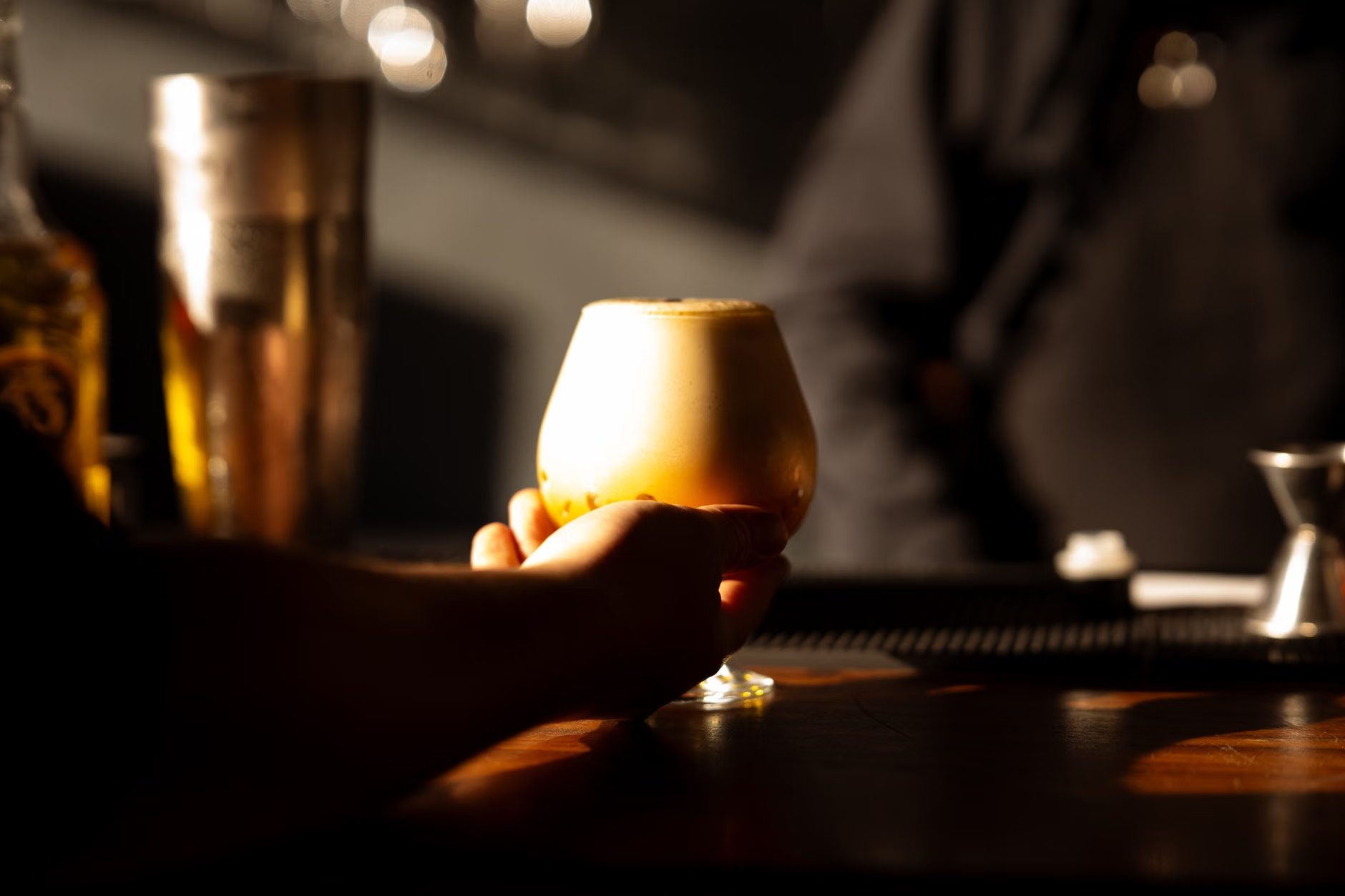
Alcohol provides “burn” and complexity. To replicate this experience, focus on ingredients that hit the palate in unique ways. Look for high-quality botanical distillates, which use herbs and spices to mimic the structure of gin or whiskey. Use shrubs (vinegar-based fruit syrups) to provide that sharp, acidic bite that keeps a drink from feeling like a child’s juice box.
2. The “Tasting Bar” Concept
Instead of a standard bar, create a “tasting bar” where a mixologist—or even an enthusiastic staff member—explains the profile of each drink. Is it smoky? Is it herbaceous? Does it have a spicy ginger finish? By framing the drinks as a culinary experience, you remove the stigma of “not drinking” and turn it into a shared activity of discovery.
3. Temperature and Glassware
Never serve a premium zero-proof drink in a plastic cup. The vessel changes the perception of value. Use coupe glasses, heavy-bottomed tumblers, and highball glasses. Ensure the ice is clear and the garnishes are fresh—think rosemary sprigs, dehydrated citrus wheels, or star anise. These small details signal to your guests that you have put thought into their experience.
| Ingredient Category | Role in the Drink | Best For |
|---|---|---|
| Shrubs/Vinegar Syrups | Acidity & Complexity | Mimicking the “bite” of spirits |
| Botanical Tonics | Aroma & Depth | Replacing gin-based profiles |
| Cold-Brewed Teas | Tannins & Mouthfeel | Replacing red wine or whiskey depth |
| Artisanal Sodas/Kombucha | Carbonation & Funk | Casual, refreshing mixers |
This table illustrates the trade-offs in flavor profiles. If you are hosting a formal evening event, lean toward shrubs and botanical tonics. If you are hosting a casual afternoon networking mixer, kombuchas and high-quality sodas are often more appropriate.
Designing the Environment to Foster Connection
When you remove the “bar” as the primary anchor of the room, you have to be more intentional about how you structure the space. Alcohol-centric events often rely on the bar as a physical destination where people congregate. In a zero-proof environment, you need to create other “gravitational pulls” to keep the conversation flowing.
Strategic Seating and Lighting
Avoid theater-style seating if your goal is networking. Use circular groupings that allow for fluid entry and exit. Lighting should be warm and dim enough to be comfortable, but bright enough to read faces and business cards. In the absence of alcohol, people are more observant of their surroundings; make sure your space is clean, well-lit, and inviting.
The “Interaction Prompt”
Consider introducing a low-stakes activity that forces interaction. This could be a blind tasting of different craft sodas or a “flavor pairing” board with snacks that complement the specific notes of your non-alcoholic drinks. By providing a shared point of focus, you remove the pressure on guests to constantly think of “networking small talk.”
Managing Expectations and Cultural Nuances
If your professional network is accustomed to traditional happy hours, you might encounter some resistance. The key to overcoming this is radical transparency and value-add. Don’t hide the fact that the event is alcohol-free; frame it as a “Wellness-Focused Networking Event” or a “Craft Mocktail Mixer.”
Addressing the “What Should I Drink?” Anxiety
People often feel awkward holding an empty hand or a generic glass of water. Ensure that as soon as a guest walks through the door, they are handed a drink. This simple act of hospitality is universal. It signals that they are taken care of and provides them with a “prop” to feel comfortable in the space.
Regional and Cultural Considerations
If you are hosting in a region where alcohol is deeply ingrained in professional culture (such as parts of Western Europe or the UK), emphasize the “premium” nature of the beverages. Conversely, in regions where alcohol consumption is limited for cultural or religious reasons (such as parts of the Middle East or Southeast Asia), the zero-proof approach is not only accepted but expected. Always research the local norms of your specific city—what is considered a “standard” networking event in New York may differ significantly from one in Tokyo or Dubai.
Common Mistakes to Avoid
Even with the best intentions, it is easy to fall into traps that make your event feel lackluster. Here are the most common pitfalls:
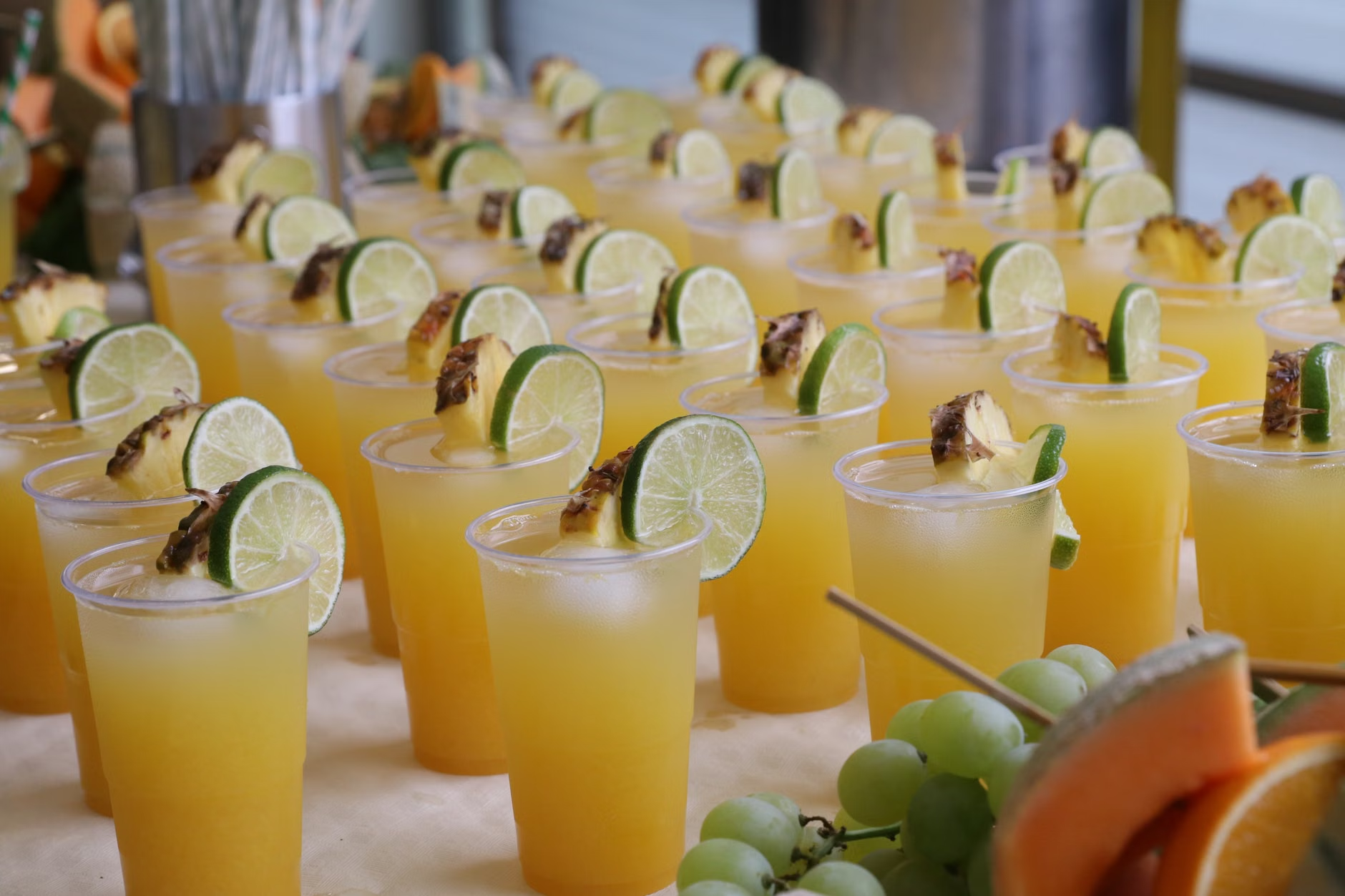
- The “Sugary Trap”: Many commercial mocktails are just juices mixed with soda, resulting in a drink that is cloyingly sweet. For a professional audience, aim for dry, savory, or bitter profiles.
- Ignoring the Food Pairing: If you are serving food, ensure the beverages complement the flavors. A spicy ginger soda might clash with a delicate appetizer, while a citrusy botanical tonic would pair perfectly.
- Underestimating the Importance of Ice: It sounds minor, but cloudy, small ice cubes melt quickly and water down your carefully crafted drinks. Use large, clear cubes for a premium look and slower dilution.
- The “Apology” Tone: Never apologize for not serving alcohol. Frame your choice with confidence. “We wanted to host an event where everyone could walk away feeling their best,” is a much stronger message than “We decided not to serve alcohol this time.”

Executing Your First Zero-Proof Event: A Step-by-Step Guide
If you are ready to pivot, follow this roadmap to ensure your event runs smoothly.
Week 4: Planning and Menu Development
Define your budget. High-end non-alcoholic ingredients can be just as expensive as mid-tier alcohol, so factor this into your cost-per-head. Choose three signature drinks: one “spirit-forward” (e.g., a non-alcoholic negroni), one “refreshing” (e.g., a sparkling botanical infusion), and one “savory” (e.g., a spiced tomato or cucumber shrub).
Week 2: Sourcing and Logistics
Don’t rely on the local grocery store for your base ingredients. Look for specialized online retailers that carry professional-grade non-alcoholic distillates. Ensure you have enough glassware; if you are hosting in an office, you may need to rent high-quality stems to avoid the “office party” feel.
The Day Of: Setup and Service
Set up the bar station at least an hour before guests arrive. Ensure that the ingredients are clearly labeled—some guests may have allergies to specific botanicals. Train your staff or volunteers on the “story” of each drink so they can speak to the flavor profile when serving.
The Hidden Benefits of the Zero-Proof Approach
Beyond the immediate health benefits, there is a significant “reputational ROI.” When you host a zero-proof event, you are signaling that you respect your guests’ time and their professional performance. You are curating an environment that says, “I value your presence, not your intoxication.”
Furthermore, from a liability and logistics perspective, the zero-proof event is significantly easier to manage. You don’t need to worry about over-serving, transportation arrangements for intoxicated guests, or the unpredictable behavior that can sometimes derail a professional reputation. You are creating a “low-risk, high-reward” environment that allows for authentic connection.
Refining Your Hosting Craft: The Expert’s Edge
To truly master this, look for the “overlooked variable”: the temperature of the serving area. If you are hosting in a warm space, ensure your non-alcoholic beverages are kept chilled in an ice bin that is aesthetically integrated into the bar. Nothing kills a premium experience faster than a lukewarm “craft” drink.
Another insight: consider the “after-event” experience. If your event ends at 8:00 PM, your guests are likely going home to finish tasks, manage household responsibilities, or simply get a good night’s sleep. By hosting a zero-proof event, you are effectively giving them their evening back. This is a subtle but powerful way to build loyalty with your professional network.
Final Thoughts
Hosting a zero-proof event is a bold move that reflects the changing priorities of our generation. It requires more thought, more preparation, and a commitment to quality over convenience. However, the result—a focused, engaged, and truly connected group of professionals—is worth every bit of the effort. Don’t be afraid to set the trend in your circle. When you provide an experience that respects your guests’ health and their professional focus, you aren’t just hosting a party; you are building a community rooted in intentionality.
For further reading on the science of non-alcoholic distillates and professional hosting, check out the resources from organizations like The Distilled Spirits Council (for industry standards on adult beverages) and various professional hospitality trade publications that cover the growing “sober-curious” market segment.
Frequently Asked Questions
1. How do I handle guests who specifically ask for alcohol?
Be upfront in your invitation. Use language like, “We are hosting a curated zero-proof experience this evening, featuring premium botanical mocktails.” Most guests, when they know what to expect, will appreciate the change. If someone is adamant, have a polite, pre-prepared response: “We’ve designed this event to be a focused, wellness-oriented gathering, and we’re excited for you to try our featured non-alcoholic menu.”
2. Is it really cheaper to host a zero-proof event?
Not necessarily. While you save on the “alcohol tax” and liquor licensing fees for larger venues, high-end non-alcoholic ingredients (like distilled botanicals and artisanal shrubs) can be quite costly. Treat your budget as you would for a standard event, but reallocate the funds from alcohol to high-quality ingredients, garnishes, and glassware.
3. How do I make non-alcoholic drinks feel as “sophisticated” as cocktails?
It’s all about the presentation and the “ritual.” Use heavy, high-quality glassware, fresh garnishes that require preparation (like torched citrus or fresh herbs), and ensure the drink is served at the correct temperature. The goal is to provide a sensory experience that mimics the complexity of a cocktail, not just a sweet drink.