- Inventory buffering is the new norm: Expect “just-in-time” retail to shift toward “just-in-case” stocking, meaning you should maintain a 2-4 week buffer of essential non-perishables.
- Localized logistics premiums: Delivery costs will increasingly fluctuate based on “last-mile” fuel surcharges and carbon-tax adjustments specific to your urban or rural region.
- Subscription volatility: Automated subscriptions may see frequent price adjustments; monitor these monthly rather than annually to avoid budget creep.
If you have noticed your favorite household cleaners, pantry staples, or kids’ essentials arriving in multiple smaller shipments or fluctuating in price more than usual, you aren’t imagining it. The global supply chain is currently undergoing a structural transformation that will reach a new plateau in 2026. For those of us juggling school runs, professional deadlines, and the weekly grocery haul, these logistics shifts are no longer just “business news”—they are domestic realities that affect your monthly budget and your household’s operational efficiency.
In 2026, the logistics landscape is defined by “fragmented resilience.” Companies are moving away from the fragile, single-source global chains of the early 2020s toward regionalized, multi-node networks. While this makes the global economy theoretically more stable, it introduces a “logistics premium” that lands directly on the consumer’s doorstep. Understanding why this is happening—and how to adjust your own household management—is the best way to keep your sanity (and your bank account) intact.
The Shift from Global Efficiency to Localized Resilience
For the last decade, we grew accustomed to the “Amazon effect”—the expectation that any item could be sourced from across the globe and delivered to our door within 48 hours for a negligible shipping fee. That model was built on hyper-optimized, low-cost global shipping lanes. However, the events of the mid-2020s, including geopolitical realignments and the increased focus on carbon-neutral logistics, have forced a pivot.
What this means for your 2026 shopping experience is geographic tiering. Retailers are increasingly stocking essential goods in regional hubs closer to the final delivery point to minimize the risk of long-distance delays. While this sounds like it should be faster, it actually adds overhead costs related to warehousing and labor in high-cost regions. You are essentially paying a premium for the “insurance” that your goods are physically closer to you.
Why does this matter for your 30s-40s household? Because it changes the cost-benefit analysis of bulk buying. Previously, buying in bulk was about saving money per unit. In 2026, bulk buying is about securing availability. When supply chains are fragmented, local shortages are more likely to occur than global ones. If your regional hub runs low on a specific brand of laundry detergent or school snack, you won’t just see a “delayed” notification; you might see a “temporarily unavailable” status for weeks.
Decoding the 2026 Logistics Premium on Your Receipt
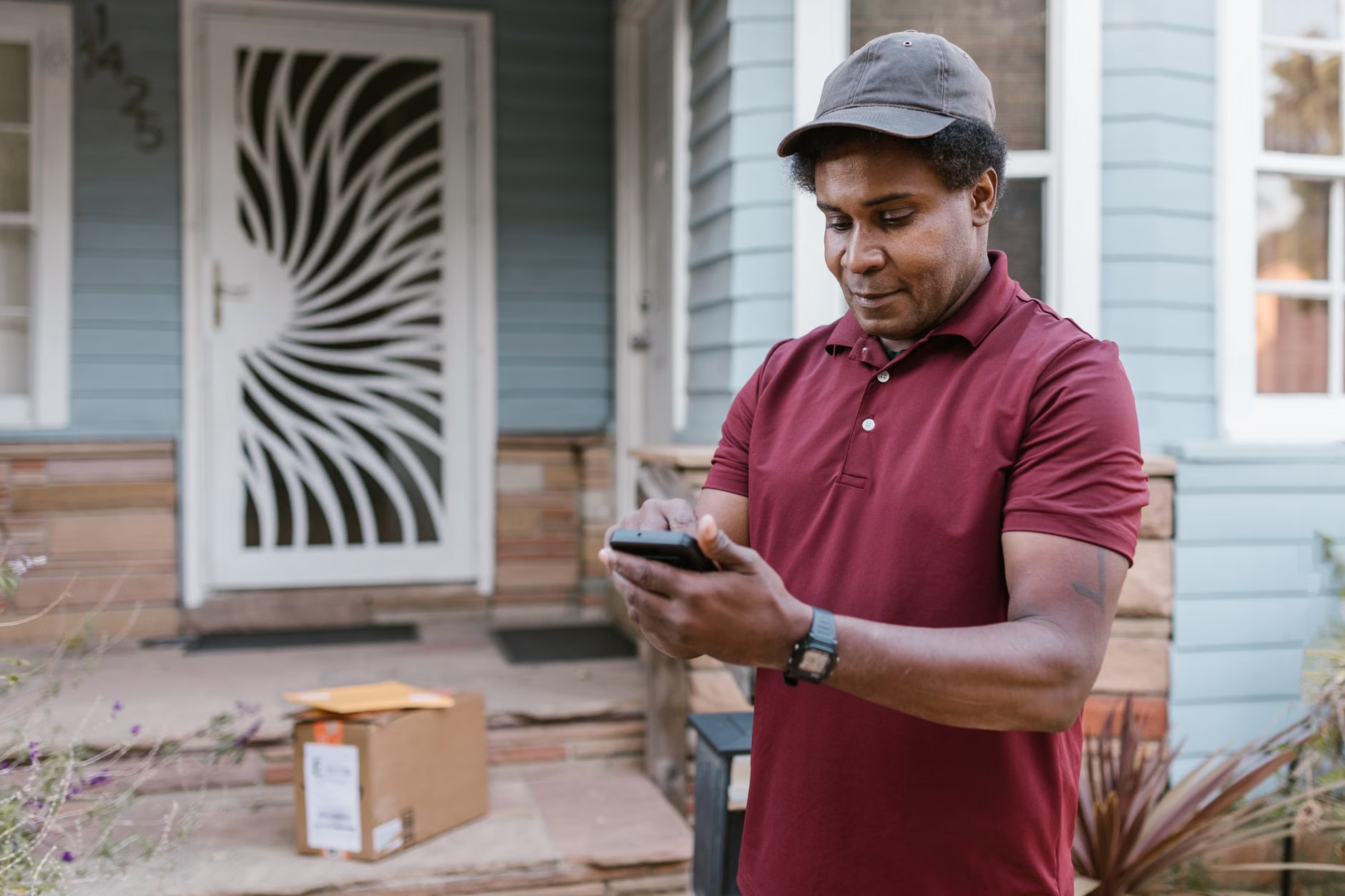
You may have noticed that the breakdown of your online receipts has become more granular. By 2026, the “shipping” line item is frequently being replaced by dynamic logistics fees. These fees are no longer flat rates; they are calculated based on real-time factors like fuel costs, delivery window efficiency, and the “last-mile” density of your area.
If you live in a rural area, you are likely paying a higher “distance-to-hub” surcharge. If you live in a dense urban center, you might be paying a “congestion fee” for delivery during peak traffic hours. Understanding these variables is critical for your family budget. Here is how these costs are currently structured:
| Fee Type | Driver | Strategy for You |
|---|---|---|
| Last-Mile Surcharge | Distance from regional warehouse | Consolidate orders to once-a-week delivery. |
| Congestion Pricing | Delivery time demand | Select “off-peak” or “slow” delivery windows. |
| Carbon-Neutral Fee | Regulatory compliance/Green shipping | Check if local pickup points reduce this cost. |
The common mistake most people make is treating these shipping charges as fixed. They aren’t. They are algorithmic. By choosing “no-rush” shipping or opting for a consolidated delivery day, you are often signaling to the logistics algorithm that you are a “low-cost” customer, which can sometimes bypass the dynamic surge pricing entirely.
The “Just-in-Case” Household Management Strategy
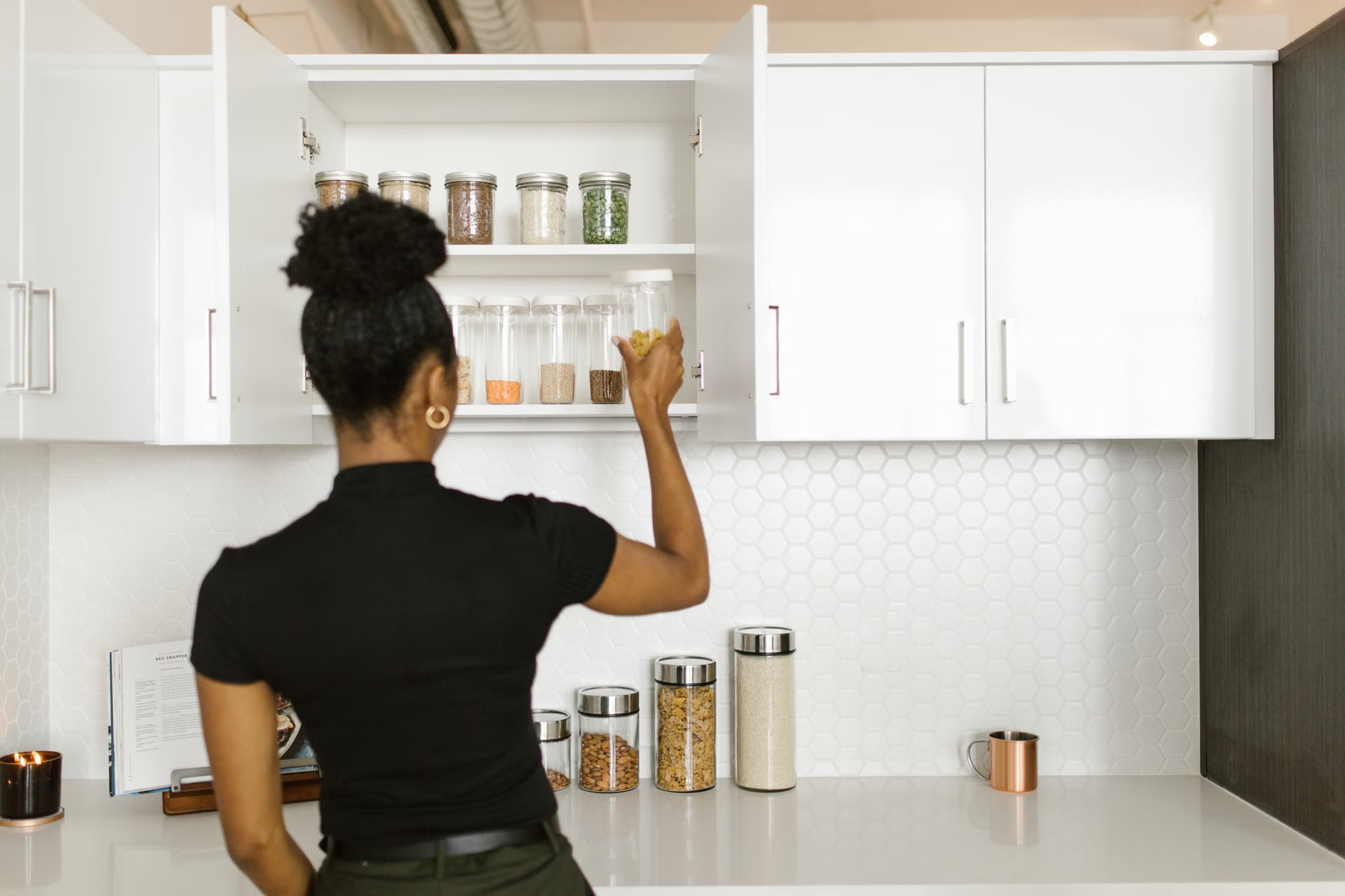
If the logistics experts are moving toward “just-in-case” inventory (keeping extra stock on hand to prevent shortages), you should adopt the same strategy for your home. This does not mean panic-buying or turning your garage into a warehouse. It means strategic buffering.
Start by identifying your “High-Frequency, High-Dependency” items. These are the goods that, if they were to disappear from the shelf for two weeks, would cause significant disruption to your household—think diapers, specific dietary staples, or pet food. For these items, your goal should be to maintain a 2-4 week buffer.
Here is a simple decision rule for your inventory: The 20% Threshold. If you have less than 20% of your total usage quantity for a specific essential item, it is time to reorder. Do not wait until you hit zero. In the 2026 logistics environment, the “zero-point” is a dangerous place to be because replenishment cycles are no longer guaranteed to be consistent.
Another insight often overlooked is the subscription trap. Many families in their 30s and 40s rely on “Subscribe and Save” models to automate their lives. However, in 2026, these subscriptions often default to the highest price tier if a coupon expires or a brand changes their regional distributor. You must audit your recurring subscriptions quarterly. If you aren’t actively managing them, you are likely paying a 10-15% “convenience tax” compared to someone who manually checks pricing every few weeks.
One of the most interesting developments in 2026 is the rise of the “micro-fulfillment center”—small, automated warehouses tucked into the back of existing retail stores or repurposed urban spaces. This is the industry’s answer to the high cost of long-distance shipping.
For you, this means that “Click and Collect” (buying online and picking up in-store) is becoming significantly more efficient and often cheaper than home delivery. Retailers are actively incentivizing this behavior because it solves their most expensive logistics problem: the last mile. If you have the flexibility to swing by a store on your way home from work or school, you can often save 5-10% on your total order by bypassing shipping and handling fees entirely.
A common misconception: Many people believe that “free shipping” is truly free. It is never free; it is just baked into the product price. By opting for in-store pickup, you are effectively “unbundling” that shipping cost from your item. If you are a high-volume shopper, this switch alone can save you hundreds of dollars over the course of a year.
The Future of Household Resilience: Beyond 2026
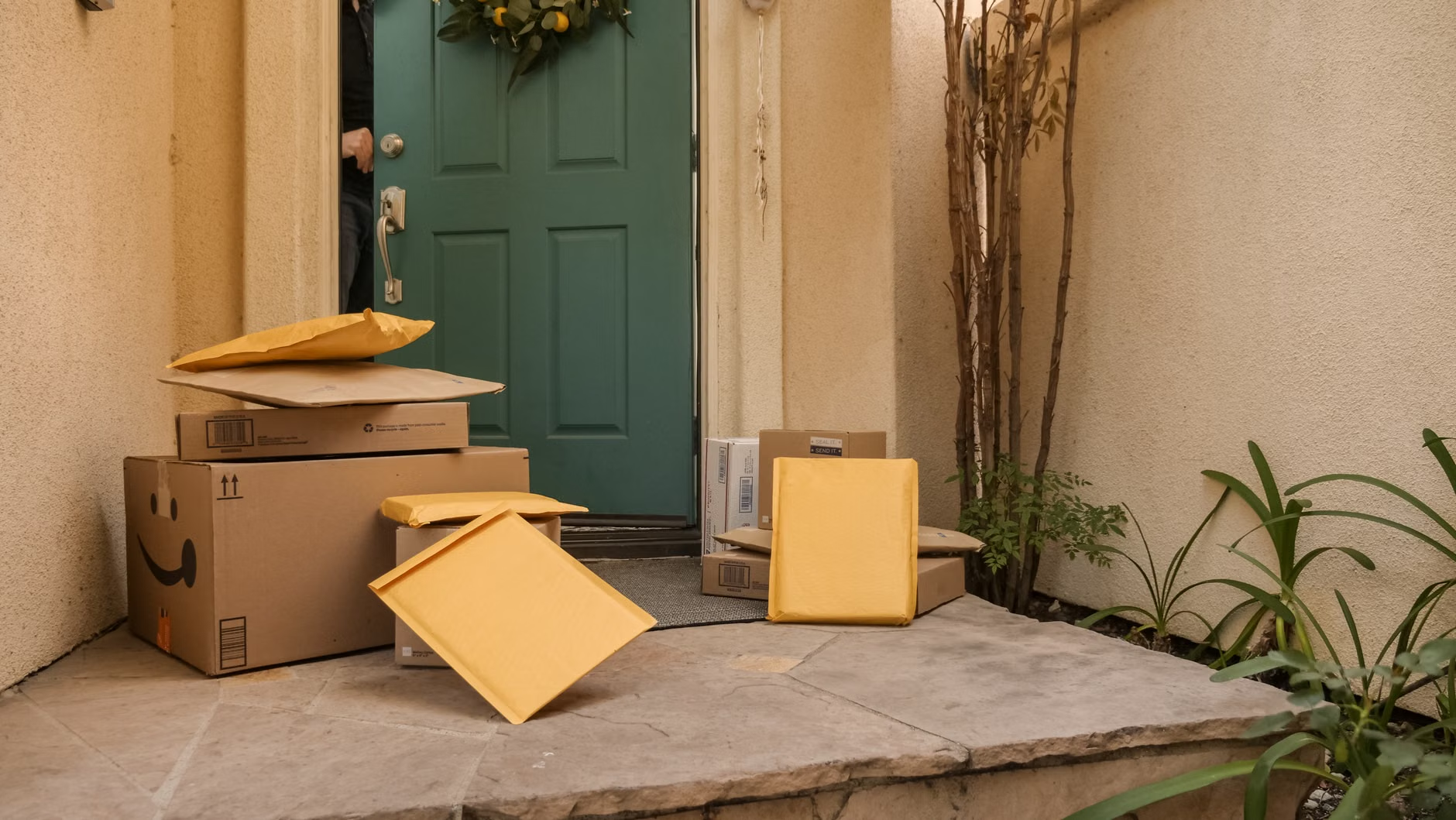
As we look past 2026, the trend of supply chain localization is likely to continue. We are moving away from the era of “anywhere, anytime, anything” and into an era of “planned, regional, and predictable.” This shift is actually a positive one for the environment and for the long-term stability of the economy, but it requires a change in mindset from the consumer.
To stay ahead, focus on three pillars: Consolidation, Audit, and Proximity.
- Consolidation: Stop the “one-off” ordering. Use a shared family list app to group all household needs into one weekly order to minimize shipping costs and delivery trips.
- Audit: Review your recurring expenses and subscription pricing every 90 days. Treat these as variable costs, not fixed ones.
- Proximity: Re-evaluate your local brick-and-mortar options. In 2026, the local store that has integrated micro-fulfillment is often more reliable and cheaper than a national e-commerce giant that has to ship from three states away.
Finally, remember that the most resilient household is one that isn’t entirely dependent on a single delivery platform. Diversifying where you shop—using a mix of local markets, specialized online vendors, and big-box retailers—protects you from the localized logistics failures that are becoming a hallmark of our current era. It’s not about being a “prepper”; it’s about being a savvy manager of your home’s resources in a world that is becoming more complex by the day.
Frequently Asked Questions
Q: Why is my “free shipping” threshold higher than it was last year?
A: Retailers have raised these thresholds because the actual cost of “last-mile” delivery (the final leg to your door) has increased due to labor costs and fuel surcharges. They are effectively forcing larger order sizes to make the delivery trip economically viable for them.
Q: Should I stop using subscription services altogether?
A: Not necessarily. Subscriptions are great for time-saving, but they require active management. If you use them, set a calendar reminder once a month to check the current market price of the item versus your subscription price. If the difference exceeds 5%, it’s time to cancel or switch brands.
Q: Are local physical stores really cheaper than online options in 2026?
A: Often, yes—especially when you factor in the “logistics premium.” When you buy in-store, you are eliminating the individual package handling and delivery costs that are now being passed on to the consumer. For high-weight or bulky items, local pickup is almost always the more cost-effective choice.
For further reading on global supply chain trends and their impact on consumer prices, you can consult the World Trade Organization’s recent reports on trade and logistics, which provide a broader look at the structural shifts occurring in global commerce.