Key Takeaways
- The 2026 Shift: The EU’s Carbon Border Adjustment Mechanism (CBAM) will effectively tax imports based on their carbon footprint, creating a “green premium” for non-EU manufactured goods.
- Direct Cost Impact: While the tax currently targets sectors like steel and cement, the expansion into textiles and apparel is imminent, likely leading to price increases for mid-to-high-range clothing imported into Europe and potentially influencing global pricing standards.
- Strategic Shopping: To mitigate rising costs, shift toward a “quality over quantity” approach, prioritize brands with transparent carbon reporting, and embrace modular wardrobe planning to extend the lifespan of your family’s clothing.
If you’ve noticed your family’s clothing budget creeping upward over the last year, you aren’t imagining things. Between supply chain volatility and the increasing cost of raw materials, the “cheap and cheerful” era of fast fashion is hitting a structural wall. But there is a much bigger, more systemic shift on the horizon that will change how we look at price tags: the 2026 Carbon Border Adjustment Mechanism (CBAM).
For parents in their 30s and 40s—who are often the primary household shoppers—this isn’t just another dry policy update from Brussels. It is a fundamental change in the economics of what we wear. When we talk about “carbon borders,” we are talking about the cost of the environment being baked directly into the cost of your child’s next winter coat or your own work attire. Let’s break down exactly what this means for your wallet and how you can prepare.
What is the Carbon Border Tax and Why Does it Matter to Your Wardrobe?
In simple terms, the Carbon Border Adjustment Mechanism (CBAM) is a trade policy designed to prevent “carbon leakage.” Currently, companies in the European Union (EU) pay a price for their carbon emissions. If they move their factories to a country with lax environmental laws, they avoid those costs. CBAM acts as a “carbon equalizer.” When goods enter the EU, they must pay a levy equivalent to the carbon tax that would have been paid had they been produced within the EU.
Why does this matter for your family’s clothing? Because the textile industry is one of the most carbon-intensive sectors globally. From the energy used in spinning cotton to the chemical-heavy processes of dyeing synthetic fabrics and the long-haul shipping required to get those items to your door, the “carbon footprint” of a single t-shirt is massive.
Up until now, the cost of that pollution was essentially ignored or “externalized.” By 2026 and beyond, as the EU expands the scope of CBAM to include more consumer goods, including textiles, the “hidden” cost of that carbon will shift from the environment to the price tag. If you buy clothing manufactured in regions with high-emission energy grids (like those heavily reliant on coal), you should expect to see that reflected in higher retail prices.
The Direct Financial Impact: What Should You Expect to See in Stores?
It’s tempting to think that this only affects luxury brands, but the reality is that the impact will be felt across the board. When a manufacturer has to account for the carbon cost of their supply chain, they generally have three choices: absorb the cost, pass it on to the retailer, or pass it on to the consumer. In a competitive retail environment, the most likely outcome is that the price is passed down the chain until it reaches you.
Let’s look at a realistic scenario for a family of four. If you typically spend $2,000 annually on new clothing, the introduction of carbon-adjusted pricing could realistically add a 5% to 15% “green premium” to those items. While that might not sound like a crisis, it represents an additional $100 to $300 per year—money that could be better spent on family activities or savings.
| Factor | Pre-CBAM Era | Post-2026 Outlook |
|---|---|---|
| Production Costs | Low (High-emission energy used) | Higher (Carbon tax levy added) |
| Transparency | Low (Opaque supply chain) | High (Mandatory carbon reporting) |
| Retail Strategy | Volume-driven (Fast Fashion) | Value-driven (Durability/Quality) |
As shown in the table above, the shift isn’t just about price; it’s about the underlying business model. Retailers who rely on mass-producing low-quality, high-emission garments will find their business model increasingly unsustainable. You will likely see a move toward “slow fashion,” where the initial purchase price is higher, but the expectation is that the garment lasts significantly longer.
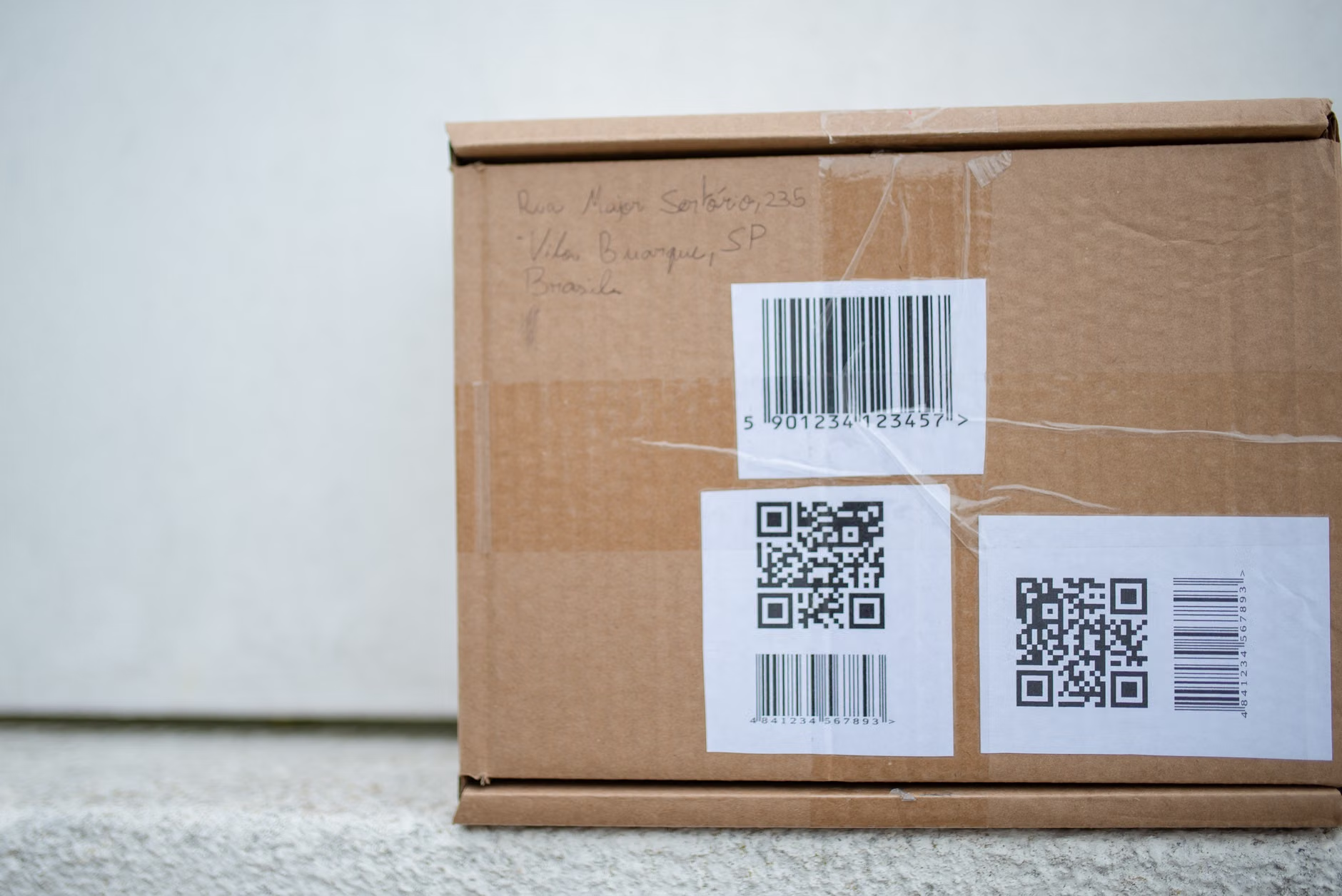
Hidden Variables: Why “Sustainable” Doesn’t Always Mean “Cheaper”
There is a common misconception that if you just buy “sustainable” clothing, you are already beating the curve. While buying organic cotton or recycled polyester is a great step, it doesn’t automatically protect you from the financial impacts of the 2026 shift. In fact, many “sustainable” brands are already priced at a premium because they have already internalized these costs.
The real variable to watch is supply chain transparency. Companies that have already invested in clean energy in their factories will be at a competitive advantage once CBAM is fully operational. They won’t have to pay the heavy “carbon tax” at the border, allowing them to keep their prices more stable compared to competitors who are scrambling to adjust their manufacturing processes at the last minute.
As a consumer, the best way to leverage this is to look for brands that publish their “carbon impact per item” or those that provide clear information about their energy sources. This isn’t just about being an ethical shopper; it’s about being a savvy one. Brands that are transparent about their carbon footprint are likely the ones that have already future-proofed their supply chain, meaning they are less likely to hit you with sudden, massive price hikes in 2026.
So, what should you actually do today? You don’t need to overhaul your entire life, but you can change your shopping habits to be more resilient to these incoming market shifts. Here is a step-by-step approach to managing your clothing budget in the lead-up to 2026.
1. Audit Your Current Wardrobe for Longevity
The most expensive item of clothing is the one you have to replace every six months. Start by assessing what you already own. Focus on high-quality basics—denim, wool, high-density cotton—that can be repaired. Learning basic sewing skills (or finding a local tailor) is one of the most effective ways to combat rising costs. If a $100 pair of jeans lasts for five years instead of one, you are effectively paying $20 per year instead of $100.
2. Shift to a Capsule Wardrobe Strategy
The “capsule” method isn’t just a trend for minimalists; it’s a financial strategy. By curating a smaller selection of high-quality items that all work together, you reduce the number of impulse purchases. Impulse purchases are where the “hidden” carbon costs (and the marketing markups) are most dangerous. When you shop with a plan, you are less susceptible to the marketing tactics of fast-fashion brands that will be struggling to maintain margins in the coming years.
3. Prioritize “Cost Per Wear” Over “Retail Price”
When you see a price tag, do a quick mental calculation. If a jacket costs $150 but you will wear it 100 times over the next two years, the cost per wear is $1.50. If a $40 jacket falls apart after 10 wears, the cost per wear is $4.00. As carbon taxes are introduced, the price of that $40 jacket is likely to jump significantly, while the $150 jacket—produced in a more stable, efficient environment—will likely see less volatility. The cheaper item will almost always become the more expensive one in the long run.
The Role of Second-Hand Markets
One of the most overlooked solutions is the resale market. Platforms like Vinted, Depop, or local consignment shops are becoming essential tools for middle-class families. Because these items have already been produced, their “carbon debt” has already been paid. They are immune to the new carbon taxes that will affect new imports. Not only does this save you money, but it also allows you to access higher-quality materials (like cashmere or high-grade leather) at a fraction of the cost of new retail items.
If you are worried about the cost of children’s clothing—which is notoriously difficult to keep in good condition—the resale market is your best friend. Many parents are now adopting a “circular” approach: buying high-quality used items and then reselling them once their child outgrows them. This cycle effectively neutralizes the price increases we expect to see by 2026.
Common Mistakes to Avoid
When trying to navigate these changes, keep an eye out for these common traps:
- “Greenwashing” Traps: Just because a brand uses a green label or mentions “eco-friendly” doesn’t mean they have a low carbon footprint. Look for verified reports, not just marketing slogans.
- Panic Buying: Don’t rush to buy a massive amount of clothing now in fear of future price hikes. This leads to clutter, waste, and, ironically, a higher carbon footprint for your own household.
- Ignoring Fabric Care: The way you wash and dry your clothes accounts for a significant portion of their total lifecycle carbon footprint. Switching to cold-water washes and air-drying can extend the life of your clothes by years, reducing the frequency with which you need to buy new items.

Looking Ahead: The New Normal
The 2026 carbon border shift is a major milestone in global trade, but it doesn’t have to be a source of stress for your family. Think of it as a forcing function for a better, more thoughtful consumer culture. We have spent decades in a cycle of disposable consumption, and the economic reality is finally catching up to the environmental cost.
By shifting your focus toward durability, repairability, and second-hand options, you aren’t just saving money—you are opting out of a system that is becoming increasingly inefficient. You are choosing to invest in items that hold their value, both in terms of utility and in terms of their impact on the planet. Start small: audit your closet, learn how to care for the fabrics you love, and look for brands that prioritize supply chain transparency. These simple steps will leave your family better prepared for the evolving economic landscape of the next decade.
Ultimately, the best way to handle the 2026 changes is to stop viewing clothes as disposable commodities and start viewing them as long-term assets. When you treat your wardrobe like an investment portfolio, you’ll find that you have more money, less clutter, and a much clearer conscience.
Frequently Asked Questions
Does the Carbon Border Adjustment Mechanism (CBAM) apply to every country?
CBAM is currently an EU-led initiative. While it primarily affects goods imported into the European Union, it has a “ripple effect” on global trade. Because major global retailers often harmonize their manufacturing standards to meet the strictest regulations, the influence of CBAM will likely be felt in other regions as well, even if they don’t have an identical tax in place. Always check your local trade regulations, as other nations may introduce similar carbon-tracking mechanisms in the future.
Will all clothing prices increase, or just specific types?
The impact will be most significant on clothing produced in countries with high-carbon energy grids and less-regulated manufacturing processes. Items made from synthetic materials (which are petroleum-based) will likely see more volatility than those made from natural, sustainably sourced fibers. You should expect the biggest price adjustments in the “fast fashion” sector, where the margin for error is low and the carbon intensity of mass production is high.
How can I tell if a brand is actually “carbon-efficient” before buying?
Look for brands that provide an “Impact Report” or “Sustainability Report” on their website. Legitimate companies will often list their Tier 1 and Tier 2 suppliers and describe their energy usage. If a brand only uses vague buzzwords like “eco-friendly” or “green” without providing data or third-party certifications (such as GOTS for organic textiles or B Corp status), treat their claims with skepticism. Transparency is the best indicator of a brand that has already done the work to prepare for a carbon-conscious market.
For further reading on the implementation of the Carbon Border Adjustment Mechanism, you can consult the official European Commission resources: European Commission: CBAM Overview.