The most effective way to reclaim your weekend as a parent in your 30s or 40s is to trade the stress of highway traffic for the rhythmic, predictable pace of East Asia’s heritage-rail networks. Unlike standard high-speed transit, these curated heritage routes prioritize the journey over the destination, offering a rare opportunity to disconnect from digital noise and reconnect with your family in a space designed for slow, deliberate movement.
Key Takeaways for the Conscious Traveler
- Prioritize “Slow Travel” Logistics: Heritage rail lines often operate on limited schedules; booking tickets at least 30 days in advance is the single most important step to ensure family seating.
- Strategic Route Selection: Opt for routes that combine scenic transit with “base-camp” stations, which allow for easy access to local culture without the need for additional car rentals.
- Manage Expectations for Amenities: Heritage trains focus on atmosphere over modern luxury; anticipate limited Wi-Fi and power outlets, and pack analog entertainment for children.
If you feel like your weekends have devolved into a cycle of grocery runs, laundry, and managing screen time, you aren’t alone. For many of us in our 30s and 40s, the “weekend getaway” often feels like a logistical nightmare—packing, car seats, traffic jams, and the inevitable exhaustion of driving. This is where the heritage-rail movement in East Asia offers a genuine alternative.
Heritage rail, in this context, refers to older, repurposed, or specifically preserved train lines that favor scenic routes and historical significance over pure velocity. These aren’t just transport; they are mobile cultural experiences. But how do you actually integrate this into a busy life without it becoming another source of stress? Let’s break down the reality of planning these trips.
Why Heritage Rail Beats the Highway for Family Travel
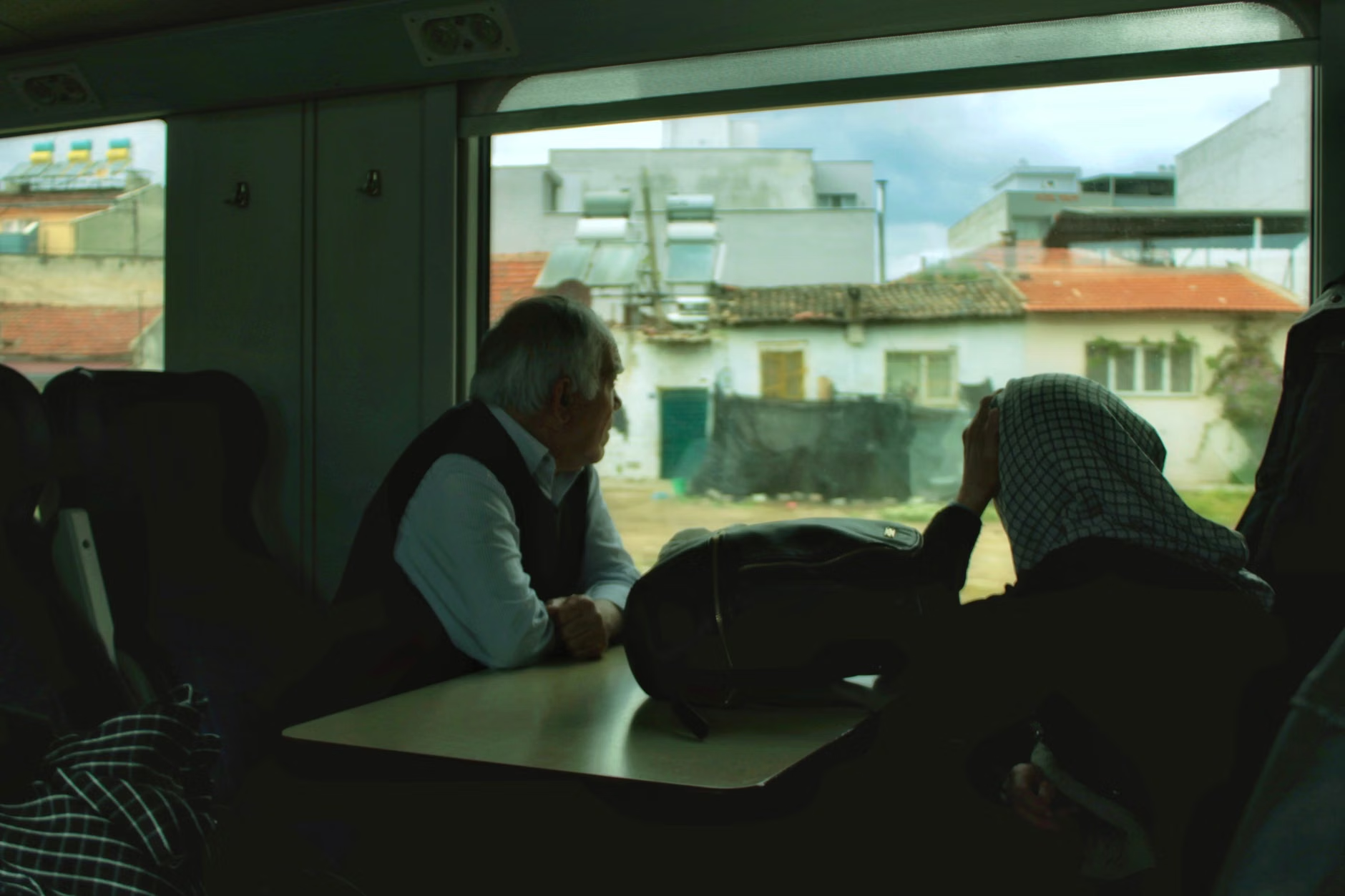
When you choose a train over a car, you aren’t just choosing a different mode of transport; you are fundamentally changing the psychological structure of your weekend. When driving, one parent is usually occupied with navigation and traffic, effectively splitting the family unit. On a heritage train, the “driver” is the railway operator. The entire family occupies the same space, facing the same direction, and sharing a common view.
For parents, the primary benefit is the predictability of the environment. A toddler can walk the aisle of a train far more safely than they can sit for three hours in a car seat. A school-aged child can sketch the passing landscape without the risk of motion sickness induced by winding mountain roads. Most importantly, the “dead time” of travel—usually spent listening to podcasts or staring at navigation apps—is transformed into shared observation.
However, there is a trade-off: autonomy. Once you are on the train, you are bound by its schedule. If your child has a sudden meltdown or you realize you left a jacket at the hotel, you cannot simply pull over. The key to success here is the “base-camp” approach: choose a destination where you can walk or take short public transit hops from the station, eliminating the need for a rental car at your arrival point.
Top-Tier Routes for the Weekend Warrior
East Asia has invested heavily in “tourist trains” that blend heritage aesthetics with modern safety standards. Not all lines are created equal, and for a weekend trip, you need routes that provide a high return on investment for your limited time. Here are three distinct types of experiences available across Japan, South Korea, and Taiwan.
| Route Type | Best For | Logistics Score |
|---|---|---|
| Coastal Heritage (e.g., Gono Line, Japan) | Families needing deep relaxation and ocean views. | Moderate (Requires careful planning) |
| Mountain/Valley (e.g., Alishan, Taiwan) | Active families wanting hiking and nature. | High (Well-integrated transit) |
| Cultural/Rural (e.g., V-Train, South Korea) | Families wanting local food and village culture. | Moderate (Remote access) |
For a parent in their 30s or 40s, the Alishan Forest Railway in Taiwan is often the gold standard. It is not merely a train ride; it is a mechanical marvel that climbs from tropical lowlands to high-altitude cloud forests. The logistics are well-supported by local tourism boards, and the frequency of trains allows for a “hop-on, hop-off” style of exploration that is perfect for families with varying energy levels.
The Hidden Costs of “Vintage” Travel
It is easy to get romantic about steam engines and wooden carriages, but remember that you are traveling with children who require snacks, bathroom access, and climate control. The most common mistake is assuming that “heritage” means “high-end luxury.” In reality, many of these lines are repurposed regional trains.
Power and Connectivity: Most heritage trains were built before the smartphone era. You will likely find few, if any, power outlets. Bring a high-capacity power bank. If your children rely on tablets for travel, download all content beforehand; don’t count on the train’s Wi-Fi, which is often non-existent or restricted to the station area.
The “Bathroom Gap”: Some older carriages have limited facilities. Always use the restroom at the station before boarding, even if you don’t feel the need. If you are traveling with a toddler, bring a portable travel potty seat or sufficient change supplies, as the onboard facilities may be cramped and difficult to navigate with a child.
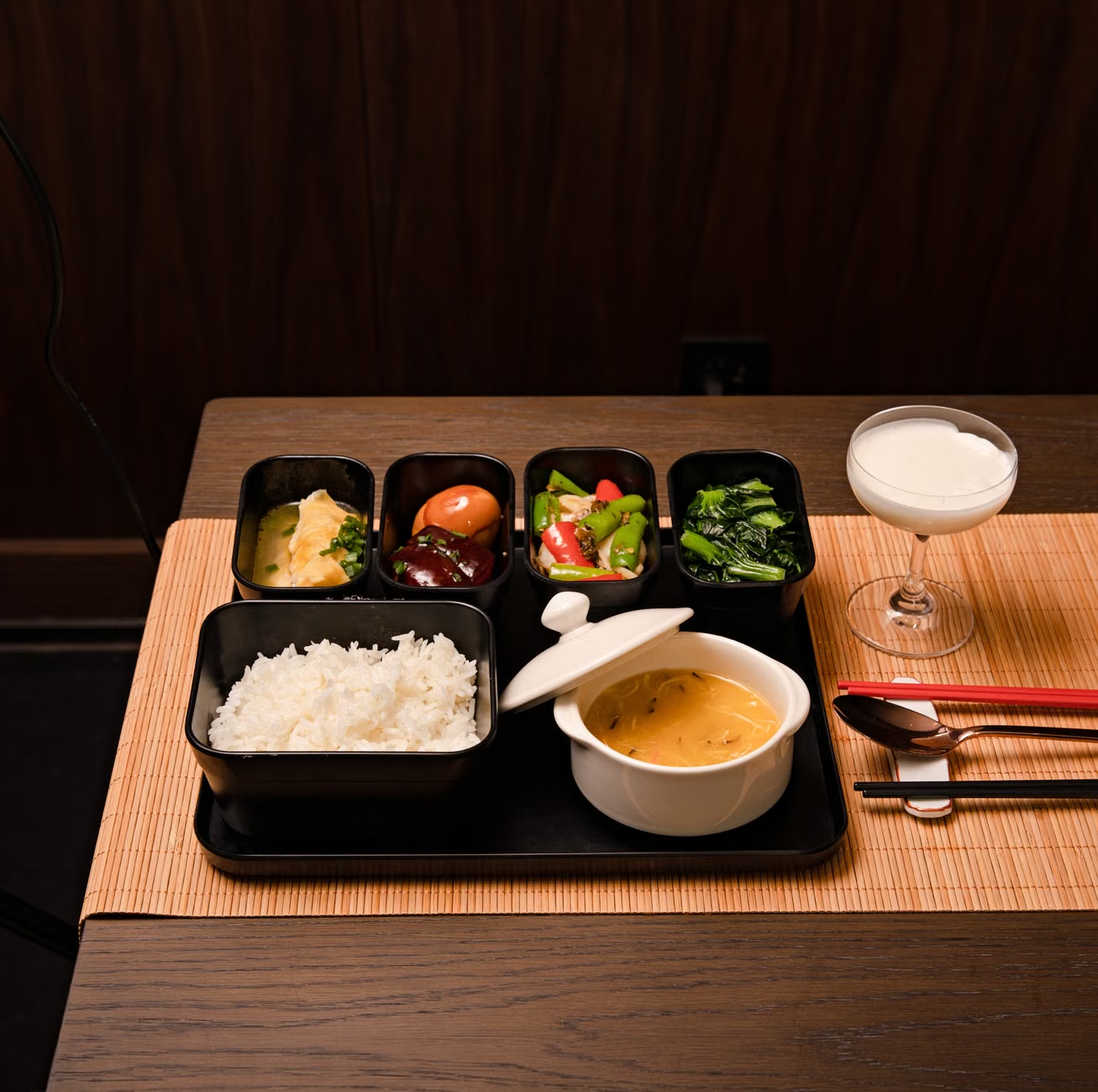
Dining Expectations: Many heritage routes emphasize “Ekiben” (station bento boxes) or local snacks. These are often delicious and provide a great cultural experience, but they are not the same as a restaurant meal. If you have picky eaters, the “heritage” snack selection might be a challenge. Always supplement with a small supply of familiar, non-perishable snacks from home.
Step-by-Step: How to Plan Your Weekend Rail Journey
Planning a weekend trip should not take longer than the trip itself. Follow this framework to minimize the administrative burden of your getaway.
- The 30-Day Rule: In East Asia, reservations for popular scenic trains often open exactly 30 days in advance. Set a calendar alert. If you wait until the week of, you will likely be standing or relegated to a less scenic carriage.
- The “Base-Camp” Selection: Identify your destination station. Use a mapping app to check if there are at least three kid-friendly activities (park, museum, or easy trail) within a 20-minute walk or a short bus ride from the station. If you need a car to reach everything, reconsider the destination.
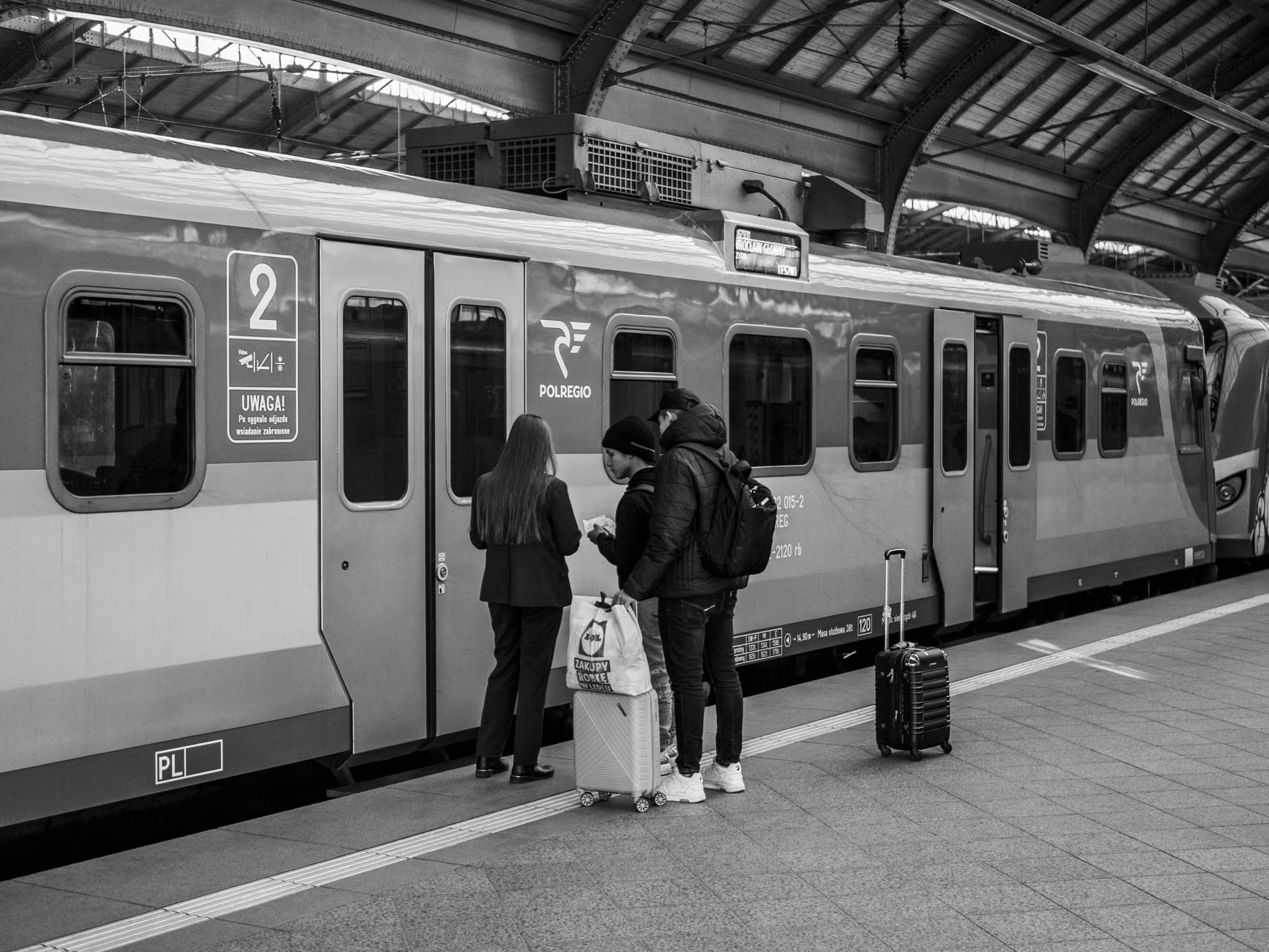
- The Luggage Strategy: Heritage trains have limited space for large suitcases. Use the “hands-free” luggage delivery services common in Japan and South Korea, or pack in backpacks. The ability to navigate a train station without dragging a massive suitcase is the difference between a relaxing start and a stressful one.
- The “Analog” Kit: Pack one bag specifically for the train: coloring books, cards, a small whiteboard, and snacks. This is your “train-only” kit. Keep it separate from your main luggage to avoid digging through bags during the journey.
While the experience of riding a train is universal, the systems in place vary significantly. If you are in Japan, the JR East or JR West websites are your primary tools. They provide excellent English-language interfaces for booking, though you may need to register an account in advance. In South Korea, the Korail app is the go-to. It is surprisingly robust and allows for mobile ticketing, which is a massive convenience for busy parents.
In Taiwan, the Taiwan Railways Administration (TRA) handles most heritage lines. The booking system is functional but can be quirky; it often requires a passport number for international travelers. Do not be intimidated by these systems. They are designed for high-volume local use, which means they are generally reliable once you understand the interface.
A note on pricing: Heritage rail is often subsidized as part of regional development. This means that, unlike luxury tourist trains in Europe or North America, these rides are often quite affordable. A family of four can often complete a scenic half-day journey for the price of a single moderate dinner. This makes it an excellent “low-risk” travel option for families who want to test the waters of longer trips.
Beyond the Tracks: Making It Sustainable for Your Life
The ultimate goal here isn’t just to take a train; it’s to build a rhythm of travel that doesn’t burn you out. Many families in their 30s and 40s fall into the trap of “optimizing” their vacation—trying to see everything, do everything, and maximize every dollar. Heritage rail forces you to reject this.
When you are on a train, you are physically unable to “do more.” You are forced to watch the world go by. This is a form of active rest. For parents who are constantly making decisions, the train is a sanctuary of limited choices. You have your seat, you have your window, and you have your destination. Everything in between is already decided for you.
If you find yourself feeling anxious about the “lack of productivity,” try to reframe it. The time you spend on the train is not lost time; it is the time you are teaching your children how to be travelers. You are showing them that the journey is a part of the experience, not just a hurdle to be cleared to get to the hotel. That is a lesson that will serve them—and you—far better than a perfectly optimized itinerary ever could.
Finally, keep your expectations grounded. There will be delays. There will be noisy passengers. There will be times when the scenery is obscured by fog. These are not failures of the trip; they are the realities of the environment. Embrace them as part of the story. If you can approach these journeys with a sense of curiosity rather than a checklist of requirements, you will find that the rail network becomes one of the most reliable ways to keep your family life feeling adventurous, even when your daily life feels routine.
Frequently Asked Questions
1. Do I need to buy a rail pass to use heritage lines?
Not necessarily. Many heritage lines are operated by regional rail companies and are not always covered by national rail passes like the Japan Rail Pass. Always check the specific website for the route you are interested in. Often, a simple point-to-point ticket is more cost-effective for a weekend trip than a multi-day pass.
Most heritage trains have limited space. If you have a child who still uses a stroller, a compact, “umbrella-style” fold-up stroller is essential. If your child is older, consider a carrier or simply teaching them to walk the platform. If you must bring a large stroller, check the train’s official website for “barrier-free” or “wheelchair accessible” status, as some older heritage carriages have high steps that are difficult to manage with luggage and a stroller.
3. What happens if we miss the last train back?
This is the most critical risk of “slow travel.” Unlike a car, you cannot drive back at midnight. Always have a “Plan B” accommodation booked or at least identified near your destination station. It is a common mistake to assume you can just “find a place” if things go wrong. In rural areas, hotels often close their check-in desks early. If you are unsure about your return time, prioritize a destination with a reliable, late-night public transport link or a pre-booked hotel.
For further research on specific routes and schedules, consult the official regional tourism portals:
- Japan National Tourism Organization
- Visit Korea Official Site
- Tourism Administration, Republic of China (Taiwan)
Start small. Pick one route, book the tickets for a weekend next month, and see how the rhythm of the rails changes your perspective on what a weekend can be. It’s a simple shift, but it’s one that often lasts long after the train pulls back into the station.