- Executive function is a set of mental skills—not just “behavior”—that must be scaffolded and practiced, not just demanded.
- Visual checklists work because they offload the “working memory” burden, allowing children to move from passive instruction-receivers to active task-managers.
- The goal of a morning checklist is not perfection, but the gradual reduction of parental supervision to foster long-term autonomy.
The secret to a peaceful morning isn’t waking up earlier or finding a more efficient coffee maker; it is moving the cognitive load of the morning routine out of your child’s brain—and yours—and onto a wall. If you find yourself repeating “Put your shoes on” for the tenth time, you aren’t dealing with a stubborn child; you are witnessing a failure of executive function that a simple checklist can solve.
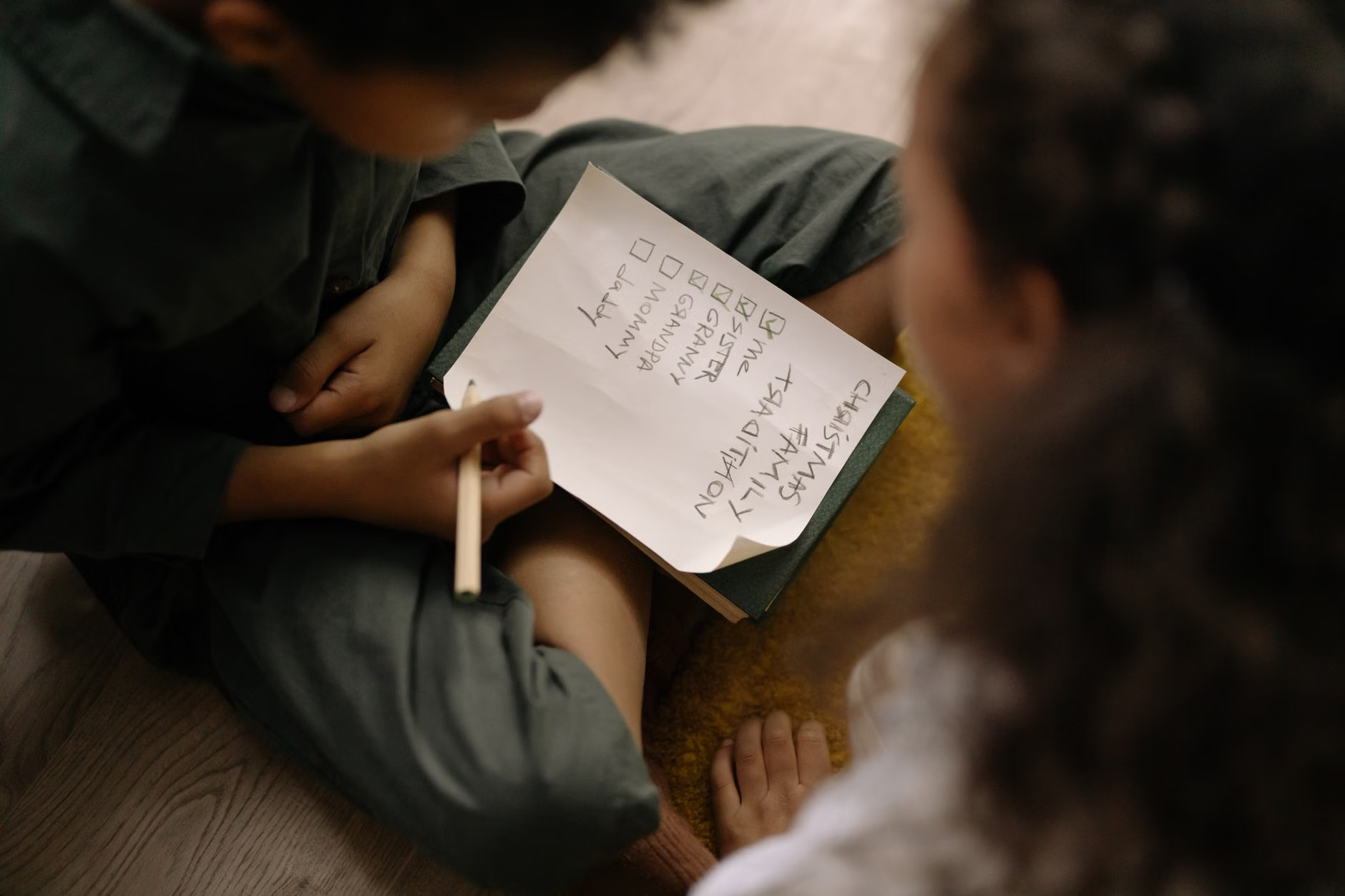
What Is Executive Function and Why Does It Stall at 7:00 AM?
In the quiet moments of the evening, your child knows exactly what needs to happen to get ready for school. But at 7:00 AM, when their brain is still in a fog and the pressure to leave is mounting, those skills often vanish. This is because executive function—the brain’s “air traffic control system”—is not fully developed until the mid-twenties. For kids, these skills are essentially a work-in-progress.
Executive function encompasses three core areas: working memory (holding information in mind), inhibitory control (resisting distractions like a stray toy), and cognitive flexibility (adapting when things go wrong, like a missing sock). When a child is asked to “get ready for school,” they are being asked to juggle a dozen sub-tasks simultaneously. If they lack the executive maturity to sequence these tasks, they freeze or hyper-focus on the wrong thing, leading to the “nagging cycle” that leaves parents exhausted before the workday even begins.
The goal of a morning checklist isn’t to force compliance; it is to provide an external hard drive for their working memory. By externalizing the sequence of events, you are teaching them how to manage their own time, which is a foundational life skill that extends far beyond getting to the bus on time.
The Physics of Morning Friction: Why Your Current Routine Might Be Failing
Most morning routines fail because they rely on verbal instructions. Verbal processing is slow and easily interrupted. When you tell a child to “brush your teeth, get dressed, and pack your bag,” you are giving them three distinct tasks that require sequencing. If they get distracted by the cat on the way to the bathroom, the rest of the list is often lost to the void.
Consider the common mistake of “The Morning Broadcast.” This is when parents stand in the hallway and list off everything the child needs to do. This is auditory overload. Even if the child hears you, the information doesn’t “stick” because their brain is busy processing the sensory input of the morning—the cold floor, the hunger, the desire to play. A checklist changes the role of the parent from “The Commander” to “The Facilitator.” You are no longer the one reminding them; the list is.
The Anatomy of an Effective Visual Checklist
A good checklist should be visual, accessible, and limited in scope. If you have 20 items on the list, it becomes a chore rather than a tool. Stick to the “must-haves” that, if missed, cause the most friction.
| Task Category | Common Pitfall | The Executive Fix |
|---|---|---|
| Self-Care | Getting distracted by toys in the bathroom. | Keep the checklist *inside* the bathroom. |
| Logistics | Forgetting the lunchbox or homework folder. | Use a “Launchpad” station by the front door. |
| Sequencing | Doing things in the wrong order (e.g., shoes before pants). | Use a numbered or time-blocked list. |
When creating the list, involve your child in the process. If they feel ownership over the checklist, they are significantly more likely to use it. Ask them, “What is the very first thing you need to do when you get out of bed?” By making them the architect of their morning, you move them from being a passive recipient of your commands to an active owner of their day.
Building the Routine: Step-by-Step Implementation
Implementing a new system requires a “training phase.” Do not expect the checklist to work on day one. You need to treat this as a skill-building exercise, similar to teaching them to tie their shoes or ride a bike.
Phase 1: The Co-Pilot Week
For the first five days, treat the checklist as a collaborative document. When your child is stuck, don’t give the answer. Instead, ask, “What does the list say is next?” This redirects their attention to the external tool. If they are staring at the wall, point to the list. This builds the habit of checking the list before asking for help.
Phase 2: The “Natural Consequence” Buffer
Once they are using the list, start stepping back. If they forget their water bottle, don’t rush to get it for them. Let them experience the small, manageable consequence of having to go back for it or realizing it’s missing. This builds the “consequence-awareness” part of the brain that is essential for executive function. Of course, ensure the consequences are safe and low-stakes.
Phase 3: The Independent Audit
After a few weeks, shift your role to an “auditor.” Instead of managing the process, ask them to check their own work. “Are you ready? Check your list.” This simple phrase shifts the responsibility from you to them. If they have missed something, they are the ones who identified it, which is a powerful confidence builder.
Advanced Strategies for When Things Go Off the Rails
There will be days when the routine breaks down. Maybe they woke up cranky, or they have a big test at school causing anxiety. Executive function is highly sensitive to emotional regulation. When a child is stressed, their ability to follow a list drops significantly.
In these moments, the checklist is still useful, but you may need to provide “micro-scaffolding.” This means breaking down a single task into even smaller steps. Instead of “Get dressed,” the list might need to say “1. Underwear, 2. Pants, 3. Shirt.” This isn’t regression; it is meeting the child where they are in that moment.
The Role of the “Launchpad”
The most common point of failure is the “Where is my stuff?” moment. This is a working memory issue. Everything needed for the next day—backpack, shoes, coat, lunch—should be placed in a designated “Launchpad” area the night before. This eliminates the need for decision-making during the high-stress morning window. If it isn’t in the Launchpad, it doesn’t exist.
Addressing Common Misconceptions
Some parents worry that using a checklist makes a child “too dependent” on a tool. This is a misunderstanding of how the brain matures. We use calendars, reminders, and to-do lists as adults because our brains have limits. Teaching a child to use a tool is not creating dependency; it is creating a system for success. It is the difference between trying to remember everything in your head and using a notes app on your phone.
Another common concern is that the checklist will become “boring” or that the child will start ignoring it. This is why it is important to keep the list dynamic. Use stickers, dry-erase markers, or even digital apps if your child responds better to technology. The medium matters less than the act of referencing the list.

Why This Matters for Your Long-Term Relationship
The ultimate goal of this process is to remove yourself from the role of “nagging parent.” When you are constantly telling a child what to do, you are inadvertently creating a dynamic where they are the passive child and you are the external brain. This breeds frustration for both sides. By shifting the authority to the checklist, you remove the interpersonal conflict from the morning routine.
When the list says “put on shoes,” and they don’t, you aren’t the one being ignored—the list is. You can then address the behavior (why they aren’t listening to the system) rather than the task itself. This preserves your energy and your relationship, allowing the morning to be a time of connection rather than a series of commands.
Remember that executive function is not a static trait. It grows, fluctuates, and matures. Some days will be perfect, and some will be messy. The objective is to build a foundation of autonomy that your child can rely on as they grow into adolescence and beyond. By starting these habits now, you are giving them the tools to manage their own lives, which is perhaps the greatest gift you can provide as a parent.
Frequently Asked Questions
1. How do I handle a child who refuses to look at the checklist?
Refusal is often a sign of feeling overwhelmed or powerless. Try involving them in the creation of the list again. Ask them if the items are in the right order or if they want to add a “reward” step at the end (like five minutes of screen time or a favorite song). If they still refuse, acknowledge their feelings—”I know it feels like another chore, but it’s there to help you finish faster so we can have a calmer morning.”—and gently point to the list without forcing them to engage immediately.
2. Should I use a paper checklist or a digital app?
For younger children (ages 4–9), a physical, tactile checklist is almost always better. The physical act of checking a box or moving a magnet provides sensory feedback that helps anchor the task in their memory. Digital apps can be great, but they often introduce the “distraction trap”—if the child picks up a tablet or phone to check their list, they may end up opening a game or video instead.
3. How do I adjust the checklist as my child gets older?
As your child gains independence, the checklist should become less about specific actions and more about outcomes. For example, instead of listing “brush teeth, wash face, comb hair,” you might condense it into one item: “Morning Hygiene.” As they demonstrate mastery, you can remove items from the list entirely, trusting them to manage the routine on their own. The goal is to eventually make the checklist obsolete.
For further reading on executive function development, you may find the resources provided by the Center on the Developing Child at Harvard University to be a helpful, evidence-based guide for understanding how these skills evolve throughout childhood.