- Prioritize “Low-Stimulation” Environments: The goal is sensory regulation, not just sightseeing; choose locations where the primary activity is simply existing in a quiet landscape.
- The 48-Hour Rule: Research suggests it takes approximately two days to fully disconnect from the “parenting brain.” Plan retreats of at least three nights to ensure true restoration.
- Service vs. Solitude: High-end resorts offer comfort, but “Quiet-Tourism” often thrives in self-catered, remote cabins where the lack of scheduled social interaction is the main feature.
The most effective way to recover from the relentless mental load of parenting in your 30s and 40s isn’t a trip to a bustling city or an activity-packed resort; it is the quiet, intentional embrace of a “Quiet-Tourism” mountain retreat. If you feel like your brain has too many tabs open—work deadlines, school schedules, grocery lists, and the constant hum of domestic management—you aren’t just tired; you are likely suffering from sensory overload.
Quiet-tourism is a growing trend that prioritizes silence, minimal social interaction, and a lack of rigid agendas. It isn’t about “doing nothing” in the lazy sense; it is about “doing nothing” as a deliberate recovery strategy to lower cortisol levels and reset your nervous system. In this article, we will break down how to execute this kind of retreat, why it is a medical and psychological necessity for modern parents, and how to pick a location that actually delivers silence instead of just another marketing gimmick.
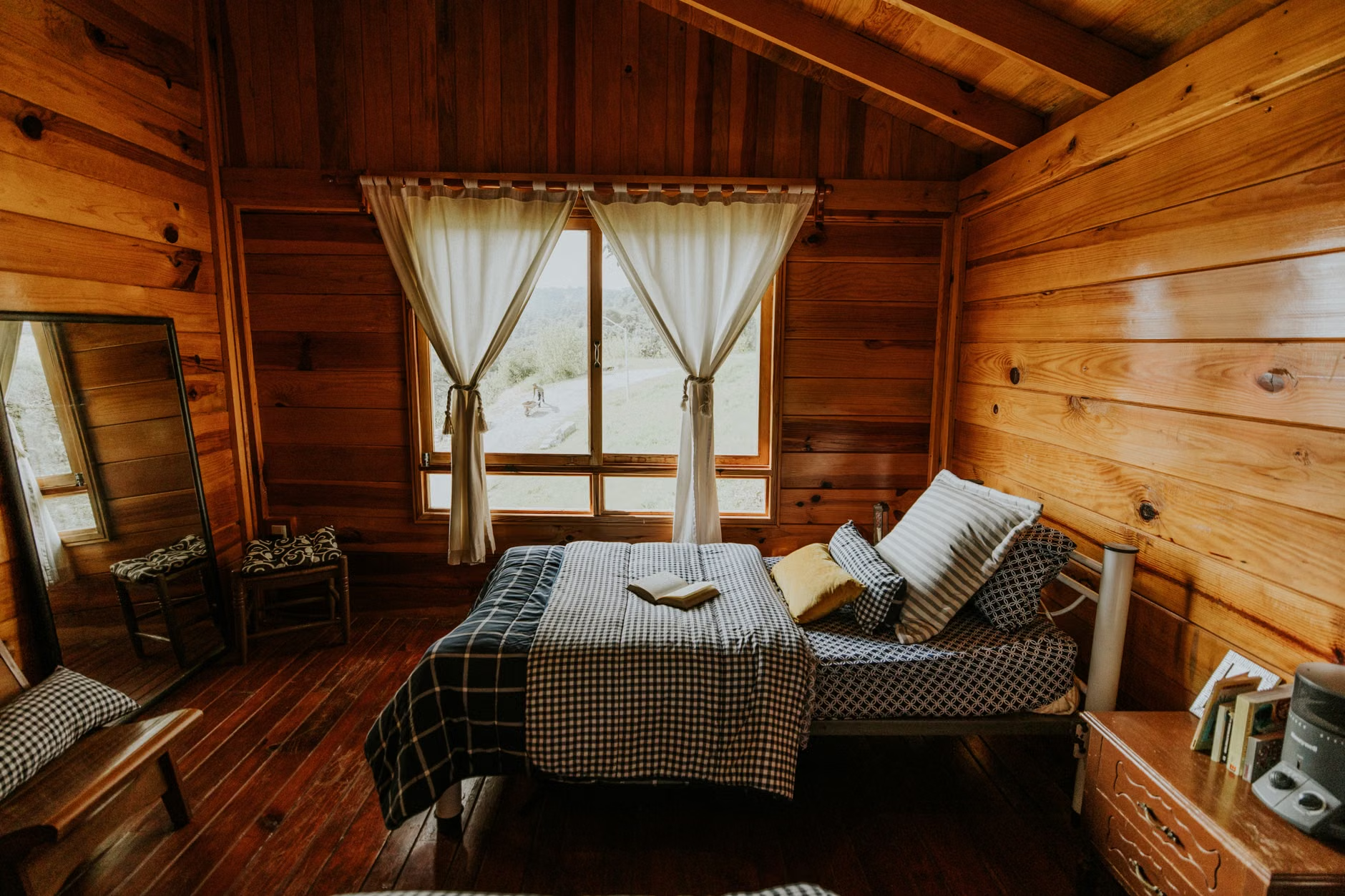
Why Your Nervous System Needs a “Low-Stimulation” Environment
In our 30s and 40s, we are often in a state of chronic “hyper-vigilance.” Whether it is listening for a child in the next room or keeping a mental tally of upcoming bills, our brains are rarely in a state of true rest. When we go on “vacation,” we often carry this habit with us, turning our leisure time into a project management task: booking tours, making dinner reservations, and managing travel logistics.
A mountain retreat centered on quiet-tourism intentionally removes these stressors. The science behind this is grounded in the concept of “Attention Restoration Theory” (ART). Research suggests that urban environments and constant digital connectivity drain our cognitive resources. Natural environments, specifically those that are quiet and visually repetitive—like a mountain range—allow our directed attention to rest. This isn’t just “feeling better”; it is a physiological shift where your parasympathetic nervous system (the “rest and digest” mode) finally takes the lead.
For a parent, this means the difference between returning home “refreshed” but still frantic, and returning home with a genuine increase in patience and mental bandwidth. You aren’t just taking a break from the kids; you are taking a break from the role of “manager.”
Choosing the Right Location: The “Isolation Index”
Not every cabin in the mountains qualifies as a quiet-tourism destination. Many popular mountain towns are just urban centers with better views. To find a true retreat, you need to apply what I call the “Isolation Index.”
When searching for a rental or a hotel, look for the following criteria to ensure you aren’t walking into a tourist trap:
| Feature | Quiet-Tourism Ready | Avoid |
|---|---|---|
| Proximity to Hubs | 20+ minutes from main town | Walking distance to town center |
| Digital Connectivity | Limited or no Wi-Fi | High-speed fiber optic advertised |
| Staff Interaction | Self-check-in / No concierge | Daily housekeeping / Social events |
The goal is to eliminate “choice architecture.” If you are staying at a resort where the staff is constantly asking if you need help with activities, you are being forced to make decisions. In a quiet retreat, your only decisions should be: “Do I go for a walk now, or in an hour?” and “What am I eating for dinner?”

The 48-Hour Decompression Protocol
One common mistake parents make is booking a weekend trip (Friday to Sunday) and expecting a full reset. The reality is that for the first 24 hours, your brain will likely continue to run on “parenting mode.” You will find yourself checking your phone for messages, worrying about home, or feeling guilty for not being productive.
To actually benefit from the retreat, you need to commit to the 48-hour decompression protocol:
- First 24 Hours (The Withdrawal Phase): You will feel restless. Your cortisol levels are dropping, and your brain is struggling to adjust to the lack of input. Do not try to hike or be “productive.” Just sit. Read a book. Allow the restlessness to exist without fighting it.
- 24-48 Hours (The Settling Phase): This is when you stop checking the time. You will notice that your senses become sharper. You might hear birds or the wind in a way you haven’t in years.
- 48+ Hours (The Restoration Phase): This is the “gold” period. Your executive function starts to return. You will find that you can think about your life, your goals, or your family without the usual sense of urgency or anxiety.
If you can only afford a two-night trip, recognize that you are only just scratching the surface of restoration. If possible, prioritize a four-night stay. The marginal utility of that third and fourth night is significantly higher than the first two.
Packing for Silence: The “Anti-Distraction” Kit
What you pack determines the success of your retreat. If you bring your laptop, you are signaling to your brain that this is a “work-from-anywhere” trip, not a restorative break. Your packing list should prioritize analog activities that require low cognitive load.
Here is a suggested framework for your “Anti-Distraction” kit:
- The Analog Journal: Not for “to-do” lists, but for “brain dumping.” Write down every anxiety, task, or thought that pops into your head so you can get it out of your system and onto paper. Once it is written, it is “stored” and you can stop holding it in your working memory.
- Comfort-First Clothing: Do not pack for “looks.” Pack for temperature regulation. Mountain weather is fickle. If you are cold, you are distracted. If you are comfortable, you are relaxed.
- The “High-Friction” Tech Barrier: If you must bring your phone for safety, put it in a lockbox or the bottom of your suitcase. If you have to physically struggle to get your phone out, you are less likely to use it for doom-scrolling.
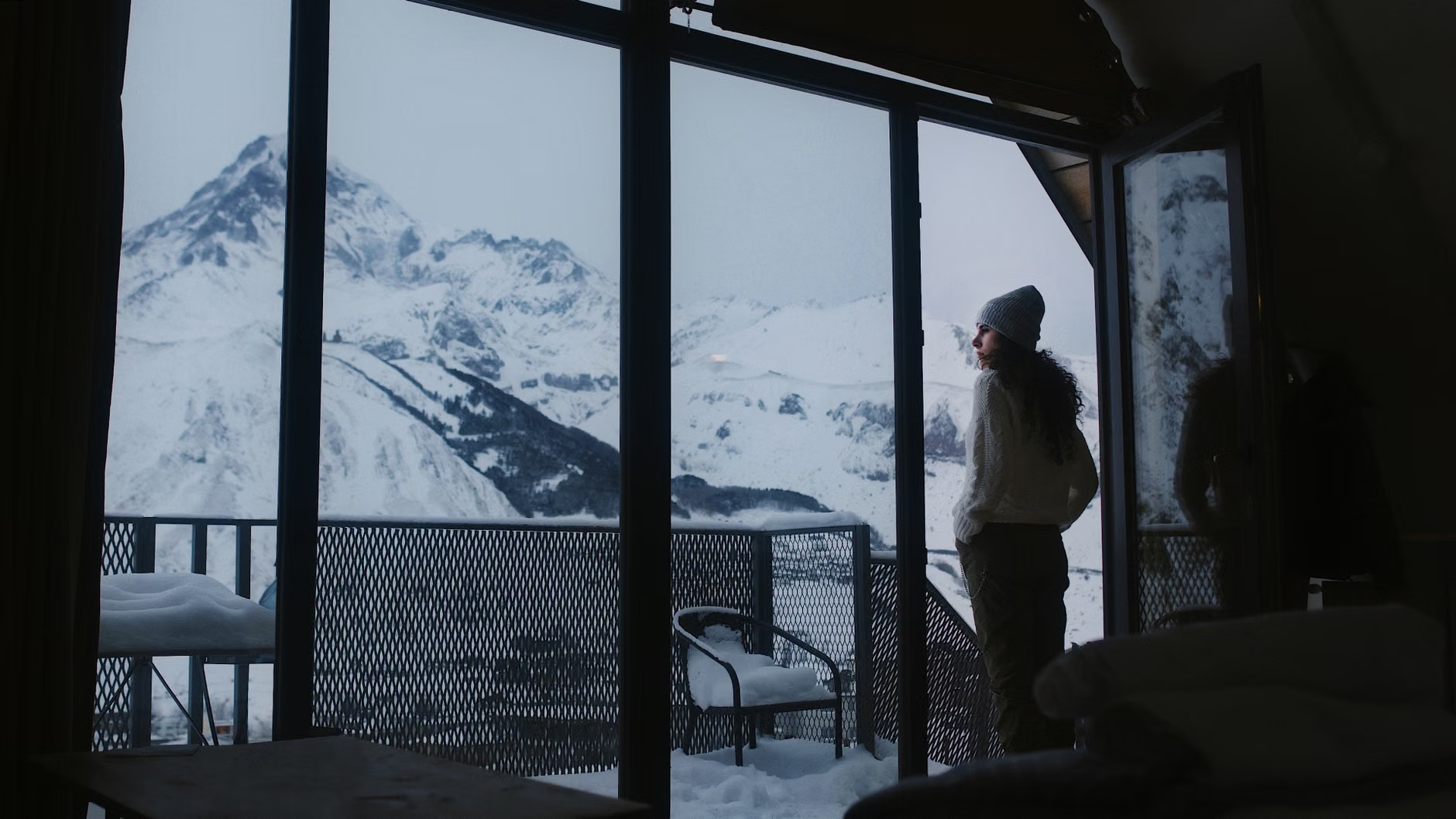
Let’s address the elephant in the room: the guilt. When you tell your partner or family you are heading off for a few days of quiet, there is often a wave of internal (and sometimes external) pressure. “Am I being selfish?” “Is this a waste of money?”
Think of it this way: You are not taking time away from your family; you are investing in the version of yourself that returns to them. A parent who is chronically burnt out is a parent who is operating at 40% capacity. By taking a quiet-tourism retreat, you are essentially “servicing the engine.”
To make this sustainable, stop viewing the retreat as a “luxury” and start viewing it as a “maintenance expense.” Just as you wouldn’t skip an oil change for your car, you shouldn’t skip your mental health maintenance. If you are worried about the cost, look for “off-season” rates. Mountain regions often have significant price drops during shoulder seasons (the weeks between peak summer and winter ski seasons). The weather might be less “perfect,” but the silence is even more profound.
Common Misconceptions About Mountain Retreats
There are a few myths that keep people from booking these trips. Let’s dismantle them:
Myth 1: “I need to be ‘doing’ things to make the trip worth it.”
The “Tourist Mindset” tells us that if we don’t hike 10 miles or visit the local museum, the trip is a failure. In quiet-tourism, the goal is the opposite. If you spend your entire retreat sitting on a porch watching a tree, you have succeeded. The value isn’t in the activity; it’s in the absence of the requirement to perform.
Myth 2: “I’ll be bored.”
In our 30s and 40s, we are so over-stimulated that we have forgotten how to be bored. Boredom is actually where creativity and emotional regulation are born. If you find yourself feeling “bored,” that is a sign that your brain is finally beginning to detox from the constant stimulation of modern life. Lean into it.
Myth 3: “It’s safer or better to stay at a hotel with amenities.”
Hotels are designed to keep you busy. They offer breakfast buffets, gym access, and concierge services. These are all “activators.” If you are truly looking for a restorative break, a self-catered cabin is almost always superior because it removes the temptation to engage with service staff or other guests.
Practical Next Steps for Booking
If you are ready to book, don’t just go to a generic travel site and search “hotel in mountains.” Follow these steps to ensure you find the right environment:
- Map the “Quiet Zones”: Look at a map of a mountain range you are interested in. Avoid the towns themselves. Look for small, secondary roads that branch off the main highway. Look for properties on those roads.
- Check the “Review for Noise”: When reading reviews on platforms like Airbnb or Booking.com, specifically search for keywords like “traffic,” “neighbors,” “construction,” or “thin walls.” If you see those, keep looking. You want reviews that mention “secluded,” “peaceful,” or “quiet.”
- Verify the Kitchen Situation: Since you shouldn’t be going out for every meal (which is a social/planning task), ensure the kitchen is functional. A basic stove and a fridge are all you need. Don’t worry about a high-end kitchen; worry about whether it is clean and functional.
- The “Safety Check”: If you are traveling solo, ensure the property has a secure way to lock up and is in a location where you have at least one bar of signal for emergencies. You don’t need 5G, but you do need peace of mind.
For more information on the benefits of spending time in nature for cognitive health, you can look at the research provided by the American Psychological Association on the mental health benefits of nature.
Final Thoughts: The Return to Normalcy
When you leave your mountain retreat, you will inevitably have to return to the “real world.” The goal isn’t to stay in the mountains forever; the goal is to bring a piece of that silence back with you. You will likely find that after a few days of true quiet, you are more sensitive to the noise of your daily life. Use that sensitivity to set better boundaries when you get home.
Maybe you keep your phone in a drawer for an hour after you pick up the kids. Maybe you stop saying “yes” to every social obligation. The retreat isn’t the end of the process; it is the catalyst for a more sustainable way of living. Start small, pick a date, and commit to the silence. Your brain will thank you.
Frequently Asked Questions
1. How do I handle the anxiety of being away from my kids for several days?
It is normal to feel guilty. The best way to manage this is to have a clear communication plan. Agree on one “check-in” time per day with your partner or caregiver. Knowing you have a scheduled time to hear about the kids allows your brain to stop “checking” for updates every five minutes.
2. Is “Quiet-Tourism” only for people who want to be alone?
Not at all. You can do this with a partner or a very close friend, provided you have a “no-talking” agreement. The goal is to share the space without the pressure of conversation or planning. It is a shared experience of silence, which can actually be incredibly bonding.
3. What if the weather is terrible during my retreat?
In quiet-tourism, bad weather is often a bonus. A storm or rain makes the cabin feel even more like a sanctuary. It removes the pressure to “go outside and explore,” giving you full permission to stay indoors and do absolutely nothing. Embrace the weather as part of the atmosphere.