- Authenticity first: Always prioritize provenance and third-party authentication before investing in restoration, as the cost of repair can exceed the resale value of a counterfeit.
- The 50% Rule: Avoid spending more than 50% of the item’s current market value on restoration unless the piece holds significant sentimental value that outweighs financial return.
- Maintenance vs. Overhaul: Minor preventative maintenance (cleaning, leather conditioning, movement oiling) is almost always a better long-term investment than waiting for a full structural failure.
The most sustainable luxury item is the one that already exists, and transforming a pre-loved find into a future family heirloom is a practical way to mark a milestone without the environmental footprint of new production. For those of us in our 30s and 40s—balancing the chaos of parenting, career growth, and household management—the idea of “investing in the past” can feel like another item on a never-ending to-do list. However, when approached with a clear strategy, sourcing and restoring luxury goods can be a rewarding way to build a legacy for your children while securing assets that hold their value.
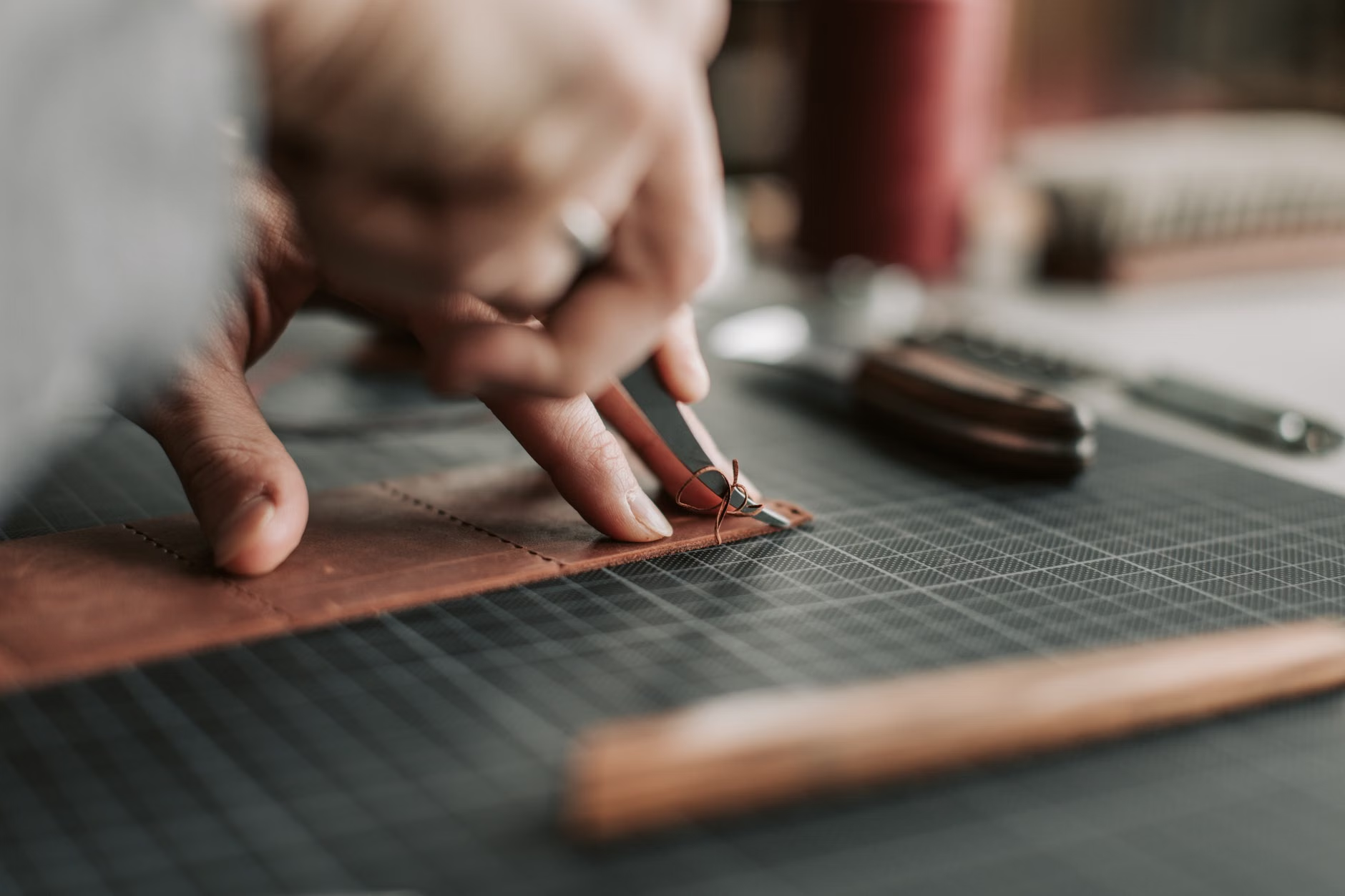
Why Restoration Beats Buying New for Sentimental Milestones
When you buy a brand-new luxury item, you are paying a premium for marketing, retail overhead, and depreciation. When you source a vintage piece and restore it, you are paying for craftsmanship and history. From a financial perspective, a well-maintained vintage piece often appreciates, whereas a new item loses 20-30% of its value the moment you leave the boutique.
But the real benefit for families is the “story-value.” A watch that you had serviced to mark your first child’s birth, or a handbag that you refurbished for a graduation gift, carries a narrative. It teaches the next generation that luxury isn’t just about consumption; it’s about care, maintenance, and the longevity of high-quality materials.
The Hidden Costs of “Cheap” Vintage: One of the most common mistakes is purchasing a damaged luxury item at a “steal” price without getting a quote for the restoration first. A handbag with a broken zipper or a watch with a seized movement might look like a $200 bargain, but if the internal parts are obsolete or the leather requires a full re-tanning, you could easily spend $1,000+ to make it functional. Always treat the restoration quote as part of the purchase price.
Establishing Your Criteria: What is Worth Restoring?
Not every item deserves a professional overhaul. Before you commit time and money, apply a rigorous decision-making framework. The following table helps categorize whether a piece is a “heirloom-to-be” or a “maintenance-only” item.
| Category | Restoration Criteria | Financial Strategy |
|---|---|---|
| High-End Horology (Watches) | Mechanical movements are essential; avoid quartz unless it is a rare vintage model. | Budget for a full service every 5-7 years; this is a permanent asset. |
| Heritage Leather Goods | Focus on structural integrity (stitching, hardware). Surface scratches are patina, not damage. | Minor repairs only; major reconstruction often ruins the resale value. |
| Fine Jewelry | Check for stone security and metal thinning. Ensure hallmark stamps are visible. | High priority for restoration as these hold the most “heirloom” potential. |
When evaluating these items, consider the condition of the original components. In the world of vintage luxury, “originality is king.” Replacing a watch dial with a service dial can reduce its value by 50% among collectors. In contrast, replacing a worn-out zipper on a leather bag is considered necessary maintenance. Knowing the difference is what separates a savvy collector from someone who inadvertently destroys the value of their find.
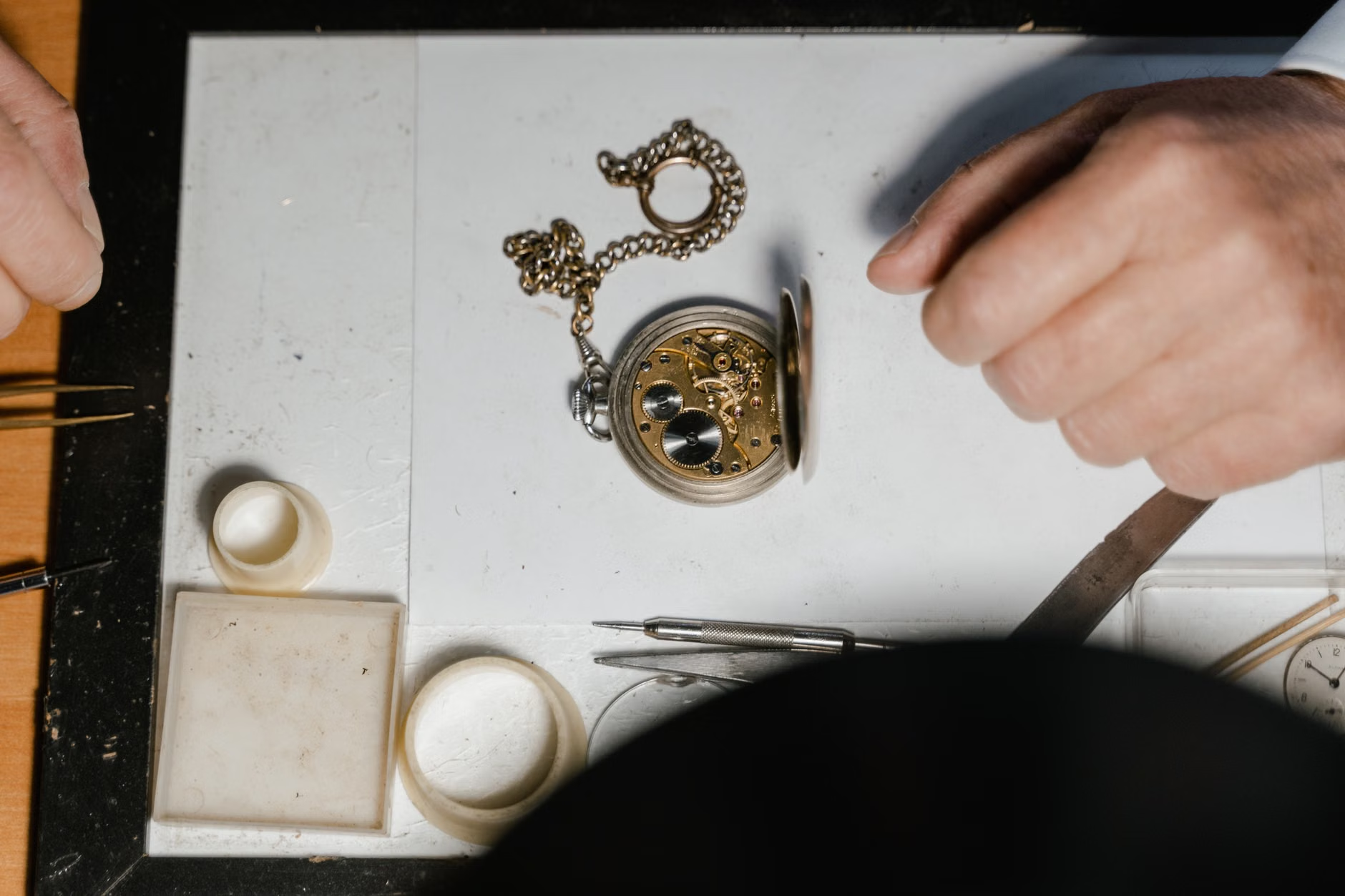
The Step-by-Step Process for Successful Restoration
If you have decided to move forward with a restoration project, following a structured path will prevent the frustration of spiraling costs or poor results. Treat this process like a home renovation project—you need a plan, a professional, and a budget buffer.
Step 1: The Authentication Audit
Never start a restoration without absolute proof of authenticity. If you find a piece at an estate sale or a local consignment shop, use a reputable third-party authentication service. Many online platforms offer this for a flat fee. Do not skip this; spending $500 to restore a fake item is a mistake you will only make once.
Step 2: Sourcing the Right Artisan
Avoid “general” repair shops. If you are dealing with a Swiss watch, you need a watchmaker who has access to original parts or a master who can fabricate them using traditional methods. For leather, look for artisans who specialize in the brand you are working with. Check their portfolio for “before and after” photos. If they cannot show you a clear track record, move on.
Step 3: The “Minimalist” Intervention
There is a growing trend of “over-restoration,” where people try to make a 40-year-old item look brand new. This is often a mistake. A piece that has been “over-polished” loses its sharp edges and historical character. Ask your artisan to perform only the repairs necessary for function and preservation. Leave the “patina”—the signs of age—unless it impacts the structural integrity of the item.
Common Pitfalls and How to Avoid Them
Even with the best intentions, the process of restoring luxury items is fraught with hidden traps. Being aware of these can save you thousands of dollars and ensure your heirloom actually lasts.
The “Part Scarcity” Trap: For many vintage luxury items, manufacturers stop producing spare parts after 20 or 30 years. If you buy an item that requires a specific, proprietary internal gear or a discontinued clasp, you may find yourself in a situation where the item becomes a “parts donor” rather than a functional piece. Before purchasing, search online forums dedicated to the specific brand to see if parts are still accessible.
The “Shipping Risk” Reality: If you are sending items to a specialist in another country (a common necessity for high-end repairs), the risk of loss or damage during transit is high. Always use a courier that offers full insurance coverage based on the restored value of the item, not the purchase price. Keep a digital file of all documentation, including the original purchase receipt, authentication certificate, and photographs of the item’s condition before it was shipped.
DIY Temptations: It is tempting to try “quick fixes” found on social media, such as using household leather conditioners or amateur jewelry cleaning kits. Do not do this. Leather is an organic material that reacts poorly to non-formulated chemicals, and many store-bought jewelry cleaners use abrasives that can permanently damage softer gemstones like emeralds or opals. If you cannot afford professional restoration yet, it is better to leave the item in storage than to risk DIY damage.
Integrating Heirlooms into Daily Life
The true value of a restored item is its utility. An heirloom that sits in a safe deposit box is just a financial asset; an heirloom that is worn or used becomes a part of the family culture. For parents, this is about teaching children the value of “slow consumption.”
When you give a restored watch to your child for their 18th or 21st birthday, the story of its restoration—the search for the artisan, the care taken to preserve the original movement, the patience required to find the right leather strap—is part of the gift. It teaches them that objects have a life cycle and that we have a responsibility to be good stewards of the things we own.
Consider creating a “Provenance Log” for each item. This is a simple digital or physical document that records:
- The date and location of purchase.
- The authentication details.
- A log of every service or restoration performed, including the name of the artisan.
- A brief note on why you chose this item to be a family heirloom.
This log adds immense value to the item, both emotionally and financially, as it provides a clear trail of the item’s history for future generations.
The Long-Term View on Investment
While we often talk about these items as “investments,” it is important to be realistic. The luxury market is volatile. A model that is highly desirable today may fall out of fashion in a decade. Therefore, the primary “return” on your investment should be the utility and the enjoyment you get from using the piece.
If you are looking for pure financial growth, stick to “blue-chip” items: vintage timepieces from established houses with documented histories or iconic jewelry pieces that use high-quality, rare stones. For everything else, treat the restoration as a cost of lifestyle, not a retirement fund. This shift in mindset prevents the disappointment of market fluctuations and keeps the focus on the joy of ownership.
Ultimately, the goal of restoring these pieces is to create a bridge between generations. In a world of fast fashion and disposable technology, being the person who decides that a piece of history is worth saving is a powerful statement. It is a commitment to quality over quantity and a practical way to ensure that your family’s milestones are marked by objects that have stood the test of time.
Frequently Asked Questions
Q: How do I know if an item is a “good” candidate for restoration versus a “lost cause”?
A: A lost cause typically involves extreme structural damage—such as a watch movement that has suffered severe water damage or leather that has undergone dry rot. If a professional artisan tells you that the structural integrity cannot be guaranteed, it is better to walk away. If the cost of repair exceeds 50% of the item’s market value, only proceed if the item has significant sentimental value that you intend to keep in the family for decades.
Q: Is it better to use official manufacturer repair services or independent specialists?
A: Official manufacturer services (like those offered by brands like Rolex or Hermes) guarantee that the item will be restored to “factory” condition, often replacing old parts with new ones. This is excellent for maintaining resale value. However, they may replace parts that you wanted to keep for historical character. Independent specialists are often better for vintage pieces where you want to preserve the “original” parts, but you must vet them thoroughly.
Q: How often should I perform maintenance on my restored heirloom?
A: Treat it like a car. Mechanical items (watches) generally need a service every 5-7 years, regardless of how often they are worn. Leather goods should be professionally cleaned and conditioned every 1-2 years, depending on your climate. Jewelry should be inspected by a professional annually to ensure stones are secure and the settings haven’t thinned.
For further reading on the authentication of luxury goods, you can consult resources such as the Federal Trade Commission’s guidance on consumer protection regarding authentic goods, or specific brand-led archives which often provide histories of their classic models. Always verify serial numbers against official brand databases when available.