The most effective way to recover from the relentless pace of modern parenting is not a high-octane vacation, but a deliberate retreat to a quiet coastal village during the off-season. By choosing “quiet tourism”—travel focused on low-stimulation, slow-paced environments—you can bypass the burnout of over-planned itineraries and actually return home feeling rested.
- Off-season coastal travel eliminates the “crowd stress” factor: By visiting between November and February, you gain access to affordable, premium accommodations that are otherwise booked or overpriced.
- Structure is the enemy of rest: For parents in their 30s and 40s, the best itinerary is one that has only one “anchor” activity per day, leaving the rest of the time for unstructured decompression.
- The “Quiet-Tourism” mindset requires a shift in expectation: You are not there to “see” the sights, but to change your sensory input—swapping digital notifications and traffic noise for the rhythmic sound of the tide and cold air.
Why Winter Coastal Villages Are the Antidote to Modern Burnout
If you are in your 30s or 40s, your daily life is likely characterized by a constant stream of micro-decisions: what to cook, how to manage the school run, which email to prioritize, and how to keep the household running. By the time the weekend hits, your “decision fatigue” is at an all-time high. A traditional resort vacation often adds more tasks to your list: booking excursions, navigating buffet lines, and managing a rigid schedule to “maximize” your investment.
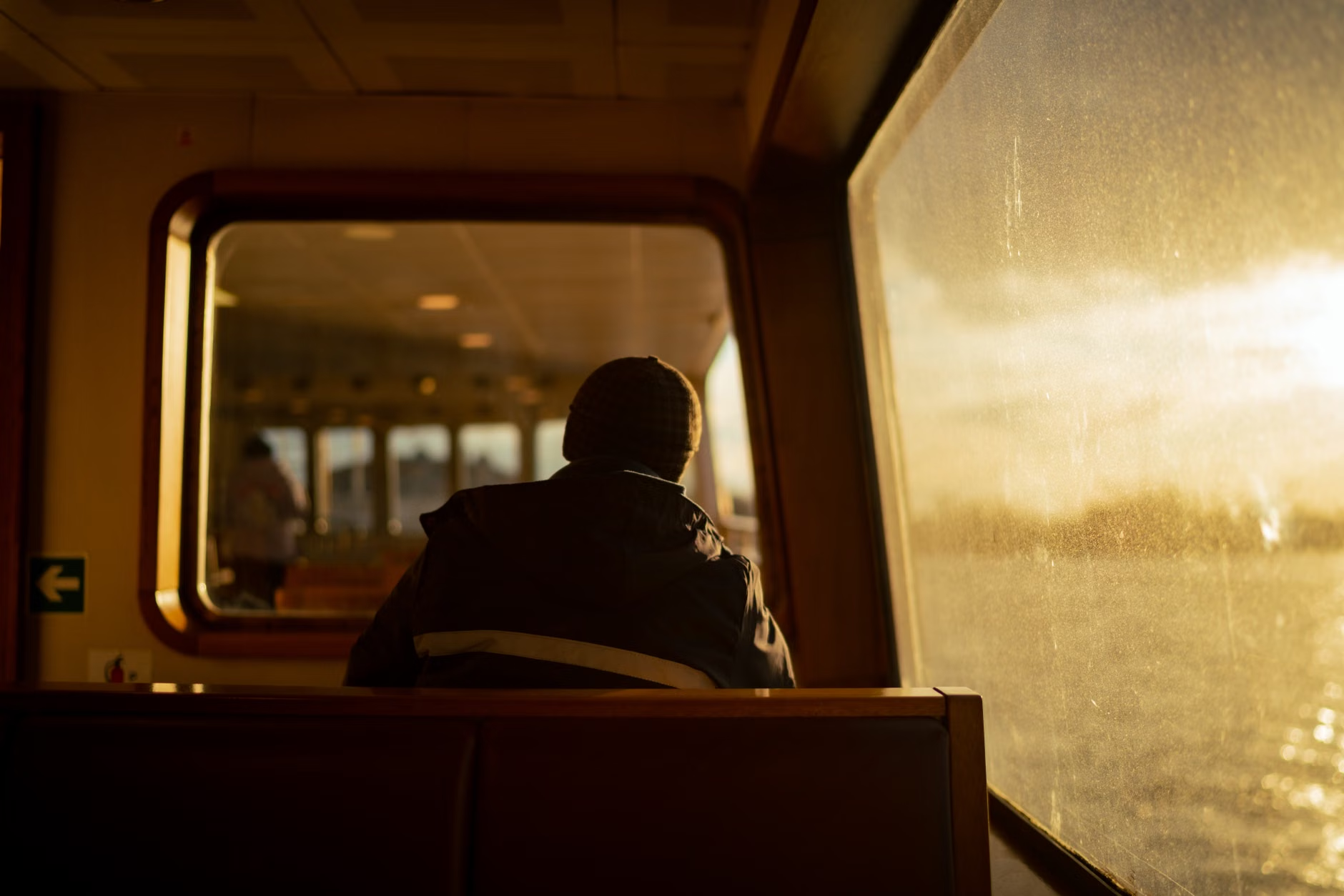
Quiet tourism, by contrast, is an exercise in subtraction. Coastal villages in the winter are inherently quiet because the tourism infrastructure has slowed down. The cafes are less crowded, the beaches are empty, and the pace of life naturally shifts to match the shorter daylight hours. This provides a rare opportunity to lower your cortisol levels. It is not about doing nothing; it is about doing things that require zero mental load.
When you visit a coastal village in the winter, you are moving away from the “experience economy” and toward a “presence economy.” You aren’t paying to be entertained; you are paying for the environment to support your nervous system’s need to downshift. This is particularly vital for parents who have spent months prioritizing the needs of others.
Identifying the Right “Quiet” Destination
Not every coastal town is suitable for quiet tourism. A town that relies heavily on summer nightlife or extreme water sports will likely feel hollow and depressing in the winter. You are looking for a place with “year-round soul.” This means a location that has a permanent resident population rather than one that shuts down entirely when the mercury drops.
When researching, look for these three indicators that a destination is right for a winter retreat:
| Feature | Why it matters for parents | What to look for |
|---|---|---|
| Local Infrastructure | You need reliable, high-quality basic services (supermarkets, clinics) to feel secure. | A town with a library, a post office, and at least one year-round bakery. |
| Walkability | Driving to find activities creates more “parental labor.” | A village center where you can walk from your accommodation to the water. |
| Indoor/Outdoor Balance | Winter weather can be unpredictable; you need a “Plan B” that isn’t just a TV. | Local museums, art galleries, or cozy, family-friendly cafes. |
The goal is to find a location where the “vibe” is authentic. If you find yourself looking at listings that talk about “nightclubs” or “tourist attractions,” keep looking. You want listings that mention “walking paths,” “local artisans,” and “quiet harbors.”
The Art of Low-Stimulation Scheduling
The biggest mistake most people make when planning a reset is trying to cram in “must-see” spots. If you have children with you, this is a recipe for disaster. The “Quiet Tourism” framework suggests the 1:1 Rule: one anchor activity in the morning, and total flexibility for the rest of the day.
Let’s say you are visiting a coastal village in the UK or the Pacific Northwest. Your anchor activity might be a short, brisk walk to a local lighthouse or a visit to a small maritime museum. That is it. That is your day. Everything else—reading, drinking tea, coloring with the kids, or simply watching the waves—is spontaneous.
This approach works because it removes the pressure to “achieve” a vacation. When you define success by how many things you saw, you are just working a different kind of job. When you define success by the quality of your sleep and the calmness of your conversations, you are actually resting.

Practical Logistics: Packing for the Elements
The barrier to enjoying a winter coastal trip is often poor preparation for the weather. If you are cold, you are not resting; you are surviving. The key to successful winter coastal travel is layering, not bulk. You want to be able to go from a freezing beach to a warm coffee shop without feeling like you are wearing a suit of armor.
The Layering Strategy:
- Base Layer: Use Merino wool or high-quality synthetic thermal wear. Avoid cotton, as it retains moisture and will make you feel colder if you sweat.
- Mid Layer: A fleece or a wool sweater. This is your insulation.
- Outer Layer: A windproof, waterproof shell. Coastal winds are the real enemy in winter, not necessarily the temperature itself. A windproof shell is significantly more effective than a thick, non-windproof wool coat.
Don’t forget the “comfort kit.” This includes items that facilitate the quiet atmosphere: a physical book (no tablets, which keep your brain in “scrolling mode”), a high-quality thermal mug for hot drinks on the beach, and a notebook for dumping those “mental to-do lists” that will inevitably pop up when your brain finally gets a chance to breathe.

Common Pitfalls and How to Avoid Them
Even with the best intentions, the “vacation mode” can go wrong. Here are the common mistakes to watch out for:
1. The “Wi-Fi Trap”
Many rentals advertise “High-Speed Wi-Fi” as a selling point. For a quiet-tourism reset, this is a hazard. If you have the ability to work, you will work. If you have the ability to check the news, you will check the news. Decision Rule: Choose an accommodation that has internet, but commit to a “digital sunset” at 6:00 PM. Turn off your phone and put it in a drawer.
2. The “Empty Fridge” Scenario
In smaller coastal villages, shops may have limited hours in the winter. Arriving on a Sunday night only to find the only grocery store closed is a major stressor. Actionable Step: Always check the opening hours of the local market before you arrive. If they are limited, bring a “starter kit” of non-perishables (coffee, tea, oatmeal, pasta) so you don’t have to scramble for food immediately upon arrival.
3. Over-estimating Child Resilience
Children in their early school years may not find “looking at the sea” as restful as you do. They need engagement. Solution: Frame the trip as an “exploration mission.” Instead of “we are going to sit and look at the beach,” try “we are going to see how many different types of sea glass or interesting rocks we can find.” The activity is the same, but the framing changes the child’s engagement level.
The Long-Term Impact of Quiet Travel
Why bother with a quiet coastal trip when you could go to a warm-weather resort? It comes down to the concept of “sensory diet.” Modern life is high-stimulation: bright lights, loud noises, constant notifications, and high-speed information. Your brain is essentially on a sugar high of constant stimulation.
A winter coastal village provides a “low-stimulation diet.” The colors are muted (grays, blues, muted greens), the sounds are repetitive and natural (waves, wind), and the pace is slow. This allows your prefrontal cortex—the part of the brain responsible for complex planning and decision-making—to actually recover. Research into “Attention Restoration Theory” suggests that environments with “soft fascination”—like the ocean—help restore our ability to focus after periods of intense mental fatigue.
For parents, this isn’t a luxury; it is a maintenance requirement. Just as you would service your car after a long road trip, you need to service your mind after a long period of parenting, working, and managing a household. A quiet coastal winter is essentially a system reset for your nervous system.
FAQ: Making the Most of Your Quiet Coastal Getaway
Q: What if the weather is terrible? Does that ruin the trip?
A: In the context of quiet tourism, “terrible” weather is part of the experience. It justifies staying inside, reading, and drinking warm tea. The goal is not to be outside 24/7, but to be in an environment where you are comfortable regardless of the weather. As long as you have good waterproof gear, the rain and wind can actually be quite cathartic to watch from a warm window.
Q: Is this type of travel too boring for children?
A: It depends on how you facilitate it. If you force them to sit still, yes. If you provide them with the tools to explore—a sketchbook, a camera, or a nature journal—they often find their own rhythm. The absence of screens and rigid schedules often leads to a surprising amount of creative play that they don’t get in their day-to-day lives.
Q: How do I find a “quiet” village that isn’t just a ghost town?
A: Look for villages that have a secondary industry beyond tourism, such as fishing, agriculture, or a local university/research presence. These towns have a heartbeat that continues throughout the winter months, ensuring that the local bakeries and cafes remain open, providing you with a sense of community without the pressure of being a “tourist.”
Final Takeaway: Prioritizing Your Reset
The most important thing to remember is that this trip is for you. It is not about creating perfect memories for a photo album or checking off a bucket list. It is about the quiet, unglamorous work of recovering your sense of self. When you return, you won’t have a list of tourist sights to brag about, but you will have a sense of clarity and rest that a frantic, high-intensity vacation simply cannot provide.
Start small. Even a two-night stay can be enough if you commit to the “quiet” aspect. Don’t look for the most exciting destination; look for the one that offers the most peace. Your mental health in the coming months will thank you for the silence you found on the coast today.
For more information on planning your slow-travel itinerary, you may find the following resources helpful for understanding regional weather patterns and local conservation areas: