Key Takeaways
- Reduced Cognitive Load: By choosing rail, you eliminate the stress of driving, parking, and navigating coastal congestion, allowing parents to engage with children during the journey.
- The ‘Last-Mile’ Reality: Rail-first travel succeeds only when you map the final transfer—whether by local bus, bike rental, or ride-share—before you leave home.
- Financial Efficiency: While single tickets may seem pricier than gas, rail travel often offsets costs by eliminating high-demand coastal parking fees and rental car insurance premiums.
The most exhausting part of a coastal family vacation isn’t the sand in your shoes or the overpriced ice cream; it is the two hours spent crawling through gridlocked traffic just to reach the shoreline. If you are in your 30s or 40s, you likely remember the “good old days” of road-tripping, but today, that experience is often replaced by a caffeinated parent gripping the steering wheel while a toddler screams in the backseat. The “Rail-First” strategy is not just an eco-friendly trend; it is a tactical shift in how you manage your family’s energy and sanity.
By moving your primary transit to the rail network, you reclaim the “lost” hours of your vacation. Instead of being a chauffeur, you become a participant in your children’s excitement. This article explores how to execute a rail-first coastal trip, why it is mathematically and mentally superior for modern parents, and how to handle the inevitable logistical hurdles that come with abandoning the car.
Why the ‘Road-Trip’ Model is Failing Modern Families
We often romanticize the family road trip, but let’s look at the reality. Coastal regions—whether in the UK, Europe, or parts of Australia—suffer from extreme seasonal congestion. When you choose to drive, you are at the mercy of infrastructure that was never built for peak summer traffic. For a parent juggling work-life balance, the last thing you want is to arrive at your destination already burnt out from a six-hour drive that should have taken three.
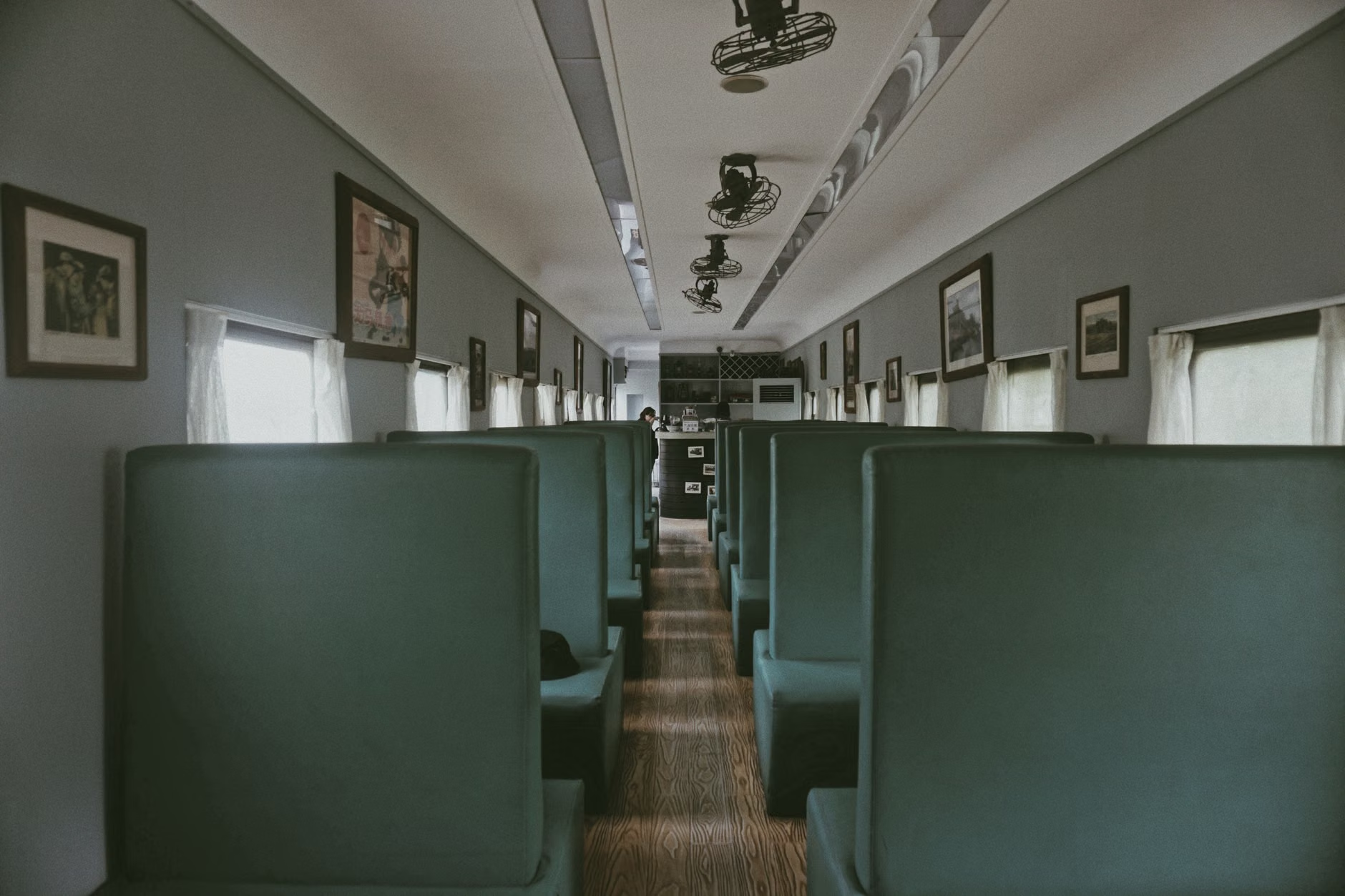
The “Rail-First” strategy operates on a simple premise: Outsource the navigation and the stress. When you travel by train, the journey becomes an extension of the vacation. You can move around, use the restroom without a “pull over” emergency, and actually look out the window instead of staring at the taillights of the car in front of you. More importantly, it shifts the focus from the act of traveling to the act of arriving.
Consider the “Parking Paradox.” In popular coastal towns, parking is not only expensive—often costing upwards of $30 to $50 per day—but it is also a source of constant anxiety. You spend your vacation worrying about time limits, permits, and whether your spot will be there when you return. By going rail-first, you remove this variable entirely. You arrive at the station, and you are already in the heart of the town, ready to walk or take a short shuttle to your accommodation.
The Logistics of the Rail-First Transition
Transitioning from car-dependency to rail-dependency requires a fundamental change in how you pack. The common mistake is treating your luggage as if you are loading a trunk. If you have to carry it, you have to pack for it. This is not about minimalism; it is about “mobility-focused packing.”
The “One-Bag-per-Adult” Rule
If you are traveling with two children, you should aim for no more than two large suitcases and two backpacks. A common failure point is the “extra just in case” bag. If you are heading to the coast, remember that most coastal towns have shops. If you truly need an extra pair of flip-flops or a specific sunscreen, you can buy it there. This trade-off—spending a few extra dollars locally versus dragging an extra 20kg of luggage through a train station—is almost always worth it.
Mapping the ‘Last-Mile’
The “last-mile” problem is the primary reason families abandon rail travel. They get off the train and realize they are still three miles from their beach house, with no clear way to get there. Before you book your tickets, you must perform a “Station-to-Stay” audit:
- Public Transit Check: Look for local bus routes or regional rail extensions. Many coastal areas have “seasonal” bus lines that run specifically from train stations to popular beaches.
- The Bike Factor: Check if your destination is bike-friendly. Renting cargo bikes or e-bikes at the station can turn a tedious transfer into a highlight of the trip.
- Pre-Booked Logistics: If you are staying at a hotel, check if they offer a shuttle. If you are in an Airbnb, look up local ride-share availability. In many coastal regions, ride-shares are scarce during peak hours, so having a pre-booked local taxi contact is a non-negotiable step.
Financial and Cognitive ROI
Many families assume that driving is cheaper. When you calculate the raw cost of fuel, it often seems that way. However, you must include the “Hidden Costs of Driving.”
| Cost Factor | Driving (Car) | Rail-First |
|---|---|---|
| Fuel/Tickets | Variable (Gas prices + wear and tear) | Fixed (Advance booking savings) |
| Parking | High ($20-$50/day) | $0 |
| Stress/Fatigue | High (Requires focus) | Low (Allows relaxation) |
| Destination Mobility | High (But parking-limited) | Medium (Requires walking/local transit) |
The table above illustrates a clear trend. While driving offers “high mobility” at the destination, that mobility is often hampered by the very traffic and parking constraints you drove through to get there. Rail-first travel forces you to slow down, which is often exactly what a family needs when they are on vacation. You are not just saving money on parking; you are buying back your own peace of mind.
Step-by-Step Execution: A Sample Itinerary
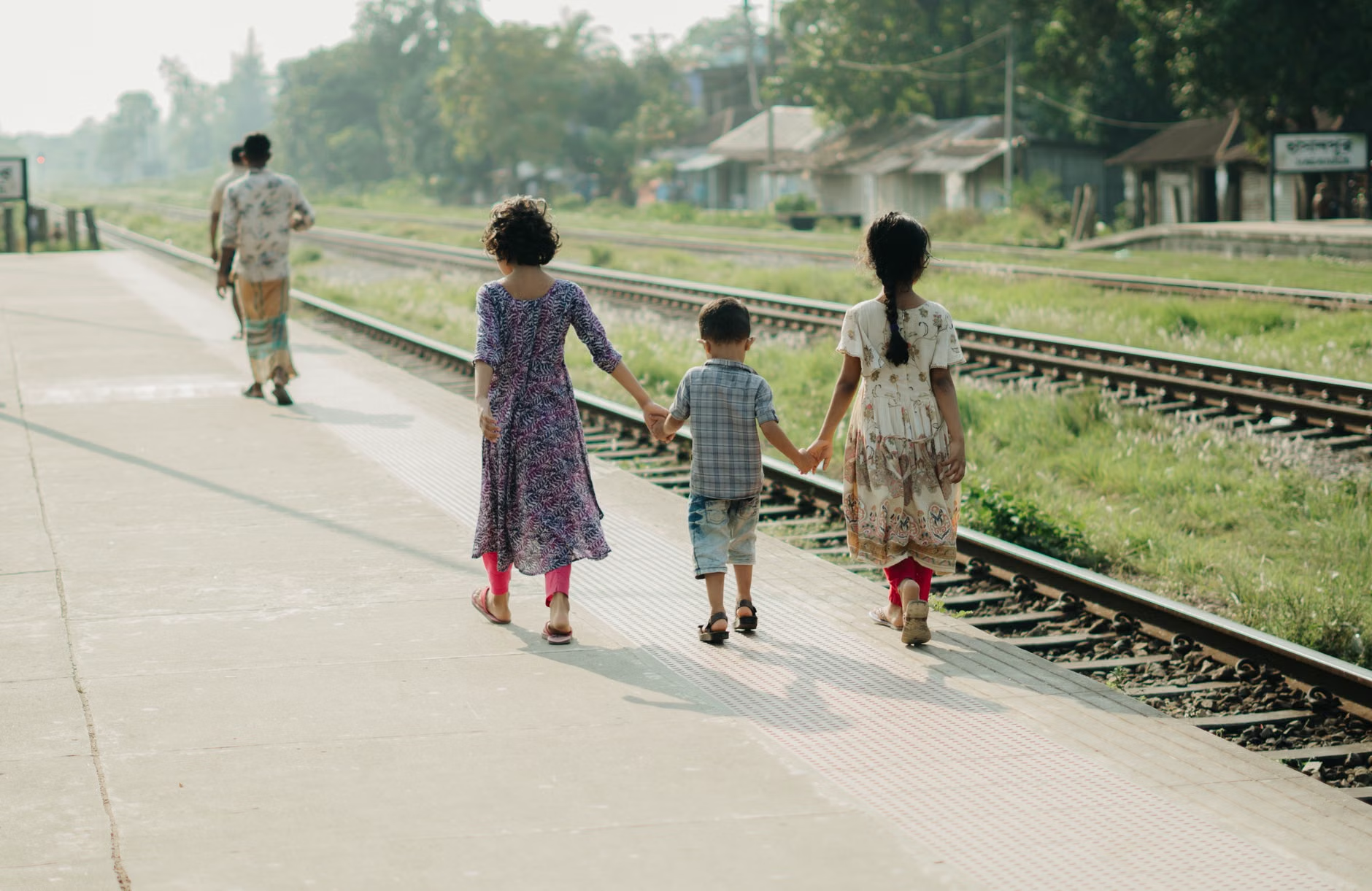
Let’s look at how this works in a real-world scenario. Imagine a family of four—two adults, a 7-year-old, and a 4-year-old—traveling to a popular coastal town three hours away.
Phase 1: The Booking (T-minus 4 weeks)
Instead of searching for “cheapest gas route,” use a multi-modal planner (like Google Maps or local rail apps). Look for “off-peak” train times. Traveling on a Tuesday morning is significantly cheaper and quieter than a Friday afternoon. Book tickets that include seat reservations—this is crucial for families. You do not want to be standing in a crowded carriage with children and luggage.
Phase 2: The Gear Prep (T-minus 1 week)
Distribute the load. Each child gets a small backpack with their own entertainment (books, tablets, coloring). This gives them a sense of responsibility and keeps their “must-haves” within reach. The adults handle the larger luggage. If you are bringing a stroller, ensure it is a “travel-weight” model that collapses easily.
Phase 3: The Transit Day
Arrive at the station 30 minutes early. This is not just for the train; it is for the “buffer zone.” It allows the kids to acclimate to the environment, use the restroom, and grab a snack without the pressure of a looming departure. Once on the train, set up your “base.” Use the tray table for activities. If you have a tablet, load it with offline content—do not rely on train Wi-Fi, which is notoriously spotty.

Common Mistakes to Avoid
Even with the best plans, things go wrong. Here is how to avoid the most common pitfalls.
1. Over-scheduling the Arrival: A common mistake is booking a train that arrives right at your hotel’s check-in time. Always build in a 90-minute “cushion.” If you arrive early, grab a coffee or ice cream near the station. If the train is delayed, you won’t be stressed about missing your check-in window.
2. Ignoring the ‘Return-Leg’ Fatigue: The trip home is always harder. You are tired, the kids are cranky, and the vacation glow is fading. Do not try to rush home on a Sunday night when everyone else is doing the same. If possible, book a late-morning train on Monday. The price difference is often negligible, and the experience is infinitely calmer.
3. The ‘No-Snack’ Gamble: Never assume the train will have food you want. Train station food is expensive and often unhealthy. Pack a “picnic” for the train. It becomes a special event for the kids—eating lunch on a train is an experience in itself, whereas eating a dry sandwich in a car is a chore.
Beyond the Shore: Why Rail-First is a Life Skill
Adopting a rail-first mindset teaches your children about sustainable travel and the value of planning. They learn that the destination isn’t the only thing that matters; the way you get there defines the quality of the experience. In your 30s and 40s, you are likely feeling the pressure of constant “doing.” Rail travel offers a rare opportunity to pause.
Furthermore, this strategy is scalable. Once you master a coastal rail trip, you can apply the same logic to city breaks or mountain retreats. The core principles—minimizing luggage, auditing the last mile, and prioritizing off-peak travel—remain the same. You are essentially building a toolkit for a more relaxed, intentional way of experiencing the world.
If you find yourself questioning whether you can really give up the car, start small. Try a short, two-hour rail trip to a local destination for a weekend. You will quickly see that the “inconvenience” of not having a car is a myth. The real inconvenience is the stress of modern driving, and once you realize you don’t have to participate in it, you will rarely go back.
Final Thoughts for the Planning Stage
The move to rail-first travel is a commitment to your own well-being. It requires more upfront planning than throwing everything into a trunk and driving, but the dividends in mental health and family connection are substantial. Start by looking at your next trip through the lens of a rail network. Check the routes, calculate the cost of the “last mile,” and consider the time you will save by not sitting in traffic.
Don’t be afraid to start with a hybrid approach if you are nervous. Drive to a major hub, park the car, and take the train for the final, most congested leg of your journey. As you grow more comfortable with the logistics, you will find that the car becomes less of a necessity and more of a burden. Your vacation should start the moment you leave your house, not when you finally pull into a parking spot three hours late.
Frequently Asked Questions
How do I handle bulky items like strollers or beach gear on a train?
Most modern trains have dedicated luggage areas near the doors. For strollers, ensure you have a lightweight, umbrella-style model that folds in seconds. For beach gear, use a collapsible wagon or oversized tote bags that can be easily stowed. If you have too much gear, consider renting beach equipment locally—many coastal towns have services that deliver chairs and umbrellas directly to the sand.
What if my train is delayed or cancelled?
This is the biggest fear for rail travelers. Always have the train operator’s app installed and notifications turned on. If a delay occurs, use the time to let the kids explore the station or grab a snack. If a major cancellation happens, check your ticket terms—most regions have “delay repay” policies that compensate you for significant disruptions. Keep a list of local taxi numbers handy just in case you need to pivot to a road-based solution for the final stretch.
Is rail-first travel really cheaper than driving?
It depends on the size of your group and the distance. For a family of four, the total ticket cost can sometimes exceed the cost of gas. However, when you factor in the high cost of coastal parking (which can reach $50/day), the depreciation of your car, and the stress-mitigation value, rail often comes out ahead. Use a comparison tool to calculate your total trip cost, including parking and tolls, before dismissing rail as “too expensive.”
For further information on planning your rail journey, check your national rail operator’s official website, such as National Rail (UK) or Deutsche Bahn (Germany), which provide comprehensive tools for journey planning, seat reservations, and accessibility information.