- Authenticity is a non-negotiable cost: Always prioritize platforms that offer physical third-party authentication to avoid the high risk of sophisticated counterfeits.
- Depreciation math: Buying pre-owned luxury items that are 2–3 years old can save you 30-50% off retail, but ensure the item has high “resale liquidity” if you plan to sell it later.
- Maintenance is the hidden variable: Factor in the cost of professional spa treatments or repairs, which can quickly erase the savings of a “bargain” purchase.
The most important realization for anyone in their 30s or 40s considering the pre-owned luxury market is that you aren’t just buying a product; you are managing an asset. While the allure of owning a “dream item” at a fraction of the cost is undeniable, the market has shifted from simple bargain hunting to a complex ecosystem of authentication, condition grading, and speculative value. If you are juggling a mortgage, school fees, and the desire for quality, treating a luxury purchase as an impulsive “treat” is a quick way to lose money. Instead, you need to treat it like a calculated acquisition.
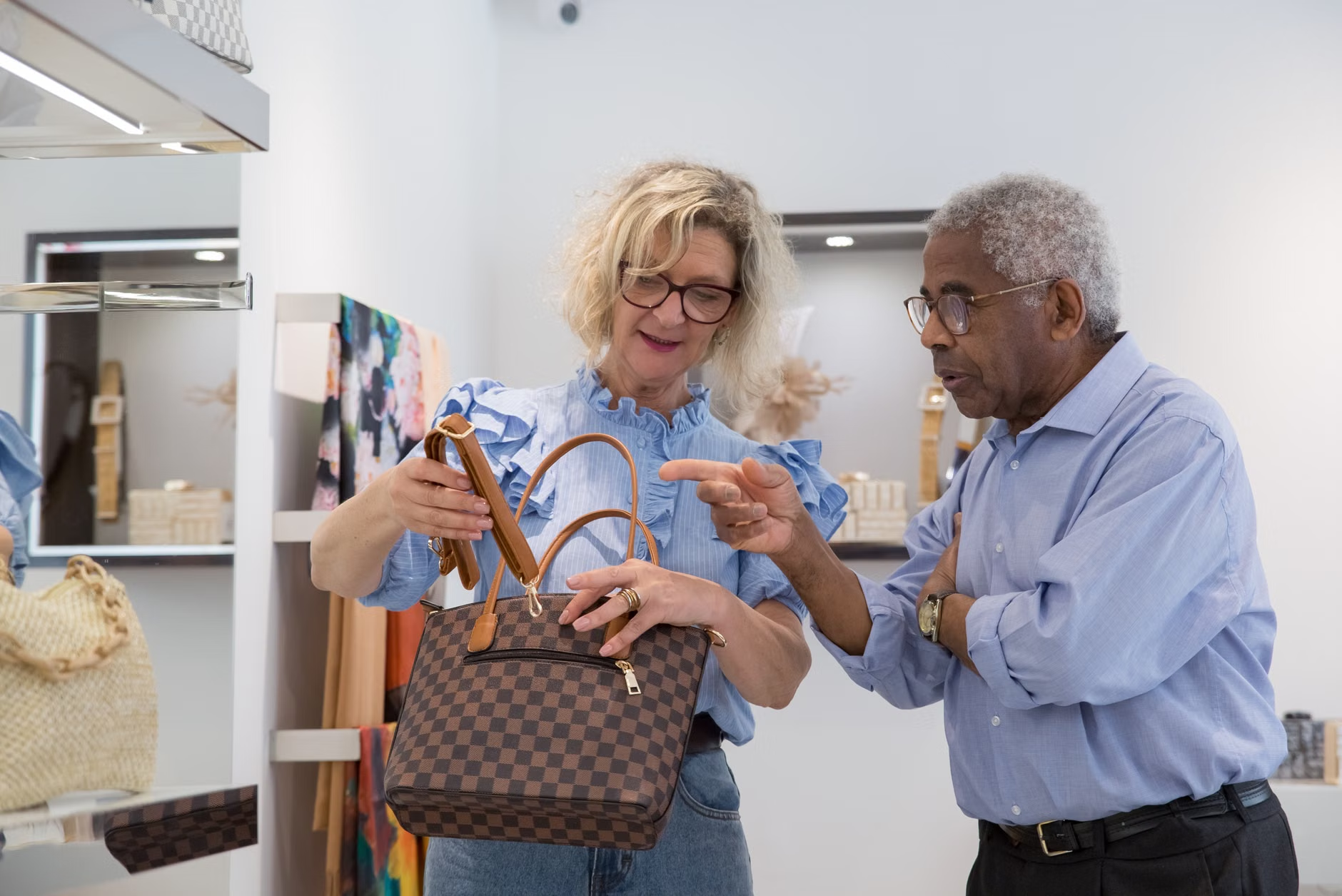
Why the Pre-Owned Market is No Longer About “Used” Goods
Ten years ago, buying second-hand luxury felt like browsing a dusty consignment shop. Today, it is a streamlined, data-driven industry. The rise of platforms like The RealReal, Vestiaire Collective, and Rebag has professionalized the space. For a parent or professional in their 30s, this is a double-edged sword. On one hand, you have access to a global inventory; on the other, you are competing with professional resellers who use algorithms to snatch up undervalued items within seconds.
The “movement” is driven by two factors: sustainability and economic pragmatism. When you buy a bag that has already depreciated, you are essentially letting the first owner absorb the “retail tax”—that immediate 20–40% loss in value the moment an item leaves the boutique. However, the risk of counterfeits has reached an all-time high. Modern “superfakes” are so well-made that even experienced retail staff can be fooled. This is why the market has moved toward “authenticated” models. If a platform doesn’t have a robust, transparent authentication process, the risk is almost always higher than the potential savings.
The Math of Depreciation: When Does it Make Financial Sense?
Not every luxury item is a good candidate for the second-hand market. To decide if a purchase is smart, you must look at the item’s resale liquidity. Some brands hold value (or even appreciate), while others drop like a stone. If you buy a luxury item for $2,000 and it loses 50% of its value in two years, your “cost per wear” is high. If you buy a pre-owned version for $1,200 and it retains that value for three years, your cost per wear is significantly lower.
Consider this decision framework for your next purchase:
| Asset Type | Risk Level | Recommendation |
|---|---|---|
| Classic Icons (e.g., specific leather goods) | Low | Best for long-term holding; high resale value. |
| Seasonal/Trendy Items | High | Only buy if you love it; expect very low resale return. |
| Watches/Timepieces | Medium | Requires service history; only buy from verified dealers. |
The rule of thumb for anyone balancing a family budget is to avoid “fashion-forward” seasonal items in the pre-owned market unless they are heavily discounted. Focus instead on “timeless” pieces that have a proven secondary market. If you cannot find a record of similar items selling on platforms like eBay or specialized forums, it is likely a sign that the item has low liquidity and will be difficult to resell if you ever need the cash back.
The Hidden Costs That Most Buyers Overlook
A common mistake is assuming the sticker price is the final cost. When you buy new, you get a warranty, a pristine box, and the peace of mind that comes with store-bought condition. When you buy pre-owned, you are often inheriting someone else’s wear and tear. You must factor in “restoration overhead.”
Professional Cleaning and Repairs: If you buy a leather item, you might need a professional leather spa treatment to remove scuffs or refresh the color. This can cost anywhere from $100 to $300 depending on the severity. If your “bargain” was $800, that extra $200 in repairs brings you closer to the retail price of a new, lower-tier item.
Shipping and Import Duties: If you are shopping on international platforms (e.g., buying a bag from France while living in the US or Asia), the import duties can be a shock. Always calculate the “landed cost”—the price of the item plus shipping, insurance, and the customs duties your country charges for luxury imports. Many buyers find that the “deal” vanishes once the customs bill arrives.
Step-by-Step: How to Verify Before You Buy
If you are serious about entering the pre-owned market, do not rely on “gut feeling.” Use this systematic approach to minimize your risk:
- Check the Seller’s History: On platforms like Vestiaire or eBay, look at the number of transactions and the quality of feedback. Avoid sellers with “private” profiles or those who refuse to answer specific questions about condition.
- Request “Macro” Photos: If the listing only has generic or stock photos, walk away. You need high-resolution images of the serial number, the stitching, the hardware engravings, and the interior lining.
- Use Third-Party Authentication Services: Services like Entrupy or specialized luxury authenticators (e.g., ProAuthenticators) can provide a certificate of authenticity for a small fee (usually $20–$50). If the seller refuses to provide the information needed for these services, it is a red flag.
- Compare “Condition Grades”: Most platforms use a ranking system (e.g., Pristine, Excellent, Very Good, Good). Understand that “Good” usually means visible wear. If you are a perfectionist, never buy below “Excellent” or “Pristine.”
The Psychological Trap: Why We Buy and How to Manage It
In our 30s and 40s, we often feel the pressure of “lifestyle creep”—the idea that as our income grows, our consumption must grow with it. Buying pre-owned can sometimes be a way to justify spending money we shouldn’t. Ask yourself: am I buying this because it adds value to my life, or because I want the status associated with the brand? If it’s the latter, the pre-owned market is a dangerous place because it makes luxury feel “accessible.”
A healthy way to approach this is the “One-In, One-Out” rule. If you buy a pre-owned luxury item, sell an existing item you no longer use. This keeps your collection curated and ensures you aren’t just accumulating clutter. Furthermore, consider the “Cost per Use” metric. If you buy a $1,000 bag and use it 200 times a year for five years, your cost is $1 per use. If you buy a $200 fast-fashion bag that breaks after 10 uses, your cost is $20 per use. Luxury, when purchased wisely, is actually the more frugal choice in the long run.
Advanced Insights: The “Dead Stock” Opportunity
One of the most overlooked variables in the current market is “dead stock”—items that were released years ago but never used or were discontinued. These items often have higher quality materials than current-season versions. For example, many luxury brands have changed their hardware or leather sourcing over the last decade to cut costs. By buying a 10-year-old “new old stock” item, you are often getting a higher-quality product than what is currently sitting on the retail shelves.
However, this comes with a trade-off: Material Degradation. Adhesives, elastics, and even some types of coated canvas can degrade over time, even if they haven’t been used. If you are buying a vintage item, ask the seller about the “stickiness” of the interior pockets or the state of any elastic components. These are the first things to fail and are often impossible to repair.
It is important to remember that laws governing the sale of pre-owned goods vary significantly by region. In the European Union, for example, consumer protection laws are generally very strong, giving you 14 days to return goods bought online. In the United States, return policies on private sales are almost non-existent. Always read the specific “Return Policy” of the platform, not just the seller. Platforms like Rebag or The RealReal have their own return policies which supersede the individual seller’s terms.
Additionally, be aware of “Luxury Tax” thresholds. In some countries, purchasing high-value items from overseas triggers a mandatory tax declaration. Failing to declare these items can lead to fines that far exceed the value of the item itself. Always check your local customs authority’s website before hitting the “Buy” button on an international order.
Practical Next Steps for Your Shopping Journey
If you are ready to make your first move into the pre-owned luxury world, start small. Do not start with a $5,000 handbag. Start with a smaller accessory—a wallet, a scarf, or a classic belt. This allows you to experience the authentication process, understand the condition grading, and get a feel for the shipping process without risking a significant portion of your savings.
Remember that the goal isn’t to be a collector; it’s to be a smart consumer. If you find yourself spending more time researching the item than actually using it, you’ve moved from “lifestyle” to “hoarding.” Keep your focus on items that serve a purpose in your daily life, and you will find that the pre-owned market is a powerful tool to elevate your wardrobe without breaking your household budget.
For further reading on authenticating luxury goods, you can visit the official guides provided by brands or industry watchdogs like the Federal Trade Commission’s guidance on consumer protection, which offers a great foundation for understanding your rights in online transactions.
Frequently Asked Questions
1. How can I tell if a pre-owned luxury item is a “superfake”?
Superfakes are designed to bypass basic visual checks. The only way to be certain is to use a professional authentication service that inspects the item physically. Look for inconsistencies in the heat stamps, the weight of the hardware, and the font used for serial numbers. If the price is “too good to be true,” it is almost certainly a fake.
2. Is it better to buy from a platform or a private seller?
Platforms (like The RealReal or Vestiaire) generally offer better protection because they act as intermediaries who authenticate the item before it reaches you. Private sellers (like those on Facebook Marketplace) offer lower prices but carry a much higher risk of fraud. For your first few purchases, always use a platform with a built-in authentication guarantee.
3. Does the “pre-owned” label affect the long-term value?
No, the value is determined by the brand’s prestige, the condition of the item, and the scarcity of the model. In fact, for certain vintage items, the “pre-owned” status adds to the appeal because it proves the item has stood the test of time. Focus on the condition and the authenticity, and the “pre-owned” label won’t negatively impact your investment.