The most effective way to manage a home in your 30s and 40s is to stop buying furniture that serves only one purpose, because your family’s needs will inevitably change every 18 to 24 months. Modular furniture—pieces designed to be reconfigured, expanded, or repurposed—is the only long-term solution to avoid the cycle of buying, discarding, and rebuying items as children grow and your professional life shifts.
- Lifecycle Cost Savings: Modular systems carry a higher upfront cost but prove 40-60% cheaper over a decade by eliminating the need for full replacements during life transitions.
- Structural Flexibility: You should prioritize “open-system” furniture that uses standardized mounting hardware, allowing you to add shelves, drawers, or desk extensions from different production years.
- The “Footprint” Rule: When selecting modular units, always measure for the future configuration (e.g., the space a desk will occupy) rather than the current one (e.g., a small play corner), ensuring your floor plan remains functional as children age.
Why Fixed-Purpose Furniture is a Financial Trap for Parents
If you are in your mid-30s, your home likely feels like a shifting landscape. One year, you need a nursery; two years later, that space is a playroom; three years after that, it needs to be a dedicated remote-work station. When you buy “fixed” furniture—such as a dedicated changing table, a small toddler-sized desk, or a bulky, non-separable media console—you are purchasing a temporary solution that becomes literal landfill fodder within a few years.
The problem isn’t just the money; it’s the physical labor and the environmental impact. Moving heavy, non-modular furniture is a logistical nightmare. Every time you move or remodel, fixed pieces either don’t fit the new layout or they look out of place. Modular furniture changes this dynamic by treating your interior space as a “living” environment rather than a static display.
Consider the “Nursery to Study” transition. A standard, non-modular crib-and-changer set is useless once the child outgrows it. Conversely, a modular storage wall can start as a low-profile toy bin system. As the child grows, you move the base units to the floor, add vertical shelving, and insert a desktop bridge. The components remain the same, but the utility evolves. You aren’t replacing furniture; you are simply “updating” the configuration.
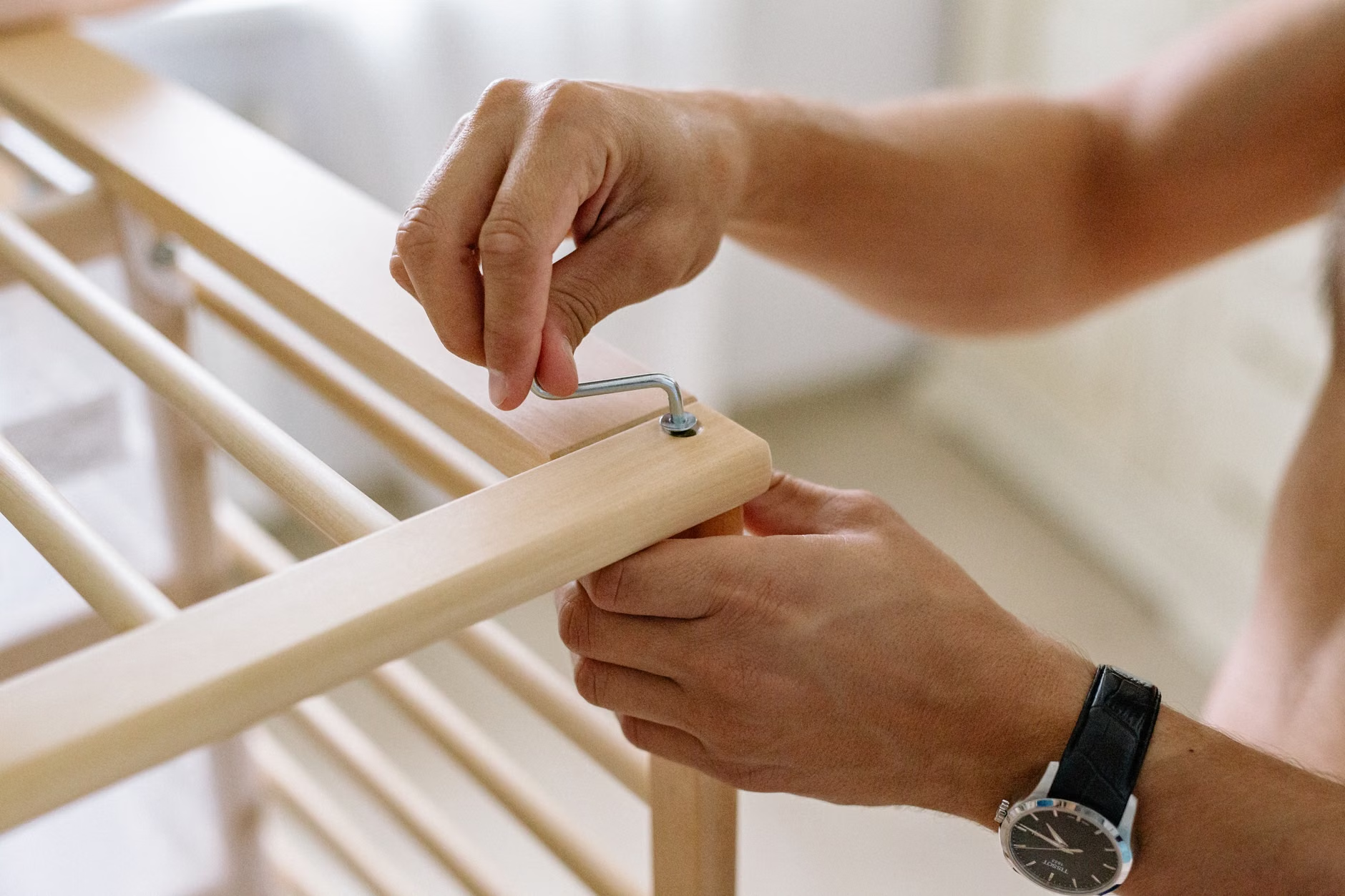
How to Identify Truly Modular Systems vs. “Marketing Modular”
Not everything labeled “modular” is actually useful. Some brands use the term to describe furniture that comes in two pieces, but those pieces cannot be combined with other collections or future additions. To avoid buying into a dead-end system, you need to look for specific engineering indicators.
1. Standardized Mounting and Hardware
The hallmark of a great modular system is standardized hardware. If the shelf pins, wall-mounting brackets, or interlocking clips are proprietary and change every season, you are trapped. Look for systems that use industry-standard hole spacing (like the 32mm system used in much of European flat-pack furniture). If you can buy a replacement bracket at a hardware store, the system is truly modular.
2. The “Open-Stock” Guarantee
Before purchasing, check if the manufacturer offers “open-stock” availability. This means you can buy a single unit today and, theoretically, buy a matching cabinet or shelf in five years. If a company discontinues its “collections” every season, do not invest in their modular systems. You want a brand that has maintained the same design language for at least a decade.
3. Vertical vs. Horizontal Scalability
Most people focus on horizontal space, but the real secret to modularity is verticality. A system that allows you to stack units safely—using heavy-duty wall anchors—is significantly more valuable than one that only expands side-to-side. In a smaller home, building up is the only way to accommodate a growing family without overcrowding your floor.
| Feature | Fixed-Purpose Furniture | True Modular System |
|---|---|---|
| Resale Value | Low (specific to one use) | High (parts are universally useful) |
| Moving Difficulty | High (bulky, fragile) | Low (breaks down into small boxes) |
| Adaptability | None | High (reconfigures for any room) |
| Upfront Cost | Lower | Higher |
As shown in the table above, the upfront cost of modular systems is higher, but the “cost-per-year” is significantly lower. If you plan to stay in your home for more than three years, the modular system will almost certainly pay for itself by preventing the need for new furniture purchases during life transitions.
Real-Life Scenarios: Managing the Nursery-to-School Transition
Let’s look at a common scenario: the transition of a child’s room. At age three, a child needs floor-level access to toys. At age seven, they need a desk for homework and deep shelving for books. At age twelve, they need a gaming/tech station and storage for clothes or hobby gear.
If you use a modular cube system, the process is simple:
- Phase 1 (Ages 2-5): Use the cubes in a 2×3 horizontal configuration. Add fabric bins to hide the mess of small toys.
- Phase 2 (Ages 6-10): Purchase a “bridge” or “desk attachment” that fits into the existing cube structure. Remove the bottom-right cubes to create legroom.
- Phase 3 (Ages 11+): Take the units apart. Use two as nightstands, and stack the rest vertically against a wall to create a tall “tower” for gaming consoles, books, or a computer monitor.
This approach saves you from having to buy a new “child’s desk,” which often lacks the size for a teenager’s laptop or gaming setup. By using modularity, you ensure the furniture grows in complexity as the child does.

Common Mistakes to Avoid When Designing Your Layout
Even with the best modular furniture, you can fail if you don’t account for the “hidden” variables of home life. Here are the mistakes I see most often in families in their 30s and 40s.
Ignoring the “Access” Gap
When you stack modular units, you often create “dead zones” where you can’t reach the contents. If you are stacking units higher than 150cm (about 5 feet), make sure the top units are for items you rarely use, like seasonal decor or long-term storage. Do not put frequently used school supplies or toys in high-up modular units; the frustration of reaching them will lead to clutter as children simply dump things on the floor instead of putting them away.
Forgetting Cable Management
Modular furniture is often designed for storage, not electronics. If you plan to use a modular unit as a media console or a desk, ensure there is a plan for cable management. Many modular systems are essentially “dumb” boxes. If you don’t drill small holes for cables or add cable channels (which you can buy separately), you will end up with a tangled mess that ruins the clean, modern look you bought the system for.
Underestimating the Weight Load
Not all modular shelves are created equal. If you are stacking units to create a library, you need to check the weight capacity of the base unit. A common mistake is stacking four levels of books on a unit designed for lightweight decorative items. Always anchor to the wall. This isn’t just about safety—it’s about structural integrity. If the base unit bows under the weight, the entire modular system will become misaligned and impossible to reconfigure later.
The Hidden Financial Strategy: Modular as an Investment
In your 30s and 40s, you are likely balancing mortgage payments, childcare costs, and retirement savings. It is tempting to buy the cheapest furniture possible (“fast furniture”). However, fast furniture is a false economy. It is essentially disposable. When you move, it falls apart. When you want to change your layout, it doesn’t fit.
Modular furniture is an asset. Because it is designed to be reconfigured, it has a secondary market value. High-quality modular brands (often found in design-focused stores or specialized furniture retailers) hold their value. If you decide to sell your home or move, you can take your furniture with you, knowing it will fit into the new space. You aren’t just buying a desk; you are buying a piece of home infrastructure that will stay with you for decades.

Decision Criteria: Which Modular System is Right for You?
Before clicking “buy,” you need to categorize your needs. There are three main types of modular systems on the market:
- The “Wall-Mounted” Rail System: These are the most flexible. They consist of vertical rails screwed into the wall, with shelves and cabinets that hook on. Best for: Small apartments or rooms where you want to maximize floor space.
- The “Cube/Box” System: These are standalone units that can be stacked or placed side-by-side. Best for: Families who move often and don’t want to drill holes in their walls.
- The “Upholstered Sectional” System: These are modular sofas where individual seats or ottomans can be moved. Best for: Living rooms that need to double as guest rooms or play areas.
If you are in a rental, the “Cube/Box” system is usually the safest bet. If you are in a permanent home, the “Wall-Mounted” system offers the cleanest look and the most stability. Never mix and match different brands of modular systems unless you are 100% sure the dimensions and mounting points are identical. The millimeter differences between brands will drive you crazy when you try to line them up.
The Psychological Benefit of a Reconfigurable Home
There is a hidden benefit to modular furniture that goes beyond money and organization: it reduces the “stuck” feeling. When our homes are static, we feel like we are living in a museum of our past selves. The crib stays where the crib was. The desk stays where the desk was. When you have the power to rearrange your furniture in an afternoon, you gain a sense of agency over your environment.
When you hit a stressful period—like a new job, a new baby, or a transition in school—having the ability to change the physical flow of your home can provide a surprising amount of relief. It allows you to “reset” your space to match your current reality. It is a small act of control in a life that often feels like it is moving too fast.
Next Steps for Your Home
If you are ready to start moving toward a modular home, don’t try to replace everything at once. Start with one “problem zone.” Is it the entryway? The home office? The playroom? Pick one, measure the wall, and buy a base modular unit. Use it for six months. See how it performs. If it works, expand it. If it doesn’t, move it to another room.
Remember, the goal is not a perfectly staged Instagram home. The goal is a home that serves you, not the other way around. Don’t be afraid to experiment with configurations. If you need a temporary standing desk, stack two units and put a board across them. If you need a temporary play-pen barrier, arrange the units in a U-shape. The best modular furniture is the kind that you aren’t afraid to move, change, and repurpose.
You have enough on your plate without worrying about whether your sofa will fit in your next apartment or if your kid’s desk will become useless in two years. Invest in quality, stay within a single hardware system, and stop buying furniture that has an expiration date.
Frequently Asked Questions
Q: Can I really mix and match modular pieces from different years?
A: Only if you stick to the same manufacturer and the same specific “collection” line. Even within a brand, different lines often use different mounting hardware or wood finishes. Always check the manufacturer’s documentation for “backward compatibility.”
Q: Is modular furniture always more expensive than standard furniture?
A: Upfront, yes. However, when you factor in the cost of replacing fixed furniture every 3-5 years due to damage or lack of utility, modular furniture is significantly cheaper over a 10-year period. You are paying for the engineering that allows for reconfiguration.
Q: What is the biggest mistake people make when installing wall-mounted modular systems?
A: Not finding the studs. Modular systems can be heavy, especially when loaded with books or electronics. Relying on drywall anchors alone is a recipe for disaster. Always use a stud finder and ensure your support rails are anchored directly into the wall studs.
For further reading on furniture safety and anchoring, you can refer to the U.S. Consumer Product Safety Commission’s guide on furniture stability, which provides essential advice for securing heavy, modular, or tall units in homes with children.