- Adopt the ‘One-Activity-Per-Day’ Rule: To prevent burnout, limit your structured park activities to one primary goal, leaving the rest of the day for spontaneous exploration.
- Prioritize Accessibility Over Intensity: Regional nature parks are often overlooked for more famous National Parks, but they offer superior amenities for families with kids, such as stroller-friendly paths and frequent rest stations.
- Preparation is the Buffer: Pack a ‘sensory kit’—binoculars, a magnifying glass, and a simple field guide—to turn a slow walk into an engaging, self-led educational experience for children.
If you are anything like me, your typical “family trip” starts with an optimistic, color-coded itinerary and ends with everyone exhausted, cranky, and needing a vacation from the vacation. We treat nature parks like amusement parks, trying to hit every viewpoint, trail, and visitor center before the sun goes down. But there is a better way to experience the outdoors: the Slow-Adventure movement.
Slow-adventure isn’t about being lazy; it’s about depth over distance. It’s the intentional choice to trade the “checklist” mentality for a sensory-rich experience. For parents in their 30s and 40s, this is the secret to actually feeling refreshed after a weekend away. Instead of rushing to reach the summit, you spend an hour examining the texture of moss or waiting quietly to see if a bird emerges from the brush. It changes the nature park from a place you “conquer” into a place you inhabit.

Why Regional Nature Parks Outperform Major National Parks for Families
When planning a family getaway, the default is often the biggest, most famous National Park in the region. While these places are stunning, they are frequently overcrowded, require permits months in advance, and involve grueling travel times. Regional nature parks—the smaller, state, or county-managed forests and wetlands within a two-hour drive—are the unsung heroes of the slow-adventure movement.
The Trade-off: You lose the “bucket list” bragging rights of a world-famous canyon, but you gain time. A 45-minute drive to a regional nature park is vastly superior to a six-hour trek to a major tourist hub when you have kids in the backseat. The infrastructure in regional parks is often designed for local community use, meaning you’ll find better-maintained picnic areas, cleaner restrooms, and trails that are actually manageable for shorter legs.
Decision Criteria for Choosing Your Park:
| Feature | National Park (The “Big” Goal) | Regional Nature Park (The “Slow” Goal) |
|---|---|---|
| Travel Time | High (Often 4+ hours) | Low (Under 2 hours) |
| Crowd Density | High (Peak season chaos) | Low (Usually locals only) |
| Activity Tempo | Fast (Must see everything) | Slow (Immersive/Relaxed) |
| Parental Stress | High (Logistics/Planning) | Low (Low-stakes/Flexible) |
The numbers don’t lie: when stress levels are lower, children are more likely to engage with their environment. A study on “Green Time” versus “Screen Time” suggests that even 20 minutes of unstructured nature interaction can significantly lower cortisol levels in both adults and children. In a regional park, you can achieve that 20 minutes within minutes of parking the car, rather than after a two-hour hike to a viewpoint.
The Art of the ‘One-Activity-Per-Day’ Strategy
The most common mistake I see parents make is “over-programming.” We fill the morning with a hike, the afternoon with a museum visit, and the evening with a sunset viewpoint. By 3 PM, everyone is hitting a wall. The core of the slow-adventure itinerary is the One-Activity-Per-Day rule.
What it looks like in practice:
- Morning: Arrive at the park between 9:00 AM and 10:00 AM. This avoids the early rush and allows for a slow, unhurried start.
- The Primary Goal: Choose one specific, low-intensity activity. Examples include: a short boardwalk loop, a pond-side sketching session, or a search for specific seasonal wildflowers.
- The “Free-Range” Afternoon: After your goal is met, do absolutely nothing scheduled. Let the kids throw rocks into a stream, let yourself sit on a bench with a book, or simply walk in a random direction until you get tired.
This approach transforms the dynamic from “we have to do this” to “we get to do this.” When you remove the pressure of the clock, you stop looking at your watch and start looking at the canopy. You’ll notice that children become naturally curious when they aren’t being dragged toward a destination. They will stop to look at bugs, collect leaves, or ask questions about the trees. If you rush them, you lose that. If you slow down, you become a partner in their discovery.
Preparing Your ‘Slow-Adventure’ Kit
You don’t need expensive gear to have a successful slow-adventure. In fact, the less gear you have, the more you can focus on the environment. However, a few “slow-tech” tools can significantly enhance the experience. Think of these as your “curiosity amplifiers.”
The Essential Toolkit:
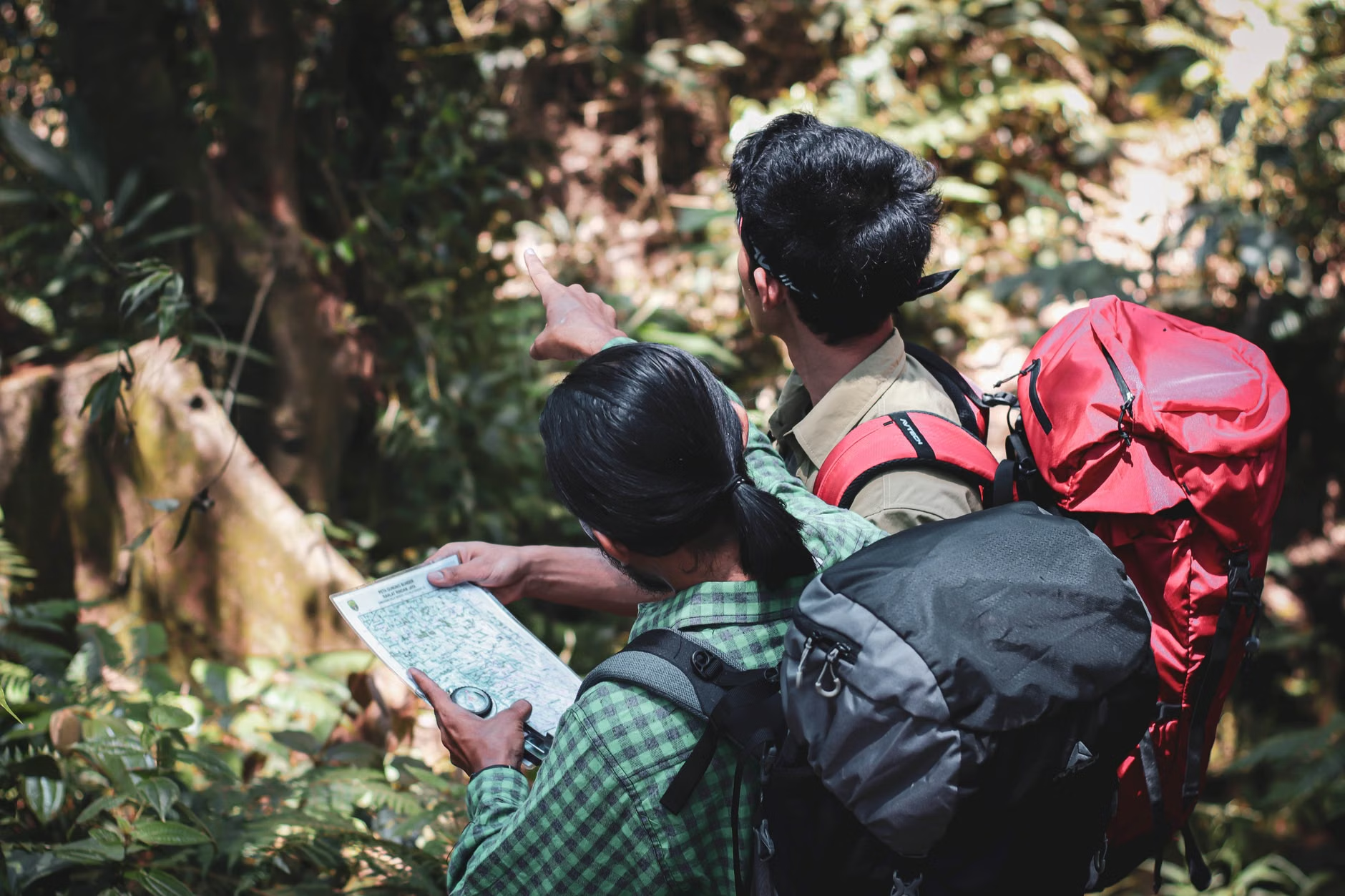
- Physical Maps: Yes, paper. Digital maps are great for navigation, but they keep your head in a screen. A physical map allows the whole family to huddle around and discuss the path, which is a great lesson in spatial awareness for kids.
- Magnifying Glasses: A simple, durable magnifying glass for each child (or one to share) turns a boring patch of dirt into a landscape of discovery.
- A ‘Nature Treasure’ Bag: Bring a small cloth bag for items found on the ground (pinecones, smooth stones, interesting twigs). Crucial rule: Only collect what is already on the ground, and teach the kids to leave the park exactly as they found it before you head home.
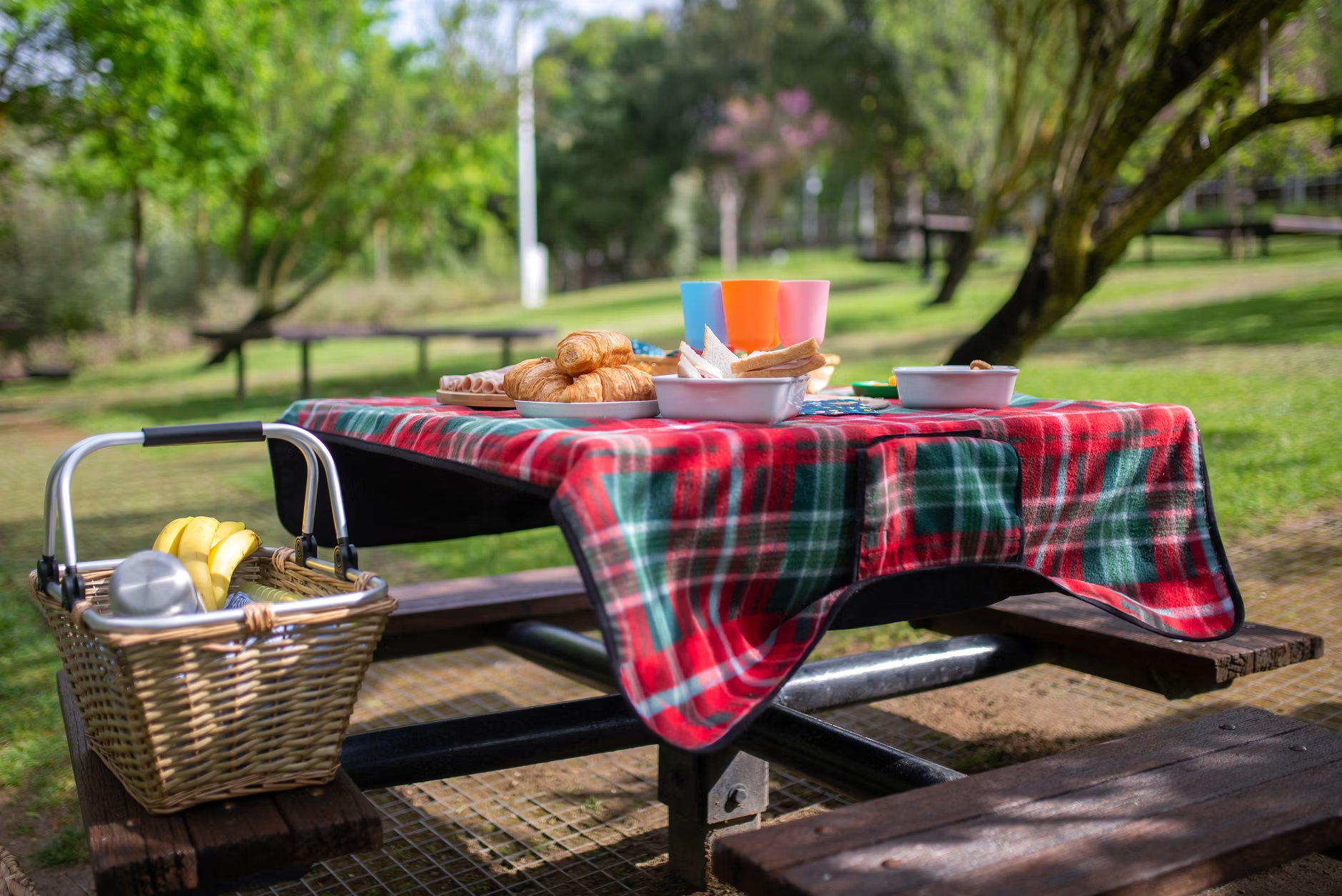
- The Thermos Factor: Never underestimate the power of a warm drink or a cold, crisp snack. Bringing your own food isn’t just about saving money; it’s about avoiding the “hangry” meltdown that forces you to leave the park prematurely.
Avoid the temptation to bring tablets or high-tech gadgets for the kids. The goal is to disconnect from the digital noise. If you are worried about them getting bored, remind yourself that boredom is the precursor to creativity. When a child is bored in nature, they eventually find a way to play with the environment—building a stick fort or creating a miniature garden.
Even with the best intentions, things can go wrong. Weather changes, kids get tired, and sometimes, you just realize you’re in a bad mood. Here is how to handle the inevitable bumps in the road.
1. The “But We Haven’t Seen the Waterfall Yet” Trap
If you don’t reach the “highlight” of the park, you haven’t failed. Your success metric should be: Did we enjoy our time outside? If you spent three hours playing by a creek instead of hiking to a waterfall, that is a successful trip. Reframe the loss to the family: “We didn’t make it to the falls, but we found this amazing creek! Let’s come back for the falls another day.”
2. The Weather Variable
There is no bad weather, only bad gear. If you are planning a slow-adventure, check the forecast, but don’t cancel just because it’s overcast. A light drizzle makes a forest smell incredible and keeps the crowds away. As long as you have waterproof layers, you can still have a magical day. If the forecast calls for a thunderstorm, however, skip it. Safety is the boundary of the slow-adventure.
3. The “Where are the bathrooms?” Anxiety
Regional parks sometimes have limited facilities. Before you leave, check the park’s official website. If the facilities are primitive, plan your trip to be a “half-day adventure” rather than a full-day commitment. Knowing the limits of your environment is key to keeping the day stress-free.
The Long-Term Benefit: Building Nature-Resilient Kids
When you commit to the slow-adventure lifestyle, you aren’t just planning a few weekends; you are building a foundation. Children who are taught to appreciate the slow pace of nature learn how to regulate their own stress. They learn that they don’t always need a scheduled activity or a screen to be entertained. They learn that the world is big, complex, and worth observing.
For us in our 30s and 40s, this is equally important. We spend our lives in a state of “continuous partial attention”—checking emails while playing with the kids, thinking about dinner while hiking. Slow-adventure forces us to be present. That 30-minute window where you are just sitting on a log, watching your child investigate a hollow tree, is a form of active meditation. It is the most effective way to reset your brain for the week ahead.
Action Plan for Your Next Weekend:
- Identify 3 regional parks within a 60-minute drive that you have never visited.
- Check the park websites for trail maps and facility information.
- Pick one and clear your calendar for a Saturday or Sunday morning.
- Prepare your ‘Slow-Adventure’ kit the night before.
- Leave the itinerary at home. Pack some snacks, dress for the weather, and go see what you find.
Don’t worry about getting the “perfect” photos for social media. In fact, try leaving your phone in your bag for the entire time you are on the trail. The memories you make when you aren’t trying to capture them are always the ones that last the longest. Nature isn’t a place to visit; it’s a part of who we are. By slowing down, you’re finally giving yourself—and your family—the space to remember that.
Frequently Asked Questions
How do I keep my kids engaged if there is no ‘destination’?
The secret is to change the focus from the destination to the “search.” Instead of saying “We’re going to the waterfall,” say “Let’s see how many different types of leaves we can find today” or “Let’s look for a place that looks like a fairy house.” Gamifying the observation process keeps them engaged without needing a grand finale.
What if my kids start complaining after 15 minutes?
This is standard! The first 15–20 minutes are often the “transition phase” where they are still mourning their screens or their toys. Stay the course. Once they realize there is no pressure to move fast, they will naturally start exploring. If they are truly miserable, sit down and have a snack. Food is the ultimate reset button for a child’s mood in the outdoors.
Google Maps is your best friend here. Zoom into your local area and look for the green patches that aren’t the massive, famous parks. Often, these are county-managed parks, nature preserves, or watershed areas. Check the municipal or county government websites in your area; they often have dedicated “Parks and Recreation” pages with detailed trail maps that don’t show up on major travel blogs.
For more information on planning your next outdoor excursion, check the resources provided by your local government’s Department of Parks and Recreation or visit national databases like the National Park Service (for general guidelines) or your regional equivalent.