- Financial Efficiency: Borrowing tools can save the average household $300–$600 per year by eliminating the need for single-use purchases.
- Space Management: Tool libraries allow you to reclaim garage or basement space, which is critical for families managing limited storage.
- Skill Building: Most libraries offer workshops, turning a simple repair task into an opportunity to learn new, long-term maintenance skills.
You don’t need to own a $200 power sander to smooth out a single wobbly chair leg, yet the pressure to own a “complete” toolkit is a common trap for homeowners and parents in their 30s and 40s. We often find ourselves staring at a pile of rarely-used equipment in the garage, wondering why we spent so much money on items that collect dust for 360 days of the year. The “Community Tool Library” model is the practical answer to this cycle of over-consumption and clutter.
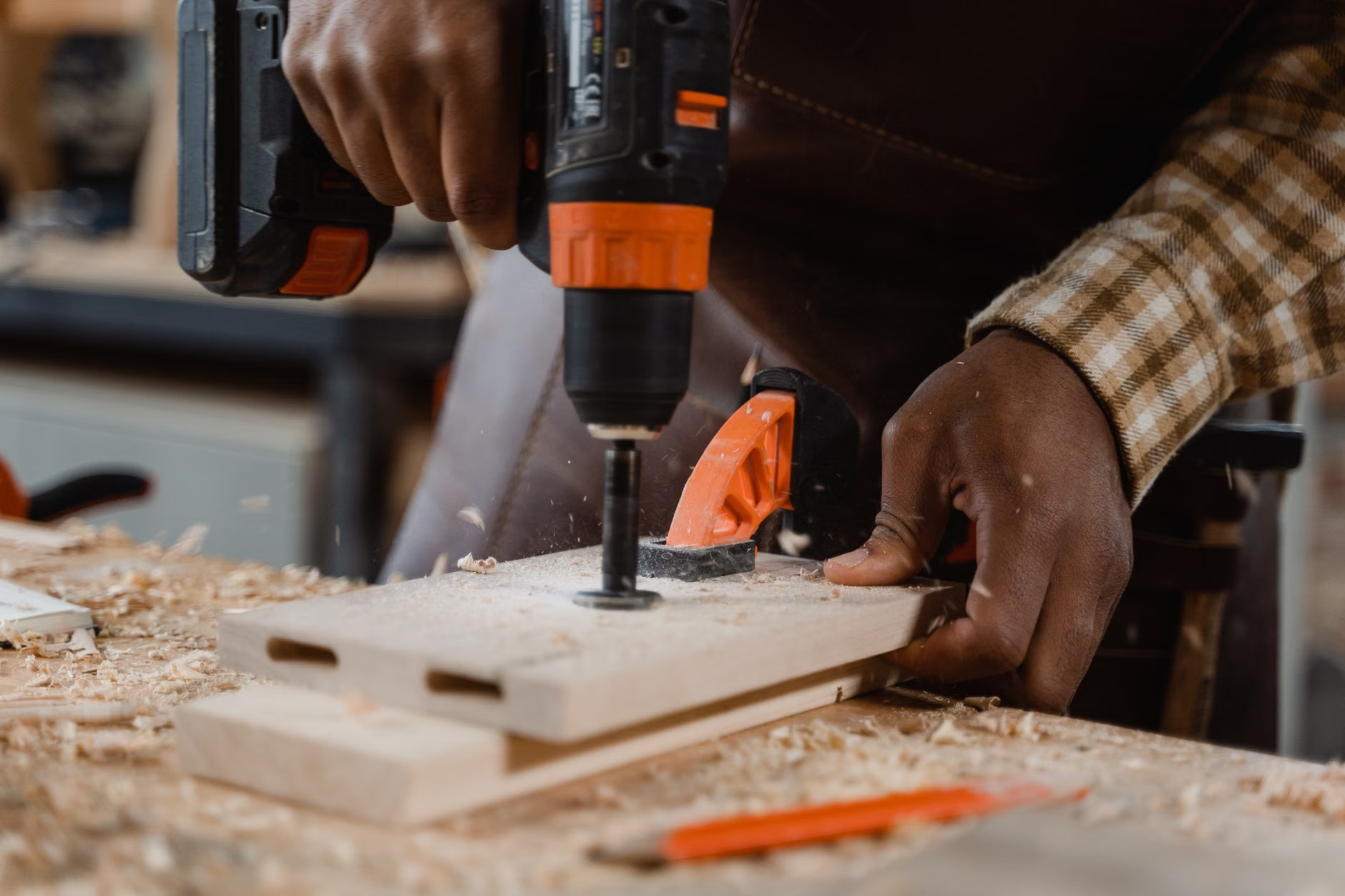
The Economics of the Tool Library Model
The core concept of a tool library is simple: it operates exactly like a book library, but for hardware. Instead of checking out a novel, you check out a circular saw, a pressure washer, or a specialized plumbing wrench. For a small annual membership fee—often ranging from $20 to $100 depending on the region—you gain access to a collection of professional-grade tools that would otherwise cost thousands of dollars to purchase individually.
Why does this matter for your household budget? When you are balancing mortgage payments, childcare costs, and the inevitable “surprise” expenses of home ownership, every dollar saved on equipment is a dollar that can go toward your family’s savings or experiences. Beyond the initial cost, consider the hidden expenses of ownership: maintenance, calibration, and the sheer cost of square footage in your home dedicated to storing items you rarely touch.
The “Cost-per-Use” Decision Rule: Before buying any tool, apply the “Rule of Three.” If you will use the tool fewer than three times in the next five years, borrow it. If you need it for a project that is a one-off (like tiling a bathroom floor or trimming a specific hedge), renting or borrowing is almost always the more fiscally responsible choice. By avoiding the purchase, you also avoid the “maintenance tax”—the time and money spent keeping tools in working order.
Reclaiming Your Family Space
One of the most overlooked benefits of the tool library model is the liberation of physical space. In many homes, the garage or the utility closet has become a graveyard for abandoned DIY projects. A heavy-duty miter saw might be useful for a weekend deck project, but it takes up significant floor space for the rest of the year. For families with children, that space is often better utilized for toy storage, sports equipment, or simply a safer, clearer pathway.
Practical Steps to Declutter:
- Audit your current collection: Identify tools that haven’t been used in 12 months.
- Sell or donate: If the tool is high-quality but rarely used, sell it to recoup costs. If it’s basic, donate it to the very library you intend to join.
- The “Library-First” Mentality: Before starting a new project, check the online inventory of your local library. If it’s available, plan your project around the borrowing window rather than rushing to a big-box store.
This shift in mindset doesn’t just clear your physical space; it reduces the mental load of managing “stuff.” Every item you own requires a bit of your attention. By outsourcing the storage and maintenance of heavy machinery to a community hub, you simplify your home environment.

Beyond Borrowing: The Educational Component
A frequent misconception is that tool libraries are only for experienced handymen. In reality, they are often centers for community education. Many libraries host “Repair Cafés” or weekend workshops where you can bring a broken item—a toaster, a vacuum, or a wooden stool—and work with a mentor to fix it. This is a massive advantage for parents who want to teach their children about sustainability and the value of repair over replacement.
Why this matters for your skill set: We are living in an era of “disposable appliances.” When a kitchen gadget breaks, the default response is often to toss it out. By utilizing a tool library’s resources and the knowledge of the volunteers there, you can extend the life of your household items. This teaches resilience and practical problem-solving to the next generation. It’s not just about the tool; it’s about the competence you gain while using it.
How to Find and Evaluate a Library Near You
Not every town has a formal “Tool Library,” but the model is growing globally. To find one, start by searching for keywords like “Tool lending library,” “Library of things,” or “Repair cafe” followed by your city or region name. If a formal library doesn’t exist, check neighborhood social media groups or community centers. Often, informal “sharing economies” exist within HOAs or community gardening groups.
When evaluating a potential library, use the following criteria to ensure it fits your needs:
| Criteria | What to Look For |
|---|---|
| Inventory Quality | Are the tools well-maintained? Ask if they perform regular safety inspections. |
| Access Hours | Does the library have hours that accommodate a 9-to-5 schedule or weekend DIY warriors? |
| Membership Tiers | Look for sliding-scale fees if you are a student or on a fixed income. |
| Liability Policy | Ensure there is a clear, fair policy regarding accidental damage to borrowed tools. |
If you find that your local area lacks these facilities, consider the “neighborhood partnership” approach. Connect with two or three neighbors to create a shared “pool” of expensive equipment. One neighbor buys the power washer, another buys the ladder, and a third buys the wet/dry vac. By formalizing this agreement, you achieve the same benefits as a library without the need for a central physical location.
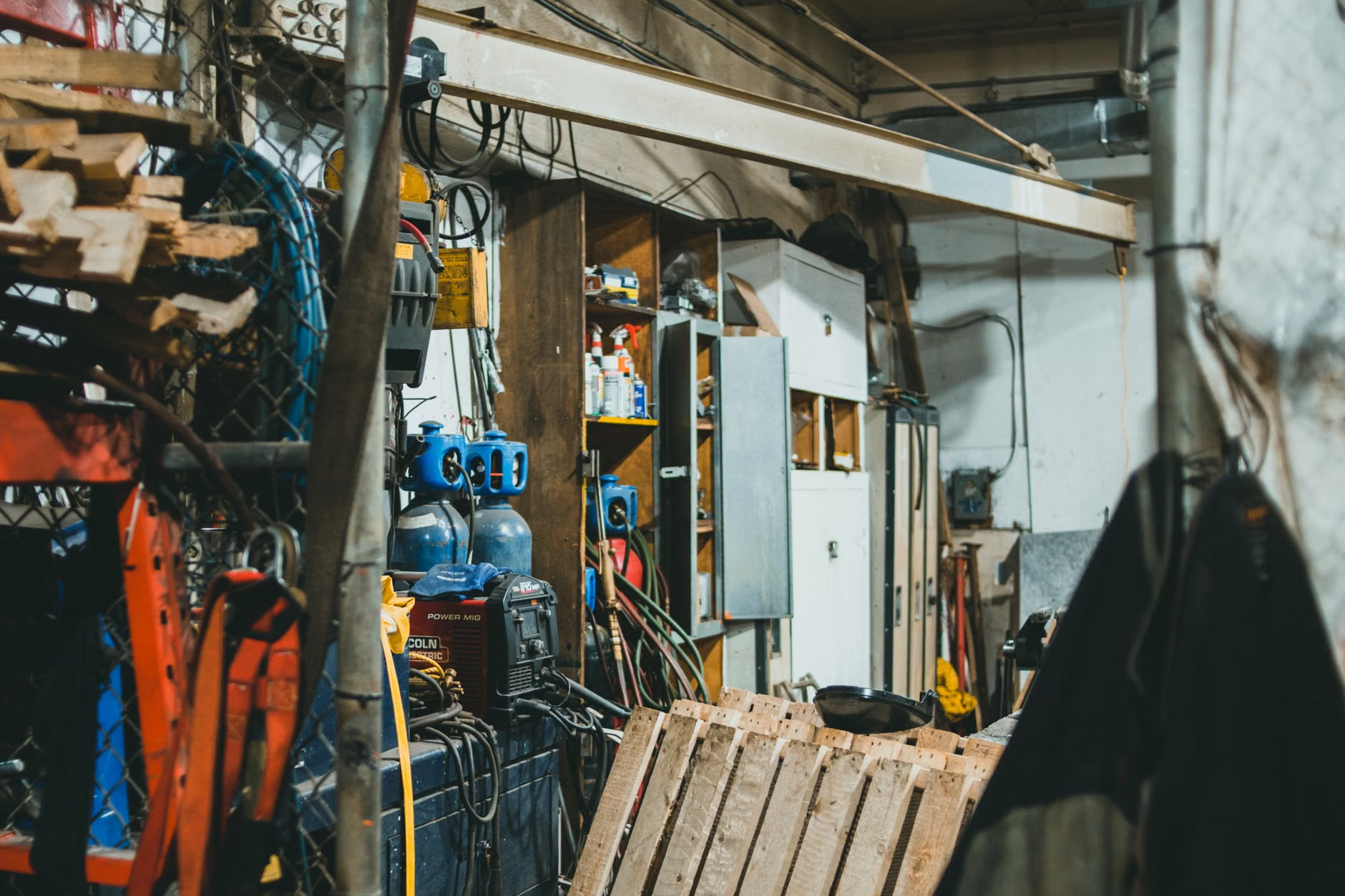
Common Pitfalls and How to Avoid Them
Even with the best intentions, there are risks to the borrowing model that you should mitigate. The most common mistake is the “late return fee.” Just like the local book library, tool libraries rely on the timely return of items so that others can complete their projects. Set a firm project timeline before you borrow.
The “Project Creep” Trap: We often underestimate how long a DIY project will take. If you borrow a tool for three days but the project takes two weeks because you only have time to work on it during nap times or after dinner, you might end up paying late fees that exceed the cost of buying the tool. Always add a 30% “buffer time” to your project estimate when checking out equipment.
Additionally, verify the safety requirements of the tool before you leave the library. If you are borrowing a high-voltage saw or a heavy-duty sander, ensure you have the appropriate Personal Protective Equipment (PPE) like goggles and ear protection. Libraries usually provide the tool, but they rarely provide the safety gear, and you should never compromise on safety for the sake of a quick repair.
Integration into Your Parenting and Life Balance
For those of us in our 30s and 40s, time is the scarcest resource. The tool library model supports this by forcing a level of planning. You cannot simply “pop out” to the garage whenever you feel like it. You have to be intentional. This intentionality actually helps in avoiding impulsive, poorly planned projects that end up half-finished. When you borrow a tool, you are making a commitment to finish the task.
Furthermore, involving your children in the process of visiting the library can be a great weekend activity. It introduces them to the concept of the circular economy and demonstrates that not everything needs to be “new” to be useful. It shifts the perspective from “consumer” to “steward” of the items we use.
Final Recommendation: Start small. Don’t try to tackle a kitchen remodel as your first library experience. Borrow a simple, high-impact tool first—like a high-quality drill for hanging shelves or a stud finder—to test the process. Once you understand the workflow of your local library and how it integrates with your family’s schedule, you can move on to more complex projects.
By stepping away from the “buy-everything” mentality, you aren’t just saving money—you are building a more sustainable, organized, and capable household. The next time a project comes up, resist the urge to click “Buy Now” on a retail site. Search for a community solution first.
For more information on the global movement of libraries of things, you can explore resources like the LocalTools platform, which helps track and manage community tool lending programs worldwide.
Frequently Asked Questions
Q: What if I break a tool while I’m using it?
Most tool libraries have a clear policy for this. Usually, if a tool breaks due to normal wear and tear, you are not held responsible. However, if it breaks due to misuse or negligence, you may be required to pay for the repair or the replacement cost. Always inspect the tool with the librarian before taking it home to ensure it is in good working order.
Q: Are the tools at these libraries reliable enough for serious projects?
Yes, in fact, they are often better than what you would buy at a consumer-grade big-box store. Many libraries receive donations from contractors or buy professional-grade tools because they are built to withstand heavy use. They are generally more robust than the entry-level models found on hardware store shelves.
Q: Can I donate my old tools to a library?
Absolutely. Most libraries rely on donations to build their inventory. If you have high-quality, functional tools that are just taking up space, contact your local library. It is a fantastic way to declutter while supporting a community resource that helps your neighbors as much as it helps you.