- Resale Value is King: Investing in high-end, durable nursery brands allows you to recoup 40% to 60% of your initial investment, effectively lowering the total cost of ownership compared to budget items.
- Safety Protocols are Non-Negotiable: When buying second-hand, prioritize items with static parts (like wooden furniture) over complex mechanical systems; if buying strollers or car seats, strictly adhere to manufacturer recall lists and serial number verification.
- The “Luxury Cycle” Strategy: Treat nursery gear as a temporary asset; by curating high-quality items that hold their structural integrity, you can rotate through premium gear at a fraction of the retail price.
Buying second-hand luxury nursery gear isn’t just about saving money; it’s about participating in a circular economy where high-quality items are given a second, third, or even fourth life. If you’ve spent any time on parenting forums or social media lately, you’ve likely noticed the shift: the “new-in-box” obsession is being replaced by a more tactical, research-heavy approach to sourcing premium equipment. For parents in their 30s and 40s, this is the intersection of sustainability and smart financial management.
Why High-End Nursery Gear Retains Value and Utility
The primary reason the second-hand luxury market for baby gear is exploding is simple: durability. Luxury brands—think Scandinavian high chairs, German-engineered strollers, or artisanal wooden bassinets—are designed with longevity in mind. They use high-grade materials like solid hardwoods, aircraft-grade aluminum, and OEKO-TEX certified textiles. Unlike mass-market plastic gear that degrades after one child, these items are built to survive multiple families.
From a financial perspective, this creates a “depreciation buffer.” If you purchase a high-end stroller for $1,200, you can often sell it two years later for $600 to $700. If you buy a $300 “budget” stroller, it is effectively worthless after the same period. By opting for the “pre-loved” route, you are essentially renting the item for the duration of your need and recouping a significant portion of your capital at the end.
The “Luxury Lifecycle” Comparison:
| Category | Budget Item | Luxury (Pre-Loved) |
|---|---|---|
| Initial Cost | $300 | $600 (Used) |
| Resale Value | $20 | $400 |
| Net Cost | $280 | $200 |
This reality forces us to reframe our perception of “expensive.” An item that costs more upfront but holds its value is often cheaper in the long run than a budget item that ends up in a landfill. The key is identifying which items are worth the investment and which are not.
The Hierarchy of Second-Hand Safety
Not all baby gear is created equal when it comes to the secondary market. Safety standards, particularly regarding structural integrity and chemical exposure, must be your guiding compass. As a rule of thumb, categorize your potential purchases into three tiers: “Safe to Buy Used,” “Proceed with Caution,” and “Buy New.”
Tier 1: Safe to Buy Used (Low Risk)
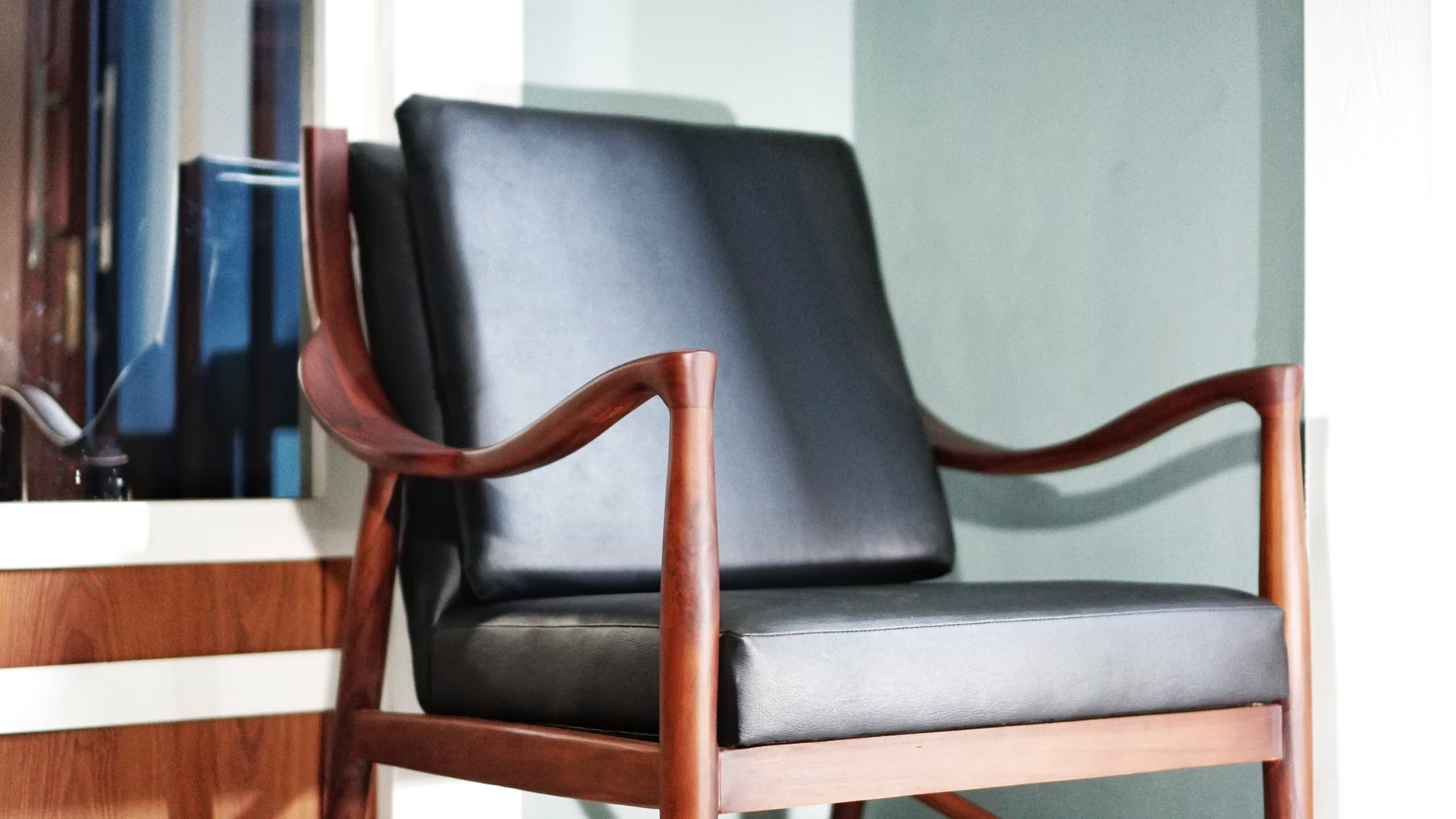
Items in this category are non-mechanical and easy to sanitize. This includes wooden furniture (cribs, changing tables, dressers), high chairs with simple designs, and nursery decor. When inspecting these, focus on structural stability. Ensure that all hardware—screws, bolts, and brackets—is present and original. Avoid items that have been modified or repaired with non-standard parts, as these can compromise the manufacturer’s original engineering.
Tier 2: Proceed with Caution (Medium Risk)
This includes strollers, carriers, and rockers. These items have moving parts, hinges, and fabric components. Before purchasing, you must perform a “mechanical audit.” Check the folding mechanism for smoothness, ensure the brakes lock firmly, and inspect the harness system for fraying. Always check the manufacturer’s serial number against their official recall database. Many premium brands have excellent customer support; even if you are the second owner, they may provide replacement parts or safety updates if you register the serial number with them.
Tier 3: Buy New (High Risk)
Car seats are the most critical exception to the second-hand movement. Because car seats have a “crash history” that is often invisible to the naked eye (micro-fractures in the plastic shell), and because they have strict expiration dates due to material degradation, buying them used is a significant risk. Never buy a used car seat unless it is from a trusted family member who can verify its full history, and even then, only if it is well within its safety lifespan.
Strategic Sourcing: Where to Find the Best Gear
Once you’ve decided what to buy, the hunt begins. The “curated” market is where the real value lies. Avoid general marketplaces like Facebook Marketplace if you are looking for specific, high-end brands; the signal-to-noise ratio is simply too low. Instead, focus on specialized platforms.
Look for boutique consignment stores in affluent neighborhoods. These shops often act as a filter, only accepting high-quality, clean, and well-maintained items. Their reputation depends on the quality of their stock, which works in your favor. When shopping online, look for platforms that offer buyer protection and verified photos. If a seller is unwilling to provide a photo of a specific wear-and-tear area, walk away. A truly “luxury” item will have a transparent history.

The “Hidden Costs” of Second-Hand Shopping
While the financial savings are clear, there are “hidden costs” that you must account for to avoid disappointment. The first is time. Finding a specific item in the right color, condition, and location requires patience. If you need a stroller by next Tuesday, you are at the mercy of the market. Start your search early—ideally, three to four months before you need the item.
The second cost is maintenance. You might find a beautiful, high-end bassinet, but the fabric cover might need a deep clean or the wood might need a non-toxic polish. Budget for these minor refurbishments. Often, buying a “project” item at a deeper discount and spending a small amount on cleaning supplies or replacement screws is the most cost-effective path, but ensure you have the skills and time to perform these repairs safely.
Finally, consider the “compatibility tax.” Some premium brands use proprietary accessories. If you buy a second-hand stroller, ensure you can still purchase the necessary adapters for your infant car seat, or that the brand hasn’t discontinued the line. A bargain is only a bargain if it integrates into your existing system.
Building a Sustainable Nursery Culture
The second-hand luxury movement is also an environmental statement. By keeping high-quality items in circulation, you are reducing the demand for new manufacturing, which is resource-intensive and carbon-heavy. It’s a way of practicing “slow parenting”—focusing on quality over quantity and teaching the next generation that objects have value beyond their initial purchase.
When you eventually move on from these items, commit to the cycle. Pass them on, sell them, or donate them to a family that will appreciate the quality. This creates a community-wide benefit where the cost of premium gear is spread out over several families, effectively democratizing access to high-end products.
Practical Steps for Your First Purchase
If you are new to this, start small. Begin with an item that has a low safety risk, such as a designer activity gym or a high-end wooden toy set. This allows you to understand the quality of the brands you are targeting and the condition in which they are typically sold. Once you are comfortable, move to larger furniture items.
When communicating with sellers, be direct. Ask three critical questions: “Is this from a smoke-free/pet-free home?”, “Are there any known functional defects or missing parts?”, and “Can you provide a close-up photo of the [specific area of wear]?” If the seller is vague, the item is likely not worth the risk. Remember, the luxury market is about quality; if the quality is in doubt, the luxury is gone.
Addressing Common Misconceptions
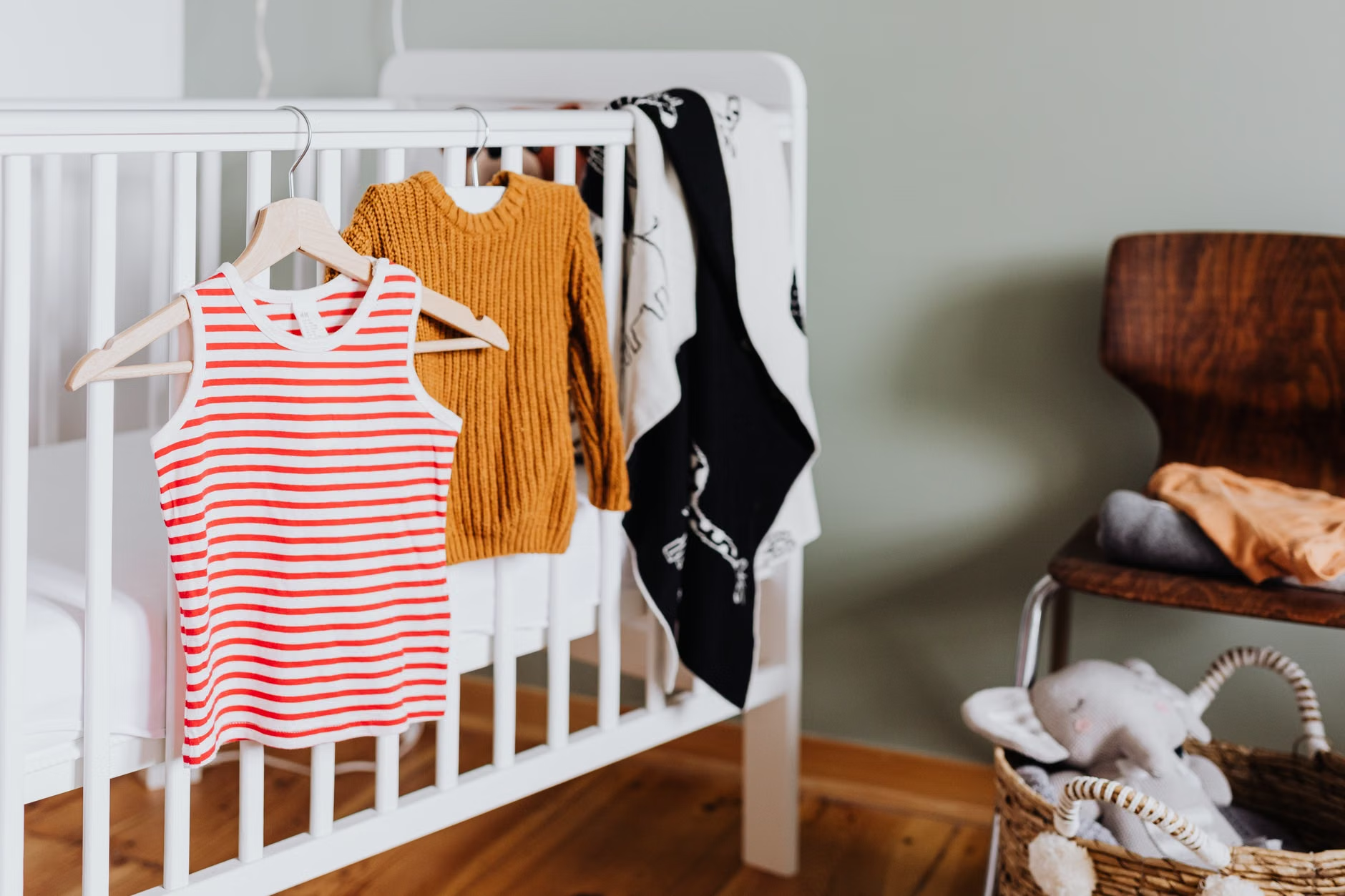
There is a lingering stigma that second-hand items are “dirty.” This is an outdated perspective. Most high-end gear is made of materials that are designed to be cleaned. Removable fabric covers can be washed with hypoallergenic detergents, and hard surfaces can be sanitized with non-toxic, food-grade cleaners. Many parents find that the “new” smell of mass-produced items is actually off-gassing from chemical treatments or flame retardants, whereas a well-loved, second-hand item has long since shed those volatile organic compounds (VOCs).
Another misconception is that it’s “too much effort.” While it does take more effort than clicking “buy now” on a retail site, the effort is finite. Once you have a system—a list of brands you trust, a few reliable search alerts on your phone, and a local network of parents—the process becomes second nature. It’s an investment of time that pays dividends in both cash and environmental impact.
The Future of the Nursery Economy
We are seeing a shift toward “Product-as-a-Service” models in the luxury nursery space. Some premium brands are now offering their own “pre-loved” programs, where they refurbish and certify their own used gear. This is the gold standard for second-hand shopping. If you have the option to buy a manufacturer-certified pre-owned item, take it. It combines the safety assurance of a new product with the price benefits of a used one.
As we move forward, the stigma of second-hand will continue to fade. In the same way that driving a pre-owned luxury car is now seen as a savvy financial choice, using a pre-owned luxury stroller is becoming a badge of honor for the informed parent. It shows that you’ve done your research, you value quality, and you are conscious of your footprint.
Final Takeaways for Your Strategy
To succeed in the second-hand luxury movement, you must prioritize quality over convenience. Stick to brands that have a proven track record of durability. When you see a good deal on a high-end item, act quickly but don’t skip the due diligence. Verify the serial number, check the structural integrity, and ensure the item fits your specific needs.
Ultimately, the goal is to create a nursery that is functional, beautiful, and sustainable. By curating your gear through the second-hand market, you are not just saving money; you are building a home for your child that reflects your values. It’s a smarter, more deliberate way to parent, and one that fits perfectly with the reality of modern life in your 30s and 40s.
Frequently Asked Questions
1. How can I be sure that a second-hand crib meets current safety standards?
Always check the manufacturer’s label for the manufacture date and the model number. Compare these against the official safety commission databases for your country (such as the CPSC in the United States or similar bodies in the EU/UK). Even if a crib looks perfect, if it has been subject to a recall for structural issues, it is unsafe. Look for the “ASTM” or “EN” certification labels, which indicate the product met the safety standards at the time of manufacture.
2. Is it worth buying second-hand clothes for a newborn?
Yes, but with a caveat: focus on high-end brands that use organic cotton or merino wool. These materials hold their shape and softness through multiple wash cycles. Avoid “fast fashion” baby clothes; they are usually made of synthetic blends that pill and lose their integrity after a few washes. High-end baby clothes are often worn for only a few weeks, meaning they are essentially brand new when you buy them second-hand.
3. What should I do if I find a piece of gear that is in great condition but is missing a small, non-critical part?
Check the brand’s website first. Many premium manufacturers sell “spare parts kits” specifically for this reason. If they don’t, check secondary marketplaces like eBay for “parts only” listings of the same model. If the missing part is essential for safety (like a buckle or a structural pin), do not attempt to replace it with a generic hardware store item; contact the manufacturer directly to see if they can supply an authorized replacement.
For further information on safety standards and recall databases, visit the U.S. Consumer Product Safety Commission or your local national equivalent. Remember to always verify the specific model number of any gear you purchase against these official records.