- DNA kits are the starting point, not the destination: A successful ‘Ancestral-Roots’ project requires combining genetic data with physical document research to create a narrative, not just a list of percentages.
- Avoid privacy pitfalls: Before gifting a DNA kit, ensure the recipient is comfortable with genetic data sharing and understands the privacy policies of the testing provider.
- Focus on the physical deliverable: The true value of this project lies in the “artifact”—a printed family tree, a digitized photo album, or a curated archive—that survives long after the digital subscription ends.
If you are like most parents in their 30s and 40s, your holiday season is likely a blur of managing school events, balancing professional deadlines, and the relentless pressure to find “the perfect gift.” By mid-December, you might find yourself staring at a shopping cart filled with plastic gadgets that will likely end up in a donation bin by spring. The ‘Ancestral-Roots’ project is a deliberate pivot away from that cycle. It is about gifting a piece of personal history—an exploration of where your family comes from, combined with the tools to map it out for future generations.
This project isn’t just about finding out if you are 10% Viking; it is about reclaiming identity in an era where we often feel disconnected from our own history. Here is how you can transform genealogy and DNA testing into a meaningful holiday gift that resonates with your family.

The Architecture of the ‘Ancestral-Roots’ Project
The ‘Ancestral-Roots’ project is essentially a three-tiered approach to heritage discovery. It moves from the biological (DNA) to the documentary (records) and finally to the narrative (the story). When you gift this, you are gifting an experience that can last for months or even years.
Tier 1: The Biological Foundation. This is the DNA test. It provides the “raw data” of your genetic heritage. It is the most popular starting point because it is tangible and requires little effort to start. However, the common mistake here is assuming the results are the end of the story. They are simply clues.
Tier 2: The Genealogical Record. This involves using sites like Ancestry, MyHeritage, or FamilySearch to verify those genetic matches against birth certificates, marriage records, and census data. This is where the “work” happens. It is the phase that requires patience and detective work.
Tier 3: The Narrative Legacy. This is the most important part for a holiday gift. It is taking the data and the records and turning them into something that can be held or shared. A printed book, a framed tree, or a digitized folder of restored family photos. This is the “gift” itself.
Why DNA Kits Require a Privacy-First Conversation
Before you wrap that DNA kit, you need to have a serious conversation about privacy. We often treat these kits like novelty items, but they involve the most sensitive data a person owns: their genetic code. Many providers share anonymized data with third-party researchers, and while that can lead to medical breakthroughs, it is a choice the recipient should make consciously.
Decision Criteria for Choosing a Provider:
| Feature | Key Considerations |
|---|---|
| Database Size | Larger databases (like Ancestry) offer better odds of finding living relatives. |
| Privacy Controls | Look for providers that allow you to delete your data or opt-out of research at any time. |
| Family Tree Integration | Some services offer better software for building and visualizing the tree alongside the DNA results. |
If your recipient is particularly tech-savvy or privacy-conscious, you might skip the DNA kit entirely and instead gift a premium subscription to a genealogy research site. This allows them to build their history without providing a biological sample, focusing entirely on the documentary evidence.
Turning Research Into a Tangible Holiday Gift
Most people leave their research trapped on a website. To make this a “gift,” you need to bring it into the physical world. This is where the project shifts from a hobby to a family heirloom.
Scenario: The “Founding” Album. Imagine your recipient has a grandfather whose history was largely lost. Instead of just sending them a link to a digital file, you curate a “Founding Album.” You collect the census records, the scanned photographs you found through your research, and a clear, printed family tree. You bind these in a high-quality physical album. This is not just data; it is a story they can show their own children.
The “Common Mistake” Trap: Do not try to research the entire family tree before gifting the project. The joy is in the discovery. Instead, gift the tools for the discovery, and perhaps a “starter” tree that you have already mapped out to the grandparents’ generation. This provides a clear starting point without robbing the recipient of the thrill of finding a new cousin or a long-lost ancestor.
The Hidden Costs and Time Commitments
There is a hidden cost to the ‘Ancestral-Roots’ project: Time. Genealogy is a rabbit hole. If you are gifting this to a parent of young children, be aware that it can become a time-sink that competes with their already limited free time. You should position the gift as a “slow hobby” rather than a project with a deadline.
Furthermore, there is a financial aspect beyond the initial kit. Most high-quality genealogy sites operate on a subscription model. If you gift a kit, you are often introducing the recipient to a platform where they will eventually be prompted to pay for access to historical records. To be a truly thoughtful gifter, consider covering the first year of a membership fee, or clearly explain that the free tier has limitations.
Managing Expectations:
- The “Dead-End” Reality: Explain that not every branch of a tree can be fully traced. Records from certain regions or time periods may have been lost to war or fire. This is not a failure; it is a part of the research process.
- The “Surprise” Factor: DNA testing can reveal unexpected family secrets, such as misattributed parentage or previously unknown siblings. Always include a gentle note that the project might uncover information that changes how the family views itself.
Step-by-Step: How to Launch Your Project This Holiday
If you want to start this project for yourself or a loved one this year, follow this sequence to avoid overwhelm:
- Phase 1 (Early December): The Data Gathering. Purchase the DNA kit or the research subscription. If you are doing this for a relative, sit down with the oldest living member of the family first. Record their stories. These stories are the “context” for the names and dates you will find later.
- Phase 2 (Late December): The Mapping. Use a tool like FamilySearch.org (which is free) or Ancestry to start building the digital tree. Focus on accuracy. Verify every birth and death date with a document if possible.
- Phase 3 (January & Beyond): The Synthesis. Once the DNA results arrive (which can take 6-8 weeks), use the matches to verify your tree. Then, take the best of your findings and create the physical artifact—the book, the poster, or the digital archive.
By following this timeline, you aren’t just giving a gift; you are giving a project that bridges the gap between the chaotic holiday season and the quiet, introspective months of the early year.
Why This Matters for Our Generation
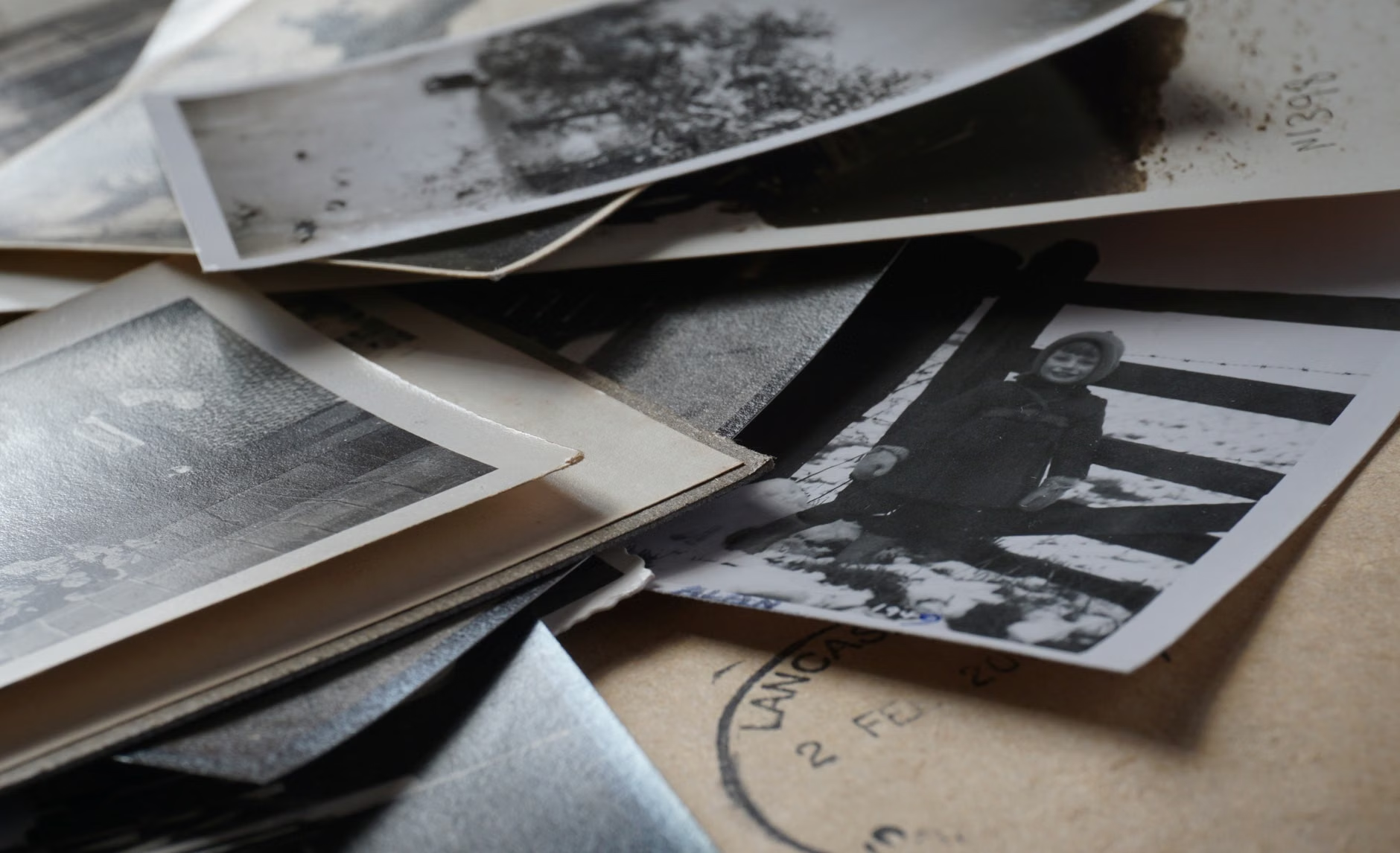
We are the generation that sits between the analog and the digital. Our parents have boxes of physical photos that are slowly fading, and our children have thousands of digital photos that will likely never be printed. The ‘Ancestral-Roots’ project forces us to reconcile these two worlds.
When you sit down to research your family roots, you are doing more than digging up names. You are building a sense of continuity. In a world that feels increasingly fragmented, having a clear understanding of your own history provides a sense of grounding. It helps us explain to our children who they are and where they come from, giving them a foundation that isn’t just based on the temporary trends of their time.
This is not about glorifying the past or seeking out noble ancestors. It is about understanding the reality of your family’s journey—the migrations, the hardships, and the moments of resilience that led to you being here today. That is a gift that doesn’t lose value over time; it only grows more precious as the years pass.
Common Questions About Heritage Gifting
Q: Is a DNA test safe for my elderly parents?
A: Generally, yes. It is a simple saliva collection. However, consider their comfort level with technology. If they aren’t tech-savvy, you will need to be the one to manage the account and the digital results for them. Ensure they understand that their DNA is being stored in a database.
Q: What if I don’t find anything interesting?
A: The “interest” is subjective. Even a “boring” tree that shows your ancestors lived in the same village for 300 years is a powerful statement about stability and resilience. The value is in the truth, not in finding a famous ancestor.
Q: Can I do this project on a budget?
A: Absolutely. You do not need a paid subscription to start. FamilySearch.org is a non-profit, free, and massive repository of world records. You can start there today without spending a penny. The “gift” could be your time and the effort you put into documenting the family history for them.
Final Thought: As you head into the holiday season, remember that the most meaningful gifts are those that connect us to one another. Whether you end up with a fully mapped family tree or just a few new stories about your great-grandmother, the process of looking back is what makes the present moment feel just a little more significant. Start small, be patient with the research, and focus on the stories that make your family unique.
For more on managing family archives and digital legacy, check out the official guidance from the National Archives Genealogy section.